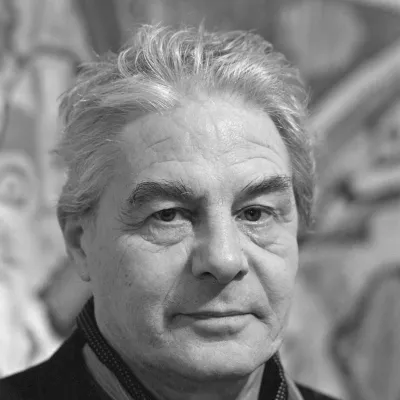
Douglas Adams
Human Design Chart
Biography
Adams wrote Dirk Gently's Holistic Detective Agency (1987) and The Long Dark Tea-Time of the Soul (1988), and co-wrote The Meaning of Liff (1983), The Deeper Meaning of Liff (1990) and Last Chance to See (1990). He wrote three stories for the television series Doctor Who including the unaired serial Shada and City of Death (1979) which he co-wrote with producer Graham Williams, and served as script editor for its 17th season. He co-wrote the sketch "Patient Abuse" for the final episode of Monty Python's Flying Circus. A posthumous collection of his selected works, including his final (unfinished) novel, was published as The Salmon of Doubt in 2002.
Known for his sharp wit and procrastination, Adams called himself a "radical atheist" and was an advocate for environmentalism and conservation. He was a lover of music, fast cars, technological innovation, and the Apple Macintosh.
Human Design Analysis: Douglas Adams as Manifestor 5/1
Manifestor 5/1 — Design at a Glance
Douglas Adams' design presented him as a pioneer and visionary, whose energy was geared towards steering the world in new directions. His inner compass worked like that of a Roman emperor: He possessed the grand vision for an empire but did not lead battles himself. Instead, he initiated processes and let others take on the concrete implementation. This style of leadership inevitably polarized him. His great dreams were enthusiastically embraced by some, while others rejected them as threatening or arrogant. Adams often experienced misunderstandings where his far-reaching ideas were not immediately understood by all, leading to a split between love and hate.
To minimize this friction and find the right following, his design required a clear strategy: Informing. Through timely and precise communication of his intentions, he could prevent resistance and attract those who wanted to follow him. If he lived according to this strategy, his system rewarded him with a deep sense of inner peace. Acting against this nature – for example, by acting without invitation or announcement – left him feeling an enduring, deep anger. This emotional state served as direct feedback on whether he was in alignment with his role as initiator or had gotten entangled in unnecessary conflicts. His internal state thus directly mirrored his strategic orientation.
Emotional Authority
Douglas Adams showed a decision-making stance that required emotional clarity and time; spontaneous reactions proved deceptive to him. His inner authority lay in the defined Solar Plexus Center, meaning he was subject to constant emotional waves. The world appeared colored by his current mood: total enthusiasm for a topic at one moment, deep skepticism towards it the next. This up-and-down of feelings was not an error but rather the mechanism of his perception.
A feeling in the moment represented only a snapshot, not necessarily the truth. Quick, spontaneous decisions based on such emotion could have negative repercussions as they were grounded in transient impulses. Adams' design therefore demanded patience: He had to let decisions mature, often sleeping on them multiple times, to distinguish between temporary mood and deeper insight. Over time, intense feelings subsided, emotional distance emerged, and calmness set in. Only then was he through the process and could make a clear, sustainable choice. This mechanism applied regardless of other defined centers in his chart; the Solar Plexus Center always took precedence in decision-making. Adams learned to take his time and ask himself multiple times what helped him set long-term steps with greater certainty rather than being carried away by passing waves.
The 5/1 Profile — Heretic / Investigator
Douglas Adams revealed through his Profile Leader/Researcher (5/1) as someone who, while magnetically projecting solutions, also needed the retreat into anonymity. Line 5 gave him a direct way to provide practical answers in crises, attracting others and making them seek advice from him. This projection could quickly lead to overextension if clear boundaries were not set. Adams tended to answer questions for hours like an expert only to feel drained afterwards as further inquiries poured in.
At the same time, Line 1 of the Researcher called for serendipity and collaboration behind the scenes. It required acceptance by kindred spirits and intellectual nourishment through quiet research away from public view. Awareness of fears about anonymity or feeling undervalued was part of it. The central conflict lay in balancing this external role as problem solver with the inner need to protect his research space. Adams learned to say no to maintain this beneficial equilibrium. This way, he could optimally utilize his gifts: making deep insights from research available for others without being drained by unbridled projection and constant demand. This dynamic shaped his approach to knowledge and interaction.
Single Definition — Defined & Open Centers
Douglas Adams was characterized by a consistent yet limited style of communication and action, shaped by his defined Throat Center. This center served as an energy anchor point, transforming messages from the body into manifest speech or action. His inner authority was emotional: The defined Solar Plexus Center required waiting for feeling waves to clarify before making decisions; impulsivity led to chaos instead. A constant, adrenaline-fueled pressure from his defined Root Center drove him to handle stress and move forward in the material world.
In contrast, his vulnerability to conditioned patterns was revealed through several open centers. His open Head Center tended to get lost in mental monologues about unimportant issues or take on others' problems instead of trusting inner authority. The open Ajna Center made him susceptible to concepts and opinions from the environment, leading to the risk of interpreting these as his own truth. His open G Center meant a lack of fixed identity; he relied on initiation through interaction with others and the right places rather than dictating a rigid direction. The open Heart Center left him without consistent willpower, tempting him to make promises or prove himself to demonstrate value – a cycle of self-disapproval. Additionally, his open Sacral Center was vulnerable to "borrowed" energy from the environment, potentially leading to overexertion and exhaustion as he did not consistently know when enough was enough. Finally, his open Spleen Center made him sensitive to others' fears and well-being, with a tendency to cling to unhealthy situations just to gain a false sense of security. This configuration described someone who needed to learn to wait for their emotional wave and avoid getting drawn into mental or social pressure cookers.
Channels for melodramatic moods and emotional provocation.
Douglas Adams exhibited a fundamental attitude driven by his emotional wave: His social openness and provocation were only powerful when they occurred in sync with the timing of his inner mood. Forced actions led to misunderstandings; authentic acting, on the other hand, worked as a catalyst for emotional transformation in listeners.
This dynamic was fueled by Channel 22-12, which connected the Solar Plexus Center with the Throat Center. Through Gate 22 (Openness) and Gate 12 (Cautious), Adams creatively translated his mood swings into voice or communication. The restraint of Gate 12 regulated the intensity so that he could target people who possessed the greatest mutative potential. His articulation used the quality of the voice to emotionally touch others and evoke new awareness – always dependent on whether he felt "in the mood" for it.
Parallel to this, Channel 39-55 (Emotional Release) connected the Root Center with the Solar Plexus. Here, provocation (Gate 39) was used to awaken the spirit of others and find resonant partners. Adams utilized this pulsating wave between joy and melancholy to tease out the nature of the spirit in his surroundings. Through Gate 55 (Spirit), he sought balance in perception while living the emotional depth authentically.
Additionally, Gate 47 shaped his drive to recognize meaning in arbitrary image sequences and create clarity within the collective. Gate 11 enhanced his visual memory and analysis before acting. In the personality realm, Gate 49 with its upheaval and obedience to tribal principles worked alongside Gate 53 in the design, which represented a pioneer's urge for freedom and new developmental cycles. This configuration underscored his role as someone who created transformative moments through emotional authenticity and targeted provocation.
Individual Circuitry — Circuit Signature
Douglas Adams revealed himself as someone whose expression was guided by emotional waves. His design connected the Throat Center with the Solar Plexus and Root Centers within the Knowledge Circuit. This configuration generated a pulsating, acoustic energy that was anchored in the "now." It propelled the expression of a unique identity forward, supported by creativity and a certain melancholy.
The circuit utilized two specific channels: "Openness" (Channels 12-22) connected the Throat Center with the Root Center, while "Release Emotions" (Channels 55-39) linked the Solar Plexus to the throat. Thus, Adams translated his inner emotional states into outer reality. The energy acted as a catalyst for change by transforming new knowledge and expressing it through the right emotional coloring. Since all three centers lay in a single group, this power flowed directly and undivided. It was not about isolated intuition or pure will but rather merging feeling, impulse, and voice into a coherent whole. This mechanism shaped his way of perceiving the world and articulating himself within it – always driven by the need to make his individuality visible through this emotionally colored, pulsating expression.
Left Angle Cross of Informing 1
Douglas Adams carried the left cross of Communication. This configuration shaped his way of processing and conveying information. In Human Design, this cross describes a specific energy aimed at making complex connections understandable. It is not just about chatting but rather a deep impulse to prepare knowledge in such a way that it truly reaches and can be used by the recipient.
For Douglas Adams, this was a central life task: he sought ways to clearly communicate ideas. The design suggested that he tended to structure information before passing it on. This did not happen out of pedantic necessity but because understanding the clarity of the message was paramount. The energy of this cross promoted an attitude in which sharing insights was seen as service to others.
It was about building bridges between abstract concepts and everyday life. Douglas Adams showed himself through this expression as someone who valued precision, not to impress, but to avoid misunderstandings. The mechanics of this design emphasized the responsibility for the quality of communication. Every impulse to speak or write was filtered by a desire to be truly helpful and comprehensible. This created a basis for interactions where clarity took precedence over quantity.
Saturn Return · Uranus Opposition · Chiron Return — Life Cycles
Douglas Adams’ life followed a clear cyclical structure marked by three astrological turning points. These phases each signalled concrete developmental stages: confirmation, change, and conclusion.
The first Saturn return occurred around the 28th year of his life. This cycle often condensed years of groundwork into a solid result. In 1980, Adams received the Ditmar Award for “The Hitchhiker’s Guide to the Galaxy” in the category International Fiction. This recognition confirmed his artistic success and strengthened his position in literature.
The Uranus opposition, which typically occurs around the 40th year of life, often brings unexpected breaks or new directions with it. For Adams, this was a career step: “Dirk Gently’s Holistic Detective Agency” was published in 1992. This event signaled further development of his work beyond the established series.
The Chiron return, a fulfillment cycle between the ages of 49 and 51, marks the bloom of one's incarnation purpose if lived according to their strategy. Adams’ cycle ended abruptly: he died in 2001 at the age of 49 from a heart attack. His death fell precisely into this period of potential completion. The mechanics here do not show healing but rather the end of his physical life phase where his creative purpose would have unfolded. Adams’ design points to a development that began with external confirmation, changed course, and extinguished at its peak.
Manifestor · Emotional Authority — Synthesis
Douglas Adams was a Generator who found a powerful voice through his defined Throat Center and Solar Plexus Center to articulate his inner visions – often in the form of provocative or unconventional ideas (Channel 22/12). However, this ability to communicate was modulated by an undefined Heart Center, which led him to constantly seek external validation and direction rather than relying on a fixed internal identity. His life was marked by constant oscillation between the urge to explore new paths (Gate 53) and fear of failure or rejection from others.
A central paradox in Adams’ design lay in the tension between his ability for creative mutation and his need for external validation. He was a pioneer whose ideas broke conventional boundaries, yet he needed the echo of others to anchor his visions and align his inner compass. This dynamic led to a life full of innovation but also deeply rooted fear of loneliness and uncertainty, which manifested in his tendency to constantly seek new experiences and connections.
2 Defined Channels
Incarnation Cross - Left Angle Cross of Informing 1
Solar Return
The Solar Return shows the moment when the sun returns to its exact birth position - your personal solar year.
Life Cycles
Discover the life cycles with a detailed triple view (birth chart, cycle chart, composite).
Human Design Profile
- Type
- Manifestor
- Strategy
- To inform others before acting
- Authority
- Emotional Authority
- Profile
- 5/1 - Heretic / Investigator
- Definition
- Single Definition
- Incarnation Cross
- Left Angle Cross of Informing 1
- Date of Birth
- 11.03.1952 11:10
- Place of Birth
- Cambridge, England, United Kingdom
Frequently Asked Questions
What was Douglas Adams' Human Design type?
What Profile did Douglas Adams have in Human Design?
What Authority did Douglas Adams have?
What incarnation cross did Douglas Adams have?
When was Douglas Adams born?
Discover your own Human Design
Are you also a Manifestor? Find out in a personal reading how to use your initiation power peacefully and dissolve resistance.
More Personalities
Back to overviewAlain-Fournier

Angeli

Christian-Jaque

Juninho

Kesha

Lucebert