
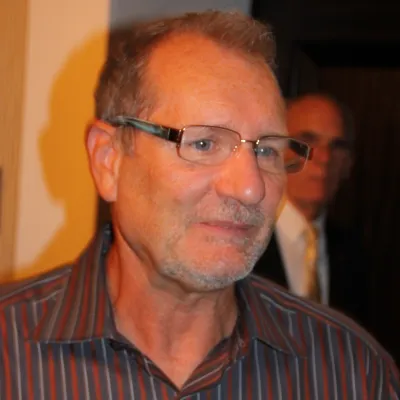
Ed O'Neill
Human Design Chart
Biography
O’Neill, like his character on Married... with Children, is a former south-paw athlete; he tried out for the NFL Pittsburgh Steelers but was cut from their roster. Unlike his character, he had teaching credentials and taught social studies in Youngstown, Ohio, but in 1982, he began his acting career and was soon known for his versatility.
Taking great pains to avoid being typecast, he took roles in films as varied as the TV movie, A Winner Never Quits (1986) and Wayne’s World (1991). In 1999, he appeared in The Bone Collector and in 2000, he returned to television with a leading role in the Big Apple. He has done voice-work for the Wreck It Ralph franchise and Finding Dory.
O’Neill married Cathy Russoff in 1986. They separated in 1989 but reconciled in 1993. They have two daughters.
The Human Design of Ed O'Neill: Generator 2/5
Generator 2/5 — Design at a Glance
Ed O'Neill revealed himself as someone with immense inner reserves of strength, whose true power did not lie in independently initiating projects but rather in the powerful response to external opportunities. His design is characterized by high sacral endurance: he had the energy to sustainably achieve things, comparable to a workhorse carrying immense loads – provided it's used correctly.
The mechanics of his Generator type define success strictly as reaction instead of initiation. The central strategy involves waiting for signals from life and then acting only when the inner 'yes' signal, the impulse from the gut, is clearly felt. This process ensures access to deep satisfaction, which his design offers as a reward for correct action.
Deviation from this principle led him to two characteristic stumbling blocks. Either he burned out his energy on tasks that did not resonate with him internally, leading to frustration and exhaustion. Or he was inhibited in his passion for his heart project despite full power still being available. Both scenarios – suppressing the impulse or ignoring inner guidance through premature initiation – resulted in a lack of energy. Only in harmony with this reactive principle could his enduring strength work unimpeded and grant him the deep fulfillment that his system generates when used correctly.
Sacral Authority
Ed O'Neill displayed a decision-making stance rooted not in the head but deeply within the body. His design as a Generator determined both his strategy and inner authority: sacral authority. This means he had to wait for external stimuli before responding through bodily resonance. His 'gut feeling' – audible as grunts, hums or an affirming 'mm-hm' – was the decisive compass.
This mechanism simplifies the process fundamentally, as strategy and authority are identical. Ed O'Neill possessed a sacral motor that, upon activation, provided vitality, enthusiasm, and inexhaustible energy. These physical signals confirmed his correct path; their absence indicated a wrong reaction. He was born to dissolve into activities with joy without constant purposefulness.
Crucial here is the open emotional state: The sacral response must occur directly at the moment of stimulus before rational considerations or emotional waves can overlay it. Through this direct physical perception, Ed O'Neill could act spontaneously and powerfully, driven by an inner zest for life that manifested in his work. His well-being depended on whether he followed these bodily impulses or fought against them.
The 2/5 Profile — Hermit / Heretic
Ed O'Neill exhibited a fundamental stance marked by constant oscillation between deep withdrawal and public expectation. His design suggested that he needed time alone to gain internal clarity while others simultaneously sought quick solutions from him. This tension arises from his Profile 2/5: Line 2 demands independence and ascetic retreat, similar to a monk in their cave who must first understand what they want to do with their energy. Simultaneously, line 5 projects an attitude of wisdom and authority onto him, so strangers expect him to solve their problems – often with more trust than he actually possessed knowledge.
Therefore, it was crucial for Ed O'Neill to be strictly selective. He had to learn to say 'no' to demands that did not serve his inner development in order to avoid forgetting himself. Only through this conscious boundary setting could he prevent the projected power position of line 5 from overwhelming him. His path involved using his alone time as necessary space for decisions and then acting outwardly only when he was sure – always with the awareness that his influence on strangers was greater than on his closest circle.
Split Definition — Defined & Open Centers
Ed O’Neill is characterized by a constant inner dialogue. His design features defined Head and Ajna Centers that form the Channel of Inspiration, creating a perpetual mental pressure to question and develop concepts. However, since these centers are not connected to energy sources, there was no power available for direct implementation of these thoughts. Attempts to relieve this pressure through hasty actions typically led to frustration or resistance, as the ideas were often not yet ready for the world. The strength lay instead in passing on this inspiration to others who had the necessary energy to bring it to fruition.
In addition to this mental configuration, Ed O’Neill has defined Sacral, Spleen, and Root Centers. His defined Sacral Center provides a reliable source of vital energy that can only be correctly activated through reactions to external stimuli – not through mental initiatives. The defined Spleen Center ensures a sharp intuitive awareness of the present moment, while his defined Root Center delivers a constant adrenaline-driven pressure that propels him forward in the material world and helps him cope with stress.
In contrast, his design reveals several open centers, making him susceptible to conditioning. His open Throat Center means he cannot communicate consistently; pressing for attention or forcing statements leads to blockages and stress. His open G Center does not allow for a fixed identity or life direction; he tends to feel lost in inappropriate environments or seek a path that he cannot define himself but can only experience through external initiation. The lack of a defined Heart Center means he lacks consistent willpower; making promises or trying to prove his worth through performance often ends in self-doubt and exhaustion. Finally, his open Solar Plexus absorbs the emotions of his surroundings, causing him to personalize foreign moods and avoid emotional confrontations to maintain peace.
Channels for maturation, judgment, awareness and transformation.
Ed O’Neill revealed himself as someone who relentlessly questions and corrects logical patterns, with his criticism being truly fruitful only upon invitation. Channel 58-18 drives this urge towards perfection; Gate 58 demands "better," while Gate 18 identifies the unhealthy aspects. Without invitations, this logic was often perceived as disruptive, but on request it was seen as a valuable correction.
Parallel to this, his mind worked with spontaneous insights that were uncontrollable. Channel 61-24 connects the inspiration of Gate 61 with the rational understanding of Gate 24. Here knowledge is gained through "satori" moments when a gap in thinking occurs; he had to wait for these mutations to occur rather than forcing them.
His drive for social recognition and advancement was shaped by Channel 54-32. Gate 54 provides the ambition to rise through talent, while Gate 32 seeks support from the tribe. His success depended on his efforts being recognized and promoted by others; without this validation, the ambition lost its foundation.
Furthermore, he went through life cycles aimed at gaining wisdom, not just achieving results. Channel 42-53 requires that experiences be fully lived out (Gate 53: Beginning) and reflected upon (Gate 42: Growth) before a new cycle begins. Premature expectations here led to frustration; only by going through the entire process did clarity emerge.
These mechanisms were supported by Gate 62, which focuses on details, logic, and precise naming of facts. Visual memories (Gate 11) helped him collectively analyze ideas, while Gate 64 interpreted past experiences to form abstract concepts. Together these elements formed a profile based on logical precision, intuitive leaps, and the mature processing of life experiences.
Collective Circuitry — Circuit Signature
Ed O’Neill exhibited a tension between pulsating creativity and focused logic. His design did not directly connect these forces but rather allowed them to operate as separate fields. The Knowledge Circuit brought innovative flashes of insight from the Head and Ajna Centers – a drive for new identity through creative mutations. Parallel to this, the Understanding Circuit was at work: here, the Spleen Center connected with the Root Center, promoting strategic judgment and emotionless ratio. This separation created an internal dynamic between impulsive ideas and rational structuring.
Additionally, two more circuits shaped his energetic field. The Purpose Circuit linked the Sacral and Root Centers, enabling cyclical emotional waves and reflecting on past experiences – a process of maturation through shared feelings. Finally, the Ego Circuit also operated over Spleen and Root Centers, with an energy of transformation. This promoted cooperation and resource management in the tribe based on reciprocity rather than individual life force.
As a person with Split Definition, Ed O’Neill acted within two clearly separate groups: on one hand, the logical-strategic axis (Spleen-Root), on the other hand, the creative-intuitive sphere (Head-Ajna-Sacral). None of these energies flowed directly into each other; they existed side by side. This required a conscious integration of innovative impulses with strategic planning without a seamless transition between feeling and mind. The mechanics were seen as parallel existence of creativity, logic, emotion, and cooperation – each active in their own, unconnected fields.
Right Angle Cross of Maya 1
Ed O’Neill revealed a deeply rooted orientation towards ethical clarity. His design suggested that he understood justice not primarily as a societal rule but as a metaphysical truth – an inner compass pointing beyond the purely material. This stance arose from the influence of the right cross of the Maya 1 in his chart. This aspect connects the spiritual dimension with a strict moral code. For him, it was about connecting with the divine through ethical integrity.
For Ed O’Neill, this meant that true knowledge could only be found beyond superficial material interests. His search for truth was inseparable from the need to anchor it within a framework of absolute fairness and spiritual rightness. He did not seek compromises that contradicted his inner ethics but rather strove for a stance that was both personally authentic and cosmologically correct. This configuration shaped him as someone who measures his actions against a high, almost sacred standard. His connection to the divine did not come through abstract meditation alone but through actively living by these clear ethical principles. It was a life task for him to bridge the gap between spiritual ideal and everyday reality through consistent justice without falling into dogmatic rigid thinking, always aware of the greater, holy order.
Saturn Return · Uranus Opposition · Chiron Return · 2nd Saturn Return — Life Cycles
Ed O’Neill revealed himself as someone whose life path was structurally redefined by clear astrological turning points. These cycles did not mark random events, but critical moments of realignment and growth.
In 1987, at the age of 41, he began his role as Al Bundy in "Married... with Children." This coincided exactly with his Uranus opposition, a cycle that often initiates sudden breaks or radical changes to break old structures and clear new paths. For Ed O’Neill, this was the moment when his career fundamentally shifted; the opposition acted as a catalyst for this new, defining role.
Later, in 2000 at age 54, he played the detective in the series "Big Apple." This corresponded with his second Saturn return. While the first return often lays the foundation, the second demands a deepening and maturation of already established structures. Here, the mechanics of Saturn were shown as confirmation and solidification of his position in the industry, no longer an emergence but a secure presence.
These two events underscore how astrological cycles accompanied Ed O’Neill’s career-relevant decisions concretely: Uranus as the trigger for breakthroughs and Saturn as the marker for established maturity. His design thus responded directly to these cosmic impulses with visible professional steps.
Generator · Sacral Authority — Synthesis
Ed O’Neills Design shows a clear orientation towards action and reacting to external stimuli. As a Generator with sacral authority (Sacral Center), he is naturally designed to generate energy when interested in something – marked by an inner "yes" through physical signals. This energetic foundation is reinforced by the defined Head Center, which creates a constant urge to question and understand, and inspires creativity. The profile as a natural talent and hero (Profile 2/5) points to a combination of the need for withdrawal and others' expectations of his abilities – an inner weighing of where he wants to invest his energy.
A central paradox lies in the tension between this energetic abundance and the pressure of the Knowing Strategy. While the Sacral Center urges him to act, the defined mental structure (Head Center) drives him to question everything and perfect it (Channel 58-18). This leads to an inner field of tension between impulsive action and the necessity to think things through thoroughly, which was evident in his career phases marked by energetic engagement.
4 Defined Channels
Incarnation Cross - Right Angle Cross of Maya 1
Solar Return
The Solar Return shows the moment when the sun returns to its exact birth position - your personal solar year.
Life Cycles
Discover the life cycles with a detailed triple view (birth chart, cycle chart, composite).
Human Design Profile
- Type
- Generator
- Strategy
- To respond - wait for something to respond to
- Authority
- Sacral Authority
- Profile
- 2/5 - Hermit / Heretic
- Definition
- Split Definition
- Incarnation Cross
- Right Angle Cross of Maya 1
- Date of Birth
- 12.04.1946 21:15
- Place of Birth
- Youngstown, OH, United States
Frequently Asked Questions
What is Ed O'Neill's Human Design type?
What profile does Ed O'Neill have in Human Design?
Which authority guides Ed O'Neill's decisions?
What incarnation cross does Ed O'Neill have?
When was Ed O'Neill born?
Discover your own Human Design
Are you also a Generator? Find out in a personal reading how to use your sacral energy correctly and discover deep satisfaction.
More Personalities
Back to overviewSissy Spacek

Aaliyah

Alexia

Anémone

Angèle

Ann-Margret
