
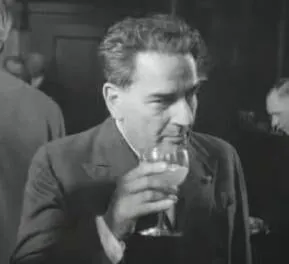
Eduard van Beinum
Human Design Chart
Biography
Death 1959/04/13.
What does Generator 6/2 mean for Eduard van Beinum?
Generator 6/2 — Design at a Glance
Eduard van Beinum had a high, enduring sacral energy that was activated not by his own initiatives but exclusively through responding to external impulses. As a Generator, his fundamental energy architecture was designed to work like a strong working horse – extremely powerful and steady as long as he received energy for his task. This power primarily ignited when he encountered signals from his environment and responded with an inner "yes" from his Sacral Center.
His effectiveness therefore directly depended on whether he followed this strategy: not initiating but responding. If he did things that didn't appeal to him or went against his internal signal, he wasted his resources and tended towards frustration and energy loss. Conversely, ignoring his urge to continue working on his heart project also led to dissatisfaction. When Eduard van Beinum lived in harmony with this principle, his design rewarded him with a deep sense of fulfillment and satisfaction. Deviations from it – such as constant initiating without inner confirmation – resulted instead in persistent frustration. His path involved acting from the gut whenever life gave a clear signal, thereby channeling his immense endurance without exhausting himself.
Emotional Authority
Eduard van Beinum demonstrated a decisive inner attitude: He avoided making decisions based on the current emotional moment. Instead, he practiced patience and let decision options rest for at least one night until the initial emotional wave had subsided and clarity and calmness set in. This arose from his inner authority, Emotional Authority, carried by the defined Solar Plexus Center. In Human Design mechanics, this authority is considered primary; it takes precedence over all other defined centers regardless of further configurations in the chart.
People with this configuration are subject to a constant emotional wave that manifests as a steady up and down of feelings. Perception is always colored by the current mood: A topic can appear inspiring at one moment and negative the next. The immediate feeling, however, represents only a fleeting snapshot, not necessarily the deeper truth. Spontaneous decisions made from this emotion often had negative consequences because they were based on incomplete information.
The mechanism required time to differentiate between transient mood and true insight. The longer Eduard van Beinum let a decision mature, the more comprehensively he could perceive the situation. This process demanded conscious hesitation and multiple reconsiderations. Over time, intense feelings subsided, emotional distance emerged, and calmness set in. Only then was the decision-making process complete. This strategy was particularly relevant for long-term decisions that had a significant impact on life's course.
The 6/2 Profile — Role Model / Hermit
Eduard van Beinum showed a clear developmental arc: In his youth, experimenting and seeking new experiences through trial and error dominated. This phase of restlessness and learning shaped his early life until he found himself around age thirty in an intense reflective period.
This change aligned with his Profile configuration 6/2, the Role model and natural talent. Before turning thirty, the energy of Line 2 was dominant, characterized by a strong desire for change and an aura of boredom when things remained static. The blocked creative force of this line required constant progress, with creativity occurring in phases of ebb and flow. After age thirty, Line 6 became active, leading to a withdrawal – metaphorically described as "a cave on the mountain." During this time of distance, Eduard van Beinum intensely reflected upon his earlier experiments. This phase served for healing and deep self-knowledge, enabled by the willpower of Line 6, which identified and rejected inferior forces in the community. The integration of these experiences ultimately led to the wisdom of a role model who allowed others to benefit from his life lessons.
Split Definition — Defined & Open Centers
Eduard van Beinum revealed himself through a foundation of defined identity, willpower, and energy production. His defined G Center gave him reliable self-love and a clear sense of direction in life; he knew who he was without being dependent on others. The defined Heart Center provided constant willpower for resource control: He kept his promises and enjoyed working independently to prove his worth. As the motor, the defined Sacral Center supplied him with a permanent, vital energy source. This power required reactions to invitations to find deep satisfaction; initiating actions without inner consent led to frustration and exhaustion.
This stable core contrasted with the openness of his mental and stress-related centers. His open Head Center meant that he did not have a constant mental focus but was open to inspiration from the environment. He tended to question whether he had found the right answer rather than imposing his own logical structure. The open Ajna Center allowed him flexible, conceptual thinking that took in concepts from the surroundings instead of generating them himself. His communication occurred through the open Throat Center only on invitation; he did not actively seek attention but spoke spontaneously when the situation required it.
The open Spleen Center made him sensitive to the well-being of his environment without having spontaneous intuition of his own. He could perceive imbalances in others and tended to feel insecure if he was not in a 'safe' atmosphere. Finally, his open Root Center absorbed external stress and adrenaline instead of generating its own energy. Eduard van Beinum often reacted to this pressure with hyperactivity to get rid of it rather than standing firm against it. His mechanics showed as a play between inner stability in identity and action, along with situational adaptability to mental and stress-induced impulses from the environment.
Channels for community, rhythm and self-assertion.
Eduard van Beinum exhibited a personality characterized by an internal rhythm and self-love but remained strongly dependent on community bonds and fair agreements. His design established a natural flow determined by Channel of Rhythm 5-15, connecting the Sacral Center with the G Center: Gate 5 held fast to fixed habits and rituals while Gate 15 integrated the diversity of society into his life stream. This created a universal magnetism that drew others into his timing and propelled a group forward without being distracted by intellectual arrogance or emotional waves.
Parallel to this, Channel of Exploration 34-10 promoted individual convictions and self-acceptance. Here, Gate 10 initiated behavior from the deepest inner self leading to self-love while Gate 34 provided the inner strength to hold fast to these personal beliefs. This combination allowed Eduard van Beinum to live authentically and demonstrate others the benefits of completed self-love through his reaction from the Sacral Center without imposing this energy.
Especially defining was Channel of Community 37-40, the only one in his design that included the Heart Center. It connected the Solar Plexus Center with the heart via Gate 37 (Friendship) and Gate 40 (Aloneness). This emphasized the necessity of recognition and mutual benefit in relationships. Eduard van Beinum sought his place within the whole and waited for a personal invitation to become part of an organization. He understood the importance of a good business carefully considered and formulated over time so that it was beneficial for both sides.
The prioritization of his gates underscored this dynamic: Gate 35 (Change) stood foremost, followed by Gate 59 (Bonding Strategy), Gate 29 (Saying Yes), and Gate 9 (Detail Work). This configuration described a life task based on interaction and experience, where true satisfaction came through the meaning of experience.
Tribal Circuitry — Circuit Signature
Eduard van Beinum showed inner strength and individual centering arising from the connection of his Sacral with the Identity Center in the Focusing Circuit. This configuration fostered bold personalities with strong convictions ('I am who I am'), reinforcing others' uniqueness. However, lacking a connection to the Throat Center, these internal certainties were often hard to articulate externally. The Understanding Circuit also linked Sacral and Identity Centers, where Channel Rhythm (15-5) supported the ability to convey logical insights without emotional coloring. Both circuits formed a shared definition: Energy did not flow through the entire system as one unit but existed in separate blocks. Another group of his energy consisted of Heart and Solar Plexus Centers in the Ego Circuit. Here, Channel Community (37-40) stood for cooperation and fair resource distribution ('Give and Take'). Since this circuit lacked a connection to the Sacral Center, constant life force was missing; therefore, pauses for regeneration were essential to build the necessary strength for mutual support within the tribe. Van Beinum's design thus presented itself as an interplay of individual stability and cooperative but rest-seeking resource building, with different energetic groups working alongside each other in parallel without directly merging.
Left Angle Cross of Migration 2
Eduard van Beinum revealed himself as someone marked by deep flexibility and resilience. His design indicated a tendency to adapt skillfully to changing circumstances and flow with the current of life rather than fight against resistance. This attitude stemmed from the archetypal structure of the Moving Cross (Cross 13), which determined his unconscious life dynamics.
This mechanism fostered the ability to quickly orient oneself in new situations and move on without clinging rigidly to the past. It was not about fleeing challenges but strategically adapting to circumstances. Eduard van Beinum seized the moment, surrendered to the flow of events, and thereby opened up new paths. The energy of this cross helped him navigate obstacles by not fighting against them but reacting flexibly. This inner alignment allowed him to maintain a stable course even in uncertain times by focusing on the present and seizing opportunities as they arose. Moving forward was thus a conscious act of orientation and progress that significantly shaped his life journey, helping him traverse various phases with ease.
Saturn Return · Uranus Opposition · Chiron Return · 2nd Saturn Return — Life Cycles
Eduard van Beinum's career followed a clear rhythm of structural turning points where his inner authority translated into concrete responsibility. In 1927, at the age of 27, he became conductor of the Haarlem Symphony Orchestra. This first Saturn return marked the transition from preparation to established role; years of work condensed here into a solid career step that strengthened his position.
Ten years later, in 1937 at the age of 37, the Uranus opposition occurred. During this phase of unpredictability, he received offers for chief conductor positions with other Dutch orchestras but chose instead to be promoted to second chief conductor alongside Mengelberg with the Concertgebouw Orchestra. The mechanics of this cycle often fostered sudden changes or new options; van Beinum did not use this impulse for a radical break but rather to refine his role within an existing structure.
In 1948, at age 48 during his Chiron return, he held the position with the London Philharmonic Orchestra. This cycle represents the bloom and unfolding of one's purpose; it became evident that his life mission increasingly found meaning and validation when he acted according to his strategy. His second Saturn return in 1956 at age 56 crowned this development: He was appointed music director of the Los Angeles Philharmonic Orchestra. Once again, long-term preparatory work condensed into a new, stable level of responsibility that cemented his international recognition.
Generator · Emotional Authority — Synthesis
Eduard van Beinum lived deeply in reaction. As a Generator with emotional authority, he was not meant to initiate but rather to react to life and then follow up with action only when his sacral center said "Yes!" This reactive ability was amplified by the connection between his sacral and G centers through the Channel of Investigation – an energy that led him into a process of deeper self-discovery and allowed him to act authentically. Additionally, the Rhythm Channel connected him to the collective flow of life, while his definition in the heart and solar plexus created a strong inner foundation refined by emotional waves. Thus, he was able to sense his own inner truth as well as connect with the energies of others.
A central paradox lay in the tension between his need for individuality and his ability to foster community. The Ego Circuit emphasized cooperation and sharing resources, while the Centering Circuit strengthened his own identity. This seeming contradiction manifested in him having a strong inner foundation yet also being able to inspire others and build deep connections with them – a balancing act between self-actualization and social engagement.
3 Defined Channels
Incarnation Cross - Left Angle Cross of Migration 2
Solar Return
The Solar Return shows the moment when the sun returns to its exact birth position - your personal solar year.
Life Cycles
Discover the life cycles with a detailed triple view (birth chart, cycle chart, composite).
Human Design Profile
- Type
- Generator
- Strategy
- To respond - wait for something to respond to
- Authority
- Emotional Authority
- Profile
- 6/2 - Role Model / Hermit
- Definition
- Split Definition
- Incarnation Cross
- Left Angle Cross of Migration 2
- Date of Birth
- 03.09.1900 19:00
- Place of Birth
- Arnhem, Netherlands
Frequently Asked Questions
What is Eduard van Beinum's Human Design type?
Which Profile did Eduard van Beinum have?
What Authority did Eduard van Beinum have?
What incarnation cross did Eduard van Beinum have?
When was Eduard van Beinum born?
Discover your own Human Design
Are you also a Generator? Find out in a personal reading how to use your sacral energy correctly and discover deep satisfaction.
More Personalities
Back to overviewAaliyah

Alexia

Alizée

Angèle

Anne-Marie

Arcángel
