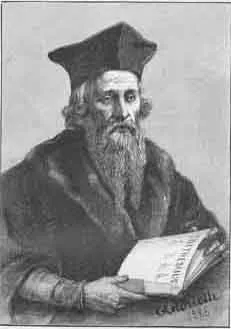
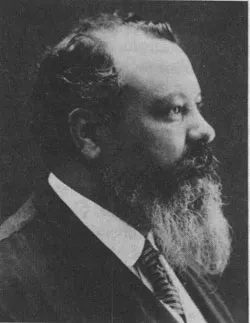
Edward Kelley
Human Design Chart
Biography
In December 1581, his mediumship and crystal ball skrying enabled Dr. Dee to begin a series of conversations with angels. Dee and Kelly traveled to England to Trebona in Bohemia in December 1583, and Czech philosopher Ivan Svitak published a book about their work together.
Kelly died while trying to escape from prison in Prague, Bohemia in the autumn of 1595.
Edward Kelley — Manifestor with Profile 1/3
Manifestor 1/3 — Design at a Glance
Edward Kelley lived as a pioneer and visionary whose nature was oriented towards leading the world into a new future. His design corresponds to that of an Manifestor, a configuration often compared to the role of an emperor in ancient Rome: He possessed the great vision for the empire but did not wage wars himself; instead, he sent others out to conquer foreign lands on his behalf. This structure led to Edward Kelley being polarized; he was misunderstood because his thinking often surpassed that of his surroundings. While some people loved his grand visions and followed him, others hated or rejected him precisely because of this foresight. This pain point of misunderstandings was a central aspect of his existence. To find the right followers who could support him, it was crucial for Edward Kelley to inform other people about his plans in a timely and precise manner. This strategy of informing was key to his inner state: If he followed this path and his authority, his system rewarded him with a deep sense of peace. Conversely, if he lived against this design, he felt persistent, deep anger within himself. Thus, his life clearly showed the dynamics that clear communication of vision is necessary to maintain inner peace and minimize resistance.
Splenic Authority
Edward Kelley demonstrated decision-making based on immediate physical intuition. His design carried inner authority in the Spleen Center, an area that functions as a health and alarm system. This configuration required both the emotional and sacral centers to be open, typical for Projectors or Manifestors.
His inner voice was a fine, spontaneous impulse that appeared only once at each moment. This first thought served his immediate well-being and reliably signaled whether a situation or environment was healthy. Edward Kelley had to grasp this fleeting input immediately; hesitation or reflection led to the clear message being drowned out. This required him to be highly vigilant and often retreat briefly so as not to miss the actual impulse.
Since knowledge in the Spleen Center is only available at the moment, his preferences changed frequently in short term periods. Long-term plans did not fit this mechanism, as they constrained the necessary flexibility. He lived best with few commitments so he could spontaneously adapt to what proved right. This structure helped him rigorously shield against harmful influences and protect himself effectively by always listening to the current state of his body.
The 1/3 Profile — Investigator / Martyr
Edward Kelley was someone who combined theoretical knowledge with practical experimentation. His design indicated a tendency to research intensively before acting – typical for Profile 1/3, that of the Researcher and Experimenter. Here learning was not an end in itself but preparation for the trial.
His Line 1 in Gate 33 emphasized wisdom in a weak position. It required withdrawal and reflection for survival. Unreflective courage led to repeated mistakes; only after completing inner processing did he speak, creating a foundation of deliberation.
At the same time, his Line 3 in Gate 24 represented trial and error. It brought the strength to create new concepts through regression and errors. Kelley used this energy to expose false knowledge and attract attention. The tension between cautious planning (Line 1) and the pressing need for practical testing (Line 3) shaped his path. He learned from failures, overcame setbacks with new insights, and built a trustworthy judgment. His character was marked by this dual nature: the scientist who holds back to understand and the adventurer who acts to prove. Self-discovered knowledge was his core theme; only what he had tested both theoretically and practically on heart and soul counted as true for him.
Single Definition — Defined & Open Centers
Edward Kelley's design inclined towards clear, self-determined communication and a pronounced willpower. His defined Throat Center connected with the energy of the Heart, leading him to speak from a strong 'I' - making statements like 'I want this' or 'I will do that'. This configuration gave his voice a consistent, honest quality, yet also carried an urge for impulsive action within it. Simultaneously, he had a defined Heart Center which granted him permanent willpower. He controlled his resources and work rhythm himself, preferred to follow his own internal mechanism, and expected recognition for his contribution. His third defined center, the Spleen, provided spontaneous intuition in the moment; he made decisions based on immediate warning signals or hunches without needing to rationalize them.
At the same time, Edward Kelley was vulnerable to external influences due to several open centers. His open Head Center allowed him to absorb mental pressure and questions from others, which could easily lead him into confusion when trying to find answers that were not his own. The open Ajna Center enabled intellectual flexibility but led him to reflect concepts and opinions from the environment rather than holding them as personal truth. Particularly influential was his open G Center: He lacked a fixed identity or direction, instead adopting these from his surroundings. This made him vulnerable in relationships; he often sought security through 'borrowed' identities and internally questioned who he actually was or where to find love. Furthermore, his open Solar Plexus absorbed the emotions of others, making him appear emotionally unstable when personalizing foreign feelings. His open Sacral Center also meant that he did not have constant vital energy but would exhaust himself by overworking with the energy of others due to lacking natural boundaries for recovery.
Channels for ambitious leadership and instinctive devotion.
Edward Kelley was someone who actively engaged with the material plane and used his willpower to secure resources. His design featured two central mechanisms: The Money Line 21-45 connected the Heart Center with the Throat Center through the Hunter's Gate (21) and the Collector's Gate (45). This configuration carried an authoritative voice that decided on control and responsibility - 'I have or I don't'. Edward Kelley had to learn to assert his will in a way that protected his own interests while serving others. Success required independence; he worked best as his own boss, setting his natural rhythm rather than being controlled by others or delegating responsibility, which would have stressed his Heart.
Additionally, the Channel of Devotion 44-26 between Spleen and Heart Centers was active. Through the Gate of Vigilance (44) and the Gate of Egotists (26), he possessed an instinctive intelligence that allowed him to assess others and find suitable products or ideologies. This channel functioned as a capitalist with creative business acumen: He used his sense for what the tribe needed - often before they knew it themselves - to steer them towards his benefit. Edward Kelley was a frontline promoter who brought in money and supplied the team. His challenge lay in waiting for market recognition before promoting his gifts, as this platform granted him necessary authority.
Individual Gates such as Gate 33 (Reflection), Gate 19 (Resources/Spirituality) and Gate 24 (mental mutation) supported this process through withdrawal and renewal in the rhythm of the pulse. Gate 57 promoted intuitive clarity while Gate 23 offered the ability to communicate and assimilate. In his design, Gates 12 (restraint/poetry), 8 (contribution/leadership) and 40 (liberation/recovery) were active. Gate 50 maintained tribal values through protective reflexes, and Gate 32 ensured continuity and material success of the tribe by reviewing failures and initiating radical changes when necessary. Edward Kelley lived this balance between work, instinct, and willful leadership.
Tribal Circuitry — Circuit Signature
Edward Kelley was someone who created resources through cooperation and mutual support. His design connected the Throat, Heart, and Spleen Centers into a closed circuit. This configuration emphasized the ability to mediate and communicate (Channel 26-44) as well as accumulate material wealth (Channel 21-45). Through this connection, his words, will, and selective perception worked together. He could translate ideas into concrete means while relying on traditional values. Since his circuit lacked a connection to the Sacral Center, he lacked constant life force for uninterrupted action. Instead, his system required regular rest periods to regenerate necessary energies for 'the tribe' - his close community or family. This cycle of activity and recovery was essential as he did not have an ongoing energy source but relied on strategic pauses to effectively support and sustainably manage resources.
Right Angle Cross of the Four Ways 2
Edward Kelley carried the right cross of the four paths. This configuration in his design combined the power of will with the ability for clear communication and the search for deeper truth, flanked by a strong physical presence. It was an energetic structure aimed at bringing inner visions into the world through words and deeds. Edward Kelley showed himself to be someone who not only thought or felt but actively shaped. The mechanics of this cross promoted unity between mind, word, and deed. Edward Kelley used this connection to express his convictions while simultaneously asserting his will. It created a strong impulse towards self-actualization through the active living of one's principles. Edward Kelley lived in tension between an inner compass and outer expression form. The right cross of the four paths demanded authenticity; it helped him to deliver his message with authority. Edward Kelley understood how to integrate these energies to find clear direction in his life. His actions were thus expressions of a deeply rooted internal logic that manifested through language and willpower. Edward Kelley was under pressure to align these four aspects of his being, which brought him both strength and challenges.
Saturn Return · Uranus Opposition — Life Cycles
Edward Kelley's design indicated a tendency towards radical reorientation when inner structures seemed no longer sustainable. This attitude became concrete in 1583: At the age of 28, during his first Saturn return, he traveled to Poland and Bohemia at the invitation of Polish nobleman Albrecht Laski. In Human Design mechanics, this cycle often marks the moment when years of groundwork condenses into a sustainable result – here through a deliberate career decision. Later, in 1595 at age 40, the Uranus opposition occurred. This planetary position stands for sudden upheavals and the breaking point of established patterns. Kelley attempted to escape from prison in Prague; this act ended with his death. The mechanics do not describe fate in a fatalistic sense but rather an extreme effect of inner dynamics: When the system is under pressure and no adaptation seems possible, it can lead to abrupt dissolution. Kelley's life illustrates the range of this configuration – from structuring integration of new paths to final, irreversible separation from the previous state.
Manifestor · Splenic Authority — Synthesis
Edward Kelley was a Manifestor whose life was marked by an internal necessity for initiation and an unconventional path. His design points towards a pioneer who pursued visions (Manifestor type), where decision-making occurred through fine, intuitive spleen authority – spontaneous knowledge of what is right or wrong. This authority coupled with the profile of a researcher and experimenter led to constant seeking of insights through personal experience and testing (Profile 1/3). The channel of the money line (21-45) indicated a natural ability to mobilize resources and take responsibility for the tribe or community.
A central paradox in Kelley's design lay in the interplay between the drive for independent initiation (Manifestor) and the necessity to connect with others to realize his visions – a tension field amplified by belonging to the ego circuit. Although he acted as an individual, his actions were always oriented towards the welfare of the tribe, making him vulnerable to misunderstandings. The documented events showed how this drive for autonomy and the attempt to forge new paths (Saturn return with travel) ultimately ended in a situation that overrode the spontaneous impulse of spleen authority (Uranus opposition, death during escape attempt).
2 Defined Channels
Incarnation Cross - Right Angle Cross of the Four Ways 2
Solar Return
The Solar Return shows the moment when the sun returns to its exact birth position - your personal solar year.
Life Cycles
Discover the life cycles with a detailed triple view (birth chart, cycle chart, composite).
Human Design Profile
- Type
- Manifestor
- Strategy
- To inform others before acting
- Authority
- Splenic Authority
- Profile
- 1/3 - Investigator / Martyr
- Definition
- Single Definition
- Incarnation Cross
- Right Angle Cross of the Four Ways 2
- Date of Birth
- 01.08.1555 16:05
- Place of Birth
- Worcester, United Kingdom
Frequently Asked Questions
What is Edward Kelley's Human Design type?
Which Profile did Edward Kelley have in Human Design?
What Authority did Edward Kelley have?
What incarnation cross did Edward Kelley have?
When was Edward Kelley born?
Discover your own Human Design
Are you also a Manifestor? Find out in a personal reading how to use your initiation power peacefully and dissolve resistance.
More Personalities
Back to overviewChristian-Jaque
Kesha

Lucebert
Masaccio

Papus
Petrarch