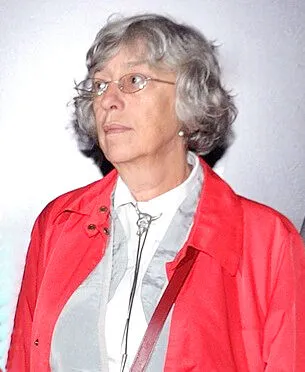
Photo: Wikimedia Commons
Edward Said
Human Design Chart
Biography
Educated in the Western canon, at British and American schools, Said applied his education and bi-cultural perspective to illuminating the gaps of cultural and political understanding between the Western world and the Eastern world, especially about the Israeli–Palestinian conflict in the Middle East; his principal influences were Antonio Gramsci, Frantz Fanon, Aimé Césaire, Michel Foucault, and Theodor Adorno.
As a cultural critic, Said is known for the book Orientalism (1978), a critique of the cultural representations that are the bases of Orientalism—how the Western world perceives the Orient. Said's model of textual analysis transformed the academic discourse of researchers in literary theory, literary criticism, and Middle-Eastern studies—how academics examine, describe, and define the cultures being studied. As a foundational text, Orientalism was controversial among scholars of Oriental Studies, philosophy, and literature.
As a public intellectual, Said was a controversial member of the Palestinian National Council, because he publicly criticized Israel and the Arab countries, especially the political and cultural policies of Muslim régimes who acted against the national interests of their peoples. Said advocated the establishment of a Palestinian state to ensure equal political and human rights for the Palestinians in Israel, including the right of return to the homeland. He defined his oppositional relation with the status quo as the remit of the public intellectual who has "to sift, to judge, to criticize, to choose, so that choice and agency return to the individual" man and woman.
What does Projector 1/3 mean for Edward Said?
Projector 1/3 — Design at a Glance
Edward Said's design shows a tendency towards precise system analysis. As a projector, he did not have a constant, intrinsic energy source in the sacral center but rather acted through a dense, focusing aura. This characteristic resembled a bright flashlight that shone light directly on areas still in darkness in the counterpart. Edward Said was someone who immediately recognized flaws in the system. This ability to identify weaknesses instantly was central to his impact, but it required a specific approach.
The mechanics of the projector warn against expressing these insights uninvited. Directly addressing the problems is often perceived by the environment as unpleasant or aggressive, comparable to a light beam directly in the face. Edward Said's design therefore demanded restraint and patience. His strategy was to wait for a respectful and sincerely meant invitation from others. Only when he was invited could he bring his insights without provoking resistance.
Living by this principle, he was rewarded with success. Ignoring this strategy and acting uninvited led to his non-self theme: bitterness. Since his energy flow was not constant, he also needed regular rest phases to avoid burning out. The conventional system, which expects continuous performance, often stood in opposition to this natural rhythm. Edward Said's effectiveness therefore depended on whether he adopted the role of a leader who only shines when asked.
Emotional Authority
Edward Said's design shows a tendency towards emotional wave and flood. He appeared as someone who did not make decisions immediately but let them ripen. This resulted from his emotional authority, which lay in the defined solar plexus center. In Human-Design mechanics, this center always carries the inner authority once it is defined – regardless of other configurations. Edward Said was subject to a permanent fluctuation of feelings; the world always appeared colored by his current mood. A moment of enthusiasm could quickly turn into negative evaluation. His feeling in the moment, however, was only a snapshot, not a final judgment. Quick, spontaneous decisions based on this emotion could have negative repercussions. Instead, he took his time. He let decisions mature overnight, hesitated, and asked himself multiple times. Over time, the intense feelings subsided, he gained emotional distance. Then clarity and calmness set in. This process was particularly central for long-term, life-defining decisions. Edward Said used this waiting period to distinguish his initial emotional reaction from the deeper truth. Through multiple nights of reflection, he gained the necessary distance to act with thoroughness.
The 1/3 Profile — Investigator / Martyr
Edward Said's design shows a tendency towards a dual stance: he was both a researcher and an experimenter. This Profile 1/3 combined the need for deep theoretical knowledge with the urge to practically test insights. Edward Said appeared as someone who valued self-acquired and tested insights. Before he made a judgment, he subjected objects or activities to both theoretical analysis and practical verification. One could trust his judgment, as it rested on this dual basis.
The mechanics of this profile revolve around learning, trial, and error. Edward Said often had to grapple with the internal conflict that the energy of Line 1 – which strives for planning and knowledge – took control. Then the fear of implementation arose, as the feeling prevailed that one did not yet know enough. This stood in opposition to Line 3, which demands trying and learning from mistakes. Edward Said lived this tension by oscillating between the retreat to reflection and the necessary step into practical application. His authority grew through this cyclical movement from theoretical preparation to concrete experience.
Split Definition — Defined & Open Centers
Edward Said's design was characterized by a constant, internal mental pressure. The definition between the Head Center and Ajna Center created a perpetual inspiration that primarily shaped questions rather than providing immediate answers. This mental process was a constant reality for him, one he could not simply turn off. Simultaneously, he had a firm sense of self through his defined G Center, which gave him a clear inner direction and a deep sense of connection, independent of external validation.
His decision-making was significantly influenced by his defined Solar Plexus Center. As his inner authority, this required patience: Edward Said had to wait out the waves of his emotions until emotional clarity emerged before he acted. Impulsive reactions at the peak or trough of the wave would have led him into his non-self. Instead, he used this emotional depth to penetrate situations from various perspectives before making a choice. His defined Spleen Center supported this by providing spontaneous, intuitive signals in the present moment, which he used for his well-being and security, while his defined Root Center provided the necessary pressure to move forward and master existential challenges.
In contrast, Edward Said showed himself to be vulnerable in his open centers to conditioning. His open Throat Center tended to speak out of a need for attention or suffered from the fear of not being heard if he did not communicate actively. He learned that true communication was only effective when he waited for invitations rather than forcing them. His open Heart Center often drove him to prove his worth through promises and competition, leading to a cycle of disappointment when he could not uphold these self-imposed goals. Additionally, his open Sacral Center was designed to absorb the energy of others, which could easily overwhelm him if he did not carefully set boundaries and retreat for regeneration.
Channels for intuitive form, emotional depth and meaningful struggle.
Edward Said's design inclined him towards intuitive, confident behavior guided by deep awareness. Channel 57-10 connected the Spleen Center with the G Center, giving him a rare clarity to react spontaneously and appropriately to his environment. This was not an intellectual calculation but an acoustic sensitivity to the quality of tones and pitch, which alleviated unfounded future anxieties and allowed him to move through the world existentially unburdened. His survival and creativity were based on this love for himself and the ability to perfect his unique behavior.
At the same time, Channel 61-24 was present in him, transforming inspiration from the Head Center into rational answers in the Ajna Center. His mind did not seek discovery but rather sudden moments of knowing, a Satori that broke old cycles. He could not control his thinking; knowledge happened in its own time, often aided by silence or music, which alleviated the mental pressure of "white noise."
This mental structure contrasted with Channel 47-64, which put him under pressure to filter every experience through a kaleidoscope of mental images. He tried to understand the past and tell stories but was ill-suited to solve his own problems alone. This confusion was the beginning of a journey that, over time, brought clarity and inspiring perspectives for others.
His inner drive was shaped by Channel 38-28, which stubbornly pushed him to find meaning in life's struggles. He resisted external forces that sought to distract him from his individual integrity and risked security to fight for values that were worth it to him. This struggle was not a choice of the mind but an adrenalized necessity that made him a role model for individualization.
Emotionally, he moved within the wave of Channel 39-55, swinging between joy and melancholy. He provoked the minds of others to reveal their true nature and understood that authenticity lay in embracing these moods. Additional influences like Gate 44 (Awareness), Gate 33 (Reflection), and Gate 19 (Resources/Community) rounded out his Profile, helping him to store transformations, reflect on experiences, and anchor himself in supportive communities.
Individual Circuitry — Circuit Signature
Edward Said's design featured a tendency towards pulsating creativity and emotional intensity, manifesting in separate energetic fields. The Split Definition meant that these forces did not flow into one another but existed parallel to each other.
In the Knowledge Circuit, he linked the Head Center with the Ajna Center, generating innovative flashes of insight and the ability to transform new knowledge. Simultaneously, he connected the Spleen, Root, and Solar Plexus Centers. Here, the channels of life struggle and emotional release were active. Edward Said used this connection to channel intuitive impulses (Spleen) through emotional waves (Solar Plexus) and the drive for survival (Root). The energy was anchored in sound and the present moment, driven by the search for his own individuality.
A second segment of the Knowledge Circuit, as well as the Purpose Circuit, also utilized the connection between the Head and Ajna Centers. In the Purpose Circuit, the Channel of Abstraction was prominent. Edward Said reflected on past experiences here to uncover their meaning. These visual, cyclical processes served to share insights with the collective and learn from the past.
In the Integration Circuit, he linked the Identity Center with the Spleen Center via the Channel of Perfect Form. This connected intuitive knowledge with personal identity. Edward Said channeled power from reactions to life through proper behavior and intuition to realize it in the present moment. This configuration strengthened his highest individuality and secured his survival through self-empowerment. All these mechanisms worked as separate but simultaneous streams in his design.
Right Angle Cross of the Four Ways 3
Edward Said's design indicated a tendency towards strategic adaptation. He was someone who, in complex situations, did not rely on rigid principles but rather on pragmatic solutions. This approach stemmed from the configuration "The Right Cross of the Four Paths 3." In Human Design mechanics, this pattern describes a specific way of decision-making: the individual uses their intuition and judgment to find the best path in a given situation. It is not about moral absolutes but about what is most effective in the moment. Edward Said lived this ability to orient himself flexibly. His chart indicated that he did not see obstacles as insurmountable barriers but as challenges that required creative circumvention. The mechanics of this cross promote the ability to learn from multiple perspectives and to implement this knowledge in practical action. Edward Said used this energy to always choose the functional approach in his interactions and projects. His design supported him in quickly adapting to new circumstances while maintaining efficiency. This characteristic shaped his approach to unpredictable developments. He did not seek the one true solution but the solution that worked best in the specific context. This pragmatic foundation allowed him to remain stable and effective in dynamic environments.
Saturn Return · Uranus Opposition · Chiron Return · 2nd Saturn Return — Life Cycles
Edward Said's design indicated a tendency towards profound structural upheavals, often accompanied by the necessity to question established truths. This configuration acted as a catalyst for moments when the old broke down to make way for new, often controversial perspectives.
In 1978, at the age of 43, Said published his most famous work, "Orientalism." This fell during the Uranus opposition, a cycle often seen in Human Design as a phase of liberation from old constraints and the assertion of individual vision. Here, years of work condensed into a groundbreaking result that challenged existing narratives.
Later, in 1983, at the age of 48, "The World, the Text, and the Critic" was published. This marked the Chiron return, a fulfillment cycle in which one's incarnation cross unfolds and personal meaning becomes experiential. For Said, this was a flowering period in which his intellectual mission became clearer and he shared his insights with greater authority.
In 1991, at the age of 56, Said was diagnosed with lymphatic leukemia. This occurred during the second Saturn return, a phase of maturation and confrontation with the limits of the body and time. This cycle often demands a redefinition of priorities and an acceptance of the final structure of one's life. Said faced the task of reassessing his role and influence in light of this physical reality.
Projector · Emotional Authority — Synthesis
He was a Projector who was constantly inspired by the defined connection between the Head and Ajna Centers (mental pressure) to recognize patterns and ask questions. This ability to illuminate the unclear and uncover errors in the system shaped his approach – he projected his understanding onto others to bring "light into the darkness" for them. The Profile as a Researcher and Experimenter (1/3) reinforced this impulse, as he not only worked out insights theoretically but also tested them through his own experiences before sharing them. However, his emotional authority challenged him to not make hasty decisions but to let them ripen in the emotional wave to ensure the depth of his insights.
A central paradox lay in the tension between his need to inspire and correct (Gate 57/10) and the potential rejection that could come with it. His knowledge circuit drove him to develop new perspectives and express them, yet the emotional wave demanded patience and finesse. The cycles showed that successes (1978, 1983) were often accompanied by crises (1991), pointing to a lifestyle marked by profound research and the courage to change, but also demanding a high price.
5 Defined Channels
Incarnation Cross - Right Angle Cross of the Four Ways 3
Solar Return
The Solar Return shows the moment when the sun returns to its exact birth position - your personal solar year.
Life Cycles
Discover the life cycles with a detailed triple view (birth chart, cycle chart, composite).
Human Design Profile
- Type
- Projector
- Strategy
- Wait for the respectful invitation
- Authority
- Emotional Authority
- Profile
- 1/3 - Investigator / Martyr
- Definition
- Split Definition
- Incarnation Cross
- Right Angle Cross of the Four Ways 3
- Date of Birth
- 01.11.1935 17:00
- Place of Birth
- Jerusalem, ISRL
Frequently Asked Questions
What was Edward Said's Human Design type?
What Profile did Edward Said have in Human Design?
Which Authority determined Edward Said's decisions?
What incarnation cross characterized Edward Said?
When was Edward Said born?
Discover your own Human Design
Are you also a Projector? Find out in a personal reading how to unfold your leadership qualities and recognize the right invitations.
More Personalities
Back to overviewSissy Spacek
Aaliyah

Alain-Fournier
Alexia

Alizée

Anémone