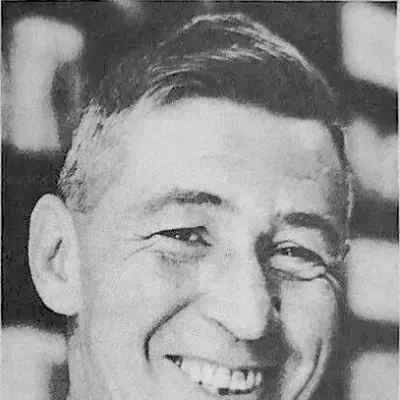
Ehud Olmert
Human Design Chart
Biography
The Human Design of Ehud Olmert: Projector 4/6
Projector 4/6 — Design at a Glance
Ehud Olmert's design shows a tendency towards precise system analysis: He was someone who immediately recognized structural weaknesses and inefficient processes in his environment. As a projector, he did not have a constant internal energy source like a generator but had phases of high intensity followed by necessary rest periods for regeneration. His aura seemed focusing and penetrating – comparable to a bright flashlight that is directed at dark, unclear areas in others or within organizations. This ability to identify the 'error in the system' was his core competence.
The challenge lay in the nature of communication: When he addressed these deficits directly and unexpectedly, it often appeared aggressive or unpleasant to those around him, similar to light shining directly into someone's face. The optimal strategy for him was not to take the initiative himself but to wait for a respectful invitation from his environment. Only then could he convey his insights in such a way that they were accepted and appreciated rather than met with resistance. If he followed this strategy, he was rewarded with success; if he ignored waiting for the invitation and acted on his own initiative or impulsively reacted to his surroundings, it led over time to his non-self theme: Bitterness. His energy balance also required clear boundaries between active phases and recovery to prevent burnout.
Splenic Authority
Ehud Olmert's design shows a tendency towards impulsive, health-oriented decisions that arise in the immediate moment. This attitude results from his inner authority in the Spleen Center. For this authority to be effective, both the Emotional Center and the Sacral Center must be open; thus, it is only available for projectors or manifestors. The Spleen Center functions here as an alarm system with excellent survival intelligence. It provides spontaneous internal knowledge about whether a situation or environment is right. Intuition and physical well-being served as reliable indicators of health.
The first impulse was the decisive factor. It allowed him to rigorously distance himself from harmful influences and take good care of himself. However, this Spleen voice is a very fine impulse that only occurs once in the moment. Therefore, there was a risk that it could be drowned out or ignored by external influences. This required high vigilance; occasionally, withdrawal for decision-making was helpful. Since what is right can only be recognized in the present, plans could change at short notice. Long-term commitments were therefore difficult. The design demanded much freedom and flexibility rather than rigid obligations to maintain spontaneous adaptability.
The 4/6 Profile — Opportunist / Role Model
Ehud Olmert's design is characterized by a deep inner conflict between the desire for belonging and the need for detached wisdom. As someone with Profile 4/6, he experimented intensively in his first thirty years of life, particularly in the areas of relationships and friendships, while Line 6 was not yet fully active. Later, he was shaped by the contradiction between wanting to be part of a community (Line 4) and the urge to withdraw to think about the meaning of existence (Line 6). This conflict between Heart and Head often led to confusion.
His character was also influenced by the themes at Gate 18 on Line 4, which addresses difficulties through uncorrectable inadequacies. This manifested as fear of failure and suffering from one's own incompetence. At the same time, Gate 52 worked on Line 6, embodying peace and a longing for inner calm. The sixth line is spiritually marked and goes beyond earthly logic; it only finds true silence when an entire circuit is fulfilled. Until then, Neptune's influence can lead to self-deception that serves as a substitute for genuine inner tranquility. Olmert thus faced the pressure of functioning as a wise role model through cooperation while his heart remained cautious to avoid opening up to the wrong people and getting hurt.
Split Definition — Defined & Open Centers
Ehud Olmert's Human Design profile revealed a tendency towards consequent clarity of thought. His defined Ajna Center ensured constant mental function; he processed data and creativity in a trustworthy manner, unaffected by external influences. This cognitive structure flowed directly into his defined Throat Center, allowing him to articulate what his mind conceptualized. Thus, his voice was not an impulsive outburst but the reliable manifestation of his inner logic and theory-building.
At the same time, Olmert had a defined Spleen Center. This endowed him with spontaneous intuition and existential awareness in the present moment. He could make trustworthy intuitive judgments without needing to rationalize them. His body signaled warnings or well-being immediately; his instinct was a firm authority that protected and kept him healthy as long as he followed it.
These stable internal pillars contrasted with his open centers. The open Head Center made him vulnerable to mental pressure and doubt not originating from himself. He tended to identify with others' questions or seek inspiration to alleviate confusion, rather than letting the thought stream pass by. His open G Center meant a lack of fixed identity; he relied on his environment and relationships to initiate direction instead of setting it himself.
His open Heart Center led him to not have a constant will but often felt pressure to prove himself or make promises, ending in cycles of failure if these did not align with his inner authority. His open Sacral Center caused him to absorb foreign energy and amplify it; he could become exhausted by running on 'borrowed' vitality rather than respecting his own fluctuating energy flow. Finally, his open Solar Plexus absorbed the emotions of the environment, making him vulnerable to emotional conditioning and prone to experiencing others' moods as reality or avoiding confrontation out of fear of rejection.
Channels for mental order and scrutinizing logic.
Ehud Olmert's Human Design profile revealed a tendency towards analytical precision and corrective judgment. He was someone who mentally organized information into a coherent worldview. This attitude was shaped by the Acceptance Channel 17-62: Gate 17 visualized patterns, while Gate 62 translated these into language and named details. Anything he could not logically integrate into his internal perspective remained incomprehensible to him. This created a constant pressure in his Throat Center to explain opinions – but effectively only when invited to speak to avoid resistance.
Simultaneously, the Judgment Channel 58-18 was at work. It connected life energy from Gate 58 with the corrective impulse of Gate 18. This created an insatiable drive to question and perfect patterns. Olmert sought out flaws to make life better for the collective. Critical assessments were necessary for him to examine existing structures for feasibility. Unprompted, these corrections could be perceived as a constant search for faults; he worked best when explicitly asked for solutions.
Additionally, individual Gates contributed to his structure: Gate 52 demanded concentrated pauses for pattern correction while Gate 31 described the transmission of leadership. Gate 45 represented hierarchical attraction and willpower on tribal level. In his design, Gates 23 (Understanding through amorality), 47 (Purpose from past confusion) as well as 35 (Progress through interaction) were active. Gate 39 provided analytical provocation for mutation, and Gate 33 allowed reflective withdrawal. This configuration promoted a lifestyle based on logical order, critical examination, and the need to be invited to contribute.
Collective Circuitry — Circuit Signature
Ehud Olmert's Human Design profile revealed a tendency towards structured, emotionless rationality. His Mind Circuit defined him as someone who shares logical insights and develops strategies for the future. This is evident in two separate energetic sub-sections since he has a Split Definition: The groups are not connected to each other.
In the first part, the Acceptance Channel linked Ajna Center with Throat Center. This connection allowed him to clearly articulate visual ideas and strategic concepts. He could translate complex thoughts into understandable formulations, which is central for conveying rational insights.
The second independent section consisted of the Judgment Channel between Spleen and Root Centers. Here an intuitive ability to recognize danger was coupled with the energy to implement these warning signals in concrete actions. This connection ensured that his instinctive judgments did not remain internal but were translated into effective measures.
Both areas worked parallel alongside each other: On one hand, clear strategic communication through Head and Throat; on the other, intuitive action-oriented response to threats through Spleen and Root. Since there was no direct connection between these two groups, these forces experienced as separate yet coexisting aspects of his personality – once focused on rational future shaping, once on instinctive safety preservation.
Right Angle Cross of Service 3
Ehud Olmerts Human-Design legt eine Neigung zu einer tiefen, oft unausgesprochenen Hingabe an das Wohl anderer fest. Sein Inneres ist geprägt von der Energie „Das rechte Kreuz des Dienens“, einer spezifischen Konfiguration im Human-Design, die keine aktive Führung oder lautstarke Selbstdarstellung erfordert. Stattdessen wirkt diese Struktur wie ein unsichtbarer Kitt, der Gemeinschaften durch stille, zuverlässige Unterstützung zusammenhält. Es handelt sich nicht um das dramatische Heldentum, sondern um die konsequente, fast selbstverständliche Übernahme von Verantwortung für das Funktionieren des Ganzen.
Diese Energie verleiht eine besondere Ausstrahlung der Zuverlässigkeit und des Schutzes. Ehud Olmert zeigte sich als jemand, dessen Autorität weniger aus Befehlen erwuchs, sondern daraus, dass er im Hintergrund die notwendigen Strukturen stabilisierte. Das rechte Kreuz des Dienens bedeutet, dass man oft übersehen wird, weil das Handeln so natürlich und integriert erscheint, dass es nicht als besondere Leistung wahrgenommen wird. Doch genau diese Unaufdringlichkeit ist der Kern seiner Wirksamkeit: Er diente nicht für Anerkennung, sondern aus einer tiefen inneren Notwendigkeit heraus, Ordnung und Sicherheit zu gewährleisten. Diese stille Präsenz schuf ein Fundament, auf dem andere agieren konnten, ohne dass er selbst im Mittelpunkt stehen musste. Seine Stärke lag in dieser unauffälligen, aber unverzichtbaren Tragfähigkeit.
Saturn Return · Uranus Opposition · Chiron Return · 2nd Saturn Return — Life Cycles
Ehud Olmerts Human-Design legt eine Tendenz zu strategischen Wendepunkten fest, die mit zunehmendem Alter an Gewicht gewinnen. 1973, im Alter von 28 Jahren, wurde er erstmals in die achte Knesset gewählt – ein typischer Moment des ersten Saturn-Return. Dieser Zyklus markiert oft den Übergang von der experimentellen Phase hin zu struktureller Verankerung; jahrelange Vorarbeit verdichtet sich hier zu einem tragfähigen öffentlichen Mandat.
Die zweite große Wende trat 15 Jahre später ein, als er im Alter von 60 Jahren nach Ariel Sharons Schlaganfall und Koma die Führung der Kadima-Partei übernahm. Dies fiel in den zweiten Saturn-Return, eine Phase, in der sich Verantwortung nicht mehr nur aufbauen, sondern auch stabilisieren muss. Hier zeigt das Design die Fähigkeit, unter Druck strukturelle Kontrolle zu übernehmen und bestehende Systeme weiterzuführen oder neu auszurichten. Beide Ereignisse illustrieren, wie bei Olmert die Lebensphasen durch klare, externe Meilensteine geprägt waren: zunächst der Einstieg in die politische Arena, später die Übernahme einer Führungsrolle in einer Krisensituation. Die Mechanik unterstreicht dabei die Bedeutung von Timing und struktureller Haltbarkeit über die Zeit hinweg.
Projector · Splenic Authority — Synthesis
Ein zentraler roter Faden in diesem Design ist eine ausgeprägte Fähigkeit, Muster zu erkennen und diese logisch zu ordnen (Kanal des Akzeptierens, definiertes Ajna-Zentrum). Diese Begabung geht einher mit einem inneren Drang, Wissen zu strukturieren und anderen zugänglich zu machen – nicht durch emotionale Beteiligung, sondern durch klare, fokussierte Analyse (Verstand-Schaltkreis). Die Verbindung von logischem Denken und der Fähigkeit, Details präzise zu erfassen, scheint eine Lebensweise zu definieren, die auf Verständnis und Verbesserung ausgerichtet ist. Das Profil als Netzwerker/Rollenvorbild deutet darauf hin, dass diese Fähigkeiten im Austausch mit anderen entfaltet werden und dazu dienen, Verbindungen zu knüpfen und Möglichkeiten aufzuzeigen.
Das zentrale Paradox liegt in der Spannung zwischen dem Bedürfnis nach Abgrenzung (Milz-Autorität) und dem Wunsch nach Zugehörigkeit (Linie 4 im Profil). Die Milzzentrierte Intuition fordert eine spontane Reaktion auf die Umgebung, um das eigene Wohlbefinden zu schützen, während die Linie 4 ein tiefes Herz für die Gemeinschaft und den Aufbau von Beziehungen signalisiert. Dies erzeugt einen inneren Konflikt zwischen dem Wunsch nach Unabhängigkeit und der Sehnsucht nach Verbundenheit, der sich in einem Wechselspiel zwischen vorsichtigem Rückzug und engagierter Interaktion äußert.
2 Defined Channels
Incarnation Cross - Right Angle Cross of Service 3
Solar Return
The Solar Return shows the moment when the sun returns to its exact birth position - your personal solar year.
Life Cycles
Discover the life cycles with a detailed triple view (birth chart, cycle chart, composite).
Human Design Profile
- Type
- Projector
- Strategy
- Wait for the respectful invitation
- Authority
- Splenic Authority
- Profile
- 4/6 - Opportunist / Role Model
- Definition
- Split Definition
- Incarnation Cross
- Right Angle Cross of Service 3
- Date of Birth
- 30.09.1945 21:00
- Place of Birth
- Tel Aviv, ISRL
Frequently Asked Questions
What is Ehud Olmert's Human Design type?
What Profile does Ehud Olmert have in Human Design?
Which authority determines Ehud Olmert's decision-making process?
What is Ehud Olmert's incarnation cross?
When was Ehud Olmert born?
Discover your own Human Design
Are you also a Projector? Find out in a personal reading how to unfold your leadership qualities and recognize the right invitations.
More Personalities
Back to overviewSissy Spacek

Alain-Fournier

Anémone

Ann-Margret

Bourvil
Hergé