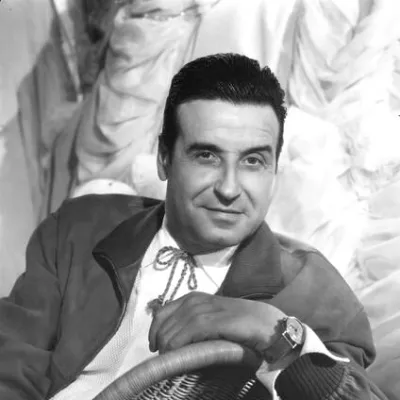
Emilio Botin
Human Design Chart
Biography
He was known for his obsession with growth and performance as well as regularly visiting branches.
He died 10 September 2014 of a heart attack in Madrid.
The Human Design of Emilio Botin: Projector 4/6
Projector 4/6 — Design at a Glance
Emilio Botin revealed himself through a dense, focusing aura that appeared like a bright flashlight. His Human-Design type was Projektor, which gave him the ability to immediately spot errors in systems and "dark spots" in others. However, this perception could be perceived as unpleasant by his surroundings, similar to a direct beam of light into someone's face.
Instead, he was most effective when attracting others through his own harmonious glow. This led to people seeking advice from him on their own initiative. The strategic necessity lay in waiting for an honest, appreciative invitation from the environment rather than taking the initiative or directly addressing errors, which would have caused conflict.
Since his Sacral Center was undefined, he lacked a constant intrinsic life force energy. This resulted in phases of high activity that had to be followed by necessary rest periods to avoid burnout. The conventional system often did not take this need into account. If he ignored this strategy, the non-self theme "Bitterness" would arise. Success, however, was the reward for living according to his design and waiting for an invitation before bringing light into darkness.
Emotional Authority
Emilio Botin showed a decision-making structure that required patience and temporal distance. His design carried emotional authority, meaning the defined Solar Plexus Center determined his inner guidance. This center was subject to constant waves of ups and downs in feelings. At one moment Emilio Botin could be excited about something, at the next he might negatively evaluate the same situation. These mood fluctuations were not a mistake but a mechanical process: The current feeling only represented a snapshot, not the final truth.
Quick, spontaneous decisions from an emotional peak carried the risk of proving false later on. Therefore, the mechanics of his authority required that impulses not be acted upon immediately. Instead, Emilio Botin had to allow time for intense feelings to subside. This process of "sleeping on" a decision was essential. Only when emotional distance was gained and calmness set in did true clarity emerge. This approach was particularly necessary for long-term, life-changing steps. By delaying and repeatedly questioning his initial reactions, he navigated through the emotional wave to the right answer. His inner voice only became clearly audible and reliable after the initial wave movements had subsided.
The 4/6 Profile — Opportunist / Role Model
Emilio Botin's Human Design profile marked a clear transition from an experimental seeker to a wise role model. In the first thirty years of his life, before Saturn returned, Line 6 still functioned like Line 3. Emilio Botin therefore showed a tendency towards intense experimentation, particularly in the areas of relationships and friendships. This phase served as learning through direct experience and testing various social dynamics.
With the activation of Line 6, a central internal conflict emerged: the contradiction between an emotional desire for belonging (Line 4) and a mental drive for distance and meaning-seeking (Line 6). This tension field between Heart and Head Center shaped his inner stance. Line 4 brought themes such as fear of failure and striving for correction with it, making Emilio Botin sensitive to his own shortcomings. Simultaneously, he sought inner peace and tranquillity through Line 6.
In his later years, it was expected that he would meet the high standards of a wise model. His development depended on resolving this conflict and protecting his Heart from false connections. True inner calm Emilio Botin only achieved when he recognised that the entire circuit was fulfilled. This process led him from an external joy of experimentation to a deeper spiritual serenity, transcending earthly logic and enabling him to make a difference through cooperation with others.
Split Definition — Defined & Open Centers
Emilio Botin was characterized by a persistent mental pressure resulting from his defined Head and Ajna configuration. This state generated constant inspiration as well as questions and doubts, which could not be directly translated into action since these centers did not provide their own energy. Instead, his defined Expression Channel (Throat) served as a reliable outlet to articulate these mental processes. His inner authority lay in the defined Solar Plexus Center; here every decision required waiting for an emotional wave until clarity emerged. This protected against impulsive reactions and used emotional depth as a basis for decision-making. This was complemented by his defined Spleen Center with existential intuition for the present moment, along with a defined Root Center that allowed a fixed approach to stress and survival pressure.
In contrast, his G-, Heart, and Sacral Centers were open. The open G-Center meant a lack of firm identity or direction; Emilio Botin tended to ask where he might find true love or his place rather than initiating it himself. He reacted to initiatives from the environment. The open Heart Center led to vulnerability for the pressure to make promises and prove willpower, often resulting in frustration due to the absence of consistent energy. Finally, the open Sacral Center required a respectful handling of unstable vitality; there was a risk of overextending oneself through borrowed energy from others until exhaustion, rather than trusting one's own rhythm of activity and rest.
Channels for analytical clarity and intuitive principles.
Emilio Botin exhibited a permanently active, skeptical mind aimed at organizing information in detail and logically proving it. His design laid a strong tendency towards pattern correction, where logic always served the common good. This attitude resulted from three defined channels in the realm of thought and judgment.
The Logic Channel 63-4 connected the Head Center with the Ajna Center through the Gate of Doubt (63) and the Gate of Formulation (4). This channel permanently filtered patterns to check their consistency. Doubt was essential here, as logic without verification could be false. Emilio Botin sought consistent, verifiable answers; unfounded belief found little space. The pressure to ask questions and recognize patterns served to offer useful predictions or clarifications for the collective.
The Accepting Channel 17-62 connected the Ajna Center with the Throat Center through the Gate of Opinions (17) and the Gate of Details (62). Here, Gate 17 visualized patterns while Gate 62 translated them into language. Emilio Botin mentally organized information to understand it. Anything he could not integrate into his worldview remained incomprehensible. He found satisfaction in detailing his opinions and what he understood. This gift allowed him to translate complex visual patterns into understandable theories or formulas that could be verified for feasibility.
The Judgment Channel 58-18 connected the Root Center with the Spleen Center through the Gate of Vitality (58) and the Gate of Correction (18). This generated an insatiable urge to perfect patterns. Gate 58 drove a love for life, while Gate 18 pointed out what needed correction. Emilio Botin judged whether something was cheerful or not for the collective. His sense of what needed correcting kept systems in motion. He enjoyed being asked if something wasn't right and then offered solutions applicable to society.
Additionally, Gates like Gate 52 (Focus on pattern correction) and Gate 48 (Depth in logical process) supported his ability to analyze deeper connections, even if these did not always directly lead to solutions.
Collective Circuitry — Circuit Signature
Emilio Botin's design inclined towards strategic improvement through rational, emotionless logic. His focus lay on the future and sharing insights free from conditioning. This resulted from his Shared Definition: Two energetically separate groups shaped his essence parallelly without direct flow between them.
The first group connected Head-, Ajna-, and Throat-Centers in the Understanding Circuit. Here, Channel 63-4 (Logic), Channel 17-62 (Accepting), and Channel 18-58 (Judgment) were active. This configuration allowed visual information to be logically structured and strategic judgments to be made for system optimization. The energy of these centers served to lead society towards a better future by sharing rational insights – without the influence of the Solar Plexus Center, ensuring pure 'emotionless ratio'.
The second group also connected Spleen- and Root-Centers in the Understanding Circuit but isolated from the first group. Here, no further channel directly interacted with the aforementioned centers. Instead, this connection existed as a separate energetic force linking intuitive security (Spleen) with endurance or stress reaction (Root).
Another aspect was the Ego Circuit, which for Emilio Botin was activated through Channel 49-19 (Synthesis). This connected Solar Plexus and Root Centers within their own group. Since these centers were not linked to the Head-Ajna-Throat group, emotional processing (Solar Plexus) remained separate from logical strategy. The Ego Circuit promoted cooperation and resource creation in the tribal context, where pauses were necessary due to no connection to the Sacral Center. Synthesis energy helped integrate various aspects into a whole but did not directly support logical continuation like the Understanding Circuit.
Right Angle Cross of Service 3
Emilio Botin's Human Design configuration pointed towards a tendency for deep service to others. His life's work revolved less around selfish success and more about fulfillment through carrying responsibility for communities. This attitude stemmed from the right Service Cross 3 in his Human Design.
This specific orientation describes an inner motivation that is not defined by personal fame but rather by the ability to carry and support others. The focus was on taking responsibility for the well-being of groups or individuals, with true satisfaction coming from the effectiveness of this service. It was a driving force that led Emilio Botin to immerse himself in structures where he could act as a pillar.
The right Service Cross 3 marks an energetic emphasis on selflessness and care. Those who carry this configuration find their validation in knowing that their actions benefit others. For Emilio Botin, it was not about his own visibility but rather ensuring the functioning of the whole from behind the scenes or in the role of a responsible figure. This mechanism shaped his approach: success was measured by the stability and well-being of what he was responsible for. The energy of this configuration promoted an attitude of reliability and commitment to the collective, which decisively determined his actions.
Saturn Return · Uranus Opposition · Chiron Return · 2nd Saturn Return — Life Cycles
Emilio Botin's life path was marked by two clear structural points where inner maturation led to external power assumption. In 1986, at age 52, he took over the presidency from his father. This coincided with his Chiron Return period, a cycle of fulfillment and blooming. Here, his incarnation purpose did not manifest as healing old wounds but rather as the concrete unfolding of his life's meaning in public space – provided he had followed his strategy up to that point. Taking office marked the peak of this inner condensation into external authority.
Following this was 1993, when he experienced a second Saturn Return, a moment of structural affirmation and long-term responsibility. Emilio Botin steered Banco Santander towards acquiring the troubled large bank Banesto. This step underscored the stability built in the first cycle and transformed it into strategic expansion. The second Saturn Return not only solidified his position but also institutional power through this crucial acquisition. Both events illustrate how cyclical developments set concrete milestones of leadership and growth for Emilio Botin.
Projector · Emotional Authority — Synthesis
Emilio Botín was a Projector who, through his ability to recognize patterns and trigger corrections (Gate 18/4), demonstrated a deep connection to the structure and understanding of the system. This analytical sharpness, fueled by the defined Head and Ajna Centers, manifested in an ongoing search for optimization – a drive that was amplified by his Root Center and propelled him to improve existing structures (Channel 58-18). His open Heart Center indicates a fundamental readiness to engage and create connections, yet without the need to constantly push forward personal goals. Instead, he seemed reinforced through recognizing imbalances and pointing out possible solutions to generate value for the collective.
A central paradox in his design lay in the tension between the desire for recognition (Gate 45) and the inherent instability of his undefined Sacral Center. He was oriented towards attracting resources and making connections, yet simultaneously lacked the constant energy to maintain these relationships or get entangled in prolonged battles. This likely led to a dynamic interplay between the wish for influence and the necessity to strategically withdraw to conserve his energy – a dance between engagement and detachment.
4 Defined Channels
Incarnation Cross - Right Angle Cross of Service 3
Solar Return
The Solar Return shows the moment when the sun returns to its exact birth position - your personal solar year.
Life Cycles
Discover the life cycles with a detailed triple view (birth chart, cycle chart, composite).
Human Design Profile
- Type
- Projector
- Strategy
- Wait for the respectful invitation
- Authority
- Emotional Authority
- Profile
- 4/6 - Opportunist / Role Model
- Definition
- Split Definition
- Incarnation Cross
- Right Angle Cross of Service 3
- Date of Birth
- 01.10.1934 00:35
- Place of Birth
- Santander, Spain
Frequently Asked Questions
What was Emilio Botin's Human Design type?
Which Profile did Emilio Botin have?
What authority did Emilio Botin possess?
What incarnation cross did Emilio Botín have?
When was Emilio Botin born?
Discover your own Human Design
Are you also a Projector? Find out in a personal reading how to unfold your leadership qualities and recognize the right invitations.
More Personalities
Back to overviewSissy Spacek

Alain-Fournier

Anémone

Ann-Margret

Bourvil
Christian-Jaque