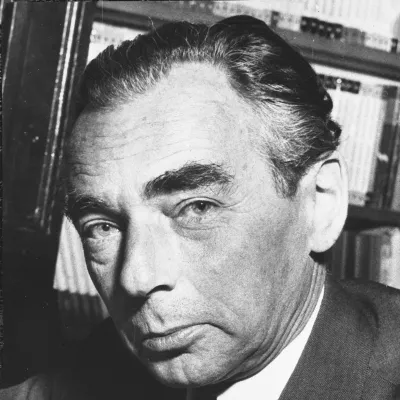
Erich Kästner
Human Design Chart
Biography
His children’s books are notable for their humor and respect for the child’s moral seriousness. The most famous of these, Emil und die Detektive (1929; Emil and the Detectives), was several times dramatized and filmed.
His post-World War II works are characterized by a greater emphasis on social philosophy but do not sacrifice their elegance and entertaining qualities.
During the 1920s Kästner became one of the most important intellectual figures in the German capital. He published poems, newspaper columns, articles, and reviews in many of Berlin's important periodicals. Kästner was a regular contributor to different daily newspapers.
Kästner was a pacifist and was opposed to the Nazi regime. The Nazis burnt Kästner's books as "contrary to the German spirit" during the infamous book burnings of 10 May 1933. Kästner witnessed the event in person.
Kästner never married. He had one son. He died of esophageal cancer, aged 75, on 29 July 1974 in Munich.
Human Design Analysis: Erich Kästner as Generator 5/1
Generator 5/1 — Design at a Glance
Erich Kästner's design inclined towards great endurance, comparable to a workhorse with immense energy reserves. As a Generator, he was characterized by abundant sacral energy that was released not through spontaneous initiatives but in response to external impulses. His strategy involved waiting for signals from life and receiving a clear 'yes' from his inner center before taking action.
This mechanism protected him from wasting energy on tasks that did not resonate with him - a common cause of exhaustion for this type. At the same time, the challenge lay in not being deterred from his heart project as long as there was still strength left. Living in harmony with this reactive strategy rewarded him with a sense of deep fulfillment and satisfaction. If he initiated constantly on his own or acted against his inner signal, sooner or later he would encounter persistent frustration and a lack of energy. His path was thus marked by waiting for the right impulse to act from the gut.
Sacral Authority
Erich Kästner appeared as a Generator whose decision-making was shaped by sacral authority. This internal voice served not only as a strategy but fundamentally simplified the process of action. His reactions to external occasions manifested physically: A spontaneous grunt, an affirming 'Mhm', or a noticeable surge in energy signaled whether something energized him vitally. Feeling this resonance led to a state of inexhaustible energy and enthusiasm that allowed him to immerse himself fully in activities - without an external goal or purpose being the driving force. The joy in doing itself was the motivating power.
Additionally, his activated Spleen Center acted as a supporting instance for sacral authority. This configuration endowed him with the ability to react particularly quickly and spontaneously. He had immediate access to his physical well-being and instinctive perception, which allowed him to reliably guide himself by these inner signals. Since his Emotional Center was open, this sacral reaction remained clear and unclouded by fluctuating emotional states. Thus, he lived in a direct connection between external stimuli and bodily response, enabling him to move through life with satisfaction and apply his energy where it naturally flowed.
The 5/1 Profile — Heretic / Investigator
Erich Kästner was someone who gathered deep knowledge to offer others for problem-solving. His design inclined towards appearing as an expert: Others sought solutions and answers from him. This aligned with Profile 5/1, the 'Heroes', who use their intensive learning phase (Line 1) to later serve as authority helpers. Line 1 in Gate 9 emphasized precise exploration and detail work. Concentration required specific patterns and habits; frustrations could be avoided by creating new forms. Problems did not get solved immediately but needed an intermediate step for continuity.
Line 5 in Gate 55 brought a magnetic presence: People wanted to know what treasures he had to offer. Yet, this openness carried risks. In positions of power, it was difficult to live the mental attitude without being seen as powerful by society. Emotional openness could influence the mind. Practical solutions depended heavily on timing; they were only possible at certain times. The great risk lay in others overwhelming him with questions until he was drained - similar to a scientist exhausted after conferences. To maintain this balance between research for himself and help for others, he had to learn to set boundaries and say no. Only then could he optimally utilize his gifts without being overwhelmed by the expectations of others.
Split Definition — Defined & Open Centers
Erich Kästner's design inclined towards self-determined action capability and instinctive orientation. His defined Heart Center provided him with a clear access to willpower; he preferred to determine his life himself, keep promises, and seek recognition for his contribution. This energy drove him to be successful but required that he only make commitments he could uphold to strengthen his self-esteem. Simultaneously, he had a defined Sacral Center which supplied him with a constant source of vital energy. His motor generated daily power that was released through reactions to external impulses. He found satisfaction in using this energy for activities to which he responded with an inner 'yes', giving him persistence and depth in his work.
Additionally, his defined Spleen Center marked a spontaneous, intuitive perception of the moment. He trusted his body awareness for decisions here and now, securing him a stable immune system and a feeling of well-being. His defined Root Center provided the necessary pressure to rise materially and master existential challenges by channeling this energy into his intuitive spleen.
At the same time, Erich Kästner was marked by several open centers making him vulnerable to external influences. His open Head Center meant he did not have a constant source of mental inspiration; he tended to engage with questions that were not his own and sought answers to other people's problems, which could lead to confusion. The open Ajna Center allowed for a flexible mind capable of absorbing many concepts but also made him susceptible to interpreting foreign opinions as his own truth or feeling unsure when lacking clear answers. His open Throat Center showed a tendency to force attention through excessive speaking rather than waiting for the natural invitation to speak up. Furthermore, his open Solar Plexus reflected the emotions of his surroundings; he absorbed foreign moods and feelings, making him emotionally vulnerable and leading him to identify with moods that were not his own. His open G Center also meant a lack of firm identity; he collected directions through interaction with others and places rather than following an unchangeable path.
Channels for instinctive dedication and focused endurance.
Erich Kästner's design inclined towards precise, almost pedantic focus. He was someone who gathered and held his energy still to observe details sharply and logically correct patterns. This attitude stemmed from the Channel of Concentration 52-9, a formative energy between Root and Sacral Centers. Gate 52 (Non-action) generated a passive pressure towards calmness while Gate 9 (Focusing) directed attention to facts. Kästner used this energy to intensely engage with a topic, analyze it step by step, and strive for perfection – always guided by the reaction of his Sacral Center.
Simultaneously, he had an instinctive ability to assess people and markets. The Channel of Devotion 44-26 connected his Spleen Center (Instinct) with his Heart Center (Willpower). Gate 44 (Awareness) gave him a fine sense for what society needed or perceived as threatening while Gate 26 (Egoist) provided the willpower to convincingly convey these insights. He was energetically designed to sell products or ideas so that they were accepted – often intuitively and with a feel for the right moment.
Additionally, individual gates worked: Gate 55 brought emotional mood swings which he only endured when it felt right. Gate 59 pursued a genetic strategy of bonding without personal preferences. Gate 16 drove him towards experimental mastery in skills. Gate 54 linked worldly success with spiritual development, supported by a partner. Gate 53 allowed him to pioneer new paths even if the lack of closure sometimes triggered depressive phases. In his design, Gates 5 (Rhythm/Habits), 50 (Conservative Values/Protection) and 34 (Individual Power/Integration) also played roles.
Tribal Circuitry — Circuit Signature
Erich Kästner's design inclined towards focused, structured work alongside a parallel ability for cooperative resource acquisition. These two areas worked as independent forces side by side since his definition was divided with no direct energetic bridge between them.
In the Understanding Circuit, the Channel of Concentration (Gates 9-52) connected his Sacral Center to his Root Center. This gave him a constant energy source that expressed itself in precise endurance and strategic focus. He could develop logical insights and direct these purposefully towards the future free from emotional influence by the unconnected Solar Plexus Center. His work style was characterized by a clear structure allowing him to rationally order complex connections.
Simultaneously, the Ego Circuit showed the Channel of Devotion (Gates 26-44) connecting his Heart Center with his Spleen Center. This connection fostered an intuitive ability for communication and sharing ideas supported by heart values. It was less about individual self-presentation but rather about creating together and mutual support within a group. Since this circuit was not connected to the Sacral Center, Erich Kästner needed regular breaks to recharge these social and communicative energies. Both systems – the focused mind and the cooperative heart-spleen system – shaped his actions as separate yet equally important parts of his personality.
Left Angle Cross of Spirit 1
Erich Kästners Human Design legte eine Tendenz zu einer tiefen, spirituellen Orientierung fest. Er zeigte sich als jemand, der nach dem Sinn hinter den Dingen suchte und diese Erkenntnis in seine Handlungen einfließen ließ. Diese Haltung entsprang der Konfiguration des linken Kreuzes des Spirit 1. In diesem Muster verbindet sich die Energie der Intuition mit der Kraft der Manifestation. Es geht darum, innere Wahrheiten nicht nur zu spüren, sondern sie aktiv in die Realität zu übersetzen. Erich Kästner lebte diese Dynamik, indem er seine inneren Impulse nach außen trug. Sein Design förderte eine klare Verbindung zwischen dem, was er fühlte, und dem, was er tat. Dies schuf eine innere Kohäenz, die sein Handeln prägte. Er handelte nicht willkürlich, sondern folgte einer tiefen inneren Logik. Das linke Kreuz des Spirit 1 verlangt nach Authentizität. Es unterstützt den Ausdruck von Werten, die aus dem Herzen kommen. Für Erich Kästner bedeutete dies, dass seine Taten stets von einer gewissen spirituellen Tiefe geprägt waren. Er suchte nicht nur nach Lösungen, sondern nach Bedeutung. Diese Suche nach Sinn war kein abstraktes Konzept, sondern ein treibender Faktor in seinem Leben. Sein Design half ihm, diese Werte konkret zu machen. So wurde aus innerer Überzeugung äußerer Erfolg.
Saturn Return · Uranus Opposition · Chiron Return · 2nd Saturn Return — Life Cycles
Erich Kästners Human Design legte eine Tendenz zu tiefgreifenden Strukturbrüchen fest, die oft mit äußeren Druck oder Verlust einhergingen. Dies zeigte sich 1927 im Alter von 28 Jahren: Der erste Saturn-Return markierte keine stabile Konsolidierung, sondern eine Krise. Kästner zog nach Berlin und verlor seine Anstellung, nachdem ihm ein Gedicht zum Verhängnis wurde. Hier verdichtete sich jahrelange Vorarbeit nicht zu Sicherheit, sondern zur Konfrontation mit den Grenzen des Systems.
Mit 40 Jahren trat die Uranus-Opposition in Kraft, ein Zyklus plötzlicher, unerwarteter Veränderung. 1939 starb seine Partnerin Hertie Kirchner bei einem Autounfall. Diese Mechanik beschrieb keine allmähliche Entwicklung, sondern einen abrupten Riss im persönlichen Gefülge, der das Leben zwingend neu ordnete.
Der Chiron-Return um das 52. Lebensjahr herum ist in Human Design ein Erfüllungszyklus, in dem sich der innere Sinnfallbar macht – vorausgesetzt, die eigene Strategie wurde gelebt. Für Kästner fiel dieser Moment der potenziellen Blüte 1951 mit dem Tod seiner Mutter in Dresden zusammen. Der Zyklus verband somit die Erfahrung des eigenen Zwecks mit tiefem Verlust und Loslösung von den Ursprüngen.
Schließlich brachte der zweite Saturn-Return im Alter von 57 Jahren 1956 eine Form der Anerkennung: den Literaturpreis der Landeshauptstadt München. Dieser Erfolg stand im Kontrast zur früheren Krise, zeigte aber ebenfalls die saturnische Qualität der strukturellen Bestätigung nach langen Phasen des Drucks und der Umbrüche.
Generator · Sacral Authority — Synthesis
Erich Kästner lebte als Generator mit sakraler Autorität ein Leben, das von einem tiefen Drang zur Aktivität und dem Bedürfnis geprägt war, Energie in die Welt zu bringen. Die Verbindung aus definierten Heart Center und dem Kanal der Konzentration (Gate 9/52) deutet auf eine Fähigkeit hin, sich intensiv auf Aufgaben zu fokussieren und diese mit Format-Energie anzugehen – ein Muster, das durch wiederholtes Engagement für Projekte und die Bereitschaft, Wissen weiterzugeben, erkennbar war. Die Linie 5 im Profil des Helden/Forschers verstärkte diesen Impuls noch, indem sie ihn in eine Rolle der Wissensvermittlung positionierte, wobei er stets nach Lösungen suchte und diese anderen zur Verfügung stellte.
Gleichzeitig offenbarte sich ein zentrales Paradox: Kästners Design wies auf einen unerschöpflichen Energiefluss hin, doch die Zyklen zeigten wiederholt Krisen und Verluste (1927, 1939, 1951) – Ereignisse, die ihn aus dem Flow brachten. Diese Erfahrungen kontrastierten mit Momenten des Erfolgs (1956), deuteten aber darauf hin, dass das Aufrechterhalten seines sakralen Antriebs stets von der Bewältigung externer Einflüsse und innerer Widerstände begleitet war. Er schien also dazu bestimmt zu sein, sowohl Kraft zu generieren als auch mit den Konsequenzen des Lebens umzugehen, die diese Energie freisetzten.
2 Defined Channels
Incarnation Cross - Left Angle Cross of Spirit 1
Solar Return
The Solar Return shows the moment when the sun returns to its exact birth position - your personal solar year.
Life Cycles
Discover the life cycles with a detailed triple view (birth chart, cycle chart, composite).
Human Design Profile
- Type
- Generator
- Strategy
- To respond - wait for something to respond to
- Authority
- Sacral Authority
- Profile
- 5/1 - Heretic / Investigator
- Definition
- Split Definition
- Incarnation Cross
- Left Angle Cross of Spirit 1
- Date of Birth
- 23.02.1899 02:15
- Place of Birth
- Dresden, Germany
Frequently Asked Questions
What was Erich Kästner's Human Design type?
What Profile did Erich Kästner have in Human Design?
Which Authority guided Erich Kästner's decisions?
Which incarnation cross was active for Erich Kästner?
When was Erich Kästner born?
Discover your own Human Design
Are you also a Generator? Find out in a personal reading how to use your sacral energy correctly and discover deep satisfaction.
More Personalities
Back to overviewAaliyah

Alain-Fournier

Alexia

Angèle

Angeli

Anne-Marie