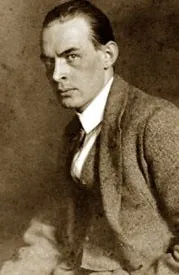
Erich Maria Remarque
Human Design Chart
Biography
Died of heart failure on 25 September 1970, Locarno, Switzerland.
Erich Maria Remarque — Manifesting Generator with Profile 4/6
Manifesting Generator 4/6 — Design at a Glance
Erich Maria Remarque showed himself to be someone who possessed a hybrid energy structure: He combined the constant power of a Generator with the lightning-fast execution power of a Manifestor. This design suggested that he could draw things into his life by skipping steps and pushing multiple projects forward simultaneously. His inner drive came from the defined Sacral Center, which provided him with a steady source of energy. The key mechanism was not to initiate himself but to react to external impulses. Only when this reaction was answered with a clear "yes" internally could he effectively use his creative power.
Despite this speed, the Manifesting Generator design carries risks: The tendency to move too quickly often led to important intermediate steps being overlooked. This required frequent backtracking and revisiting of basics, which could cause frustration – a classic sign of the non-self theme of this type. Additionally, he tended to pursue multiple tasks simultaneously, driven by various impulses. If strategy and inner authority did not align, initial enthusiasm would quickly turn into exhaustion.
However, deep satisfaction came for him when he remained in "play mode." Variety and enjoyment of the process were essential to maintaining his energy. The compulsion to finish one thing completely before starting another was contrary to his nature. Instead, he benefited from regularly checking whether his current activities were still supported by his inner compass. This way, he could utilize his versatility without falling into frustration.
Sacral Authority
Erich Maria Remarque's design inclined him to make decisions not through intellectual analysis but through immediate physical resonance. As a Generator, he possessed sacral authority as an inner guiding structure – a configuration unique to this type that simplifies the decision-making process because strategy and authority are identical. This mechanism acted as his "gut feeling": In response to external stimuli, his body would react with spontaneous signals like grunting, humming, or a soft "hm". Positive feedback was felt as an energy surge that released vitality and inexhaustible energy. During these moments, he immersed himself in his activities driven by enthusiasm and satisfaction without the need for any external purpose.
Central to this functioning was the openness of his Emotional Center. This prerequisite ensured that emotional wave movements did not overlay or delay the clear, immediate response of his sacral authority. Additionally, his activated Spleen Center supported his sacral authority. Through this connection, he had a quick, instinctive access to his physical well-being. This configuration allowed him to trust his spontaneous and reliable inner perception, which shaped a direct, unmediated reaction to life free from hesitant deliberation.
The 4/6 Profile — Opportunist / Role Model
Erich Maria Remarque's Human Design suggests a tendency towards an internal tension field that developed over the course of his life. In his first thirty years, he acted more experimentally due to the line configuration, intensely seeking connections in relationships and friendships, similar to someone with a pure three-line. This corresponded to the early phase of Profile 4/6, where curiosity and testing boundaries dominated.
With the activation of the six-line, however, a change occurred. He now found himself in conflict between a deep need for belonging to a community—marked by the fourth line of the "outsider" or wallflower—and an simultaneous urge to withdraw to contemplate the meaning of things. This dynamic described a constant shift between Heart (connection) and Head (reflection).
The fourth line brought natural humility with it, often serving as a protective mechanism against perceived inadequacies. At the same time, it gave him a sense of outsider status that made him cautious in dealing with others; he opened his heart only conditionally to avoid being hurt. The six-line added that he was an observer and judge who learned from ignorance or inappropriate actions. Later, he was expected to act as a role model, conveying wisdom through cooperation with others, while his spiritual stance was characterized by constant questioning and transformation.
Triple Split Definition — Defined & Open Centers
Erich Maria Remarque's Human Design showed a tendency towards constant mental pressure and the search for conceptual clarity. The definition between Head Center and Ajna Center created a permanent impulse to question and understand connections, without these thoughts being directly converted into energy. This often led to inner concern or confusion, as inspiration only forms questions that need their own answers. At the same time, he had a defined G Center, which gave him a firm self-identity and a clear sense of personal direction. He knew where he belonged but could easily be unsettled if others did not share or reject this direction.
His open Solar Plexus made him vulnerable to absorbing foreign emotions. He tended to take on the emotional climate of his environment and personalize it, leading to feelings of being emotionally out of control or needing to avoid conflicts at all costs to prevent rejection. This sensitivity contrasted with his defined Heart Center, which gave him willpower and a desire for self-responsibility. He wanted to determine when he worked and how he used his resources, but the attempt to implement mental concepts through sheer willpower could lead to frustration as the energy did not come directly from the mind.
The open Spleen Center amplified fears of survival security and well-being. He tended to cling to people or situations that radiated a sense of safety, even if they were unhealthy for him in the long term. Spontaneous decisions were difficult for him because he could not use intuitive knowledge in the moment as a reliable authority. Instead, he learned to observe and interpret his fears without blindly following them. The combination of defined mental function and open emotional nature created a personality that was intellectually precise but emotionally strongly influenced by the environment and had to learn to distinguish between personal feelings and absorbed moods.
Channels for rhythm, self-worth, success, clarity and growth.
Erich Maria Remarque's life was characterized by a deep inner pulse and the need to deepen his own convictions. This fundamental attitude stemmed from Channel of Rhythm 5-15, connecting Sacral Center with G Center. He held onto firm habits (Gate 5) while simultaneously integrating the diversity of human experience into his life flow (Gate 15). This gave him an independent timing; when he listened to this natural rhythm, everything seemed effortless and magnetically drew others into his rhythm. Parallel to this, Channel of Exploration 34-10 enhanced his ability for self-affirmation. By connecting inner strength (Gate 34) with authentic behavior (Gate 10), he sought to accept and honor himself. His energy served not to impose but to creatively focus on how to stay true to personal convictions despite extreme circumstances.
In the material aspects of his existence, Channel of the Money Line 21-45 between Heart and Throat Center was active. Here, the will for control (Gate 21) clashed with the need for resources and loyalty (Gate 45). He was inclined to take responsibility and master the material plane through sheer willpower, but his success depended on protecting his own interests while serving others. Mental clarity came from Channel of Awareness 61-24 connecting Head Center with Ajna Center. Sudden inspirations (Gate 61) were transformed here into rational answers (Gate 24), helping him distinguish between what was knowledge-worthy and what wasn't. This process required patience as the knowledge only surfaced at his own pace.
Finally, Channel of Maturation 53-42 structured his experiences cyclically. From beginning (Gate 53) to completion (Gate 42), each life phase had to be fully traversed and reflected upon to gain wisdom. Individual Gates like Gate 25 (Innocence/Mysticism) and Gate 46 (Devotion/Presence) underscored his connection to spiritual depth and physical here-and-now. Additionally, Gate 9 in Sacral Center allowed for detailed elaboration of patterns as long as it was energetically filled.
Individual Circuitry — Circuit Signature
Erich Maria Remarque's Human Design indicated a tendency towards inner strength and clear self-determination, coupled with the ability to grasp knowledge intuitively. His Triple Definition created three separate, parallel operating energy blocks: A first block connected Sacral, Identity, and Root Centers. Here, the Centering Circuit (Channel 10-34), Understanding Circuit (Channel 15-5), and Meaning-Finding Circuit (Channel 42-53) were active. This generated a powerful rhythmic foundation that combined logical structure with emotional reflection. A second block connected Heart and Throat Centers via the Ego Circuit (Channel 21-45). This connection enabled him to access material resources through direct communication and live in mutual support exchange. The third, isolated block included Head and Ajna Centers via Knowledge Circuit (Channel 24-61). Here spontaneous awareness and creative inspiration arose but did not flow directly with the other blocks. Remarque thus showed as someone who held inner convictions firmly, generated knowledge intuitively, and organized resources through clear expression – three distinct forces existing side by side without forming a single continuous flow.
Right Angle Cross of the Vessel of Love 2
Erich Maria Remarque's design inclined towards intense, often fateful bonds that were less based on romantic idealization and more on a profound, almost tragic connection. This configuration, known as the right cross of Love Vessel 2, shaped his interpersonal experiences with a strong desire for true dedication and the willingness to go to extremes in relationships. It was not about superficial attraction but rather a force compelling him to tear down emotional walls and fully trust others, often willing to risk everything in the process. This energy created situations where love became the central life task, intertwined with deep pain over possible separations or failures of these connections. The design promoted an attitude of sacrifice and dedication that characterized his relationships: he sought a connection that defined him while also challenging him to surpass his own limits. This mechanism acted as a driving force in his private life, where he navigated intense emotional currents, always searching for the deep unity promised but also demanded by this cross.
Saturn Return · Uranus Opposition · Chiron Return · 2nd Saturn Return — Life Cycles
Erich Maria Remarque's design inclined towards cyclical condensations where inner maturation translated into concrete milestones of life. This was evident in 1928 at age 30 with the publication of his anti-war novel 'All Quiet on the Western Front'. For his chart, this marked the first Saturn Return, a time when years of groundwork often culminate in a solid, public achievement. The ensuing worldwide success signified a phase of structural affirmation.
Another pattern emerged in 1947 when he received American citizenship at age 49. This coincided with his Chiron Return, a fulfillment cycle between the ages of 49 and 51. During this period, one's incarnation cross increasingly unfolds; if lived according to personal strategy, meaning and purpose become tangible. The new citizenship here expressed a deepened identification and a new chapter in life, not as healing old wounds but as a bloom on his personal path.
The structure continued in 1958 when he married Paulette Goddard at age 60. This aligned with the second Saturn Return, often bringing further consolidation and new stable bonds to the forefront. These events illustrate how Remarque's design was marked by specific life phases: the first Saturn Return brought major public recognition, the Chiron Return deepened his anchoring in a new homeland, and the second Saturn Return a personal connection at high levels. Each step followed the energetic rhythms of his chart.
Manifesting Generator · Sacral Authority — Synthesis
Erich Maria Remarque lived a path deeply influenced by reactions to external stimuli. His sacral center provided a constant energy source (sacral authority), yet through his defined mental center (Head Center) it led to continuous inspiration and questioning. This combination created an inner drive that made him respond to the world around him and reflect this in his works – a pattern evident in the success of his first novel (Saturn Return 1). He was not someone who initiated things but rather responded with full force to what he encountered (Rhythm Channel), thus generating a natural flow in his life.
Remarque embodied a central paradox: the tension between the desire for connection and the need for individual reflection. His profile as a networker/role model points to a longing to be part of a community (Line 4), while simultaneously Line 6 amplified a drive towards distance and deeper self-reflection. This led to an internal conflict between heart and mind, manifesting in his life – a dance between the wish to share with others and the need to walk one's own path (Knowledge Circuit).
5 Defined Channels
Incarnation Cross - Right Angle Cross of the Vessel of Love 2
Solar Return
The Solar Return shows the moment when the sun returns to its exact birth position - your personal solar year.
Life Cycles
Discover the life cycles with a detailed triple view (birth chart, cycle chart, composite).
Human Design Profile
- Strategy
- To respond - wait for something to respond to
- Authority
- Sacral Authority
- Profile
- 4/6 - Opportunist / Role Model
- Definition
- Triple Split
- Incarnation Cross
- Right Angle Cross of the Vessel of Love 2
- Date of Birth
- 22.06.1898 20:15
- Place of Birth
- Osnabrück, GER
Frequently Asked Questions
What was Erich Maria Remarque's Human Design type?
What profile did Erich Maria Remarque have?
What authority did Erich Maria Remarque have?
What was Erich Maria Remarque's incarnation cross?
When was Erich Maria Remarque born?
Discover your own Human Design
Are you also a Manifesting Generator? Find out in a personal reading how to unfold your multi-talents and direct your energy wisely.
More Personalities
Back to overviewAldair

Alizée

Angeli
Arletty
Artus

Balthus