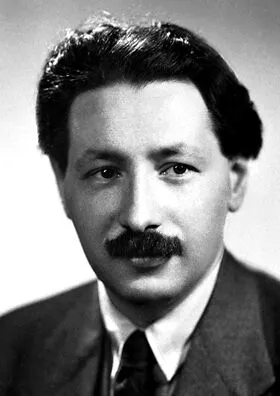
Ernst Chain
Human Design Chart
Biography
In 1930, he received his degree in chemistry from Friedrich Wilhelm University. After the Nazis came to power, Chain understood that, being Jewish, he would no longer be safe in Germany. He left Germany and moved to England, arriving on 2 April 1933 with £10 in his pocket. Geneticist and physiologist J.B.S. Haldane helped him obtain a position at University College Hospital, London.
After a couple of months he was accepted as a PhD student at Cambridge University, where he began working on phospholipids under the direction of Sir Frederick Gowland Hopkins. In 1935, he accepted a job at Oxford University as a lecturer in pathology. During this time he worked on a range of research topics, including snake venoms, tumour metabolism, lysozymes, and biochemistry techniques. Chain was naturalised as a British subject in 1939.
In 1939, he joined Howard Florey to investigate natural antibacterial agents produced by microorganisms. This led him and Florey to revisit the work of Alexander Fleming, who had described penicillin nine years earlier. Chain and Florey went on to discover penicillin's therapeutic action and its chemical composition. Chain and Florey discovered how to isolate and concentrate the germ-killing agent in penicillin. Along with Edward Abraham he was also involved in theorising the beta-lactam structure of penicillin in 1942, which was confirmed by X-ray crystallography done by Dorothy Hodgkin in 1945. For this research, Chain, Florey, and Fleming received the Nobel Prize in 1945.
On 17 March 1948 Chain was appointed a fellow by the Royal Society. He was knighted in 1969.
He was a lifelong friend of Professor Albert Neuberger, whom he met in Berlin in the 1930s.
In 1948, he married Anne Beloff-Chain, sister of Renee Soskin, Max Beloff, John Beloff and Nora Beloff, and a biochemist of significant standing herself.
What does Projector 5/1 mean for Ernst Chain?
Projector 5/1 — Design at a Glance
Ernst Chain revealed himself as someone with a dense, focused aura that directly influenced his surroundings. As a Projector, he did not have an internal constant energy source like a Generator but rather acted more like a bright flashlight: He precisely directed his beam of light onto those areas in others that were still in the dark or not functioning optimally. This ability allowed him to immediately recognize flaws in systems and point out solutions.
However, this direct perception required tact. Had he addressed his observations abruptly, it would often have been perceived as aggressive – comparable to a flashlight beam directly into someone's face. The more effective strategy for his design was to attract others through his own harmonious actions. When Ernst Chain himself lived a functioning structure, people sought him out to seek advice. Therefore, his best approach was to wait for respectful and honest invitations rather than taking the initiative himself.
This pattern also shaped his energy level: Since his Sacral Center was undefined, he experienced phases of high productivity followed by necessary rest periods for regeneration. The conformist work environment often did not accommodate this need, increasing the risk of burnout. Living according to this strategy of patience and invitation rewarded him with success; opposing his design led sooner or later to bitterness as an expression of his non-self. His influence thus rested less on constant action but rather on the quality of his targeted guidance when asked.
Emotional Authority
Ernst Chain showed an inner decision-making structure that was not characterized by immediate clarity, but rather through wave-like emotional movements. His design carried Emotional Authority, meaning that the defined Solar Plexus Center took over his internal leadership. In Human Design mechanics, this authority is considered primary: Once the Emotional Center is defined, it takes on the role of the inner instance, regardless of other defined centers in the chart.
This configuration shaped Ernst Chain's approach to decisions through a characteristic rhythm of ups and downs. His perception was always colored by his current mood; a project or idea could be felt as absolutely inspiring at one moment only to appear negative the next. These fluctuations were not errors but the natural dynamics of his system. Quick, spontaneous reactions to these initial emotional impulses would often have led to inappropriate results since the first impression did not yet represent the full truth.
Instead, his design required patience and a conscious abstention from immediate answers. Ernst Chain used time as a tool for clarification. By letting decisions go overnight and asking himself several times, intense feelings subsided. This process of "sleeping on it" allowed him to gain emotional distance. Only when the wave had ebbed and calmness set in did deep clarity emerge, upon which a well-founded decision could be based. This method was particularly crucial for long-term decisions as it ensured that his actions stemmed from a stable, mature understanding rather than fleeting excitement.
The 5/1 Profile — Heretic / Investigator
Ernst Chain revealed himself as someone who used profound knowledge to offer concrete solutions to others. His 5/1 Profile endowed him with almost magnetic appeal: Others actively sought out his insights. This configuration combined Line 1, which stands for intensive research and learning new challenges, with Line 5, which appears as a hero or expert. People projected expectations onto him and expected answers, similar to how a scientist might answer questions in lengthy conferences.
However, this role carried risks. Without clear boundaries, there was the danger that his inbox would be overflowing and he would end up drained at night. His Line 5 taught him pragmatism and caution; it knew the emotional ups and downs and when a safe retreat was necessary. Deep experiences with people led to learning how to avoid certain types or say no. Only in this way could he maintain the balance between private research for himself and public problem-solving for others. His Line 1 challenged him to face challenges, while his selflessness and spontaneous action – influenced by communicative aspects – contributed to sharing his knowledge unfiltered. The art lay in using these gifts optimally without being overwhelmed by other people's projections.
Triple Split Definition — Defined & Open Centers
Ernst Chain was characterized by a design marked by constant mental pressure and clear inner direction. His defined Head and Ajna Centers generated continuous inspiration to ask questions and form concepts but did not provide the energy for direct implementation. This led him to learn patience, avoiding hasty actions to prevent frustration. His defined G Center gave him a stable identity and sense of life mission while his defined Heart Center offered willpower and the ability to fulfill promises and self-determinedly control resources.
At the same time, he was exposed to certain conditioning through open centers. His open Sacral Center made him susceptible to absorbing foreign energy and overworking as a result, lacking his own consistent generative power. He tended to ignore limits or cover up fatigue, which could lead to exhaustion. Additionally, his open Spleen Center was marked by fundamental survival anxiety; he unconsciously sought security in the environment and risked clinging to unhealthy situations to avoid losing a sense of well-being. Spontaneous decisions were risky for him as they often relied on conditioned fear rather than clear judgment.
The combination of defined mental and willful structure with open energetic and intuitive areas shaped his way of interacting: He acted as an inspirer and decision-maker, but had to be mindful of his energy balance and protect himself from impulsive reactions.
Channels for curious search, logical doubt, synthesis and initiation.
Ernst Chain was characterized by a design that combined logical rigor with narrative creativity. His Channel of Logic 63-4 connected the Head and Ajna Centers, causing his mind to permanently filter patterns. Doubt here was not an obstacle but an essential component: Only when an answer was consistent, practical, and verifiable did it qualify as logically true. This created an active mind that questioned and sought evidence rather than following blind faith.
At the same time, he possessed the Channel of Curiosity 11-56 between Ajna and Throat Centers. This drive pushed him not only to collect facts but also to transform them into stories. His communication served less as pure data transmission and more as telling life parables that should influence others. He linked abstract ideas with concrete experiences to stimulate his environment and offer new perspectives.
Emotionally and socially, his Channel of Synthesis 19-49 between Root and Solar Plexus Centers was influential. This mechanism provided a fine sense of belonging and tribal loyalty. He sought balance between feasibility and fairness, where emotional waves determined who deserved support. His identity was strongly tied to the protection of resources and maintaining clear principles to secure community cohesion.
Individually, he was also marked by the Channel of Initiation 51-25 in his Heart Center. This configuration gave him natural competitiveness that merged with a mystical component of Higher Self. He endured the shock of individuation and could encourage others to transcend their own limits when invited. Additional Gates like Gate 12 (Holding Back) and Gate 46 (Devotion in the Now) rounded out his profile: He acted authentically in the moment but maintained a certain poetic distance that channeled his mutative power.
Collective Circuitry — Circuit Signature
Ernst Chain was characterized as a person with strongly pronounced inner strength and clear convictions. His design connected Identity Center to Heart Center through the Centering Circuit (Channel 25-51). This gave him a brave, individualistic stance: He knew who he was and promoted this constancy in others. Since there was no connection to Throat Center, these deep convictions often remained unspoken or hard to verbalize.
Parallel to this, there existed a separate, non-connected energetic structure from Head and Ajna Centers (Understanding Circuit, Channel 63-4). Here the energy of focused logic and strategic planning for future solutions was at work. However, this rational side did not have any direct flow to the emotional or identity-forming level.
A third, also isolated group comprised Ajna and Throat Centers (Purpose Circuit, Channel 11-56). Here past experiences were processed driven by curiosity. Emotional waves from Solar Plexus Center were reflected and then verbally communicated to collectively learn from the past.
Finally, the Ego Circuit (Channel 49-19) connected Solar Plexus with Root Centers. This generated a rhythmic energy between emotional processing and action impulse. Since there was no connection to Sacral Center, regular rest pauses were necessary to restore resources for this cooperative dynamic. Ernst Chain's design thus consisted of three parallel, non-fused power fields: inner identity, rational strategy as well as emotional reflection and communication.
Left Angle Cross of Education 1
Ernst Chain's Human Design featured the left Education Cross. This configuration shaped a fundamental disposition characterized not by spontaneous impulses or chaotic energy outbursts but rather by a deep, often silent dedication to learning and understanding complex relationships. The focus was less on public teaching in the classical sense than on internalizing knowledge and carefully condensing it.
In Human Design, this cross describes a specific form of knowledge transmission that is closely tied to the process of learning. It's not about authority or direct instruction but rather the ability to gain insights through personal study and reflection, which can then subtly influence others. The energy of this design fostered an attitude of humility toward the vast expanse of knowledge. Ernst Chain demonstrated himself as someone who saw his role in deepening understanding and solidifying foundations, often behind the scenes or in small circles where true education rather than superficial information took place. This structure supported a path where sharing insights from a position of profound respect for the learning process itself occurred without claiming absolute control over the outcomes.
Saturn Return · Uranus Opposition · Chiron Return · 2nd Saturn Return — Life Cycles
Ernst Chain showed himself to be someone whose creative power took on a new expansive quality in his second half of life. His design contained the Uranus Opposition, a configuration often associated with a deep transformation in middle age. This mechanism does not describe a sudden reversal but rather breaking free from old structures for the sake of a broader, more global perspective. It challenges one to break away from narrow definitions and explore new horizons.
This process became visible in 1945 when Ernst Chain was 39 years old with his Nobel Prize for Physiology or Medicine shared with Alexander Fleming and Howard Walter Florey. This success not only marked the recognition of his scientific work but also coincided precisely with the phase where the energy of the Uranus Opposition was active. The prize symbolized a transition from an intense, often isolated research phase to broader public impact and international networking. The opposition in the chart indicated that Ernst Chain had to learn to integrate his individual achievements into a larger context. Rather than focusing solely on personal accomplishments, he opened himself up to collaboration and exchange with other pioneers of his field. This mechanism fostered an attitude that transcended the purely personal and contributed to making his discoveries accessible for all humanity. The energy of this configuration helped him transcend known boundaries and adapt to a new reality where his work gained a globally felt influence.
Projector · Emotional Authority — Synthesis
Ernst Chain was a projector whose life seemed marked by a profound need to recognize patterns and provide orientation to others. The connection between the defined Head Center – constant mental pressure for understanding (Channel 63-4) – and emotional authority points to someone who filtered and analyzed information before communicating it in a way that could be helpful to others. This pattern was particularly evident in his dealings with other people's problems, where he acted as a Hero/Researcher (5/1 Profile), bringing deep knowledge to offer solutions. The ability to recognize and highlight what wasn't working was central to his effectiveness.
Simultaneously, an internal tension between the need for deep analysis and emotional waves revealed itself. Constant questioning (Channel 63-4) clashed with a process that required time and maturity to reach clear judgment. This dynamic may have led him into situations where his knowledge and insights were sought after but not always optimally presented in terms of how they resonated with others. His documented success (Nobel Prize) at the age of 39 underscores this problem-solving ability, while underlying tension suggests that this process rarely occurred without internal pressure.
4 Defined Channels
Incarnation Cross - Left Angle Cross of Education 1
Solar Return
The Solar Return shows the moment when the sun returns to its exact birth position - your personal solar year.
Life Cycles
Discover the life cycles with a detailed triple view (birth chart, cycle chart, composite).
Human Design Profile
- Type
- Projector
- Strategy
- Wait for the respectful invitation
- Authority
- Emotional Authority
- Profile
- 5/1 - Heretic / Investigator
- Definition
- Triple Split
- Incarnation Cross
- Left Angle Cross of Education 1
- Date of Birth
- 19.06.1906 03:45
- Place of Birth
- Berlin, Germany
Frequently Asked Questions
What was Ernst Chain's Human Design type?
Which Profile did Ernst Chain have?
What Authority did Ernst Chain have?
What incarnation cross did Ernst Chain have?
When was Ernst Chain born?
Discover your own Human Design
Are you also a Projector? Find out in a personal reading how to unfold your leadership qualities and recognize the right invitations.
More Personalities
Back to overviewSissy Spacek

Alain-Fournier

Anémone

Ann-Margret

Bourvil
Hergé