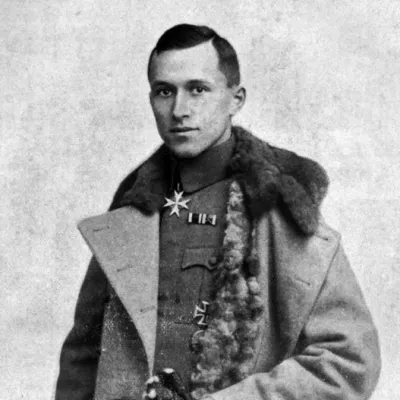
Ernst Jünger
Human Design Chart
Biography
Jünger appears on the fringes of the Stauffenberg bomb plot. He was clearly an inspiration to anti-Nazi conservatives in the German Army, and while in Paris he was close to the old, mostly Prussian, officers who carried out the assassination attempt against Hitler. He was only peripherally involved in the events however, and in the aftermath suffered only dismissal from the army in the summer of 1944, rather than execution.
His elder son Ernst Jr., born 1 May 1926, then a naval (Kriegsmarine) cadet, was imprisoned that year for engaging in "subversive discussions" in his Wilhelmshaven Naval Academy. Transferred to Penal Unit 999, he was killed near Carrara in occupied Italy on 29 November 1944.
His fiction books include, "The Storm of Steel" in 1920 (German: In Stahlgewittern), "On Marble Cliffs" in 1939 (Auf den Marmorklippen) and "The Glass Bees" in 1957. His non-fiction books were a gifted rendition of botany and entomology. The total number of books exceeds fifty. In his book An der Zeitmauer (1959) he discusses astrology at length, in a very positive light.
During many years, Jünger experimented with LSD and other psychedelic drugs, together with his friend Albert Hofmann, the discoverer of LSD.
He died on 17 February 1998, six weeks before his 103rd birthday.
The Human Design of Ernst Jünger: Manifestor 5/2
Manifestor 5/2 — Design at a Glance
Ernst Jürger revealed himself as a pioneer and visionary whose Human Design type was that of a Manifestor, a configuration often compared to the image of a Roman emperor: A person with a great vision who does not implement it in detail themselves but instead guides others to forge paths and conquer territories. This role inevitably brought him into contact with resistance; his far-reaching thoughts and goals were frequently misunderstood because they went beyond what many of his contemporaries could comprehend. This led to polarization - some loved and followed him for his greatness, while others rejected or even hated him precisely because of it. To minimize friction and find the right followership, his strategy was informing: He had to timely and accurately inform others about his intentions. If he lived according to this strategy and his inner authority, his design rewarded him with a sense of inner peace. When acting against this nature, however, he felt an enduring, deep-seated anger. His path thus revolved around the tension between pushing forward his vision and constantly dealing with the reactions of a world that did not always immediately understand his steps.
Emotional Authority
Ernst Jürger showed a decision-making stance that did not solidify in the moment of initial excitement or rejection, but only after a process of emotional maturation. His inner authority was an emotional authority carried by the defined Solar Plexus Center. This configuration determined that he would always be subject to waves of changing emotions; his perception was constantly colored by his current mood. What seemed highly significant at one moment could turn negative in the next. However, this up-and-down did not mean that the first impression was the truth. Quick, spontaneous judgments from an emotional peak often proved misleading or disadvantageous for him.
The mechanics of his authority required patience: Decisions had to be allowed to mature. Only when intense feelings subsided and he gained emotional distance would clarity set in. This process of 'sleeping on it' was essential to move from the fleeting snapshot moment to a deeper understanding. Especially with long-term life decisions that profoundly shaped his path, he followed this rhythm. Emotional authority always took precedence over other defined centers in his chart; regardless of further energetic conditions, the Solar Plexus Center was the decisive compass for his actions. Ernst Jürger learned to let himself be delayed and questioned multiple times until the calmness of the lived process set in.
The 5/2 Profile — Heretic / Hermit
Ernst Jürger carried the internal contradiction of Profile 5/2: The desire for recognition as a hero conflicted with the need to dwell in the solitude of his 'cave'. This configuration shaped a lifestyle where he initially hid his gifts and hardened himself in withdrawal. Line 2 promoted discretion and intuitive insight; it acted like a foam-dampened fighter who resisted without visibly violating obvious behavioral norms. At the same time, Line 5 carried the potential for global synthesis and recognition of a place within larger hierarchies. As long as he did not show himself, his heroism remained hidden; only by leaving the retreat space did his presence become effective. The mechanics of this profile require balance: Too much isolation led to frustration over the lack of expected admiration, while the world began to appreciate his clear insights and authority only once he showed himself. Jürger navigated between the urge for order and synthesis in society (Line 5) and the necessary self-defense as well as protection of privacy (Line 2). His design suggested that true impact only arose when he found balance - enough restraint to gather himself, enough openness to take his role in the whole.
Single Definition — Defined & Open Centers
Ernst Jürger revealed himself as someone whose expression was characterized by a constant yet limited nature. His defined Throat Center ensured that he reliably conveyed information from his inner world to the outside world. This voice did not stem from impulsive speech flow, but rather from a clear internal source.
This clarity was filtered through his defined Solar Plexus Center. Jürger possessed an emotional authority that required patience. He tended to make decisions only after the waves of his emotions had subsided and emotional clarity had set in. Instead of immediately reacting to impulses, he waited until the emotional wave had run its course from peak to trough. This allowed him deep insights as he viewed situations from many different angles before acting.
His defined Spleen Center also provided an intuitive, momentary orientation. It gave him a sense for what was healthy and correct in each moment. This spontaneous intuition worked independently of the mind and helped him protect and orient himself in the present.
At the same time, his design revealed specific points of conditioning. His open Head Center made him vulnerable to mental pressure and the temptation to want to solve others' questions. He tended to get stuck in doubts if he did not trust his inner authority. Similarly, his open Ajna Center meant that he absorbed concepts and ideas from the environment without identifying them as his own truth. This fostered a flexible mind but could also lead to accepting foreign opinions.
His open G Center showed that he lacked a fixed identity, instead forming it through interaction with his surroundings and relationships. He relied on others to initiate him in order to find the right direction. Additionally, his open Heart Center lacked a constant willpower; he tended to want to prove his worth through promises, which often led to disappointment. His open Sacral Center also meant that he did not have a consistent generative energy and was vulnerable to exhaustion when taking on others' life force without setting personal boundaries.
Channels for logical struggle, emotional crises and liberation.
Ernst Jürger revealed himself as someone whose inner drive was strongly influenced by the need to question patterns and find meaning in conflicts. This attitude resulted from the interplay of two central channels in his design.
The Channel of Judgment 58-18 connected the Root Center with the Spleen Center, driving an insatiable urge to perfect logical processes and correct any inadequacy. Jürger had a sharp sense for what was not functioning properly within the collective or individual; he acted like a sentry judging whether something promoted life or hindered it. His criticism was not merely dissatisfaction but rather an attempt to regain original joy and love lost in conditioned structures through correction.
Parallel to this, the Channel of Life Struggle 38-28 shaped his existence. This connection between Root and Spleen gave him the determination to follow his own path even against resistance. For Jürger, struggle was not just a survival fight but a means to preserve individual integrity and give life deep meaning. He actively sought out struggles worth fighting for and found in them the purpose that propelled him forward.
Additionally, other energies were at work: The Channel of Transience 35-36 brought a need for new emotional experiences often through creating crises to generate movement. The Channel of Emotional Release 39-55 added a moody, emotional wave oscillating between melancholy and ecstasy demanding authentic spirituality from correctness.
Individual Gates rounded out the picture: Gate 17 brought logical teaching and doubt as tools for shaping the future; Gate 22 allowed calm openness to mutations in social fields. Gate 37 sought organic community structures while Gate 6 provided elemental friction for further development. Gate 54 linked worldly success with mystical insight, and Gate 16 collectively experimented with new skills. Together these mechanisms formed a design characterized by critical analysis, combative individuality, and emotional depth.
Individual Circuitry — Circuit Signature
Ernst Jürger revealed himself as someone whose inner experience and external expression potential were shaped by one continuous energetic structure. His Spleen, Root, Solar Plexus, and Throat Centers formed a direct flow connecting his intuitive perception and emotional depth directly to the ability to convey these experiences outwardly through speech or action.
The Knowledge Circuit reinforced this through the Channel of Life Struggle (Spleen-Root) creating an instinctive orientation towards what was truly authentic and through Emotional Release (Solar Plexus-Throat). The latter allowed not just feeling emotional waves but directly translating them into expression. This configuration promoted a pulsating, creative energy aimed at forging new paths and initiating change through personal expression.
Parallel to this, the Understanding Circuit worked through the Channel of Judgment (Spleen-Root) intensifying intuitive selection power and strategic thinking without slipping into emotional evaluation. It was a focused rational force serving to share logical insights and develop structures for the future.
The Meaning-Finding Circuit completed this unity. Through the Channel of Transience (Throat-Solar Plexus), it directly connected the Throat Center with the emotional center ensuring that expression was not just impulsive but marked by a cyclical, reflective quality. Ernst Jürger could thus transform past experiences and their meaning into a shared, expressive form possessing both emotional depth and clear structure.
Left Angle Cross of Upheaval 1
Ernst Jürger's fundamental disposition was marked by the left cross of revolution. This configuration described an inner mission to question existing structures and forge new paths. It wasn't about arbitrary change but a deeply rooted tendency to dissolve the old so that something new could emerge. For his design, this meant he often stood at the intersection of tradition and innovation. He sought the essential by removing the superfluous. This process was not just intellectual for him but existential. The left cross of revolution conveyed the ability to find clarity in times of uncertainty. Ernst Jürger used this energy to break free from rigid patterns and forge his own path. It was about having the courage to leave behind what was familiar, even if it came with resistance. His life task was to enable personal growth through constant change. He understood how to develop new possibilities out of fractures. This attitude shaped his entire existence and led him to always be in motion to follow the call for transformation.
Saturn Return · Uranus Opposition · Chiron Return · 2nd Saturn Return — Life Cycles
Ernst Jürger's design showed a tendency towards structural reorganization during life phases marked by planetary cycles. His first Saturn return in 1923, at age 28, coincided with his departure from the Reichswehr and matriculation at Leipzig University. This shift from military structure to academic education highlighted the typical condensation of years of groundwork into a solid new foundation for life.
The Uranus opposition in 1933, at age 38, brought fundamental changes in relationship and living context: Jürger moved with his family to Goslar where his second son was born. This cycle often promoted the need for autonomy and new living spaces, which is evident here in the family's realignment.
The Chiron return in 1944, at age 49, marked a point of bloom and fulfillment of the incarnation cross. However, the accompanying event – his arrest and five-month prison sentence at age 17 – does not fall within this cycle but represents an earlier crisis. In Human Design, the Chiron return describes the unfolding of one's purpose; here it shows a discrepancy between the theoretical fulfillment cycle and the biographical reality of earlier conflicts.
The second Saturn return in 1950, at age 55, led to his move to Wilflingen where he lived until his death. This step solidified the long-term structure of his living space by establishing a permanent anchor point for further development after a phase of movement.
Manifestor · Emotional Authority — Synthesis
He was a Generator with emotional authority and the Profile Hero/Natural Talent (5/2), whose life seemed marked by a deep tension between inner drive and external perception. The defined communication and manifestation center (Throat) points to a strong voice, yet this is constantly questioned and refined through judgment (Channel 58-18) – an ongoing pursuit of accuracy and improvement fueled by the life energy of the Root Center. This combination makes him appear as someone who not only actively wanted to shape the world but did so with a pronounced sense of logic and precision. The knowledge circuit underscored this desire for transformation through personal insights and their expression.
A central paradox lay in his profile: the need to be seen as a hero (Line 5) clashed with the wish for withdrawal and inner reflection (Line 2). This was evident in recurring cycles that encompassed both career turning points (departure from the Reichswehr, matriculation) and personal changes (move, arrest). The emotional wave required time for decision-making while his Manifestor design urged him to take initiatives – an internal conflict between the need for mature deliberation and the impulse to act.
4 Defined Channels
Incarnation Cross - Left Angle Cross of Upheaval 1
Solar Return
The Solar Return shows the moment when the sun returns to its exact birth position - your personal solar year.
Life Cycles
Discover the life cycles with a detailed triple view (birth chart, cycle chart, composite).
Human Design Profile
- Type
- Manifestor
- Strategy
- To inform others before acting
- Authority
- Emotional Authority
- Profile
- 5/2 - Heretic / Hermit
- Definition
- Single Definition
- Incarnation Cross
- Left Angle Cross of Upheaval 1
- Date of Birth
- 29.03.1895 12:00
- Place of Birth
- Heidelberg, Germany
Frequently Asked Questions
What was Ernst Jönger's Human Design type?
What Profile did Ernst Jönger have in Human Design?
What Authority did Ernst Jönger have?
What incarnation cross did Ernst Jügger have?
When was Ernst Jügger born?
Discover your own Human Design
Are you also a Manifestor? Find out in a personal reading how to use your initiation power peacefully and dissolve resistance.
More Personalities
Back to overviewAlain-Fournier

Angeli
Christian-Jaque

Juninho

Kesha

Lucebert