Photo: Wikimedia Commons
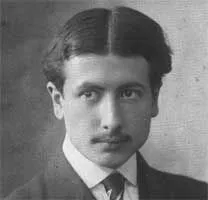
Erwin Strittmatter
Human Design Chart
Biography
In 1956 Strittmatter married Eva Strittmatter, who went on to become one of the most successful poets of East Germany. He had three marriages and three children. He died in Stechlin on 31 January 1994 at age 81 after a long illness.
Erwin Strittmatter — Generator with Profile 3/5
Generator 3/5 — Design at a Glance
Erwin Strittmatter revealed himself as someone with immense endurance, whose source of strength lay in his ability to receive impulses from his environment and respond accordingly. His design as a Generator endowed him with abundant sacral energy, driving him similarly to a strong workhorse – provided he followed tasks that stirred an inner enthusiasm within him. This energy was not released through spontaneous initiatives but only when his inner self responded with a clear "yes" to life's stimuli. The motto was always: do not initiate, but react.
When Erwin Strittmatter adhered to this strategy and acted from the gut, his system rewarded him with deep satisfaction and a sense of fulfillment. Conversely, ignoring this principle – such as by constantly taking initiative or performing tasks without inner consent – inevitably led to frustration and energy loss. Two specific pitfalls shaped his dynamics: first, the risk of wasting energy on things that did not resonate with him, leading to exhaustion over time. Second, holding back from projects he wanted to throw himself into fully. His success thus depended directly on whether he used this sacral response to apply his enduring strength purposefully and in harmony with his inner truth.
Sacral Authority
Erwin Strittmatter's design inclined towards intuitive, body-based decision-making. As a Generator, he possessed sacral authority, which simplified his process: strategy and inner guidance merged into one mechanism. This mechanics worked as an immediate response to external stimuli. Instead of planning, his system reacted with a "gut feeling" – audible as grunts or mhm sounds, palpable as a surge of energy. When this resonance occurred, he felt vital and energized; without it, the energy remained reserved. This allowed him to engage in activities with great enthusiasm and without rigid purposefulness, fully immersing himself in what brought him alive.
Additionally, his activated Spleen Center served as a supportive instance for sacral authority. Since the Spleen is often directly connected to the Sacral Center, Erwin Strittmatter reacted particularly quickly and spontaneously. He had an immediate access to his physical well-being and instinctive perception. This connection allowed him to reliably guide himself from this deep inner compass without long hesitation or intellectual analysis. The combination of sacral resonance and spleen-induced quickness shaped his way of responding to life: directly, lively, and in harmony with his bodily pulse.
The 3/5 Profile — Martyr / Heretic
Erwin Strittmatter revealed himself as someone who gained his knowledge not from books but through personal experimentation. His Profile 3/5 marked him as an experimenter and a hero: he initially believed little in predetermined truths and had to experience everything for himself. This line of the adventurer drove him to establish or end connections, often through trial and error. Failure was not an endpoint but part of the learning process that later helped him solve problems for others.
His practical experience became a treasure he presented to others. The fifth line, the hero's line, ensured that these insights were attractive. Others sought his advice because they wanted to learn from both his mistakes and successes. This role flattered him but could also be painful when public experiments failed. He had to communicate his individual insights in a way that the collective would accept, despite the pressure to conform to expectations. Thus, he transformed personal responsibility into shared security.
Split Definition — Defined & Open Centers
Erwin Strittmatter's design indicated a tendency towards constant mental pressure combined with a deeply rooted ability to react to external impulses. His defined Head Center and Ajna Center generated a permanent internal dialogue of questions and concepts; he always thought in specific patterns but was not destined to directly translate these thoughts into action, as no motor energy was connected to the mind. Instead, his defined Throat Center served as a reliable channel to express these mental processes verbally or through actions if triggered by other centers.
His power source lay in his defined Sacral Center: He possessed immense vital energy that could only be released through correct reactions to life. Initiatives from the mind led to frustration and resistance; his strategy was to wait and then respond with full force. This was complemented by his defined G Center, which gave him a stable identity and a clear inner compass, as well as his defined Root Center, providing the necessary existential pressure for continuous movement.
At the same time, he was vulnerable to conditioning in his open centers. His open Heart Center tended to want to prove itself through promises and competition, often ending in a spiral of self-doubt when expectations were not met. The open Solar Plexus Center absorbed foreign emotions, putting him at risk of identifying with others' moods and making emotional decisions that he later regretted. Additionally, his open Spleen Center could take up spontaneous fears or false intuitions from the environment, leading him to impulsively cling to unhealthy situations in an attempt to simulate a sense of security. The challenge was not to misinterpret these open fields as his own authority.
Channels for abstract thinking, change, rhythm and structure.
Erwin Strittmatter navigated between the pressure of evolutionary change and the need for inner rhythms. Channel 60-3 connected his Root Center with his Sacral Center, creating a pulsating energy that had to accept limitation (Gate 60) in order to move beyond the confusion of a new beginning (Gate 3). This mechanism led to mechanical mood swings; silence and patience were necessary until new mutations took hold. Simultaneously, Channel 5-15 determined his life flow by connecting his Sacral Center with his G Center, where fixed habits (Gate 5) met love for human diversity (Gate 15), giving him a sense of timing and drawing others into his energy flow.
In communication, Channel 43-23 was at work. It connected his Ajna Center with his Throat Center, assimilating spontaneous insights (Gate 43) and clearly expressing them verbally (Gate 23). This allowed for innovative perspectives that promoted efficiency but required patience until the timing was right. Mentally, gates like Gate 64 (Confusion) and Gate 47 (Understanding) pushed him to sift experiences through a kaleidoscope of images to find meaning. Further influences came from gates of logical formulation (Gate 4), emotional upheaval (Gate 49), and genetic binding strategy (Gate 59). Detail work (Gate 9) and being present in the moment (Gate 20) rounded out his profile, while experiential conclusions (Gate 42) and mental renewal (Gate 24) shaped his learning process.
Collective Circuitry — Circuit Signature
Erwin Strittmatter's design inclined towards structured identity formation coupled with a drive to emotionally process past experiences. As a person of split definition, his inner self consisted of two parallel energy blocks not directly intertwined: one powerful center comprising Sacral, Root, and Identity Centers alongside another block made up of Head, Ajna, and Throat Centers. This separation created separate operational units rather than a single continuous flow.
The Knowledge Circuit shaped him through two distinct segments. One connected the Ajna with the Throat Center, enabling clear verbal articulation of conceptual thoughts. The other segment linked Sacral and Root Centers via Channel 60-3 (Gates 3-60), allowing him to utilize deviations from the known energetically to forge new paths. Simultaneously, the Understanding Circuit was at play: here a channel connected Identity with Sacral Center (Rhythm, Gates 15-5) giving him a focused rational orientation towards the future free of emotional distortion to share logical structures.
The Meaning Finding Circuit completed the picture through Channel 64-47 connecting Head and Ajna Centers. This enabled him to reflect on visual impressions from the past and grasp their deeper meaning. Together, these separate circuits formed a profile possessing cool strategy and future-oriented logic alongside the capacity to abstractly process emotional waves of the past and express new identity through mutation – always as coexisting, not directly merging forces.
Right Angle Cross of Explanation 3
Erwin Strittmatter's design was characterized by the right cross of clarity. This configuration created an internal tension between a deep desire for clarity and the necessity to live that clarity actively. It wasn't just intellectualism but rather an impulse to formulate truths so precisely that they became tangible for others. The mechanics of this cross require that insights not only be thought but also articulated in words and shared to fully unfold their impact. For Erwin Strittmatter, this meant his path was marked by the search for authentic expression. He had to learn to articulate his own truths without being distracted by external expectations. The energy of this cross promoted direct, often unvarnished communication aimed at resolving misunderstandings and making connections transparent. This required courage as clear statements always provoke criticism. His design suggested that his greatest strength lay in organizing complex situations through precise language to provide orientation for others. The challenge was to use this gift not as a tool of control but as service to the truth. Erwin Strittmatter carried this burden of clarity throughout his life, driven by the inner law associated with this cross: only through honest explanation can true connection arise.
Saturn Return · Uranus Opposition · Chiron Return · 2nd Saturn Return — Life Cycles
Erwin Strittmatter's design was marked by a cyclical condensation of responsibility and recognition visible in his Saturn returns. The first Saturn return in 1938 signaled the beginning of a long-term life phase; here, his son Ulf was born. This period often marks the transition from experimental youth to stable, binding structures within Human Design, anchoring Erwin Strittmatter in his role as father and creator.
The Uranus opposition in 1950 brought an essential expansion of his horizon. At age 38, he attended a special training course for cultural editors at the Party School. This cycle typically demands letting go of old patterns in favor of new ones, often collective or institutional frameworks. Erwin Strittmatter used this phase to professionalize his career orientation and integrate into the cultural infrastructure of his time.
The second Saturn return in 1970 crowned this development with official confirmation. The awarding of the Johannes-R.-Becher Medal by the GDR was no coincidence but the result of years of consistent work within his design. This later life phase confirmed internal stability and earned status built through earlier commitments. His path showed how personal responsibility (Saturn) and necessary adaptation to external conditions (Uranus) worked together to establish a recognized position in the cultural field.
Generator · Sacral Authority — Synthesis
Erwin Strittmatter was a Generator whose life was marked by a constant flow of sacral energy (Generator type). This energy always sought tasks into which he could fully immerse himself—a tendency amplified by the Profile of the Experimenter and Helper. He tried many things (Line 3), gathered practical experiences, and shared them willingly with others (Line 5). The defined Head Center provided an unceasing mental drive to question and understand things, leading him constantly to seek new insights and share these further. The Channel of Mutation (3-60) points towards a gift for evolutionary change, coupled with melancholy arising from the constant rebirth.
Central in his design was a paradox between the desire for free experimentation and the drive to offer solutions. Sacral authority challenged him to listen to his gut and only say 'yes' when he actually felt energy for a task. Simultaneously, the right cross of clarity 3 seemed to indicate that he took on the role of the explainer—a tension field between personal experimenting and imparting knowledge to others. This dynamic was evident in defining cycles of his life, from professional developments to awards confirming his ability to transform and inspire.
4 Defined Channels
Incarnation Cross - Right Angle Cross of Explanation 3
Solar Return
The Solar Return shows the moment when the sun returns to its exact birth position - your personal solar year.
Life Cycles
Discover the life cycles with a detailed triple view (birth chart, cycle chart, composite).
Human Design Profile
- Type
- Generator
- Strategy
- To respond - wait for something to respond to
- Authority
- Sacral Authority
- Profile
- 3/5 - Martyr / Heretic
- Definition
- Split Definition
- Incarnation Cross
- Right Angle Cross of Explanation 3
- Date of Birth
- 14.08.1912 10:00
- Place of Birth
- Spremberg, GER
Frequently Asked Questions
What was Erwin Strittmatter's Human Design type?
What Profile did Erwin Strittmatter have in Human Design?
What Authority did Erwin Strittmatter possess?
What incarnation cross did Erwin Strittmatter have?
When was Erwin Strittmatter born?
Discover your own Human Design
Are you also a Generator? Find out in a personal reading how to use your sacral energy correctly and discover deep satisfaction.
More Personalities
Back to overviewAaliyah

Alain-Fournier
Alexia

Angèle

Angeli
Anne-Marie