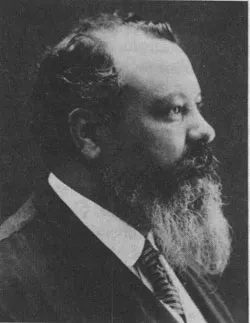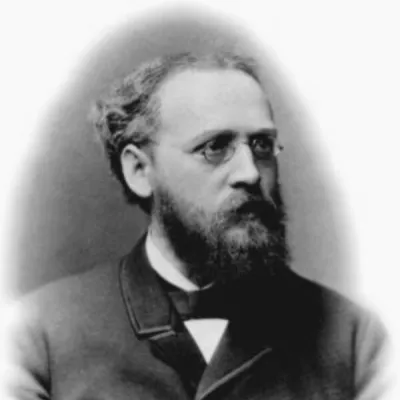
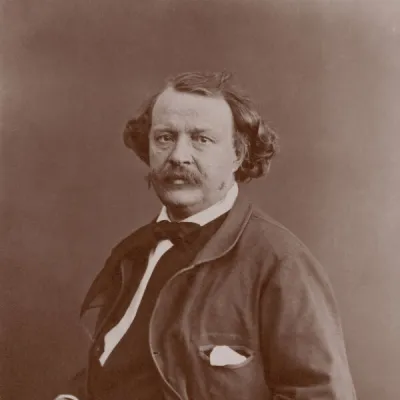
Eugen Baumann
Human Design Chart
Biography
From 1883 till his death, Baumann was married to Theresa Kopp, the daughter of chemist Hermann Kopp, and they had five children. He died in Freiburg on 3 November 1896 at the age of 49 due to a heart problem.
What does Manifestor 4/6 mean for Eugen Baumann?
Manifestor 4/6 — Design at a Glance
Eugen Baumann's design established the foundational structure of a Pioneer whose impact was less in personal execution than in initiating new directions. Similar to an Emperor in ancient Rome, he possessed the vision of a great whole but left the concrete implementation to others who turned his plans into reality. This constellation inevitably led to polarization: His often far-reaching thoughts were either enthusiastically embraced and followed or met with rejection and misunderstanding.
The source of this conflict was not his character but the nature of his big dreams, which did not appeal to everyone. To resolve this tension, his design required a clear strategy: timely informing those around him about his intentions. Only then could an appropriate following form that supported his visions. If Eugen Baumann lived true to this strategy and followed his inner authority, his system rewarded him with a deep sense of inner peace. If he deviated from it or acted without communication, persistent anger arose as direct feedback on the violation of his design. His path was thus marked by the tension between the need to be seen and understood and the risk of unintentionally evoking hatred or love through his Pioneer role.
Ego Authority
Eugen Baumann's design featured a rare configuration: authority in the Ego Center. This structure required that Emotional, Sacral, and Spleen Centers be open, making him highly susceptible to influence. His truth was not revealed through logical reasoning but rather through spontaneous, uncensored speech. Eugen Baumann had to learn to listen to himself while speaking to distinguish when his mind – conditioned by the open centers and foreign interests – spoke versus when his defined will came into play. Only what impulsively emerged from him aligned with his inner reality.
Action impulses arose for Eugen Baumann only when personal relevance was present; it had to be worth it to him. This applied both to the desire for material success as well as the drive to cross boundaries and do pioneering work. Those who followed him often experienced this as selfish, yet this stance was essential for his integrity. A central mechanism of his design was the necessity of a pause after goal achievement. Continuous working did not lead Eugen Baumann to greater success but rather into unhealthy exhaustion and illness. His path consisted in consistently following his own will, setting boundaries against distractions through his openness, and consciously pausing after each achieved goal to regenerate energy.
The 4/6 Profile — Opportunist / Role Model
Eugen Baumann's design was characterized by a clear developmental arc from experimental social behavior in youth to wisdom-oriented function in old age. In the first thirty years of his life, before the Saturn Return, he often acted like a pure experimenter: He actively sought connections, extensively tested relationships and friendships. This behavior aligned with Line 4 of his profile, which emphasized the desire for belonging and emotional contact. However, a defensive side also emerged: To protect the status quo of the community, his design relied on mechanisms of censorship and selective memory. Certain things were consciously forgotten or not pursued further to avoid negative consequences for the social fabric.
With entry into the second half of life, this dynamic fundamentally shifted. The internal conflict between heart – with its need for close binding – and head – seeking distance and meaning – became his central experience. Eugen Baumann now faced the task of distinguishing what was meaningful from what was not. This ability offered by Line 6 provided him an overview of cyclical processes, but could lead to complaining or depression in the absence of clarity. In later years, his environment expected him to take on the role of a wise mentor. He should share his insights and act through cooperation, learning to carefully use his big heart so as not to open up to the wrong people and get hurt.
Single Definition — Defined & Open Centers
Eugen Baumann's design was characterized by a clear, though limited, internal structure: two defined centers contrasted with seven open ones. This configuration created tension between constant inner strength and vulnerable reception of the environment. His defined Heart Center provided consistent willpower and ego strength; it was the source of his determination to shape his life and fulfill promises. This energy flowed directly into his also defined Throat Center, which served as a transmutation point. Here, internal will was transformed into reliable communication and action. Baumann spoke from a clear 'I want' feeling, giving him an authentic yet sometimes limited expression style. However, the risk lay in impulsive over-manifestation: without trust in his strategy, he tended to waste energy through excessive talking or acting, setting unrealistic expectations for others.
In contrast to this inner firmness stood seven open centers that made him sensitive to external influences. His open Head Center lacked constant mental inspiration; he tended to engage with the questions and doubts of others rather than having his own steady thought streams. The open Ajna Center allowed flexible thinking but also made him susceptible to interpreting concepts as personal truth or feigning uncertainty. Particularly defining was his open G Center: Baumann had no fixed identity or direction, instead taking them from his environment. He often sought love and orientation through others, making him vulnerable in relationships because he easily confused himself with the identity of his counterpart.
His open Sacral Center also lacked a constant energy flow; he absorbed the vitality of others, leading to exhaustion if boundaries were neglected. The open Solar Plexus Center amplified foreign emotions, causing him to fluctuate between moods and feelings of the environment rather than having stable personal ones. Finally, the open Spleen Center (fear of survival) and the open Root Center (stress absorption) took pressure from the surroundings. Baumann's challenge was not to squander his defined willpower through mental, emotional, or physical stress from his open centers but to trust in his inner authority.
Channels for ego-driven initiative and clear self-assertion.
Eugen Baumann's design laid a fundamental tendency towards material self-determination, marked by tension between personal will and authoritarian demand. This dynamic was primarily shaped by the Money Line 21-45. This channel connected the Heart Center with the Throat Center and reflected the archetypal role of the Hunter (Gate 21), who works hard to maintain control over his rhythm, as well as that of the Gatherer (Gate 45), who secures resources and demands loyalty. For Eugen Baumann, this meant a lifelong task: using his own authority to create material security without falling into dependency on others. The internal conflict lay in Gate 21 wanting to serve but needing control so the Heart was not overwhelmed, while Gate 45 acted protectively and insisted on having the final word – embodied by the attitude 'I have or I don't'. Success required maintaining this balance in his own interest by acting as his own boss.
Additionally, other gates influenced his psyche. Gate 26 promoted ego innovations, while Gate 47 helped recognize collective meaning from past experiences. Social ease came from Gate 22, which enabled listening and mutation. On the personality level, Gate 16 drove experimental mastery forward, while in the design, Gate 62 stood for logical detail work and pattern recognition. Finally, Gate 35 sought change through interaction and exchange of experience. Together, these elements formed a profile that linked material reality with analytical precision and social exchange, with mastery of the Money Line as the central focus.
Tribal Circuitry — Circuit Signature
Eugen Baumann's design was characterized by a clear orientation towards cooperation and the joint creation of resources within the clan group. His ego circuit connected his Throat Center exclusively to his Heart Center, creating a direct energetic line between willpower and expression. This configuration established transactional giving and taking as a basis for mutual support: 'Today I give, tomorrow you give'.
Central was the active Money Line (Channel 21-45), which promoted the ability to accumulate material wealth. Eugen Baumann used this energy in a conservative and tradition-bound manner to secure resources for his clan. Since his circuit did not connect to the Sacral Center – thus working without the constant life force of this center – his energy was not inexhaustible. Instead, the system required mandatory rest periods for regenerating strength before new resources could be created.
This mechanism shaped his actions: He worked effectively during phases of engagement but had to take enforced breaks to restore willpower stored in the Heart Center and expression power manifested in the Throat Center. The connection between Heart and Throat allowed him to communicate his intentions clearly while trusting reciprocal support, without slipping into individual ego structures. His focus was always on securing prosperity through disciplined cooperation and respectful handling of personal energetic boundaries.
Right Angle Cross of Rulership 4
Eugen Baumann's design indicated a tendency towards strategic authority that did not rely on impulsive action but rather on precise knowledge of the right moment. His chart contained the right cross of governing 4, a configuration describing an inner authority: recognizing when it was appropriate to unleash Five energy – action and responsibility. For Eugen Baumann, this wasn't about stormy or unconsidered acting, but waiting for the opportune moment followed by a clear, reliable decision. This mechanism shaped him as someone who radiated reliability in decision-making processes because he understood that effectiveness is only sustainable when it aligns with inner timing. The structure of his design challenged him not to groan or hesitate but to take responsibility for the moment once the internal signal was clear. Thus, Eugen Baumann appeared as a person whose strength lay in strategically waiting and then acting deliberately, allowing him to be perceived as a reliable figure in his environment. This attitude wasn't merely a personality trait but the direct result of the energetic architecture of his Human Design, guiding him to establish authority through timely action rather than sheer will or external pressure.
Saturn Return · Uranus Opposition · Chiron Return — Life Cycles
Eugen Baumann's professional career followed a clear cyclical structure framing his intellectual development. His first Saturn return marked the completion of fundamental education: in 1872 at age 26, he earned his Dr. phil. This cycle condensed years of groundwork into a solid academic foundation.
The Uranus opposition brought structural innovation and public recognition. In 1883 at age 37, Baumann became Ordinarius at the University of Freiburg. This phase promoted breaking away from purely assistant roles towards self-responsible scientific leadership, reinforcing his position in the academic community.
The Chiron return ushered in a period of bloom and fulfillment of his incarnation purpose. In 1895 at age 49, he took over the leadership of Hoppe-Seylers Journal for Physiological Chemistry alongside Albrecht Kossel. This was not a moment of healing but full realization of his expertise and authority in his field. Taking on this editorial responsibility proved to be a logical consequence of living according to his inner strategies, thus institutionalizing his specific contribution to physiological chemistry with far-reaching impact.
Manifestor · Ego Authority — Synthesis
Eugen Baumann's design reveals a central thread of mediation and transformation. As a Manifestor equipped with defined Throat and Heart Centers, he was destined to initiate visions and mobilize resources – an Emperor setting things in motion through his impulses. However, the openness of his centers (Head, Ajna, Sacral, Spleen, Root) suggests that he drew these impulses not from an inner, firm foundation but rather as an antenna for the energies and needs of his environment. He received them, amplified them, and passed them on in transformed form – a constant exchange between inside and outside, making him an interface between various forces.
This design harbors a central paradox: Baumann was both initiator and recipient, leader and driven one. His defined Ego Center implies strong will and the ability for self-realization, yet the openness of other centers points to vulnerability to external influences. He could plan and release energy (21/45), but he also relied on drawing this energy from his environment and adapting to its rhythms. This tension between initiative and adaptability shaped his path by forcing him to constantly find a balance between expressing his will and absorbing the needs of others.
1 Defined Channel
Incarnation Cross - Right Angle Cross of Rulership 4
Solar Return
The Solar Return shows the moment when the sun returns to its exact birth position - your personal solar year.
Life Cycles
Discover the life cycles with a detailed triple view (birth chart, cycle chart, composite).
Human Design Profile
- Type
- Manifestor
- Strategy
- To inform others before acting
- Authority
- Ego Authority
- Profile
- 4/6 - Opportunist / Role Model
- Definition
- Single Definition
- Incarnation Cross
- Right Angle Cross of Rulership 4
- Date of Birth
- 12.12.1846 11:00
- Place of Birth
- Stuttgart-Bad Cannstatt, Germany
Frequently Asked Questions
What was Eugen Baumann's Human Design type?
Which Profile did Eugen Baumann have in Human Design?
What Authority guided Eugen Baumann?
What incarnation cross did Eugen Baumann have?
When was Eugen Baumann born?
Discover your own Human Design
Are you also a Manifestor? Find out in a personal reading how to use your initiation power peacefully and dissolve resistance.
More Personalities
Back to overviewChristian-Jaque
Kesha

Lucebert
Masaccio

Nadar
Papus