
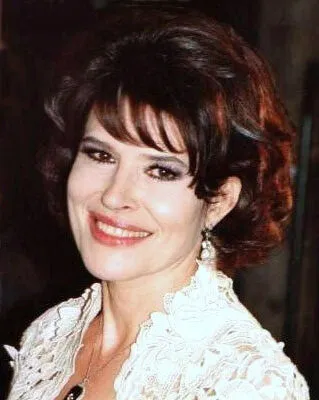
Fanny Ardant
Human Design Chart
Biography
The daughter of a cavalry officer, Fanny was born in France and grew up in Monaco, where her father's position allowed the family to visit with Princess Grace frequently. At age 17, Ardant relocated to Aix-en-Provence to study political science. She took drama classes from Jean Périmony and made her professional debut in a 1974 stage production of "Corneille's Polyeucte."
Ardant received her first critical acclaim in 1979 with her performance in Truffaut’s made-for-TV drama. Shortly after, she began her association with François Truffaut. The working relationship resulted in two of her most memorable roles, "La Femme d'à côté" in 1981 and "Vivement dimanche!" in 1983, and their personal relationship lasted until Truffaut's death of a cancerous brain tumor on 21 October 1984.
Ardant's work continued to thrive after Truffaut's death, and she cemented her reputation with serious, passionate roles in a number of dramatic films. "Pédale douce" won her the 1997 Best Actress César. Ardant also maintained a career on the stage.
Truffaut described Ardant as: "...full of vitality, enthusiasm, humor, intensity, but also with an air of secrecy, a timid side, a hint of wildness, and above all, a sense of vibrancy." She loves classical music and literature. An elegant, statuesque brunette, she has pale, striking, handsome features. She has three daughters - Joséphine (born in 1983 from her relationship with François Truffaut), Lumir and Baladine - whom she has brought up on her own.
What does Generator 4/6 mean for Fanny Ardant?
Generator 4/6 — Design at a Glance
Fanny Ardant's Design indicates a tendency towards great endurance if she responds to inner impulses. As a Generator, she has plenty of sacral energy that she uses like a workhorse – strong and steady when she has the energy for her task. This strength, however, is not shown through self-initiated action but rather through reacting to signals from life.
The mechanics of her Design require her to wait until her sacral center gives a clear "yes." Only then does she act. This path of reacting instead of initiating was key to conserving energy and deeply fulfilled her. If this strategy is not followed, two stumbling blocks arise: either she would spend energy on things without inner desire, leading to frustration and burnout, or she would be held back from her heart's project even though the power was still there.
If Fanny Ardant lived by this pattern, no one could stop her materialization power. She received deep satisfaction as a reward. If she ignored the signal of her gut and instead tried to initiate actions or suppress her desire, she met with ongoing frustration and energy deficiency. Her success did not depend on the number of actions taken but rather whether each action was based on an authentic "yes" from the sacral center. Only in this way did her energy flow freely and her sense of fulfillment remain intact.
Sacral Authority
Fanny Ardant's Design suggests a tendency to make decisions not through cognitive analysis but via immediate physical signals. As a Generator, her strategy was identical to her inner authority: the sacral authority. This instance reacts to external stimuli with a clear "gut feeling" – audible as grunting or humming, and palpable as a surge of energy. Such signals marked moments when her sacral motor kicked in, providing her with vital, inexhaustible energy. In these states, Fanny Ardant was enthusiastic about her activities, fully immersed in the doing without any sense of purposefulness. Her Design allowed her to move through life with joy and satisfaction, driven by this inner resonance rather than external expectations.
Another layer of her decision-making came from the connection to spleen authority. With the Spleen Center activated and possibly directly connected to the Sacral Center, it served as a supportive instance. This gave her the ability to react particularly quickly and spontaneously. She had an immediate access to her physical well-being and instinctive perception. This combination of sacral confirmation and spleen intuition allowed Fanny Ardant to reliably guide herself by her inner impulses. The distinction between mere impulsive reaction and the true sacral response lay in consciously paying attention to these specific bodily signals. Her chart thus described a mechanism where vitality and instinct were primary navigational aids, driven by an energy source that only unfolds when it is addressed from within.
The 4/6 Profile — Opportunist / Role Model
Fanny Ardents Design sets a tendency towards experimental network building in the first three decades of life. Before Saturn returns, line 6 of her configuration still acts like line 3, which prompts her to try and test extensively in relationships and friendships. This phase serves the purpose of building a foundation through direct experience within social structures.
Once line 6 becomes active, she exhibits the central inner conflict of Profile 4/6: the tension between the emotional need for belonging (line 4) and the intellectual drive for distance and meaning-making (line 6). This contradiction between heart and head can be confusing but shapes her developmental path towards the role of a wise mentor.
In her later years, she is expected to meet high standards in leadership and stand out through cooperation. Throughout this period, line 4 remains cautious always to avoid hurt. Starting from age 50, the phase of authenticity begins. Here, perfect behavior loses its function as protection; hypocrisy becomes impossible. Instead, it's about acknowledging individual survival tactics and moving beyond the "roof phase" to develop true wisdom through integrating the entire circuit board.
Single Definition — Defined & Open Centers
Fanny Ardant's Human Design profile shows a tendency towards constant vital energy and spontaneous intuition. Her defined Sacral Center generated a daily supply of energy that manifested as a buzzing sensation or restlessness. This energy was only available for activities she responded to; mental initiatives without this inner approval led to resistance and exhaustion. At the same time, her defined Spleen Center acted as an instance of immediate survival awareness. It provided spontaneous, irrational warning signals in the present moment, protecting health and well-being once trusted. Additionally, the defined Root Center created a persistent existential pressure that propelled her forward and helped her deal with stress to thrive materially or make corrections.
In contrast, Head, Ajna, and G Centers were open. The open Head Center meant no fixed way of processing mental inspiration; instead, she tended to be distracted by doubts or questions from others when not listening to her inner authority. Similarly, the open Ajna Center allowed for a flexible mind that absorbed concepts from the environment rather than having its own firm theories. The open G Center lacked a set identity or direction; she adapted to people and places around her and found her orientation through external initiation, especially in correct relationships and environments.
Further open centers were Heart, Solar Plexus, and Throat. The open Heart Center had no consistent willpower; it tended to give promises or prove worthiness for recognition, often leading to frustration as the energy was not consistently available. The open Solar Plexus Center absorbed and amplified emotions from the environment without possessing them, leading to a risk of emotional over-identification. Finally, the Throat Center was open; communication did not come from a consistent source but spontaneously in response to external invitations, creating pressure to force attention rather than waiting for the right moment to speak.
Channels for caring values and meaningful life struggle.
Fanny Ardant's Human Design profile shows a tendency towards selfless service to the collective paired with stubborn resistance against external pressure. This duality shapes her mechanics: On one hand, her aura automatically attracts trust; on the other, she seeks meaning in resistance.
The Channel of Preservation 27-50 connects the Sacral Center with the Spleen Center through Gate Caring (27) and Gate Values (50). This creates a constant aura of trust and responsibility for the clan. The quality of all activities is enhanced by selfless care from Gate 27, while Gate 50 guards traditional values necessary to maintain order. This channel generates many levels of preservation to serve and protect the clan and its creative endeavors. It's about 'enlightened selfishness': Only those who first take proper care of themselves can nourish others. Responsibility is only taken when there's an inner confirmation; otherwise, there's a risk of overloading.
Simultaneously, the Channel of Life Struggle 38-28 acts as a juxtaposed force. It connects the Root Center with the Spleen Center through Gate Fighter (38) and Gate Player (28). This is about finding meaning in life by struggling. Gate 28 recognizes if a struggle is appropriate and worthwhile, while Gate 38 exerts pressure to defend individual integrity against external distractions. This adrenalized energy drives towards individuation by stubbornly listening to present awareness and forcing mutation in the status quo.
This structure is shaped by Gate Innocence/Mysticism (25) and Gate Devotion/Body Love (46). Gate 25 allows access to unconditional love through a mystical channel, while Gate 46 fosters determination for full participation in the process. Success here comes from engagement and devotion to the physical body as a temple. The combination of the caring aura of Channel 27-50 and the fighting integrity of Channel 38-28 creates an inner conflict between the need to preserve the clan and the urge to prove individuality through resistance.
Individual Circuitry — Circuit Signature
Fanny Ardant's Human Design profile unfolds two parallel, energetically separate streams. As a Simple Definition, these forces did not work as a continuous flow but as coexisting focal points. The Knowledge Circuit connected her Spleen and Root Centers through the Channel of Life Struggle (Gates 28-38). This created a pulsating, acoustic energy of individual identity. Here it was about walking one's own path and transformation through mutation – deviating from the known. The Spleen provided intuitive selection, while the Root supplied impulsive drive for change in the world.
Parallel to this, the Archer Circuit connected her Sacral and Spleen Centers at Fanny Ardant. Active here was the Channel of Preservation (Gates 27-50). This connection brought timeless, instinctive energies of touch and smell into play. It was about the primordial: protecting genetics, preserving family, and nurturing. The sacral life force was linked with the intuitive care of the Spleen, emphasizing themes like caregiving, defense, and roles of 'mother and father'.
While the Knowledge Circuit aimed at innovation and expressing uniqueness through emotional waves, the Archer Circuit focused on clan survival. Both circuits shared the Spleen Center as an intuitive instance, yet belonging to different energetic groups, Fanny Ardant's experiences of individual transformation and familial preservation remained separate, non-directly merging reality levels.
Right Angle Cross of the Vessel of Love 1
Fanny Ardents Design establishes a profound, often unconscious dynamic of devotion and emotional vulnerability as the central driving force of her life. This existential orientation stems from the right cross of the Love Vessel 1. It is a specific configuration that fills the inner self with an intense, almost fated quality. The energy of this cross does not seek superficial validation but rather seeks a connection that penetrates to the core. Here, vulnerability is not a flaw but the price paid for a love that eclipses everything else.
This mechanism describes a state in which the ego feels completely surrendered, often without rational control over the extent of these feelings. It is an inner compass pointing towards absolute emotional authenticity, even if it means pain. The experience of love here is not felt as a pleasant sensation but as an existential necessity that permeates and shapes the entire personality. Those who carry this configuration move in a world where superficial bonds are inadequate; it's about the risk of fully opening up and potentially losing or gaining everything. This intensity defines how relationships are perceived and lived – not as choices, but as fateful blows deeply rooted in the soul.
Saturn Return · Uranus Opposition · Chiron Return · 2nd Saturn Return — Life Cycles
Fanny Ardant's Design shows a structure in which planetary cycles act as clear turning points for relationships, success, and career. In 1975, at the age of 26, her first Saturn return marked the birth of her first daughter Lumir. This cycle often condenses years of groundwork into solid results and anchors new responsibility in partnership.
Ten years later, in 1990, her Uranus opposition coincided with the birth of her third daughter Baladine. This configuration frequently brings unexpected changes or liberating blows, which reordered and expanded her family structure.
Her Chiron return around age 47 (1996) ushered in a phase of fulfillment. In this year, she received the César for best leading actress for "Aussi les femmes ont du plaisir!" and experienced success with "Ridicule." This cycle allows one's incarnation cross to bloom if lived according to strategy; here, purpose was made tangible through external recognition.
Her second Saturn return followed in 2009 at the age of 60. She debuted as a director with the archaic revenge drama "Ash and Blood." This cycle often demands a redefinition of one's authority and structure, which for Fanny Ardant resulted in a creative realignment from actress to director. This sequence illustrates how her chart structure shaped life phases through clear, cyclical milestones.
Generator · Sacral Authority — Synthesis
Fanny Ardant seems to be marked by a deep inner drive that manifests in a strong reaction to the environment (sacral center) and is intensified by a constant search for authenticity and meaning in life (Gate 25, Line 6). This combination of reactive energy and the desire for self-discovery creates a character that is both powerful and vulnerable. The ability to step into different roles and the associated adaptability (open G Center) appears to be a central element of her approach to life – a way of experiencing the world by absorbing and reflecting the energies of others.
A central paradox in Fanny Ardant's design lies in the tension between the need for community and the desire for individual freedom (Profile 4/6). On one hand, she seeks connection and validation through relationships (Line 4), while on the other hand, she strives for an independent space to reflect on questions of meaning (Line 6). This internal conflict between heart and head requires constant navigation between closeness and distance, which can be both a source of her creativity and potential inner conflicts.
2 Defined Channels
Incarnation Cross - Right Angle Cross of the Vessel of Love 1
Solar Return
The Solar Return shows the moment when the sun returns to its exact birth position - your personal solar year.
Life Cycles
Discover the life cycles with a detailed triple view (birth chart, cycle chart, composite).
Human Design Profile
- Type
- Generator
- Strategy
- To respond - wait for something to respond to
- Authority
- Sacral Authority
- Profile
- 4/6 - Opportunist / Role Model
- Definition
- Single Definition
- Incarnation Cross
- Right Angle Cross of the Vessel of Love 1
- Date of Birth
- 22.03.1949 12:00
- Place of Birth
- Saumur, France
Frequently Asked Questions
What is Fanny Ardant's Human Design type?
What Profiles does Fanny Ardant have?
Which Authority does Fanny Ardant possess?
What incarnation cross is assigned to Fanny Ardant?
When was Fanny Ardant born?
Discover your own Human Design
Are you also a Generator? Find out in a personal reading how to use your sacral energy correctly and discover deep satisfaction.
More Personalities
Back to overviewSissy Spacek

Aaliyah

Alexia

Anémone

Angèle

Ann-Margret
