
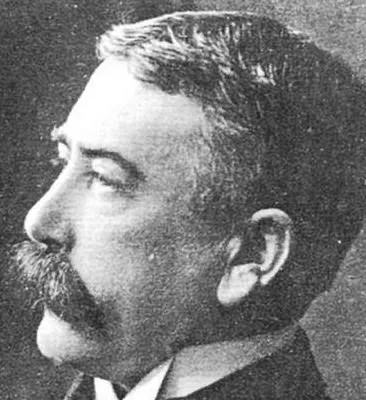
Ferdinand de Saussure
Human Design Chart
Biography
Saussure died on 22 February 1913.
The Human Design of Ferdinand de Saussure: Manifesting Generator 5/1
Manifesting Generator 5/1 — Design at a Glance
Ferdinand de Saussure's design features a hybrid nature that combines the speed of a Manifestor with the constant energy of a Generator. He was someone who could skip steps and achieve results quickly if his internal rhythm aligned properly. This configuration describes a person who, while belonging to the Generators – marked by a defined Sacral Center with steady energy flow – also possesses Manifestor traits.
The mechanics require the strategy of 'Reacting instead of Initiating'. Ferdinand de Saussure had to wait for impulses and act only when his Sacral Center gave consent. Acting too hastily or without this inner confirmation led him to miss crucial steps, forcing him to backtrack and fill gaps – a source of frustration. Additionally, his speed tended towards multitasking; he often started several projects simultaneously.
His creative power unfolded fully in 'Play Mode'. With variety and parallel project work, as long as the Sacral Center gave a clear 'yes', Ferdinand de Saussure found deep satisfaction in his work. The advice to finish one thing before starting another did not suit his nature; instead, he needed this dynamic diversity to channel his energy productively without frustration.
Emotional Authority
Ferdinand de Saussure's design predisposes him towards temporary emotional fluctuations that color his perception of the world with mood swings. He showed himself as someone whose inner decision-making center lies in the defined Solar Plexus Center – the seat of emotional authority. This mechanism means he is subject to a constant wave of ups and downs in his feelings. What appears inspiring at one moment can turn negative in the next. His immediate feeling, however, is only a snapshot, not a guaranteed truth value. Spontaneous decisions made from this emotional heat are therefore prone to error.
The Human Design mechanics of emotional authority dictate that this instance always takes precedence regardless of other defined centers in the chart. For Ferdinand de Saussure, this necessitated allowing time and patience to prevail. He had to reconsider decisions multiple times over sleeping to gain clarity. By hesitating and asking more than once, intense feelings subsided. Only then did he establish the necessary emotional distance that allowed for calmness and deeper insight. This process was essential for long-term realignments in his life.
The 5/1 Profile — Heretic / Investigator
Ferdinand de Saussure's design creates a tension between the magnetic urge to provide solutions as a hero for others and the deep need for withdrawal. As a 5/1 profile, he used the depth of his knowledge base (Line 1) to offer it to others for problem-solving. Line 5 gave him almost magnetic qualities: Others instinctively sought answers from him, projecting power and knowledge onto him. This could quickly lead to exhaustion if clear boundaries were not set – similar to a scientist who is drained after hours-long conferences while their inbox remains full of new questions.
Line 1 emphasized the inner foundation and willpower. Rest periods were crucial for Ferdinand de Saussure to build this strength. Metaphors like moon phases illustrated that recovery was necessary before he could work again. His ego grew restless during prolonged solitude, but only after a completed rest phase could he return to work. By learning to say no, he maintained the balance between research for himself and problem-solving for others. Thus, he used his gifts optimally without breaking down from unbridled giving to the environment.
Split Definition — Defined & Open Centers
Ferdinand de Saussure's Human Design profile indicated a tendency towards strong self-determined presence characterized by constant vital energy and clear identity. His defined G Center provided him with a reliable sense of direction and love, while the also defined Heart Center supplied willpower and ego strength. This combination created an inner authority that helped him keep promises and control his own resources.
Communication served as a central pivot point: His defined Throat Center transmuted messages from these internal sources directly into action and expression. The energy for this came from the Sacral Center, a motor with constant vitality but only available through reaction – not initiation – ensuring endurance in tasks he responded to rather than initiating himself.
Emotionally, his defined Solar Plexus moderated this dynamic. As an emotional authority, he revealed the truth only after experiencing the emotional wave; he colored his environment and needed patience for clarity before acting.
In contrast, Head, Ajna, and Spleen Centers were open. The open Head Center tended to absorb mental pressure from the environment or get stuck in doubts rather than possessing consistent inspiration. The open Ajna Center indicated a flexible but not fixed mind that could take on other people's concepts without holding them as absolute truth. The open Spleen Center made him vulnerable to absorbing well-being or fear from his surroundings; he tended to cling to things that gave a false sense of security rather than trusting spontaneous inner intuition. Also, the Root Center was open, facilitating the absorption of external stress and adrenalin-driven pressure not generated by himself but reflected.
Channels for powerful presence, self-empowerment and communal connection.
Ferdinand de Saussure's design inclined towards deep exploration and perfection of individual behavior. This orientation stemmed from the connection between sacral energy and the G Center, giving him the power to hold onto his innermost convictions and love himself as long as he waited for external stimuli. Channel of Research 34-10 linked Gate of Power (34) with Self Behavior Gate (10), enabling him to express his individuality through patient reaction rather than impulsive action.
Parallel to this, a charismatic influence based on authentic expression in the here and now was present. Channel of Charisma 34-20 connected the vital energy from Gate 34 directly with the Throat Center via Now Gate (20). This created a drive for manifestation that was constructive only when guided by sacral reaction; otherwise, chaotic action threatened. The combination of these channels promoted a lifestyle where self-love and independence were demonstrated through consistent, reactive acting.
Channel of Awakening 10-20 rounded this profile off by connecting the G Center with the Throat Center. Through the Gates of Presence (10) and Now (20), Ferdinand de Saussure spoke for himself and lived his principles in the present moment. His authentic existence served as an unconscious inspiration for others to live their own uniqueness without him actively pursuing this.
Individual Circuitry — Circuit Signature
Ferdinand de Saussure appeared as a person with deep inner strength and strong self-worth, yet this internal strength rarely found direct verbal expression. His design presented a tension between individual conviction and the need for cooperative support in social contexts.
The active Centering Circuit connected his Identity Center with the Sacral Center (Channel 10-34). This connection fostered a fortified, courageous personality with clear individual convictions ('I am who I am'). However, lacking a connection to the Throat Center, these firm internal positions often remained unspoken or difficult to articulate. Parallel, the Ego Circuit operated through the connection of Heart and Solar Plexus Centers (Channel 37-40). This focused on cooperation, mutual support, and reciprocal give-and-take within a group. Since this circuit did not have a direct link to the Sacral Center, periodic rest for resource regeneration was essential.
Additionally, integration through channels between Throat, Sacral, and Identity Centers (Gates 20-10, 20-34) allowed drawing strength from reacting to life and making it effective in the present moment. Overall, this profile combined inner individuality with a desire for clan-oriented cooperation, where the energy for such cooperation was rhythmic, not constant.
Left Angle Cross of Duality 2
Ferdinand de Saussure's design established a deeper existential dynamics marked by the archetypal pattern of "Left Cross of Duality 2." This manifested as a persistent tension field between the need for individual identity and the drive to belong to a group or community. For Ferdinand de Saussure, this duality was not a transient conflict but a fundamental life pattern that determined his inner orientation.
The left cross of duality 2 describes a structure in which one's uniqueness is always negotiated within the context of the collective. It involves the constant balance between the desire to define oneself as an independent individual and the simultaneous need to be part of something larger. This configuration generated an internal dynamic for Ferdinand de Saussure where self-determination and connectedness continually intersected. The challenge was to integrate these two poles not as opposites but as complementary aspects of a single experience. Through this pattern, he learned that true identity often emerges only in the mirror of community, while the group is enriched by individual contributions. This archetypal structure shaped his way of positioning himself in social and intellectual realms, inspiring him to always seek synthesis between autonomy and integration.
Saturn Return · Uranus Opposition · Chiron Return — Life Cycles
Ferdinand de Saussure's Human Design profile indicated a tendency towards late but profound authority in his field of expertise. This development peaked during the Chiron Return, a cycle of fulfillment and bloom between the ages of 49 and 51. During this phase, years of inner work condensed into clear, outwardly effective competence. It was not about healing old wounds but rather about unfolding one's incarnation purpose: achieving a state where knowledge and insights could be understood personally and authoritatively conveyed to others. The transition from searching student to prepared expert became tangible.
This mechanical process manifested concretely in the year 1906. At age 49, his professorship at the University of Geneva was expanded to General Linguistics. This event was no coincidence but rather an external confirmation of the inner maturation described by the Chiron Return. The expansion of responsibilities reflected the now available capacity to systematically organize complex connections and convey them to others. His design promoted in this age the ability to pour one's own insights into a structure accessible and teachable to others. Inner uncertainty gave way to clear positioning; knowledge became the foundation for broader influence. Thus, the Chiron Return marked the point at which Ferdinand de Saussure could fully live out his specific life task—the systematic grasp and conveyance of linguistic principles—in its entirety. The mechanics of his design supported the shift from individual appropriation to institutional mediation.
Manifesting Generator · Emotional Authority — Synthesis
Ferdinand de Saussure lived a life marked by profound inner dynamism. His design as an Expressing Generator (with defined sacral authority) indicates a person who constantly possessed energy and could seize opportunities quickly, yet was also hindered by emotional waves and the necessity of mature decision-making. This combination of swift reaction and internal deliberation formed the thread of his work – a constant oscillation between the impulsive and the reflective. The Awakening Channel (10-34) amplified his ability to recognize principles in the present moment and put them into action, while the defined Throat Center enabled the transformation of these inner insights into communication.
A central paradox lay in the connection between quick action and deep analysis. His Profile as Hero/Researcher (5/1) pointed to a knowledge base he enjoyed sharing, yet emotional authority required time for insights to mature. Thus arose a tension field between the need to react quickly and offer solutions – facilitated by the Manifestor component – and the inner necessity of thoroughly weighing decisions to avoid premature action or skipping crucial steps. This shift between initiation and reaction shaped his approach to complex questions.
4 Defined Channels
Incarnation Cross - Left Angle Cross of Duality 2
Solar Return
The Solar Return shows the moment when the sun returns to its exact birth position - your personal solar year.
Life Cycles
Discover the life cycles with a detailed triple view (birth chart, cycle chart, composite).
Human Design Profile
- Strategy
- To respond - wait for something to respond to
- Authority
- Emotional Authority
- Profile
- 5/1 - Heretic / Investigator
- Definition
- Split Definition
- Incarnation Cross
- Left Angle Cross of Duality 2
- Date of Birth
- 26.11.1857 15:00
- Place of Birth
- Geneva, SWTZ
Frequently Asked Questions
What is Ferdinand de Saussure's Human Design type?
What profile did Ferdinand de Saussure have in Human Design?
What authority guided Ferdinand de Saussure?
What incarnation cross did Ferdinand de Saussure have?
When was Ferdinand de Saussure born?
Discover your own Human Design
Are you also a Manifesting Generator? Find out in a personal reading how to unfold your multi-talents and direct your energy wisely.
More Personalities
Back to overviewAlain-Fournier

Aldair

Alizée

Angeli

Arletty

Artus
