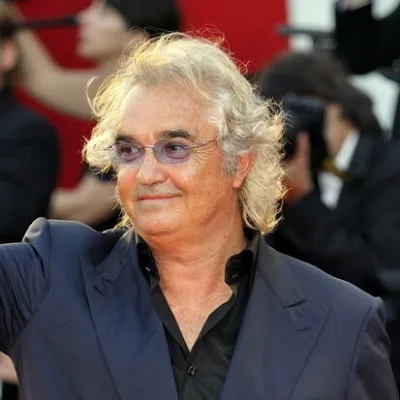
Flavio Briatore
Human Design Chart
Biography
Briatore started his career as a restaurant manager and insurance salesman in Italy. He was convicted in Italy on several fraud charges in the 1980s, receiving two prison sentences, though the convictions were later extinguished by an amnesty. He spent several years as a fugitive in the Virgin Islands and the United States, where he set up several United Colors of Benetton franchises, paving the way for his role at Benetton's F1 team. From 2007 to 2011, he was part-owner and chairman of English association football team Queens Park Rangers.
The Human Design of Flavio Briatore: Generator 2/4
Generator 2/4 — Design at a Glance
Flavio Briatore was someone who could unleash his immense stamina and strength primarily when he responded to concrete impulses from his environment. His Generator design established a foundational structure that does not thrive on the principle of independent initiation but rather on the ability to perceive signals and respond with immediate, powerful action. This energy source is sacral, centered in the abdomen, functioning like an engine that only starts up through the right signal.
The central challenge in this pattern lay in not overstepping or forcing things for which there was no internal resonance. If he did so, frustration or loss of energy would ensue. Conversely, it was crucial for him that nobody hindered him from tasks where his inner compass clearly signaled a “yes” – even if external circumstances suggested stopping earlier. When Flavio Briatore followed this reactive strategy and acted from the gut, it resulted in deep satisfaction and unbridled productivity. His success thus depended less on strategic planning than on recognizing the right life offers and responding to them with full force rather than taking the first step himself.
Sacral Authority
Flavio Briatore displayed a decision-making structure based on immediate physical reaction. His Generator design allowed him to unite strategy and inner authority in one function: sacral authority. This mechanism spared him complex deliberation processes; instead, he was guided by a direct gut feeling or a noticeable surge of energy as a response to external stimuli.
This internal guidance manifested through bodily signals like grunting, humming, or simple vocalizations (like “Mhm”). As long as his Emotional Center remained open – not blocked by constant mood swings – he could clearly perceive these sacral impulses. When his Sacral Motor engaged with a topic, Flavio Briatore felt vital and energized. He tackled his tasks with great enthusiasm and immersed himself in the activity without seeking an abstract purpose. The joy of doing was the driving force.
Additionally, his activated Spleen Center acted as a supportive instance. This connection gave him the ability to act particularly quickly and spontaneously. He had direct access to his instinctive perception and physical well-being. This combination of sacral energy and spleen-supported intuition allowed him to reliably orient himself by his inner signals and make decisions in the moment of encountering the outside world, rather than planning them mentally.
The 2/4 Profile — Hermit / Opportunist
Flavio Briatore was someone who oscillated between intense withdrawal phases and a need for close connection with a chosen group. His design tended towards condensing knowledge from his network during solitude to develop clear strategies. This dynamic stems from his Profile 2/4: Line 2 demands independence and personal space, while Line 4 carries the desire for integration with “favorite people.” It was crucial for him to clearly communicate these needs – when he sought company and when he needed to be undisturbed. During withdrawal phases, he delved into internal processes to gain clarity. Only once this inner balance was restored did he return to incorporate his reflected insights. Line 2 often projected competence in process completion externally, even if there was internal uncertainty; it sought change and withdrew ascetically during trend shifts. Simultaneously, Line 4 (Gate 61) promoted deep research and expansion through collaboration. His knowledge could be carried by others into various directions, which could be painful but also allowed influence without direct control. Thus, a pattern emerged: withdrawal for condensation, then targeted integration into the network to develop brilliant ideas from the synthesis of isolation and community.
Split Definition — Defined & Open Centers
Flavio Briatore was characterized by a constant mental pressure stemming from his defined Head and Ajna Centers. This configuration created a persistent drive to question and find answers, often experienced as inner restlessness or concern since there was no direct energy available for implementing these thoughts. Instead, his mind served to inspire others to think deeply. His communication occurred through his defined Throat Center, which translated these mental concepts into the world.
At the same time, he possessed a massive source of vital energy through his defined Sacral Center. However, this power was only available when responding correctly to external initiatives; initiating actions actively led to frustration and exhaustion as it then broke the connection with sacral power. His actions were therefore based on waiting for an internal confirmation ("Yes" or "No") before engaging in commitments.
In contrast, his G Center was open, meaning he did not have a fixed identity or direction. He tended to blend into his environment and often sought a place where he felt belonging rather than constructing his own identity. His open Heart Center made him vulnerable to trying to prove his worth through promises or competition, which ended in spirals of self-doubt when these could not be kept. Additionally, his open Solar Plexus Center absorbed the emotions of others, leading him to feel foreign moods as his own and avoiding confrontation out of fear of emotional overload. Finally, his open Root Center took on external stress, pushing him into hyperactive behavior to escape this pressure rather than confronting it.
Channels for intuition, mental structure and individual power.
Flavio Briatore was someone who made complex situations understandable through logical order while trusting intuitive warning signals. His design inclined towards structuring information mentally before communicating it. The Accepting Channel 17-62 connected his Ajna Center with the Throat Center; Gate 17 visualized patterns, whereas Gate 62 translated these into language. This created an internal process of organization: Only what logically fit into his mental system could he understand and convey. He enjoyed speaking about details but found relief in clearly articulating his opinions once the inner structure was aligned.
Simultaneously, a deep survival intelligence influenced him. The Power Channel 34-57 connected his Spleen Center with the Sacral Center. Gate 57 in the Spleen continuously checked the environment for vibrations and dangers while Gate 34 in the Sacral Center prepared energy for spontaneous reactions. This allowed him to protect himself through intuitive assessments of situations and act quickly without relying primarily on mental reasoning.
Another aspect was his drive to transform experiences into stories. The Abstraction Channel 47-64 connected his Head Center with the Ajna Center. Gate 64 brought initial impulses and possible confusion, which were translated into conceptual connections by Gate 47. His mind constantly played with possibilities to form a meaningful perspective or story from the chaos of experience that he could then share.
Additionally, individual Gates shaped his approach: Gate 42 in his design emphasized closing processes for new growth, while Gate 32 sought continuity and material success. Gate 61 aimed at inner truth through acoustic clarity, and Gate 27 introduced a caring, altruistic component. Gate 48 allowed the recognition of deeper patterns, though implementation could be frustrating, and Gate 18 urged not to take corrections in the collective process personally.
Collective Circuitry — Circuit Signature
Flavio Briatore's design inclined towards strategic clarity and intuitive reaction. He was someone who combined logical structures with inner security without these areas directly overlapping. In him existed two separate, parallel power centers: a cognitive area and a survival-oriented block.
In the first flow, the Understanding Circuit connected his Ajna Center with the Throat Center (Channel 17/62 'Accepting'). This promoted the ability to articulate rational insights clearly and communicate future strategies. Parallel to this in the same cognitive block was the Meaning Circuit through Head and Ajna Centers (Channel 64/47 'Abstraction'). Here it was about emotionally reflecting on past experiences and drawing abstract patterns from earlier events. Both channels shared the Ajna Center, enabling an intensive processing of ideas and feelings that were not directly connected to the second block.
The second isolated flow consisted of Integration through Sacral and Spleen Centers (Channel 34/57 'Power'). This connection ensured survival through intuitive reactions to current threats in the present moment. Flavio Briatore could draw power from reacting to life and channel it through intuitive knowledge. As this is a Shared Definition, cognitive analysis for future/past and intuitive survival reaction worked as separate, not directly energetically connected systems in his design.
Right Angle Cross of Maya 1
Flavio Briatores Human Design shows a tendency towards a specific, almost mythical kind of leadership. The right Maya cross 1 describes not an ordinary career path but an archetypal role: that of the pioneer who ventures into inhospitable or uncharted territory and brings order where chaos once reigned. It's the profile of an adventurer ready to take risks to blaze new trails—not out of mere curiosity, but with a deep inner drive to establish something lasting in a new world.
This configuration grants natural authority that is often misunderstood. It appears as if he were a discoverer leading his crew through uncharted waters. Flavio Briatore showed himself to be someone who was not concerned about safety but rather the possibility of pushing boundaries. The energy of this cross demands facing challenges head-on instead of avoiding them. It's a design for those ready to take the first step into the unknown and pursue a vision that transcends the here and now. This attitude shapes his actions as someone who does not merely use structures but actively redefines them, often against resistance and established norms.
Saturn Return · Uranus Opposition · Chiron Return · 2nd Saturn Return — Life Cycles
Flavio Briatores Human Design reveals a structure where external crises often act as catalysts for new responsibilities. This was evident in 1979 at the age of 29: The death of his business partner Attilio Dutto in an auto bomb explosion marked his first Saturn return. In this cycle, long-term efforts solidify into tangible results; here a severe crisis forced Briatore to redefine his role and take on responsibility in a changed context.
Ten years later, in 1989 at the age of 39, he went through the Uranus opposition. This cycle often demands radical changes to life's structure. Briatore was appointed as manager and team chief for Formula-1 racing team Benetton—a clear step into a new career phase driven by the need for autonomy and structural renewal.
His second Saturn return followed in 2007 at age 57. During this period of maturation and consolidation, Briatore and Bernie Ecclestone purchased London's football club Queens Park Rangers. This underscores his design tendency to create or take over stable structures again in later life phases after earlier cycles had already made fundamental shifts.
Generator · Sacral Authority — Synthesis
A central red thread in this design is the dynamic interaction between inner drive and external reaction. Sacral energy (Generator type) forms a strong basis for sustained action, especially when it comes to tasks that truly inspire. However, this energy is complemented by his profile as a natural talent/networker, which implies an ongoing oscillation between the need for withdrawal and the search for connection. The defined mental circuit (Understanding Circuit) further reinforces this internal process by adding a constant necessity for analysis and organization of information—a logical foundation for the sacral reaction to external stimuli.
The central paradox lies in the tension between the desire for deep immersion into inner processes (Line 2) and the ability, through the defined Head Center (Gate 17/62), to filter, structure, and share information with others. This creates an internal field of tension: The energy wants to flow and orient itself towards activities that are inspiring in the moment, while the mind constantly analyzes and tries to recognize patterns—a combination of immediate reaction and detached evaluation. Crises (Saturn return 1) and career peaks (Uranus opposition, Saturn return 2) seem to confirm this dynamic.
3 Defined Channels
Incarnation Cross - Right Angle Cross of Maya 1
Solar Return
The Solar Return shows the moment when the sun returns to its exact birth position - your personal solar year.
Life Cycles
Discover the life cycles with a detailed triple view (birth chart, cycle chart, composite).
Human Design Profile
- Type
- Generator
- Strategy
- To respond - wait for something to respond to
- Authority
- Sacral Authority
- Profile
- 2/4 - Hermit / Opportunist
- Definition
- Split Definition
- Incarnation Cross
- Right Angle Cross of Maya 1
- Date of Birth
- 12.04.1950 08:50
- Place of Birth
- Verzuolo, Italy
Frequently Asked Questions
What is Flavio Briatore's Human Design type?
What Profile does Flavio Briatore have in Human Design?
Which Authority guides Flavio Briatore?
What is Flavio Briatore's incarnation cross?
When was Flavio Briatore born?
Discover your own Human Design
Are you also a Generator? Find out in a personal reading how to use your sacral energy correctly and discover deep satisfaction.
More Personalities
Back to overviewAaliyah

Alexia

Angèle

Anne-Marie

Arcángel

Arno