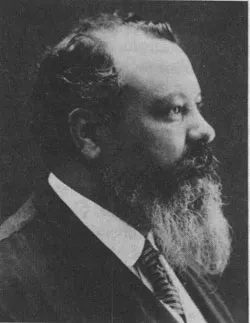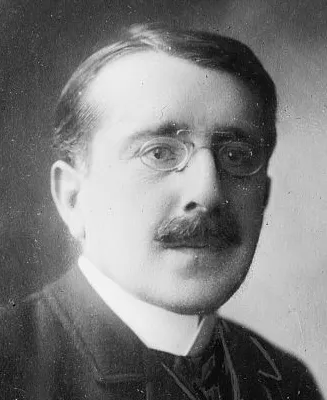
Frantz Funck-Brentano
Human Design Chart
Biography
He died on 13 June 1947 at Montfermeil. He was a son of sociologist Théophile Funck-Brentano. One of his sons, Christian Funck-Bentano (1894–1966) was among the founders of the newspaper Le Monde; another, Claude Théophile (born 1892) was shot down on the front at Vosges in February 1916.
What does Manifestor 2/4 mean for Frantz Funck-Brentano?
Manifestor 2/4 — Design at a Glance
Frantz Funck-Brentano revealed himself as someone destined to lead the world into a new future. His design marked him as a pioneer and visionary, comparable to an emperor in ancient Rome who, though carrying the vision of a great empire, did not wage the necessary wars himself but delegated them to others. This role, however, came with a specific pain point: He was often misunderstood because his thinking often exceeded that of his surroundings. This led to polarization; while some people loved his big dreams and followed him, he was disliked or even hated by others precisely because of these visions. For the right followers to find him, it was crucial that he informed others about his intentions in a timely and precise manner. This strategy of informing was the key to his inner balance. If Frantz Funck-Brentano lived according to this design and followed his inner authority, he was rewarded with a sense of inner peace. If he acted against his design, he instead felt a persistent, deep anger. His path was therefore characterized by the necessity to clearly communicate his initiative to minimize resistance and gain the support of those willing to carry his visions.
Emotional Authority
Frantz Funck-Brentano showed himself as someone who did not make decisions in the heat of the moment but consciously took time to find inner clarity. His design carried emotional authority, meaning that his defined emotional center was the source for all important life decisions. This mechanism holds true regardless of other defined centers: Once the emotional center is active, it takes precedence.
Frantz Funck-Brentano was subject to an emotional wave that manifested in a constant up and down of his feelings. The world appeared to him always colored by his current mood. In one moment, he could be totally enthusiastic about something, in the next, he saw the same thing completely negatively. His feeling in the moment, however, was only a snapshot, a first impression that did not necessarily represent his truth. Quick, spontaneous decisions based on emotion often had negative consequences.
Instead, Frantz Funck-Brentano took time to let a decision mature. This process required patience and the multiple reconsideration of questions. The more time he took, the deeper and more comprehensive he could understand something. He hesitated properly, asked himself multiple times, and waited until the intense feelings subsided. Only then did he gain emotional distance, and clarity and calmness set in. This path was particularly important for long-term decisions that could have a significant impact on his life course. Going through this process was the central strategy to find his inner truth.
The 2/4 Profile — Hermit / Opportunist
Frantz Funck-Brentano's design laid a tendency towards a constant interaction between deep withdrawal and active networking. He showed himself as someone who oscillated between the need for seclusion and the desire for community. For him, it was essential to create a safe environment in which he could clearly communicate when he sought company and when he wanted to be left alone.
This dynamic resulted from his Profile 2/4. Line 2, characterized by Gate 12, called for phases of cleansing and isolation. During this time, he withdrew to sort out unclear emotions and gain inner clarity. Saturn's influence underscored the necessity of discipline and purity in this phase. Once this inner need was satisfied, Line 4, influenced by Gate 36, came into play. Here, he actively sought the network, gathered information, and made connections. He used his friendliness to gain access to confidential knowledge and experiences.
The tension between these two poles shaped his actions. In the alone time, he reflected on what he had learned from his network and developed new ideas from it. Without these clear boundaries between 'cave' and 'society', his energy would have been scattered. His design required this rhythmic sequence: withdrawal for processing, then engagement for information gathering. This way, he could effectively use the collected insights and fulfill his role in the social fabric without losing himself.
Split Definition — Defined & Open Centers
Frantz Funck-Brentano's Human Design profile indicated a tendency towards constant mental pressure and deep emotional reflection. He was someone who stood under the weight of permanent inspiration, asking questions and forming concepts, yet unable to directly translate these into action. His defined Head and Ajna Centers generated a continuous thought process that predisposed him to stimulate or pressure others with his ideas, while he himself struggled with the inability to immediately realize these thoughts. This configuration often led to mental anxiety, as he had to learn to accept the pressure rather than release it through hasty actions.
At the same time, he had a defined Throat, serving as a channel for his mental concepts, and a defined Solar Plexus, forming his emotional authority. This meant that he did not make decisions in his head but had to wait for the clarity of his emotional wave. His feelings were his inner compass, and he tended to dive into and out of relationships and situations when he did not respect this emotional depth.
In contrast, his G Center, Heart Center, Sacral Center, Spleen Center, and Root Center were open. This made him vulnerable to conditioning in the areas of identity, willpower, vital energy, health, and stress. He tended to long for a fixed identity and question who he really was, rather than waiting for external initiations. His open Heart Center led him into cycles of promises and disappointments when he tried to prove his worth. The open Sacral Center caused him to absorb foreign energy and overextend himself without clear boundaries. His open Spleen Center made him susceptible to fears and spontaneous, unconsidered decisions, while his open Root Center turned him into an absorber of external stress, which could lead to burnout if he did not learn to release this pressure.
Channels for emotional drama, resistance and mental imagery.
Frantz Funck-Brentano's Human Design profile was characterized by deep emotional intensity, manifesting in social interactions and the search for new experiences. His behavior was strongly influenced by his emotional wave, leading to a unique style of communication and learning.
The Openness Channel 22-12 connected his Solar Plexus to his Throat Center, allowing him to creatively express his feelings and moods, whether through speech, music, or other artistic forms. The openness in this channel depended on his mood; when he felt it, he could deeply touch and inspire others. However, this required patience and waiting for the right moment to avoid misunderstandings.
Additionally, the Transience Channel 36-35 propelled him to seek new experiences and adventures. This channel fostered a restless desire for change and promoted learning through direct experience. Frantz Funck-Brentano used this energy to challenge himself and others and explore new horizons.
The Abstraction Channel 64-47 connected his Head Center to his Ajna Center, helping him process complex ideas and experiences. He sought patterns and connections to understand his own story and others'. This process was often accompanied by mental confusion but ultimately led to clear insights and inspiring realizations.
Gate 11 contributed to visual memory and collective ideas, while Gate 6 promoted emotional development and fertility. Gate 55 played a role in emotional awareness and genetic mutation, and Gate 30 helped him recognize his feelings and desires. Finally, Gate 24 supported the process of mental renewal and finding inner peace.
Collective Circuitry — Circuit Signature
Frantz Funck-Brentano's Human Design profile indicated a tendency towards emotional reflection and the expression of past experiences. In him, two separate energetic systems worked in parallel. The Knowledge Circuit connected his Throat to his Solar Plexus Center through the Openness Channel. This created a pulsating, acoustic energy that allowed him to directly translate his individual impulses into words and thus initiate change.
Parallel to this, the Purpose Circuit was at work, but it was not connected to the first system. It consisted of two isolated segments: One channel connected the Head to the Ajna Center (Abstraction), another the Throat to the Solar Plexus Center (Transience). This configuration promoted a cyclical, visual processing of emotions from the past. Frantz Funck-Brentano was someone who sought meaning behind events and shared these insights with the collective to learn together from history. The separation of the groups meant that his innovative, individual expression and his reflective purpose-seeking worked as coexisting forces without a direct common flow.
Right Angle Cross of Eden 2
Frantz Funck-Brentano's Human Design profile bore the imprint of the right cross of Eden 2. This configuration was characterized by a specific dynamic often described as 'the search for truth' or the quest for a profound understanding of one's existence. It was not a superficial interest but a driving force that shaped his inner world.
In Human Design, the right cross of Eden 2 represents a connection between the emotional center and the solar plexus, flowing through the Gates of Intuition and Truth. This created an internal tension between what was felt and what was perceived as the truth. Frantz Funck-Brentano lived with the challenge of integrating these two aspects. His energy was directed towards looking beyond the surface and grasping the essence of situations.
This mechanism fostered a stance of reflection and pausing. Rather than acting impulsively, he tended to base his decisions on a deep, often intuitive perception. The truth he sought was not just intellectual but emotionally grounded. His design suggested that his greatest strength lay in navigating complex emotional landscapes and finding a clear, authentic path. This inner alignment shaped the way he experienced and responded to the world.
Saturn Return · Uranus Opposition · Chiron Return · 2nd Saturn Return — Life Cycles
Frantz Funck-Brentano's life journey followed the classic rhythmic phases of human maturation as described in Human Design through the major planetary cycles. His first Saturn return marked the transition into full self-responsibility, a phase where the foundations of his identity crystallized and long-term commitments became clear. This period served as the foundation for subsequent development.
The Uranus opposition then brought a time of necessary letting go and change. Here, the urge to question old structures and take new paths was evident, often accompanied by an inner restlessness that led to expanding horizons. It was a phase of liberation from bonds that no longer aligned with the growing self.
The Chiron return, the cycle of fulfillment, marked the peak of personal unfolding. During this life phase, the inner sense and true life purpose became experiential. If Frantz Funck-Brentano had followed his strategy up to this point, the bloom of his existence was revealed, a state of deep peace and confirmation of his path.
The second Saturn return concluded this arc. It was marked by integration and the passing on of wisdom. The experiences of the previous decades were now a coherent whole that Frantz Funck-Brentano carried with authority and calm. This cycle confirmed the durability of the lived life and laid the groundwork for the final phase of grounding and letting go.
Manifestor · Emotional Authority — Synthesis
Frantz Funck-Brentano lived a life path marked by an internal tension between the drive to initiate new things and the necessity to process these emotionally. As a Manifestor, he was destined to be a pioneer and develop visions (Manifestor Type), yet his emotional authority required a mature engagement with his feelings before he could act (Emotional Authority). This combination led to a constant interplay between the desire for rapid progress and the need to surrender to his emotional wave. The defined Head Center intensified this internal pressure to question and seek inspiration, while the open channel of openness (22/12) enhanced his ability to express emotions and influence others.
A central paradox in his design lay in the entanglement of individuality and community. The profile as a natural talent and networker points to a pendulum swing between the need for withdrawal and the search for connection (Profile 2/4). He needed time for internal processes to gain clarity, yet simultaneously sought exchange with others to share his inspiration. This led to a dynamic tension between the desire for autonomy and the longing for belonging, which shaped his life path and led him to both pursue independent paths and bring transformative impulses into his environment (Knowledge Circuit).
3 Defined Channels
Incarnation Cross - Right Angle Cross of Eden 2
Solar Return
The Solar Return shows the moment when the sun returns to its exact birth position - your personal solar year.
Life Cycles
Discover the life cycles with a detailed triple view (birth chart, cycle chart, composite).
Human Design Profile
- Type
- Manifestor
- Strategy
- To inform others before acting
- Authority
- Emotional Authority
- Profile
- 2/4 - Hermit / Opportunist
- Definition
- Split Definition
- Incarnation Cross
- Right Angle Cross of Eden 2
- Date of Birth
- 15.06.1862 12:00
- Place of Birth
- Schuttrange, Luxembourg
Frequently Asked Questions
What was Frantz Funck-Brentano's Human Design type?
What profile did Frantz Funck-Brentano have?
What authority did Frantz Funck-Brentano have?
What incarnation cross did Frantz Funck-Brentano have?
When was Frantz Funck-Brentano born?
Discover your own Human Design
Are you also a Manifestor? Find out in a personal reading how to use your initiation power peacefully and dissolve resistance.
More Personalities
Back to overviewChristian-Jaque
Kesha

Lucebert
Masaccio
Nadar
Papus