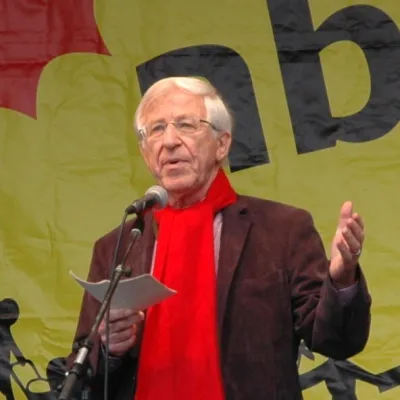
Franz Alt
Human Design Chart
Biography
He was director and moderator of the political magazine “Report” from 1972 to 1992. From 1992 to 2003 he was director of Zukunftsredaktion ZEITSPRUNG on SWR, and he has been directing the magazine QUERDENKER since 1997 and the magazine GRENZENLOS on 3sat since 2000.
Prices and awards: Adolf-Grimme-Preis, Goldene Kamera, BAMBI, Deutscher + Europäischer Solarpreis, Umweltpreis der dt. Wirtschaft, Innovationspreis and German Speakers “Hall Of Fame” (Speaker of the Year 2011).
Franz Alt gives 200 talks worldwide per year on renewable energy, climate change, ecology, peace, human rights and writes guest commentaries and background reports for over 40 newspapers and magazines. For his commitment he has received numerous awards. His books have been translated into 12 languages and have reached print runs of more than two million copies.
Franz Alt — Manifesting Generator with Profile 4/6
Manifesting Generator 4/6 — Design at a Glance
Franz Alts design shows a tendency towards lightning-fast implementation, combined with the ability to skip conventional process steps. As an Manifestor Generator, he had the constant life force of a generator through his defined Sacral Center but also possessed the direct connection from Motor Centers to Throat, which is typical for Manifestors. This configuration allowed him to translate ideas quickly into reality without having to follow the usual slow path.
However, this speed carried specific risks: The tendency to skip important intermediate steps could lead to frustration if results were not stable and rework was necessary. Furthermore, his design showed a preference for parallel activities; pursuing multiple impulses simultaneously was energetically natural but required discipline to result in satisfaction rather than overload.
The key to effectiveness lay in the strategy of responding: Franz Alt acted most successfully when he waited for external triggers and then acted only when his Sacral Center signaled a clear "yes." Under this condition, potential rashness transformed into productive dynamics. His deepest fulfillment did not come from linearly completing task lists but through a playful mode that sought variety and kept multiple projects running side by side as long as they received his inner approval.
Sacral Authority
Franz Alts decision-making process was primarily oriented towards physical resonance rather than intellectual analysis. His design features the sacral authority as a central instance, which is characteristic of his Generator type: Here, strategy and inner authority align, simplifying the choice process. This mechanism requires an open emotional center to avoid falling into impulsive moods.
Orientation occurred through direct reaction to external stimuli. Franz Alt was sensitive to signals from the sacral area – an internal "gut feeling," bursts of energy, or spontaneous vocalizations like grunts, hums, or a confirming "mm-hm." These physical sounds served as reliable compass needles. When his sacral motor engaged with a topic, he experienced noticeable vitality and inexhaustible energy. In these moments, he acted with great enthusiasm and immersed himself in the activity without needing external motivation; the joy of doing was enough.
Additionally, the spleen center functioned as supporting authority. This gave him the ability to react quickly and instinctively. Immediate access to physical well-being and instinctive perception allowed Franz Alt to make spontaneous decisions and rely confidently on this inner feeling rather than weighing options for long periods.
The 4/6 Profile — Opportunist / Role Model
Franz Alts Design set a tendency to endure the tension between the deep desire for belonging and the intellectual drive for distance. In the first three decades of his life, his energy was experimental; he intensively tested relationships and friendships to find out where he truly belonged. This corresponded with the early dynamics of his Profile Line 6, which initially behaved like a learning-oriented Line 3.
With the activation of the sixth line, a central internal conflict arose for him: The Heart (Line 4) sought community and harmony, while the Head (Line 6) yearned for higher meaning and process overview. This constellation required him to carefully choose his social environment. His big heart had to be protected from false people who could hurt it. At the same time, his sixth line demanded abstraction; he reflected on what patterns could be drawn from his experiences.
The success in his design depended on sharing this growth process with others. Instead of losing himself in an ascetic retreat or excluding others from the benefit of his insights, he developed into a cooperative role model. He waited until he had organized the details before expressing them, which helped him balance between the desire for simplicity and the necessity for clear analysis. Thus, out of the initial confusion between heart and head emerged a wise attitude based on trust in his own process and connection to community.
Split Definition — Defined & Open Centers
Franz Alt was characterized by a massive, defined energy infrastructure: Head, Ajna, Throat, G Center, and Sacral were set. This created a constant mental pressure to question and form conceptual ideas that were communicated directly into the world. His identity and direction (G Center) were clear, supported by a reliable vital energy source in the Sacral center. This configuration allowed him to not only think about inspiration but also express it with full force – provided he reacted to life rather than initiating.
The open centers marked specific sensitivities. The open Heart Center meant that willpower and competitive behavior were not his natural energy; he tended to want to prove himself through promises, which often ended in frustration due to the lack of consistent power for this purpose. Instead, his value lay in an authentic, reactive presence without a need for recognition.
The open Solar Plexus Center absorbed emotions from the environment. Franz Alt was vulnerable to personalizing foreign moods and feeling emotionally out of control. To stay clear, he had to learn not to identify with these taken-in waves and spend time alone to reduce emotional conditioning.
Additionally, the open Spleen and Root Centers were at play. The undefined Spleen brought a fundamental survival fear and the tendency to cling to uncertain situations because they offered a false sense of security. Spontaneous decisions here were risky. The open Root Center absorbed external stress; it amplified environmental pressure and could lead into cycles of hyperactivity and burnout if he tried to rid himself of this non-self adrenaline surge through overwork. The challenge was not to interpret these outer stimuli as personal obligations or truths.
Channels for inspiration, rhythmic power and clear insight.
Franz Alt's design leaned towards logical precision, serving as a tool to make complex patterns recognizable and facts clearly definable. This ability for detailed analysis and fact clarification established a structural foundation upon which his mutative insights could work.
This dynamic was marked by the Awareness Channel 61-24. It connects the Head Center with the Ajna Center and transforms sudden inspiration into rational answers. Franz Alt showed himself as someone whose thinking did not rest on discovery but rather on how acoustic mind processes inspiration. His mind sought silence, for knowledge here only passed in its own time – a Satori moment breaking old cycles. The challenge lay in distinguishing between what one knows or must know and what simply happens.
His impact on others arose not through argumentation but via the Inspiration Channel 1-8. This connects the G Center with the Throat Center, enabling individual authenticity to be lived as an example. Franz Alt was designed to draw attention by expressing his unique identity. This co-creation between his dedication to his own truth and recognition from others inspired his environment to also live out their uniqueness.
The energetic foundation for this came from the Beat Channel 14-2. It links the Sacral Center with the G Center, providing resources for new directions. As a 'Key Keeper', Franz Alt had the power to support mutations materially without actively pursuing them. By trusting his reaction from his Sacral, he mechanically reinforced others in their own direction. His logic (Gate 62) helped him cultivate patience and wait for the timing when mutative energy became self-effective.
Individual Circuitry — Circuit Signature
Franz Alt's design leaned towards the development of a unique identity marked by acquiring and transforming new knowledge. His Human Design featured a Split Definition, meaning two energetically separate systems worked in parallel within him without directly flowing into each other.
In the Knowledge Circuit, this was clear: The first group connected the Head Center with the Ajna Center. Here, through the Inspiration Channel (Gates 1 and 8) and Awareness (Channel 24-61), space for innovative flashes of insight and creative thought processes emerged. This energy, however, was isolated from the second group.
The second power line connected the Throat Center, Identity Center, and Sacral Center. Through the 'Beat' Channel (Gates 2 and 14), a pulsating acoustic rhythm arose. This connection allowed Franz Alt to give an emotionally charged expression to his individual realization. The energy flowed from the stable source in the Sacral Center over identity directly into the verbal or creative output of the Throat Center.
Though both systems were defined, there was no direct energetic flow between the thought process (Head-Ajna) and the expression system (Identity-Throat-Sacral). Instead, two parallel energy fields existed: One provided inspired thinking processes; the other linked identity, throat center, and sacral center for an emotionally charged expression. This configuration described a path aimed at bringing entirely new knowledge into the world through the authentic expression of one's individuality, with inspiration and execution as separate yet coexisting forces.
Right Angle Cross of Maya 2
Franz Alt's design indicated a tendency towards a deep, often unspoken connection with collective consciousness. His internal structure was designed to operate not primarily through individual ambition but by carrying and understanding group energies. This corresponds to the mechanics of the right cross of Maya 2, a configuration that focuses on stability and protection for the whole.
In this Human Design context, it means a natural alignment towards supporting others without losing one's own self in the process. The energy of this cross promotes a calm, steady presence that serves as an anchor point during uncertain times. Franz Alt was marked by his ability to absorb impulses from his environment and process them in ways that foster harmony and continuity. It was less about uncovering new truths through conflict than it was about preserving what already exists and works.
This attitude did not arise from conscious decision but was a fundamental characteristic of his design. It shaped his interactions with the world such that he was often perceived as a stabilizing force, tending to resolve tensions through patience and constancy rather than actively fighting them out. His influence thus worked subtly and sustainably, rooted in a deep connection with the social fabric around him.
Saturn Return · Uranus Opposition · Chiron Return · 2nd Saturn Return — Life Cycles
Franz Alt's design featured a clear sequence of structural consolidations and public recognitions that corresponded with his astrological cycles. In 1967, at age 29, he earned his doctorate on Konrad Adenauer. This marked his first Saturn return: a time when years of groundwork condenses into a solid, institutionally anchored result, reinforcing personal structure.
Ten years later in 1978, at the age of 40, he received the Bambi Award. This fell during the Uranus opposition, a phase of maturity where internal tensions often release outwardly and new, independent paths to public visibility are found. The previous work was not only confirmed but placed into a new context.
In 1987 at age 49, he received the Seven Feathers Award in conjunction with his Chiron return. This cycle represents a period of fulfillment: if one follows their design, the deeper meaning and purpose of life's mission becomes tangible and visible. It is not a healing process but the concrete realization of an incarnation goal.
His second Saturn return was marked in 1994 at age 56 with his first German Solar Award. Here too, long-term work condensed into another milestone of recognition. These four events illustrate how mechanical cycles in Franz Alt's life marked concrete stations of professional and societal validation – from academic foundation to media presence through thematic fulfillment.
Manifesting Generator · Sacral Authority — Synthesis
Franz Alt's chart reveals a central thread of dynamic energy and transformative potential. As an Manifesting Generator with defined Sacral, Head, and Throat centers, he possessed constant life force that was characterized by inspiration and the desire for authentic expression (Head/Throat Center). This inner driving force, coupled with the ability to quickly initiate things, points to a person who not only acted but also initiated changes – both in their own life and in their surroundings. The connection of G-Center and Channel 1-8 underscores the impact of his individual expression and his ability to inspire others (Channel Inspiration). Repeated experiences of success, evidenced by awards (Saturn Return, Uranus Opposition), show that this energy translated into concrete results.
At the same time, a central paradox lies between the drive for quick initiation and the need to heed inner impulses. As a Manifesting Generator, he tended towards handling multiple things simultaneously (Design View), which was reinforced by open definitions in areas like Heart, Solar Plexus, Root, and Spleen. This likely led to internal tensions between the desire for versatility and the challenge of focusing on what is essential (open centers). The ability to learn from experiences and apply them in new directions (Channel 2-14) thus stood in contrast to susceptibility to external influences and the need to find inner clarity.
3 Defined Channels
Incarnation Cross - Right Angle Cross of Maya 2
Solar Return
The Solar Return shows the moment when the sun returns to its exact birth position - your personal solar year.
Life Cycles
Discover the life cycles with a detailed triple view (birth chart, cycle chart, composite).
Human Design Profile
- Strategy
- To respond - wait for something to respond to
- Authority
- Sacral Authority
- Profile
- 4/6 - Opportunist / Role Model
- Definition
- Split Definition
- Incarnation Cross
- Right Angle Cross of Maya 2
- Date of Birth
- 17.07.1938 03:45
- Place of Birth
- Untergrombach, Germany
Frequently Asked Questions
What is Franz Alt's Human Design type?
What Profile does Franz Alt have in Human Design?
Which Authority guides Franz Alt's decisions?
What incarnation cross is active for Franz Alt?
When was Franz Alt born?
Discover your own Human Design
Are you also a Manifesting Generator? Find out in a personal reading how to unfold your multi-talents and direct your energy wisely.
More Personalities
Back to overviewAlain-Fournier
Aldair

Alizée

Angeli

Arletty

Artus