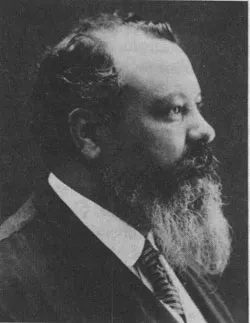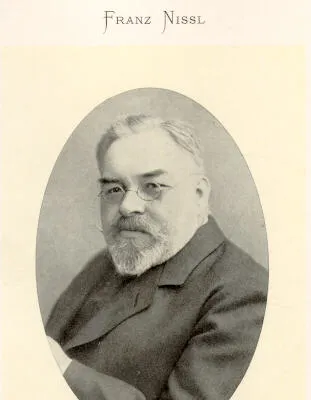
Franz Nissl
Human Design Chart
Biography
He gravitated to medicine and as a student in Munich he wrote on pathology of cortical cells in which he used a stain he created which opened up a new era in neurocytology and neuropathology. He also did outstanding work in psychiatry and demonstrated the correlation of nerves and mental disease by relating them to changes in glial cells, blood elements, blood vessels, and brain tissue in general. He worked with Alzheimer on general paresis. In the last 10 years of his life he did studies in which he established connections between the cortex and certain thalamic nuclei. He will be remembered as a great neuropathologist.
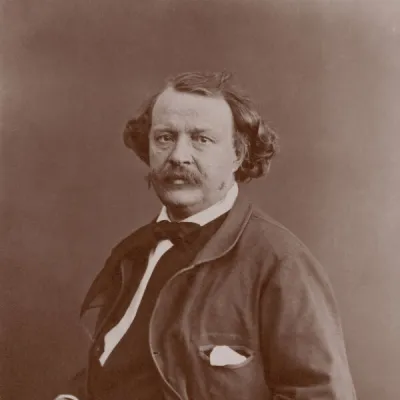
Nissl was of small stature, with poor posture. He had a birthmark on his left face. He never married, and his life revolved entirely around his work.
Nissl was a competent pianist.
He died 11 August 1919.
Franz Nissl — Manifestor with Profile 1/3
Manifestor 1/3 — Design at a Glance
Franz Nissl's design predisposed him to proactive initiative and the ability to set new directions. As a Manifestor, he had the energetic capacity to act as a pioneer and visionary, similar to an emperor in ancient Rome: He formulated the grand vision of an empire or project but did not lead wars himself; instead, he sent others to implement his plans. This nature of initiating polarized him inevitably. Because his thinking often reached further than that of his surroundings, Franz Nissl was frequently misunderstood. While some people loved his big dreams and followed him, he encountered rejection or even hatred from others – a typical pain point for this type.
The key mechanism for him was to find this 'following' by informing others about his intentions in a timely and precise manner. This strategy of informing was the key to minimizing resistance and gaining support. If Franz Nissl lived in accordance with this strategy as well as his inner authority, his design rewarded him with a deep sense of peace. However, if he acted against this structure – for example, through unannounced actions or ignoring the need for communication – it resulted in persistent anger for him. His energetic footprint was thus characterized by the dynamics between initiating new paths and the necessary clarity in communication to walk these paths together.
Emotional Authority
Franz Nissl showed an inner decision-making stance that did not solidify at moments of enthusiasm or rejection. His design carried Emotional Authority, meaning his defined emotional center was the central instance for all important life decisions – regardless of which other centers were also defined in his chart. This priority rule is a central mechanism: The emotional wave determined the rhythm of his judgment.
Nissl experienced a constant up and down of emotions; the world appeared to him always colored by his current mood. What was still seen as exciting at one moment could appear negative in the next. His immediate feeling, however, was only a snapshot, an initial impression that did not necessarily correspond with his deepest truth. Quick, spontaneous decisions from such an emotional state often had negative consequences for him.
Instead, his path required patience and conscious hesitation. He took time to let decisions mature, slept on it multiple times, and asked questions. Only when the intense feelings subsided and emotional distance was gained did clarity and calmness set in. This process of enduring the emotional wave was indispensable for long-term, life-defining decisions to ensure he acted not on a passing mood but on deeper insight.
The 1/3 Profile — Investigator / Martyr
Franz Nissl's design predisposed him towards intensive, practical learning. As someone with Profile 1/3 – Researcher and Experimenter – he showed himself as someone who collected knowledge not just theoretically but through personal experience. His life revolved around the process of trial and error; he learned best by acting and becoming wise from the resulting setbacks.
This configuration described a life task: uncovering hidden connections and passing them on to others. When Franz Nissl made a judgment or evaluated something as good, he had thoroughly examined it both mentally and practically. One could trust his judgment since it was based on self-earned insights.
Occasionally, however, the energy of Line 1 took control. Then he felt fear about moving from planning to implementation because there was a feeling that not enough was known yet. This conflicted with the natural urge of Line 3 to simply try things out and learn from mistakes. This tension between the desire for perfect foreknowledge and the necessity of experimental action shaped his way of dealing with the world. He sought meaning in the past and tested ancestral ties through humiliation and attempts to be included despite resistance.
Split Definition — Defined & Open Centers
Franz Nissl's design sets a tendency for constant mental pressure to question and form concepts. His defined Head and Ajna Centers generate a perpetual stream of inspiration, but lack the direct energy needed for implementation. This often leads to inner concern or confusion as he learns to use this pressure as a source for others rather than trying to discharge it himself. His open Throat Center allows him to articulate these thoughts reliably, while his defined G Center provides a firm self-identity and clear direction. He knew who he was without needing to impose it on others.
At the same time, Franz Nissl showed through his open Centers to be vulnerable to external conditioning. His open Heart Center tends to want to prove its worth through promises or competition, ending in cycles of self-doubt when failing; he had to learn that being valuable does not require making promises. His open Sacral Center lets him absorb foreign energies and overextend himself due to the lack of constant vital energy; he tended to ignore limits and become exhausted. Furthermore, his open Spleen Center is marked by fundamental survival fears, making him prone to spontaneous decisions for security – often with negative consequences. His open Root Center absorbs external stress, putting him under pressure to be constantly active even though this energy does not originate from within himself. Franz Nissl's challenge lies in waiting for mental and emotional clarity (defined Solar Plexus) without succumbing to the pitfalls of his open Centers.
Channels for logical leadership, emotional openness and inner clarity.
Franz Nissl's Design points to a tendency towards collective, logical leadership paired with deep individual intuition. He was someone who gained influence not through mere authority but by adhering to familiar patterns and the ability to make these useful for the future. This was particularly marked by the Alpha Animal Channel 7-31: A connection between logical strategy (Gate 7) and the voice of the collective leader (Gate 31). It was less about absolute power and more about winning the trust of a community and guiding them based on tested, secure paths. His leadership role was designed to become effective only when invited by the majority – a process of refinement through dialogue and recognition.
Parallel to this, he exhibited an ability for emotional openness carried by the Openness Channel 22-12. This channel connects his emotional wave (Gate 22) with cautious articulation (Gate 12). His social interactions were strongly dependent on his inner mood; he could deeply touch or transform others through voice and expression, but only when he felt compelled to do so. Force led him to withdraw, while patience and waiting for the right moment maximized his communicative power.
Another central aspect was his mental drive towards sudden clarity described by the Awareness Channel 61-24. Here spontaneous inspiration (Gate 61) merged with rational processing (Gate 24). His mind did not seek logical proof for the future or reflections of the past but waited for "satori" – the moment when knowledge simply arrived. He was designed to recognize these inner truths and share them as inspiring insights without needing to control the thought process.
Additionally, individual Gates like Gate 47 (Purpose from Past) and Gate 45 (tribal energy bundling) contributed to his ability to understand collective connections on a deep, almost mythic level. His way of working was thus a blend of rational guidance, emotional authenticity, and intuitive insight that always aligned with the context and his inner resonance.
Individual Circuitry — Circuit Signature
Franz Nissl's design sets a tendency for separated, parallel operating energy fields. In his case, it was a Split Definition: Two independent groups of centers existed side by side without being directly connected to each other. One group linked the G Center with the Throat and Solar Plexus Centers; the other connected Ajna with the Head Center. This separation meant that his energetic expressions did not appear as a continuous flow but rather as distinct, independent areas of his personality.
The Knowledge Circuit shaped him through two active channels. The Awareness Channel (24-61) promoted creative flashes of insight and the ability to transform new knowledge. Parallel to this, the Openness Channel (12-22), which generated an emotional wave and steered expression through the Throat Center, was also at work. This connection specifically linked Franz Nissl's Throat with his Solar Plexus Center, thereby turning intuitive emotions into words. Another part of this circuit connected Head and Ajna Centers, generating spontaneous inspirations that remained energetically separate from emotional expression.
Additionally, the Understanding Circuit operated through the Alpha Animal Channel (31-7). This channel linked the Throat with the Identity Center and promoted logical, rational insights as well as strategic thinking for the future. Since the Solar Plexus Center was not involved here, it was an "emotionless ratio." Thus, Franz Nissl exhibited two separate expression patterns: a creatively colored emotional exchange on one side and a focused, logical discourse on the other, which never directly merged into each other.
Right Angle Cross of Rulership 3
Franz Nissl's Human Design profile highlighted a specific orientation marked by the right Authority 3 cross. This configuration indicated an internal dynamic where authority and leadership were not understood as external power positions but rather as a process of inner clarification and timing. It was a structure aimed at creating order out of chaos by first understanding one's position within a system before acting or leading.
For Franz Nissl, this meant that his way of 'ruling' – in terms of influence and decision-making – depended heavily on the ability to wait for the right moment and listen to clear inner signals. The right cross often emphasizes the need not to be swayed by external pressure but rather to follow a well-founded path. It was less about dominant enforcement than creating space for authentic leadership based on deep understanding of one's role. This mechanism suggested that Franz Nissl needed clarity about his own motivation and context before taking responsibility or influencing others. Only then could his leadership qualities be effective without working against the natural flow of his energy. The structure thus promoted a reflective, more restrained form of authority based on inner security rather than external recognition.
Saturn Return · Uranus Opposition · Chiron Return · 2nd Saturn Return — Life Cycles
Franz Nissl's design showed a clear pattern of consolidation phases and sudden shifts. His first Saturn return marked the beginning of his psychiatric training as an assistant at the Munich Lunatic Asylum in 1885, at age 25. This cycle condensed years of groundwork into a solid foundation for his later career.
The Uranus opposition brought dynamic change: in 1901, at age 41, he was appointed extraordinary professor. This success matched the typical effect of this aspect, breaking established structures and enabling new roles. It was a moment of recognition based on previous stabilization.
His second Saturn return led to him giving up his chair due to illness in 1918, at age 58. This cycle demanded reorganization of life structure and revealed the limits of previous endurance. The sequence of these events illustrates the rhythm of his design: build-up, expansion, and ultimately necessary reduction. Franz Nissl lived out these mechanical realities concretely, with each astrological cycle marking a clear turning point in his professional career.
Manifestor · Emotional Authority — Synthesis
Franz Nissl was a Manifestor whose life was marked by a constant drive for knowledge and the desire to forge new paths. The defined connection between Head Center and Ajna Center (mental pressure) fed an unceasing inspiration and need to understand things – a process that repeatedly plunged him into questions and doubts. This corresponded with his profile as Researcher/Experimentor: he tested hypotheses not only theoretically but actively sought practical evidence to solidify his insights (Line 1/3). The Alpha Animal channel points to natural leadership abilities, yet it was accompanied by the necessity of developing personal patterns and insights before guiding others.
A central tension in his design lay between the impulsive pioneering nature of a Manifestor and his emotional authority. While his type tended towards taking initiatives and setting things in motion, his emotional wave required time for decisions to mature and consequences to be weighed. This discrepancy was evident in documented cycles: professional successes followed phases of intense research, while crises coincided with relinquishing positions – an expression of the internal tension between swift action and emotional clarity.
3 Defined Channels
Incarnation Cross - Right Angle Cross of Rulership 3
Solar Return
The Solar Return shows the moment when the sun returns to its exact birth position - your personal solar year.
Life Cycles
Discover the life cycles with a detailed triple view (birth chart, cycle chart, composite).
Human Design Profile
- Type
- Manifestor
- Strategy
- To inform others before acting
- Authority
- Emotional Authority
- Profile
- 1/3 - Investigator / Martyr
- Definition
- Split Definition
- Incarnation Cross
- Right Angle Cross of Rulership 3
- Date of Birth
- 09.09.1860 15:30
- Place of Birth
- Frankenthal (Rheinland-Pfalz), GER
Frequently Asked Questions
What was Franz Nissl's Human Design type?
What Profile did Franz Nissl have in Human Design?
What Authority did Franz Nissl have?
What incarnation cross did Franz Nissl have?
When was Franz Nissl born?
Discover your own Human Design
Are you also a Manifestor? Find out in a personal reading how to use your initiation power peacefully and dissolve resistance.
More Personalities
Back to overviewChristian-Jaque
Kesha

Lucebert
Masaccio

Nadar
Papus