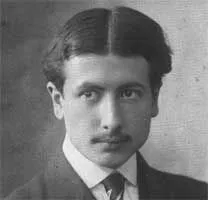
Friedrich Meinecke
Human Design Chart
Biography
Meinecke died on 6 February 1954, West Berlin, Germany
What does Manifesting Generator 5/1 mean for Friedrich Meinecke?
Manifesting Generator 5/1 — Design at a Glance
Friedrich Meinecke was revealed as someone who possessed hybrid energy: the constant power of a Generator paired with the lightning-fast effect of a Manifestor. His design suggested that he could draw things into his life by skipping steps and acting quickly. However, this speed was a double-edged sword. Often, he tended to move too fast and skip important stages, which forced him later to backtrack and catch up on missing foundations. Such setbacks easily led to frustration, his specific non-self theme.
Moreover, he reacted to many different impulses simultaneously and started several projects in parallel. Without the constant review by his inner authority and sacral center – his internal 'yes' or 'no' – this creative drive quickly turned into exhaustion. His strategy was not to initiate himself but to react to life. Only when the sacral center continued to signal approval after an initial test could he effectively proceed.
When correctly applying this strategy, Friedrich Meinecke found deep satisfaction in his actions. He did not thrive in a rigid focus on a single task but needed variety and playful mode. Parallelism was no obstacle for him, but rather a prerequisite for his energy as long as he led himself through inner resonance and not external pressure or hasty action.
Sacral Authority
Friedrich Meinecke showed that he made decisions neither from intellectual deliberation nor emotional fluctuation, but waited for an immediate physical resonance. His design was marked by sacral authority – a mechanism exclusive to the Generator type and which merges with his strategy of inner guidance. This simplified his process: He did not need long deliberation, but reacted to external stimuli with a clear 'gut feeling'. This manifested in bodily signals like grunting or a palpable surge of energy. When this reaction occurred, he felt vital and energized; its absence left the action powerless.
Additionally, his activated spleen center acted as a supportive instance. Since it was connected to the sacral center, this enabled quick, spontaneous reactions based on instinctive perception. Friedrich Meinecke could thus immediately sense what served him and where his energy should flow. He lived in the ability to fully immerse himself in tasks that found this inner confirmation – without compulsion or external purposefulness. His satisfaction did not arise from the result but from the alignment of his actions with this deep, physical resonance.
The 5/1 Profile — Heretic / Investigator
Friedrich Meinecke was revealed as someone who gathered profound knowledge to offer others for problem-solving. His design carried Profile 5/1, the 'Hero/Researcher'. Line 1 drove him into retreat: Here it was about showing wisdom in a weak position and finding meaning through reflection. Unreflective courage was counterproductive here; only after completing inner work could he communicate.
At the same time, Line 5 had a magnetic aura. Others instinctively sought his solutions because they recognized his knowledge as valuable. This dynamic harbored a risk: Without clear boundaries, exhaustion threatened if he got entangled in conflicts or alliances that did not serve his own survival.
His Gate 28 addressed the life struggle and its value. It was about trust – and the danger of this being misused to send others into battles whose purpose remained unclear. The intuitive ability to dissolve alliances or join stronger groups was part of this line.
Friedrich Meinecke had to learn to say no to maintain balance between private research (Line 1) and public problem-solving (Line 5). Only then could he use his gifts without being overwhelmed by the expectations of others or collective conflicts. His path lay in prioritizing inner clarity over external impact.
Split Definition — Defined & Open Centers
Friedrich Meinecke revealed himself as someone whose thinking and actions were shaped by a constant inner structure. His defined Ajna Center ensured reliable mental function; he conceived theories in a consistent manner and was hardly distracted by external influences. This cognitive stability directly influenced his communication, as his also defined Throat Center verbally manifested what the mind designed. He could express what he thought, making his words an external authority for others.
In addition to this intellectual clarity, Meinecke possessed strong willpower through his defined Heart Center. He enjoyed controlling his own resources and keeping promises, which helped him build trust and affirm his own value. This ego strength was reinforced by the vital energy of his defined Sacral Center. As a Generator, he had a constant energy reserve that was only reliably available when he responded rather than initiated. His strategy involved answering questions or offers to avoid frustration and exhaustion. Furthermore, his defined Spleen Center guided him through intuitive, spontaneous judgments in the here and now, helping him distinguish between healthy and unhealthy conditions for his survival.
In contrast, Meinecke was vulnerable to conditioning in other areas. His open Head Center prevented him from enduring constant mental pressure; he tended to be overwhelmed by doubts or inspiring questions from others and sometimes sought answers to problems that were not his own. Similarly, his open G Center meant that he did not have a fixed identity or direction. He adapted to the environment and gathered directions through interaction rather than asserting them himself. This made him vulnerable in relationships and places; if he felt out of place, it negatively affected his overall well-being.
Additionally, his open Solar Plexus absorbed the emotions of his surroundings. He amplified foreign moods and feelings, which could lead him to experience emotional waves as his own and avoid confrontation to maintain stability. Finally, his open Root Center took on external stress. The pressure from the environment acted upon him like adrenaline that he did not generate himself but rather intensified. This could lead to a feeling of chaos or overwhelm when he tried to withstand this foreign pressure instead of trusting in his inner authority and strategy.
Channels for care, logical clarity and courageous authority.
Friedrich Meinecke revealed himself as someone whose mind was driven to translate complex realities into logically coherent structures. This inclination stemmed from Channel 17-62, connecting the Ajna Center with the Throat Center. Through Gate 17, he visualized patterns, while Gate 62 translated these into precise language and details. His mind continuously organized information; only what could integrate into his mental system was accepted as understood. This created an inner pressure to communicate his opinions and understanding of connections in detail, always aiming to establish clarity through logical order.
Parallel to this, he carried the burden of material responsibility on Channel 21-45, linking Heart Center with Throat Center. Underpinning this connection was a strong will: Gate 21 of the Hunter sought control to protect his own heart, while Gate 45 of the Gatherer represented the authoritative voice deciding over resources. For Meinecke, this meant mastering the material plane by taking responsibility and maintaining independence simultaneously. The conflict between the need for service and the demand for control shaped his approach to power and hierarchy; he worked best when he could set his own framework.
Another foundation was laid by Channel 27-50, connecting Sacral Center with Spleen Center. Gate 27 brought potential for care and nourishment, while Gate 50 ensured the preservation of traditional values and laws. This configuration fostered a protective stance towards "the tribe" – whether family or community – through defending established orders. His aura attracted trust, yet he had to learn to take responsibility only when his own energy allowed it, to avoid overloading.
Additionally, Gates like 28 (Present-Moment Risk Awareness) and 33 (Reflection) urged him to pause and weigh decisions carefully. Gate 19 connected him with the need for secure territory and resources, while Gate 5 determined the basic rhythm of his energy. These elements together created a Profile based on logical analysis, conscious resource use, and nurturing both inner and outer stability.
Tribal Circuitry — Circuit Signature
Friedrich Meinecke's design inclines towards structured, rational communication. His Understanding Circuit connects his Ajna Center with the Throat Center via Channel 17-62 "Acceptance," allowing him to articulate logical and strategic insights clearly and free from emotional bias, making them accessible to others. His language serves to convey future visions based purely on reason.
Parallel to this, the Ego Circuit features Channel 21-45 "The Money Line," which links the Heart Center with the Throat Center. This configuration emphasizes the exchange of resources and support within a community, involving mutual giving and taking where words often carry promises or commitments for material or social security. Since there is no connection to the Sacral Center, this kind of cooperation requires regular pauses for energy regeneration in the collective.
Another separate stream forms the Hunter Circuit. Here, Channel 27-50 "Conservation" connects the Sacral Center with the Spleen Center, fostering instinctive care and preservation of what exists. It manifests as a deeply rooted need to maintain one's family or genetic line through practical nurturing and protection.
Due to their shared definition, these three circuits exist as two independent blocks: on one hand, the connected axis from Ajna, Throat, and Heart; on the other hand, the isolated connection between Sacral and Spleen. Thus, Friedrich Meinecke navigates between rational, community-oriented strategy and instinctive, protective care without these areas energetically overlapping each other.
Left Angle Cross of Alignment 2
Friedrich Meinecke's design indicated a tendency towards inner orientation that aimed less at external validation and more at a deep, personal search for meaning and structure. This attitude did not manifest as a loud pursuit of recognition but rather as a quiet, consistent alignment with his own standards.
The left cross of the Alignment 2 describes in Human Design a configuration characterized by a specific energy distribution: It combines the need for clarity and order with a certain reticence towards immediate social pressure. Those who carry this structure tend to avoid impulsive decision-making, instead first internally verifying decisions until they align with an inner compass. This is a kind of intuition that does not shout but works quietly and steadily – often in the background, far from the spotlight.
For Friedrich Meinecke, this meant that he likely did not determine his paths through external constraints or fashion trends, but rather through a deeply rooted drive for authenticity and mental coherence. His actions were therefore often marked by a certain deliberation, as he relied on finding an inner direction before moving outward. This mechanism fostered a way of life where stillness and reflection took precedence over haste and noise.
Saturn Return · Uranus Opposition · Chiron Return · 2nd Saturn Return — Life Cycles
Friedrich Meinecke's design promoted a deep, analytical engagement with structure and order. This inclination was evident in 1901 when he received the call to the University of Strasbourg at age 39. This marked his Uranus opposition, a cycle that often leads to sudden breaks or new perspectives when old conditions no longer fit. For him, this meant a professional reorientation through an external invitation.
Ten years later in 1911 at age 49, his Chiron return occurred. In this fulfillment cycle, the personal life purpose unfolds increasingly. Meinecke became corresponding member of the Bavarian Academy of Sciences. This recognition reflected the maturation of his intellectual identity not as a healing but as an affirmation of his path.
In 1922 at age 60, he completed his second Saturn return. This cycle often demands the consolidation of long-term work and the assumption of responsibility for one's creation. Meinecke published 'The German State and German Parties'. This publication condensed years of research into a solid result that strengthened his position in academia. His design thus indicated a tendency to achieve impact through structured analysis and institutional anchoring, with each significant step corresponding to astrological cycles in his chart.
Manifesting Generator · Sacral Authority — Synthesis
Friedrich Meinecke lived a life marked by a profound drive for understanding and the dissemination of this understanding. As an Manifesting Generator with sacral authority (and the Profile Hero/Researcher), he primarily followed his gut feeling, reacted to the world, and quickly drew opportunities into his life. The defined mental structure (Ajna Center) allowed him consistent thinking while Channel Acceptance (Gate 17/62) enabled him to organize information and create meaning through language – a process that helped him grasp complex issues and make them accessible to others. Repeated professional recognitions in 1901, 1911, and 1922 showed he directed his energy into areas aligned with his sacral drive and brought fulfillment.
However, his nature was marked by an inner paradox: The ability to act quickly and attract things (Manifesting Generator) stood in tension with the necessity of conducting deep research and carefully examining details (Line 1 of Profile). He could develop and communicate ideas swiftly yet needed time and space to anchor these within a comprehensive context. This interplay between quick reaction and thorough analysis shaped his approach to knowledge and contributed to him being perceived as both a dynamic thinker and a profound researcher.
3 Defined Channels
Incarnation Cross - Left Angle Cross of Alignment 2
Solar Return
The Solar Return shows the moment when the sun returns to its exact birth position - your personal solar year.
Life Cycles
Discover the life cycles with a detailed triple view (birth chart, cycle chart, composite).
Human Design Profile
- Strategy
- To respond - wait for something to respond to
- Authority
- Sacral Authority
- Profile
- 5/1 - Heretic / Investigator
- Definition
- Split Definition
- Incarnation Cross
- Left Angle Cross of Alignment 2
- Date of Birth
- 30.10.1862 04:00
- Place of Birth
- Salzwedel, Germany
Frequently Asked Questions
What was Friedrich Meinecke's Human Design type?
What profile did Friedrich Meinecke have in Human Design?
What authority did Friedrich Meinecke have?
What incarnation cross did Friedrich Meinecke have?
When was Friedrich Meinecke born?
Discover your own Human Design
Are you also a Manifesting Generator? Find out in a personal reading how to unfold your multi-talents and direct your energy wisely.
More Personalities
Back to overviewAlain-Fournier
Aldair

Alizée

Angeli

Arletty

Artus