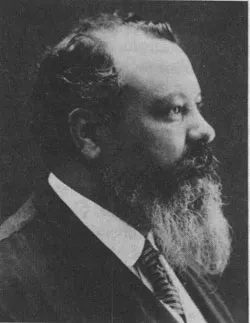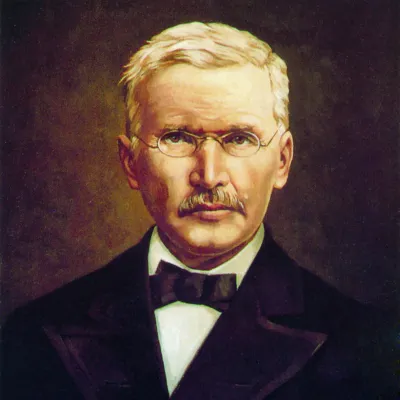
Friedrich Wilhelm Raiffeisen
Human Design Chart
Biography
He was the seventh of nine children. His father Gottfried Friedrich Raiffeisen was a farmer and also served as the mayor of Hamm. Leaving school at the age of 14 he received three years of education from a local pastor before entering the military at the age of 17. His career in the military led him to Cologne, Koblenz, and Sayn.
After an eye disease forced him to resign from military service in 1843 he entered public service. He served as the mayor of several towns: from 1845 he was the mayor of Weyerbusch/Westerwald; from 1848 the mayor of Flammersfeld/Westerwald; and the mayor of Heddesdorf from 1852 until late 1865, when, at the age of 47, his worsening health cut his career short. He had contracted typhus in 1863 during an epidemic which took his wife's life. As his small pension was not sufficient to meet the needs of Raiffeisen’s family he initially started a small cigar factory and later a wine business.
In 1867, he married the widow Maria Panseroth. She outlived him by 12 years and their marriage remained childless. He died on 11 March 1888 in Neuwied-Heddesdorf, shortly before his 70th birthday.
Friedrich Wilhelm Raiffeisen — Manifestor with Profile 1/3
Manifestor 1/3 — Design at a Glance
Friedrich Wilhelm Raiffeisen showed himself to be a pioneer and leader whose nature was geared towards leading the world into a new future. His design carried the energy of an emperor in ancient Rome: He possessed the vision of a great whole, but did not lead the necessary wars and battles himself; instead, he sent others to conquer foreign lands for him. This configuration brought with it a specific pain point: Friedrich Wilhelm Raiffeisen was misunderstood and polarizing. Because he often thought ahead of his environment, his immense vision met with various reactions. Some people loved him and found followers who followed him; others did not like or even hated him because of these great dreams. For Friedrich Wilhelm Raiffeisen to be found by the right followers, it was crucial for him to inform others about his visions in a timely and precise manner. This formed the ideal strategy of his design. Living according to this Manifestor's strategy and authority rewarded him with an inner peace. If he lived against his design, he felt persistent deep anger within himself. Friedrich Wilhelm Raiffeisen thus acted through informing and leading, where the balance between acceptance and rejection shaped his path.
Emotional Authority
Friedrich Wilhelm Raiffeisen showed a basic attitude of emotional delay: He consciously took time before making decisions. His inner authority was Emotional Authority, carried by the defined Emotional Center. In Human Design mechanics, this authority is always prioritized – it takes precedence over all other defined centers in the design, regardless of their number or type. This meant for him that his current feeling was only a passing wave, not an ultimate truth. Since his perception was colored by the ups and downs of his moods, he recognized the danger of impulsive reactions. Instead of acting immediately, he let decisions mature. This process required patience and consciously sleeping on important questions. Only when the initial emotional intensity subsided and an inner distance set in did clarity emerge for him. This calmness was the result of a necessary ripening process that prevented quick judgments. For long-term steps that shaped his life course, this strategy was crucial: It protected him from decisions made out of temporary enthusiasm or rejection. By waiting for emotional calming, he secured himself a deeper and more comprehensive understanding. His design thus suggested that true freedom to make decisions did not lie in speed but in the endurance of inner dialogue.
The 1/3 Profile — Investigator / Martyr
Friedrich Wilhelm Raiffeisen showed himself as someone who combined theoretical knowledge with practical application. His design indicated a tendency towards research and experimentation: he learned continuously (Line 1) and tested insights through personal action (Line 3). This approach meant that his judgment was based on both levels – theory and practice. If he valued something as good, he had thoroughly tested it beforehand.
His inner self was marked by the tension between a desire for control and a need for self-determination (Gate 21). Without clear willpower, this could lead to conflicts; violence or harsh measures were only last resorts if guidance failed. Parallel to this, he learned through trial and error (Line 3), where alliances often remained short-lived once the concrete struggle was over. His vitality came from working with compatible forces, while selfish agreements protected his life force but weakened partners. This mechanism shaped him as a person who arrived at reliable conclusions through personal experience and testing.
Split Definition — Defined & Open Centers
Friedrich Wilhelm Raiffeisen revealed himself as someone whose expression and actions were marked by a constant inner willpower. His defined Heart Center gave him the ability to make promises and keep them; he enjoyed working independently and sought recognition for his contributions. This energy flowed into his also defined Throat Center, making his communication not just words but a reliable manifestation of his "I want." He spoke from a place of self-determination, which helped him set clear boundaries and control his own resources.
At the same time, he navigated through a complex emotional landscape. His defined Solar Plexus served as an inner authority: truth revealed itself to him over time. He learned to wait out the waves of his feelings before deciding, in order to avoid impulsiveness and gain deep insights. This process was supported by his defined Spleen Center, which provided spontaneous intuitive warning signals in the present moment—a vital instinct for health and well-being that he had to trust without rationalizing it. The constant pressure of his defined Root Center propelled him forward to ensure existential security and material ascent.
Yet this strength had a flip side in his open centers. His open Head and Ajna Centers made him vulnerable to mental confusion; he tended to get entangled with others' questions or seek inspiration that was not his own. Without consistent mental clarity, he needed to learn to remain an unattached observer of his thoughts. Additionally, his open G Center meant he did not have a fixed identity but rather absorbed it from the environment; he often sought direction and love through others, making him vulnerable to false relationships. Finally, his Sacral Center was open: he lacked a constant energy flow, tended toward overexertion by "borrowed" energy from others, and had to learn to set boundaries early and rest instead of working until collapse.
Channels for intuition, instinct and emotional release.
Friedrich Wilhelm Raiffeisen revealed himself as someone who combined intuitive depth with technical mastery. This attitude stemmed from the Channel 48-16: Gate 48 sought out vital information, while Gate 16 perfected skills through experimentation. Raiffeisen used this combination to find solutions and refine patterns.
Parallel to this, the Channel of Devotion 44-26 was at work. It connected the instinctive alertness of Gate 44 with the ego strength of Gate 26. Raiffeisen had a sense of what his community needed and used his willpower to convincingly sell improvements. He acted as an entrepreneur who generated resources and supplied his team, driven by the realization that recognition energized his talent.
Emotionally, he was marked by the Channel of Emotion Release 39-55. Through Gate 39 (Provocation) and Gate 55 (Spirit), he moved in a pulsating wave between joy and melancholy. Raiffeisen learned to accept these moods rather than rationalize them to appear authentic and evoke the right spirit in others.
Additionally, prioritized Gates contributed to his structure: Gate 21 directed material life through control and demanded respect in service to the community. Gate 38 set boundaries and defended individual integrity against resistance. Gate 60 accepted limitations as a prerequisite for transcendence, while Gate 36 used crises as cyclical movement to enable new experiences. Raiffeisen integrated these mechanisms by combining his inner intelligence with outer efficiency and living the emotional truth of his wavelength.
Individual Circuitry — Circuit Signature
Friedrich Wilhelm Raiffeisen was marked by separated, parallel functioning energetic blocks. The Split Definition divided his forces into two unconnected groups: an alliance of Throat, Spleen, and Heart Centers as well as a separate interplay between Root and Solar Plexus Centers. This separation meant that rational strategies did not directly fuse with emotional impulses but existed as distinct experiences side by side.
In the Knowledge Circuit, he connected the Solar Plexus Center to the Root Center. This generated pulsating emotional waves aimed at spontaneous release – a power of individual transformation through acoustic and time-bound impulses. Parallel to this, in the Understanding Circuit, the channel between Throat and Spleen Centers was active. Here focused visual clarity took precedence: sharing logical insights free from emotional coloring to improve future-oriented structures.
A third strand formed in the Ego Circuit through the connection of Heart and Spleen Centers. This channel emphasized devotion and the traditional art of giving and taking within a community. Since there was no direct link to the Sacral Center, this resource-oriented cooperation required necessary pauses for regeneration. Raiffeisen's design thus combined emotional immediacy, cool strategic communication, and cooperative connectedness as separate, non-interpenetrating systems.
Right Angle Cross of Tension 1
Friedrich Wilhelm Raiffeisen showed a fundamental attitude based on the tension between inner security and external pressure. His design featured the right cross of tension 1, characterized by the contrast between Gate 6 (the search for harmony and balance) and Gate 35 (the pursuit of authority and control). This mechanism created an internal motor: The experience of uncertainty or chaos in the outside world drove him to establish order and structures that offered stability. He did not only seek peace for himself but also developed systems capable of conveying this security to others. The pressure of disorder became a source of energy for building rules and hierarchies serving as protection against the unpredictable. This dynamic shaped his work: From the necessity to resolve tensions emerged consistent principles of order. Friedrich Wilhelm Raiffeisen lived out this tension by transforming chaotic situations into clear, controllable frameworks, with authority always serving the goal of harmonious integration.
Saturn Return · Uranus Opposition · Chiron Return · 2nd Saturn Return — Life Cycles
Friedrich Wilhelm Raiffeisen was marked in his life phases by a clear structuring and a striving for constant connection. His design inclined towards pouring inner values into outer, tangible forms – whether in private or public spheres. This attitude became particularly evident during his Saturn Returns, cycles roughly every 29 years marking consolidation and anchoring.
In 1845, at the age of 27, he married Emilie Storck. This first Saturn Return marked the beginning of a stable partnership, a typical expression of the mechanics where years of inner development condensed into a solid life foundation. The relationship served as an anchor for his further orientation.
The Chiron Return around the age of 49 in Human Design is not a healing process but a fulfillment cycle, during which personal meaning increasingly unfolds. In 1867, Raiffeisen married the widow Maria Panseroth. During this phase, there was a deepening of his life task; the incarnation cross worked more strongly than before, manifesting in a new, mature relationship form – not as repair but as blooming of his own essence.
His second Saturn Return around the age of 56 brought the culmination of this structural work. In 1874, he founded the 'Deutsche landwirtschaftliche Centralbank'. This was no coincidence but the logical conclusion of a cycle where private stability and personal fulfillment condensed into institutional achievement. His design thus promoted the creation of lasting structures that grew beyond the individual.
Manifestor · Emotional Authority — Synthesis
Friedrich Wilhelm Raiffeisen was a Generator who moved through life always seeking new opportunities to perfect his skills (Channel Wavelength). His design points to a profound inner intelligence not grasped by reason but arising from harmony with bodily instincts. This ability to delve into deep knowledge and apply it practically shaped his work, leading to innovations (Knowledge Circuit). The repeated events of Saturn Return and Chiron Return marking relationship changes, as well as the success in founding a bank, underscore this continuous process of learning, experimenting, and transformation.
Raiffeisen lived in a tension field between the drive for independent insight and the necessity to communicate it (defined Throat Center). As a Manifestor, he was destined to inspire the world and initiate changes, yet his emotional authority required time to mature decisions. This likely led to an internal dynamic where visionary impulses met careful scrutiny – a dance between quick recognition of possibilities (Gate 16) and deep understanding of their implications (Gate 48).
3 Defined Channels
Incarnation Cross - Right Angle Cross of Tension 1
Solar Return
The Solar Return shows the moment when the sun returns to its exact birth position - your personal solar year.
Life Cycles
Discover the life cycles with a detailed triple view (birth chart, cycle chart, composite).
Human Design Profile
- Type
- Manifestor
- Strategy
- To inform others before acting
- Authority
- Emotional Authority
- Profile
- 1/3 - Investigator / Martyr
- Definition
- Split Definition
- Incarnation Cross
- Right Angle Cross of Tension 1
- Date of Birth
- 30.03.1818 23:00
- Place of Birth
- Hamm, GER
Frequently Asked Questions
What was Friedrich Wilhelm Raiffeisen's Human Design type?
What Profile did Friedrich Wilhelm Raiffeisen have in Human Design?
What Authority did Friedrich Wilhelm Raiffeisen have?
What incarnation cross did Friedrich Wilhelm Raiffeisen have?
When was Friedrich Wilhelm Raiffeisen born?
Discover your own Human Design
Are you also a Manifestor? Find out in a personal reading how to use your initiation power peacefully and dissolve resistance.
More Personalities
Back to overviewChristian-Jaque
Kesha

Lucebert
Marilyn

Masaccio
Papus