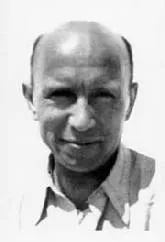
Fritz Kolbe
Human Design Chart
Biography
He was employed by the German foreign ministry in March 1925 as a clerk, and was posted as a mid-level diplomat in Madrid from October 1925 until January 1936. After Madrid, Kolbe was briefly stationed in Warsaw before returning in mid-1936 to Berlin. He then worked for Rudolph Leitner and, with him, was posted in the Cape Town German consulate in 1937.
Kolbe's refusal to join the Nazi Party led him to be assigned lowly clerical work in Berlin after the start of World War II in 1939. Meanwhile, by diligence and skill, Kolbe had earned the trust of the people to whom he reported. He was given positions of increasing responsibility in the Foreign Office. In 1941, Kolbe was assigned, partly due to his brusque manner and intellect, to Karl Ritter who served in the Foreign Office as a liaison with the military. Ritter himself was normally physically located near Hitler's headquarters, the Wolf's Lair. Reports from foreign diplomats and up to 120 cables daily from German consulates and embassies were directed to Berlin for Ritter; Kolbe's duty was to read them all and relay important ones on to Ritter.
Kolbe was influenced by surgeon Ferdinand Sauerbruch and around November 1941, became determined to actively help defeat the Nazis. Realizing the importance of the information for which he had access, Kolbe tried to make contact with the United States Embassy in Berlin in late 1941, prior to their declaration of war following the Pearl Harbor attack and the closing of the embassy. The longer he was in Berlin, the more Kolbe disliked the Hitler regime and its actions.
Kolbe passed information gleaned from cables to the French Resistance, particularly when it could save someone's life or prevent an arrest.
Human Design Analysis: Fritz Kolbe as Manifesting Generator 4/6
Manifesting Generator 4/6 — Design at a Glance
Fritz Kolbes design points to a tendency towards hybrid dynamics: He had the constant energy source of a Manifesting Generator, yet he also possessed the ability to accelerate processes and skip steps. This configuration as a Manifesting Generator meant that he could quickly pull things into his life as soon as he responded to an inner impulse. His strategy was not to initiate himself but to wait until life spoke to him, and then only proceed when his Sacral Center gave a clear "yes."
However, this speed brought specific risks with it. Fritz Kolbe tended to skip important stages or pursue multiple projects simultaneously, driven by reactions to various impulses. If he ignored this strategy and acted without inner consent, the hasty execution quickly led to frustration – his non-self theme – as he then had to make up for missing steps. The danger was that initial enthusiasm could be extinguished through overloading or lack of endurance.
However, when he correctly applied his nature by regularly checking whether his authority and Sacral Center still supported a project, Fritz Kolbe could draw deep satisfaction from his work. For him, it was essential to stay in "play mode" and seek variety; the compulsion to finish one thing strictly before starting another often went against his natural energy. His satisfaction arose from the diversity of parallel activities, as long as they were legitimized by inner resonance.
Sacral Authority
Fritz Kolbe's decision-making followed a clear, physical logic. As a Generator, his strategy was also his inner authority: the sacral authority. This greatly simplified his process because he did not have to switch between different internal voices. The prerequisite for this was an open emotional center, meaning that he did not rely on fleeting moods but rather on a deeper, stable energy source.
His reactions appeared as immediate physical signals – often as gut feelings or a noticeable surge of power triggered by external stimuli. Fritz Kolbe learned to interpret these bodily sounds: grunting, humming, or simple utterances like "Mhm" signaled resonance. When his sacral motor kicked in, he felt vital and alive. Then an almost inexhaustible energy was at his disposal with which he accomplished tasks with great enthusiasm. He was born to perform activities with joy and satisfaction, entirely without compulsion or purposefulness.
Additionally, an activated Spleen Center served as a supportive instance. This gave him the ability to react particularly quickly and spontaneously. His immediate access to physical well-being and instinctive perception served as a reliable compass. He could trust these impulses, which made his actions precise and in harmony with his essence.
The 4/6 Profile — Opportunist / Role Model
Fritz Kolbes Design shows a tendency towards social influence, paired with a later role as an inspirational figure. In his first thirty years, Line 6 still acted like Line 3; he enjoyed experimenting extensively in relationships and friendships. The fourth line drove him toward recognition and success within the network, but it was also prone to fixation on his own process.
Once Line 6 became active, he often experienced the conflict between wanting to belong to a community (Line 4) and the urge to withdraw to contemplate the meaning of life (Line 6). His life thus revolved around the Heart versus Head conflict. In later years, it was expected that he would meet the high standards of being a wise role model through cooperation. Line 6 brought self-defence and humility; he experienced trial and error in the first third of his life to recognize and eliminate weaknesses later on. His big heart remained cautious throughout, to avoid opening up to the wrong people and getting hurt.
Single Definition — Defined & Open Centers
Fritz Kolbe's design inclines towards clear, identity-based communication that flows directly from his inner direction and vital energy. His defined G Center gives him a reliable sense of self-identity and life mission; he intuitively knows who he is and where it pulls him. This inner security manifests in his defined Throat Center: His voice does not speak out of mere conception or emotion, but from this central truth – a steady, honest expression of his Higher Self.
This ability to express himself is supported by his defined Sacral Center. As a Generator, Fritz Kolbe has an enormous source of vital energy. His life is characterized by the principle of reaction: He waits for the life offer and responds with a clear "yes" or "no" from the gut – this sacral confirmation ensures that his actions and words are carried by genuine satisfaction and endurance rather than mental overexertion. Additionally, his defined Spleen Center provides spontaneous intuition; he acts in the present moment, guided by a deep bodily awareness of health and well-being, which protects him from what is not correct.
At the same time, his design reveals high susceptibility to external influences. His open Head Center makes him vulnerable to mental pressure; he tends to catch questions and confusion from others rather than possessing constant thought streams of his own. The open Ajna Center amplifies this: He reflects the ideas of his environment like a mirror but can easily waver when trying to impose foreign concepts as his own truth.
His open Heart Center lacks consistent willpower; he is not designed to make promises or prove his worth through competition. Instead, his open Solar Plexus absorbs the emotions of others, making him emotionally vulnerable and prone to personalizing other people's moods. Finally, his open Root Center takes on the stress of the environment, causing him to suffer from adrenaline pressure that does not originate from within himself. Fritz Kolbe's challenge lies in not personalizing these open windows and instead relying on his defined sources – identity, voice, energy, and intuition.
Channels for intuitive clarity, vibrant presence and powerful implementation.
Fritz Kolbes Design reveals a tendency towards deep self-confidence and an intuitive survival instinct. He appeared as someone who acted through authentic presence and spontaneous reactions to his environment, guided by inner wisdom that was determined not by thoughts but by the immediate present moment.
This attitude drew from Channel 10-20, which connects the G Center with the Throat Center. Through Gate 10 (Presence) and Gate 20 (Now), he expressed the wisdom that self-love and acceptance in the present moment form the foundation for a fulfilling life. His survival and self-reinforcement came from accepting himself in every moment and living as his true self, making him an inspiring voice for individual guidance.
Parallel to this, Channel 34-10 between the Sacral and G Centers also played a role. Gate 34 (Power) provided the supportive strength to hold onto his own convictions while Gate 10 initiated the behaviour. This allowed him to act independently and live out his uniqueness without resistance as long as he responded to external stimuli.
Channel 57-10, connecting the Spleen with the G Center, guided Gate 57 (intuitive insight) through auditory sensitivity and intuitive clarity, helping him let go of unfounded future anxieties and respond spontaneously and appropriately.
Additionally, Channel 48-16 shaped his ability to combine intuitive depth (Gate 48) with technical skill (Gate 16), perfecting talents through repeated practice. Channel 34-20 gave him the power to manifest charisma through sacral reactions, using his energy only for satisfying activities. Channel 57-20 provided a clear voice in the present moment for his intuitive insight, while Channel 34-57 strengthened his survival intelligence by connecting Sacral energy and Spleen intuition.
Individual Circuitry — Circuit Signature
Fritz Kolbes Design points to a tendency towards pulsating, acoustic creativity and strong individuality. As a person with a simple definition, he appears as a coherent unit: The connected centers—Identity, Sacral Center, Spleen, and Throat Center—form a continuous energetic flow without internal breaks or separate poles.
This cohesion works across several circuits. His Integration Circuit connects all four defined centers directly. This is about securing survival: Power from reacting to life (Gate 34) is guided by proper behavior (Gate 10), intuitive knowledge (Gate 57), and in the present moment (Gate 20). This creates high self-confirmation and ultimate individuality, as all channels of this circuit are active.
Parallel to this, the Centering Circuit works through the channel "Exploration" (10-34). It connects Identity with the Sacral Center, fostering solid convictions and courage. However, since there is no connection to the Throat Center, these inner truths often remain unspoken.
In the Knowledge Circuit, the channel "Flash of Insight" (20-57) between Throat and Spleen Centers contributes. It enables innovative impulses and the ability to express new insights in the here and now. Similarly, the Understanding Circuit functions through the channel "The Wavelength" (16-48), also between Throat and Spleen Centers. This channel serves to share logical, rational insights free from conditioning, focused on the future.
Together, this configuration shapes a person who combines inner clarity with intuitive intelligence. His energy is pulsating and rooted in the present, where he explores new paths by fusing logical structures with creative impulses—always carried by a strong, undivided internal identity.
Right Angle Cross of the Vessel of Love 3
Fritz Kolbe's design carried the signature of the right cross of the Love Vessel. This configuration established a specific inner dynamics that relied less on external recognition and more on deep, often silent devotion. In Human Design, this cross marks a process of maturation and the ability to carry life with a certain calmness, even when outer circumstances were challenging.
For Fritz Kolbe, this meant an underlying attitude characterized by a kind of patient endurance. He was inclined not to immediately judge experiences as success or failure but rather to place them in a larger context. The 'Love Vessel' here does not refer to romantic bonds in the narrower sense but to a comprehensive capacity to accept life and fill it with warmth that works independently of immediate reward.
This structure promoted an inner stability that helped him navigate through phases of uncertainty or waiting. It was an energy that did not forcefully assert itself but worked quietly behind the scenes, allowing him to fulfill his role in life with a certain dignity and perseverance. The right side of the cross emphasized the aspect of integration and learning from experience, enabling Fritz Kolbe to transform his life experiences into a coherent inner stance.
Saturn Return · Uranus Opposition · Chiron Return · 2nd Saturn Return — Life Cycles
Fritz Kolbe's design set a tendency towards structured, institutional frameworks within which his life mission could unfold. As a Generator, he was dependent on picking up external impulses and responding to them with his inner authority. This was clearly evident in the first Saturn return: In 1925, at age 25, he entered the German Foreign Office as an official and became a diplomat in Madrid. This marked the condensation of earlier preparations into a viable professional structure, as described by the Saturn return cycle for his chart pattern.
However, the opposition to Uranus around his 39th year brought stability breaks and unexpected realignments. Instead of continuing to expand, his role was reduced to minor clerical work in Berlin – a year later, in 1939, right in the middle of a historical upheaval. For his design, this meant a phase of inner waiting time when outer structures collapsed or narrowed.
The Chiron return around age 50 then initiated the fulfillment cycle. Here it was not about healing but rather that his incarnation purpose became increasingly experiential. In 1950, Kolbe attempted to return to the Foreign Office. This attempt expressed the bloom phase: The drive to re-enter the original life flow and anchor one's existence according to the chart purpose now emerged effectively.
Manifesting Generator · Sacral Authority — Synthesis
Fritz Kolbe's life was marked by a dynamic interplay between initiation and reaction. As an Manifesting Generator (MG), he possessed the ability, through defined sacral energy (Sacral Center), to swiftly seize opportunities (Throat Center). Yet his design required waiting for the inner impulse – a gut feeling (sacral authority). This interplay was evident in a career characterized by early active phases (1925) followed by periods of adaptation and waiting (1939), before he took steps again (1950). The Awakening Channel connected his G Center with the Throat Center, suggesting deep inner certainty manifesting in expressive forms.
A central paradox lay in the tension between his desire for community (Line 4 in Profile) and the need for independent reflection (Line 6). This field of tension led to an internal split as he sought both connection and distance for introspective processes. The Knowledge Circuit amplified this drive towards individuality and transformation, while the right cross of the Love Vessel hinted at emotional depth influencing his decisions. He thus lived in a constant oscillation between the desire to act and the need to withdraw and understand.
7 Defined Channels
Incarnation Cross - Right Angle Cross of the Vessel of Love 3
Solar Return
The Solar Return shows the moment when the sun returns to its exact birth position - your personal solar year.
Life Cycles
Discover the life cycles with a detailed triple view (birth chart, cycle chart, composite).
Human Design Profile
- Strategy
- To respond - wait for something to respond to
- Authority
- Sacral Authority
- Profile
- 4/6 - Opportunist / Role Model
- Definition
- Single Definition
- Incarnation Cross
- Right Angle Cross of the Vessel of Love 3
- Date of Birth
- 25.09.1900 10:00
- Place of Birth
- Berlin, Germany
Frequently Asked Questions
What was Fritz Kolbe's Human Design type?
Which Profile did Fritz Kolbe have in Human Design?
Which Authority guided Fritz Kolbe?
What incarnation cross did Fritz Kolbe have?
When was Fritz Kolbe born?
Discover your own Human Design
Are you also a Manifesting Generator? Find out in a personal reading how to unfold your multi-talents and direct your energy wisely.
More Personalities
Back to overviewAldair

Alizée

Angeli

Arletty

Artus

Balthus