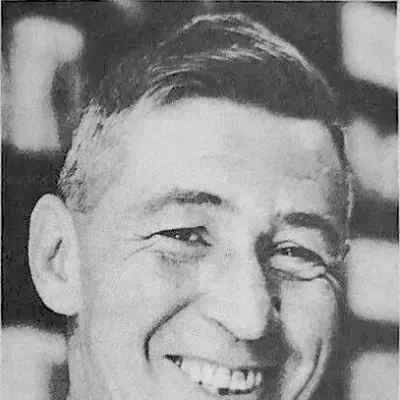
George F. Kennan
Human Design Chart
Biography
During the late 1940s, his writings inspired the Truman Doctrine and the U.S. foreign policy of "containing" the Soviet Union. His "Long Telegram" from Moscow during 1946 and the subsequent 1947 article "The Sources of Soviet Conduct" argued that the Soviet regime was inherently expansionist and that its influence had to be "contained" in areas of vital strategic importance to the United States. These texts provided justification for the Truman administration's new anti-Soviet policy. Kennan played a major role in the development of definitive Cold War programs and institutions, notably the Marshall Plan.
Soon after his concepts had become U.S. policy, Kennan began to criticize the foreign policies that he had seemingly helped begin. Subsequently, prior to the end of 1948, Kennan became confident that positive dialogue could commence with the Soviet government. His proposals were discounted by the Truman administration and Kennan's influence was marginalized, particularly after Dean Acheson was appointed secretary of state during 1949. Soon thereafter, U.S. Cold War strategy assumed a more assertive and militaristic quality, causing Kennan to lament about what he believed was an abrogation of his previous assessments.
During 1950, Kennan left the Department of State—except for two brief ambassadorial stints in Moscow and Yugoslavia—and became a realist critic of U.S. foreign policy. He continued to analyze international affairs as a faculty member of the Institute for Advanced Study from 1956 until his death at age 101 on 17 March 2005.
Human Design Analysis: George F. Kennan as Projector 3/5
Projector 3/5 — Design at a Glance
George F. Kennan was someone who immediately recognized flaws in systems – a direct result of his Projector design. Projectors act like a bright flashlight: They project their energy onto the environment and illuminate areas that are still dark for others. Kennan's aura was dense and focused; it could therefore sometimes be perceived as unpleasant by those around him. When he addressed these systemic weaknesses directly, he risked resistance, similar to someone shining a light directly into another person's face.
The more elegant strategy for Projectors is simply to shine pleasantly – perhaps through the example of harmonious structures – so that others come to them on their own and ask for advice. Kennan's design suggested that he found success when he waited for a genuine, appreciative invitation rather than pushing forward independently.
Since Projectors do not have a defined Sacral Center, they lack a constant intrinsic energy source. Kennan therefore experienced phases of high productivity followed by necessary rest periods to avoid burnout. The traditional work model often ignored this need. When he lived according to his design, he was rewarded with success; when he deviated from it, the theme of non-self bitterness would eventually become apparent. His effectiveness thus depended crucially on the right dosage of insights and waiting for invitations.
Emotional Authority
George F. Kennan showed a fundamental attitude where inner clarity was not immediately available but required time to crystallize out of emotional waves. His design carried Emotional Authority, meaning that his defined Emotional Center always formed the decision-making authority – regardless of other defined areas in his chart. This configuration generated a permanent rhythm of ups and downs in feelings; his perception of the world was always colored by the current mood. What appeared inspiring at one moment could be negatively evaluated in the next. Since this first impression was only a snapshot, not an ultimate truth, spontaneous decisions based on emotion were risky and often disadvantageous.
The mechanics of his authority required patience: He had to let decisions mature, take time to consider them, and ask questions multiple times. Only when intense feelings subsided did he gain emotional distance. Then calmness set in and the process was complete. This strategy was particularly relevant for long-term decision-making that significantly influenced his life course. By waiting for this inner tranquility, he could gain deeper, more comprehensive insights rather than being led by transient moods.
The 3/5 Profile — Martyr / Heretic
George F. Kennan showed himself as someone who learned through personal experimentation and later offered practical knowledge to others to solve their problems. This pattern matched his 3/5 Profile, which made him an experimental adventurer and at the same time a heroic advisor. In his early phase, he initially believed little in given truths and had to experience everything for himself. From these experiences, including failures, he later gained authority to act as a hero or savior. This role was attractive to him because it validated his acquired knowledge but could be painful when experiments failed in public. His attitude was also shaped by a deep acceptance of fate. This corresponded with Line 3 and Gate 30, which saw life as a wave without lasting fulfillment and demanded resignation in the sense of accepting what is – without positive or negative judgment. At the same time, he carried an innate dignity that tended towards power. This fifth line often appeared arrogant, but this overconfidence primarily served as a protective mechanism to maintain his projection and protect him from rejection if others questioned his leadership abilities. Thus, his design combined the pragmatic search for truth with a detached, almost mystical calmness toward the course of events.
Single Definition — Defined & Open Centers
George F. Kennan's Human Design profile indicated a tendency towards profound, time-dependent analysis. His defined Solar Plexus Center acted as an internal authority: He did not have immediate truth in the moment but developed clarity only through waiting for emotional waves to pass. This mechanism required patience; impulsive action on emotional highs or lows would have been counterproductive for him. Instead, he strategically used the seductive energy of his emotions by delaying decisions until emotional calm allowed for deeper insight.
Parallel to this, George F. Kennan had a defined Root Center. This gave him a constant internal pressure to move and survive in the material world. This stress was not a disturbance but his driving force, pushing him vigilantly forward as long as he was guided by his emotional authority.
In contrast, George F. Kennan showed himself through several open centers to be receptive to external influences. His open Head Center tended to absorb mental confusion or pressure from other questions rather than having consistent inspiration. Similarly, his Ajna Center being open gave him a flexible mind that took in concepts and theories without identifying them as personal truths. His open G Center meant he did not have a fixed identity or direction but was shaped by the environment and relationships; he did not actively seek a goal but waited to be initiated. Additionally, his Heart Center being open made him vulnerable to trying to prove his worth through promises or competition – a trap he had to avoid to prevent self-worth issues. His Sacral and Spleen Centers were also open: He lacked a constant energy flow and was sensitive to the health vibrations of others, leading him to avoid spontaneous decisions and trust his inner authority rather than rely on external security feelings.
Channels for the urge to recognize feelings.
George F. Kennan's Human Design profile indicated a tendency towards intense internal restlessness driven by a continuous urge for new experiences. This fundamental disposition resulted from Channel 41-30, connecting the Root Center with the Solar Plexus. The pressure from Gate 41 created a feeling of unease and fueled countless scenario fantasies. Through its connection to Gate 30, these impulses were strengthened by emotional waves, creating a strong desire for the leap from unfamiliarity into familiarity. Kennan showed himself as someone who had to learn to follow his emotional authority and develop patience before making decisions to gain clarity.
Additionally, further energetic streams influenced him. Gate 29 in the Sacral Center emphasized the need for saying yes at the right time and persistence in life-affirming challenges. Gate 14 contributed to skillful handling of power, where self-control and grace in wielding influence were crucial. In terms of identity, Gate 8 promoted individual standing up for group goals as a creative role model.
On the level of personality, further gates shaped his emotional landscape. Gate 6 served as an elemental building block for development through friction and regulated biological boundaries. Gate 36 allowed for the release of strong emotional energy in crises, preparing the ground for new experiences. Gate 55 led to extreme mood swings and emotional awareness, while Gate 60 required acceptance of limitations as a prerequisite for transcendence. Gate 22 supported individual processes through calm listening without imposition. In his design itself, Gate 38 with its pressure towards defending personal integrity and Gate 52, which demanded a self-imposed pause to focus on pattern correction, influenced him. This combination shaped a person navigating between an intense drive for experience and the need for inner peace as well as strategic persistence.
Collective Circuitry — Circuit Signature
George F. Kennan's Human Design profile indicated a tendency towards emotional wave movements drawing from past experiences. As someone with simple definition, he showed a cohesive energetic flow within one group: the Meaning Circuit. This connected his Solar Plexus Center to his Root Center through Channel 'Recognizing'.
While other circuits often emphasize cool logic, this configuration revolved around emotions and reflecting on the past. The energy flowed in wave-like patterns – each cycle had a beginning, middle, and end. Kennan did not just use these felt insights privately but saw them as necessary to share with the collective so that lessons could be learned from past events together. Since his design was simply defined, these forces formed a unified experience; there were no separate, coexisting energy fields of other groups. The connection between Solar Plexus and Root Center shaped him as someone seeking meaning in the past and passing it on through emotional clarity without being distracted by other disconnected centers. This structure promoted a deep understanding of how past events shaped his current emotional state.
Right Angle Cross of Contagion 1
George F. Kennans Design indicated a tendency towards a deep, often unconscious entanglement in the emotional currents of his environment. This configuration, known as the right infection cross 1, did not describe an active search for conflicts but rather a passive receptivity to collective moods and fears. Kennan was someone who absorbed the suppressed energy and hidden tensions of a group or era within himself without always clearly naming them or consciously controlling them.
This mechanism worked like an invisible filter: The emotional states of others were internalized and shaped his inner disposition before they could be discharged outwardly. It was a form of empathy that relied less on understanding than on resonance. Kennan lived with this burden by carrying the weight of the atmosphere around him. The energy of this cross did not require a classical solution but rather a way of enduring and processing what flowed in from outside. His reaction to these internal pressures was marked by a certain detachment from his own emotional involvement, as consciousness often failed to grasp the full extent of the absorbed burden. This created an inner tension between what was felt and what could be rationally processed, without this being understood as weakness but rather as a structural feature of his design.
Saturn Return · Uranus Opposition · Chiron Return · 2nd Saturn Return — Life Cycles
George F. Kennans Design indicated a tendency towards strategic adaptation, with external events often serving as catalysts for internal clarification. In 1944, at the age of 40, the Uranus opposition became active: He was appointed Counselor and political advisor in London. This cycle marks a turning point where old structures break down and new roles are forced; Kennan used this suddenness to position himself in a complex diplomatic environment.
His Chiron return in 1952 (age 48) brought his incarnation purpose closer to fulfillment. He was appointed US Ambassador to the Soviet Union, yet removed as persona non grata that same year. This cycle does not show healing but rather the full expression of one's design: The appointment and immediate removal illustrate how his specific path was defined through extreme confrontation and withdrawal – a moment of bloom where his role was pushed to its peak and simultaneously ended.
The second Saturn return in 1961 (age 57) solidified this experience. Kennan became Ambassador to Yugoslavia. This cycle requires integration and responsibility; he took up a new, stable position after previous turbulence. His design thus showed him forming his diplomatic identity through sudden breaks (Uranus), intense fulfillment crises (Chiron), and finally structural anchoring (Saturn) – always reacting to external demands without being isolated from them.
Projector · Emotional Authority — Synthesis
He was a projector who, through the connection of Root and Solar Plexus Centers (Channel of Recognition), possessed an acute ability to recognize potentials and work towards new possibilities. This energetic configuration nourished a deep urge to explore the unknown – experimenting that kept him in constant motion. However, his defined Emotional Center required time for the resulting feelings to mature before he communicated them. This led him to recognize patterns and dynamics that others missed, using these insights as a basis for his assessments.
A central paradox shaped his essence: He was designed to guide other people by pointing out blind spots (projector), yet his emotional authority demanded an inner maturation of perception before sharing these insights. The cyclical career events showed this internal conflict – moments of professional advancement followed phases of removal or realignment. Thus, he lived in a tension between the need to project his insights and the necessity to wait for the emotional wave to ensure that his contribution was truly effective.
1 Defined Channel
Incarnation Cross - Right Angle Cross of Contagion 1
Solar Return
The Solar Return shows the moment when the sun returns to its exact birth position - your personal solar year.
Life Cycles
Discover the life cycles with a detailed triple view (birth chart, cycle chart, composite).
Human Design Profile
- Type
- Projector
- Strategy
- Wait for the respectful invitation
- Authority
- Emotional Authority
- Profile
- 3/5 - Martyr / Heretic
- Definition
- Single Definition
- Incarnation Cross
- Right Angle Cross of Contagion 1
- Date of Birth
- 16.02.1904 13:00
- Place of Birth
- Milwaukee, WI, United States
Frequently Asked Questions
What was George F. Kennan's Human Design type?
Which Profile did George F. Kennan have?
What was George F. Kennan's Authority?
What incarnation cross did George F. Kennan have?
When was George F. Kennan born?
Discover your own Human Design
Are you also a Projector? Find out in a personal reading how to unfold your leadership qualities and recognize the right invitations.
More Personalities
Back to overviewSissy Spacek

Alain-Fournier

Anémone

Ann-Margret

Bourvil
Hergé