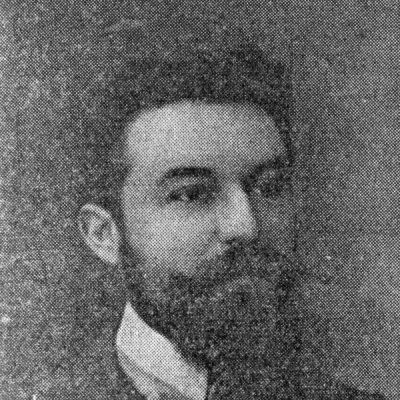
Georges Athénas
Human Design Chart
Biography
He won the Prix Goncourt in 1909 for the novel "En France" (In France), which he co-wrote with his cousin Aimé Merlo under the pseudonym Marius-Ary Leblond, from which point he was often called Marius Leblond. He later officiated as secretary to Marshal Joseph Gallieni from 1914 to 1916.
He died on 8 May 1953 in Paris, a Commander of the Legion of Honour.
The Human Design of Georges Athénas: Generator 3/5
Generator 3/5 — Design at a Glance
Georges Athénas had an enormous reservoir of endurance and life force that allowed him to pursue projects with great consistency. As a Generator, he possessed a specific energy source in the sacral center, which drove him like a strong workhorse—provided this power was used correctly. His design indicated that his success did not depend on his own initiative but rather on how he responded to impulses from his environment. The key strategy for Georges Athénas was to wait until an external signal came and his inner self answered with a clear "yes." Upon receiving this internal confirmation, he then acted with full devotion.
This path of reacting instead of initiating was the key to his deep satisfaction. When Georges Athénas followed this inner guidance, he felt fulfilled and invulnerable in his creative power. Conversely, ignoring this signal or constantly pushing forward his own plans without inner resonance led to frustration and energy loss. Especially dangerous for him was being prevented from working on his heart's project when his strength was still present. Such interruptions or the compulsive nature of things that did not find internal approval threatened to slow down his enormous potential and lead to burnout. His design clearly showed: His strength lay in patiently waiting for the right impulse and then implementing it with powerful endurance afterward.
Emotional Authority
Georges Athénas revealed himself as someone who did not make his inner decisions in the moment of the first impulse but rather let them mature consciously. His inner authority lay in the defined Solar Plexus Center, bringing with it a specific emotional wave: a constant up and down of feelings. The world always appeared to him colored by the current mood; still filled with enthusiasm one moment, he could see the same situation negatively in the next. However, this immediate feeling was only a snapshot, not a secured truth value. Quick, spontaneous reactions to these emotions would often have worked against his best interests.
Instead, his mechanics required patience and time. Georges Athénas let decisions ripen overnight, slept on them multiple times, and allowed others to question and ponder with him. Only over time did the intense feelings subside, allowing him to gain emotional distance. In this distance, clarity and calmness set in – a sign that the decision-making process was complete. This strategy was particularly relevant for long-term directional changes that significantly influenced his life course. By waiting for a clear emotional ground, he secured himself against impulsive misjudgments and found deeper, more comprehensive insights.
The 3/5 Profile — Martyr / Heretic
Georges Athénas revealed himself through a fundamental attitude based on unbiased exploration. His design suggested that he initially did not accept anything at face value but had to try everything for himself. This trial-and-error process of Line 3 was crucial for his development of practical wisdom. He learned from his experiments and even from failures, which endowed him with high adaptability.
This personal learning method led to the role of Helper. With self-earned knowledge, he solved problems for other people, in accordance with Line 5. His rich treasure trove of lived experience was attractive to those around him; others sought his advice because they wanted to learn from his practical insights. This heroic role flattered him naturally but also carried a specific vulnerability: public failure was especially painful for him since it occurred before the eyes of the community that trusted in his competence.
The tension between the need for free exploration and the expectation of his environment to act as a competent savior shaped his essence. His focus always lay on validating knowledge through personal experience rather than blind faith. In this, there was a certain impartiality: he focused on what was essential to secure resources while also being sensitive to the other side in order to gain loyalty. His belief did not rest on dogmas but on the conviction that certain patterns would recur in the future – an insight reinforced by consistent attention to detail and logical processes.
Triple Split Definition — Defined & Open Centers
Georges Athénas revealed himself as someone with an extremely stable, self-sustaining internal structure. His design was almost entirely defined: Head, Ajna, Heart, Sacral, Solar Plexus, Spleen, and Root were set in stone. This gave him a constant presence in mental inspiration, willpower, generative energy, emotional depth, intuitive health, and stress resistance. He possessed a high internal capacity for thinking, feeling, and acting. The combination of defined Head/Ajna (mental pressure) and Heart/Sacral (willpower/energy) created a strong, assertive personality. His emotional authority in the Solar Plexus filtered these energies temporally; he waited patiently for clarity before taking action.
In contrast, his G Center and Throat Center remained open. The open G Center meant that his identity and direction were situational, dependent on the environment. He tended to ask questions like “Who am I?” or “Where do I find the right direction?” when he was not in the correct place. Instead of seeking a fixed identity, he adapted himself to people to learn which directions felt right for him. The open Throat Center meant that he could not communicate consistently. He had a fear of not being noticed or felt pressure to force attention. Rather than initiate communication, he waited for invitations to speak in order to receive the appropriate attention at the right time. This openness stood in sharp contrast to his inner stability and challenged him not to be pushed into false directions or communication by the mind.
Channels for synthesis, community, logic and preservation.
Georges Athénas revealed a fundamental attitude of healthy skepticism and a deep need for collective binding. His design suggested that he constantly filtered patterns to test their consistency. The Logic Channel 63-4 connected Head with Ajna Center; here doubt was essential, as logical formulations could be flawless but still incorrect. This skepticism served as a filter against unfounded belief and sought verifiable evidence for the collective.
Simultaneously, his emotional wave determined his belonging to the tribe. The Synthesis Channel 19-49 connected Root with Solar Plexus Center and created the emotional glue that decided who deserved support. Loyalty and the feeling of being needed were central to him; he sought a balance between feasibility and fairness within his community.
The provision for this community was through care and values. The Preservation Channel 27-50 connected Sacral with Spleen Center. Here, Gate 27 selflessly cared for others while Gate 50 guarded traditional values to maintain order. Georges Athénas automatically attracted trust and took responsibility for those who could not provide for themselves, always aware that his own health was a prerequisite for caring for others.
The building of this community was based on mutual agreement. The Community Channel 37-40 connected Solar Plexus with Heart Center and emphasized that good deals had to be carefully considered. It wasn’t about spontaneous deals but clear contracts (‘I do this for you if you do this for me’), sealed over time through willpower and emotional clarity.
Additionally, individual gates were at work: Gate 9 promoted detailed work and perfection in the Sacral Center; Gate 16 advanced mutative experiments in the collective. Gate 11 allowed visual assessment of the situation, while Gate 64 interpreted past experiences. Gate 28 stood for risks in the here and now, Gate 5 for life rhythms, Gate 55 for emotional awareness, and Gate 29 for persistent affirmation to challenges.
Tribal Circuitry — Circuit Signature
Georges Athénas' design leaned towards rational structuring, separate from deep instincts. The Understanding Circuit connected Head and Ajna Center through the Logic Channel. This promoted sharing clear, emotionless insights for the future, free of conditioning.
Parallel, the Ego Circuit operated in Heart, Solar Plexus, and Root Centers. Through the Channels Community (Give-Take) and Synthesis, it steered cooperation and resource management within the tribe. As there was no connection to Sacral Center, rest periods were necessary here to cope with the emotional waves of the Solar Plexus.
A third independent system formed by the Archer Circuit between Sacral and Spleen Centers. The Preservation Channel (27-50) activated primal instincts for protecting genetics and family. This included care and preservation, separate from rational logic of the mind or social dynamics of ego.
This triple definition created three parallel, not directly connected power fields: the cool ratio of the head, the emotional community dynamics in the Heart-Root area, and the instinctive protective drive of Sacral and Spleen. Georges Athénas revealed himself through the interplay of these separate systems – logic, social cooperation, and genetic instinct – each with its own rules and needs. The awareness stream of sensitivity in Solar Plexus underscored the emotional component within the Ego Circuit.
Right Angle Cross of Planning 1
Georges Athénas' design indicated a tendency towards strategic alignment and long-term vision. His chart featured the 'right cross of planning 1', a configuration that did not encourage spontaneous impulsiveness but rather conveyed a deep need for structure and a clear horizon of goals. This mechanism described a person whose energy was directed not only at overcoming the immediate present but also at maintaining an eye on the larger context. It created distance from the chaos of everyday life, allowing for meaningful decisions to be made from this vantage point.
For Georges Athénas, this meant that his actions were always guided by a higher plan or vision. He did not seek short-term solutions but built systems and thought structures that stood the test of time. The energy of this cross acted like a compass: it kept him focused on clarity and prevented him from being drawn into the whirlpool of the moment. His strength lay in his ability to penetrate complex connections and derive coherent strategies from them. This was not an intellectual exercise in empty space but a practical tool for life design. Georges Athénas used this skill to set his steps consciously and ensure that every action aligned with his long-term intention. Planning was not a constraint for him, but the natural expression of his inner order.
Generator · Emotional Authority — Synthesis
Georges Athénas' life was marked by a deeply rooted ability to recognize patterns and apply them in practical ways. His defined sacral energy provided the endurance for this undertaking, while the connected Head and Ajna Centers generated a constant mental pressure to understand and articulate (Channel 63-4). This combination of intuitive power and analytical thinking allowed him to grasp complex connections and derive concrete courses of action from them – a process that was reinforced by the Format-Energy of Channel 5-9. He drew his energy from responding to impulses (sacral center), not from initiation itself, making him a productive shaper whose work occurred in cycles of experimentation and refinement.
A central tension field in Georges Athénas' design lay between his ability for deep emotional perception (defined Solar Plexus Center) and the need for clarity and logic (Head and Ajna Centers). While the emotional center led him into the depths of experience, reason demanded a rational analysis. This dynamic created an internal struggle between feeling and mind that drove him to process experiences, recognize patterns, and derive grounded decisions from them – a process that included the Channel 27-50's capacity for care and protection.
4 Defined Channels
Incarnation Cross - Right Angle Cross of Planning 1
Solar Return
The Solar Return shows the moment when the sun returns to its exact birth position - your personal solar year.
Life Cycles
Discover the life cycles with a detailed triple view (birth chart, cycle chart, composite).
Human Design Profile
- Type
- Generator
- Strategy
- To respond - wait for something to respond to
- Authority
- Emotional Authority
- Profile
- 3/5 - Martyr / Heretic
- Definition
- Triple Split
- Incarnation Cross
- Right Angle Cross of Planning 1
- Date of Birth
- 26.02.1877 13:15
- Place of Birth
- Saint-Denis, Reunion
Frequently Asked Questions
Which Human Design Type was Georges Athénas?
Which profile did Georges Athénas have?
Which authority guided Georges Athénas?
What incarnation cross did Georges Athénas have?
When was Georges Athénas born?
Discover your own Human Design
Are you also a Generator? Find out in a personal reading how to use your sacral energy correctly and discover deep satisfaction.
More Personalities
Back to overviewAaliyah

Alexia

Angèle

Anne-Marie

Arcángel

Arno