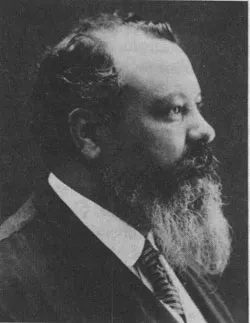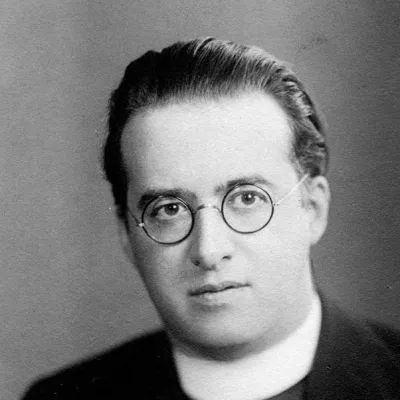
Georges Lemaître
Human Design Chart
Biography
A civil engineer, he served as an Army artillery officer during World War I. After the war ended, Lemaître entered the seminary and was ordained as a priest in 1923. He developed an interest in astronomy while studying biblical creation, and from 1923 to 1924, he studied at the solar physics laboratory at the University of Cambridge. He continued his studies at the Massachusetts Institute of Technology in Cambridge from 1925-27. He became professor of astrophysics at the University of Louvain in 1927, and during that same year, he proposed his theory of the expansion of the universe.
Lemaître died on 20 June 1966 at age 71 in Leuven, Belgium.
The Human Design of Georges Lemaître: Manifestor 5/1
Manifestor 5/1 — Design at a Glance
Georges Lemaître emerged as a pioneer with a clear vision that destined him to lead others into new directions. His design was that of a Manifestor, a type who did not fight every battle himself but rather, like an emperor in ancient Rome, implemented his plans through others. This role, however, brought a specific dynamic: Because he often thought ahead of his surroundings, he was frequently misunderstood and polarized those around him. While some were attracted to his ideas and followed him, others rejected or even hated him precisely because of the magnitude of his visions.
To minimize this resistance and avoid misunderstandings, his strategy lay in timely and accurate informing. By keeping others updated on his intentions and visions, he enabled the right followers to find and follow him. Living by this informing strategy rewarded Georges Lemaître with a sense of inner peace. This was the natural result of living in harmony with his design. Deviations from this path led to deep, persistent anger within him. His internal state thus directly depended on how consistently he communicated his vision and thereby prepared the environment for his leadership.
Splenic Authority
Georges Lemaître oriented himself primarily by a fine physical intuition as a decision-making basis. His design saw the Spleen Center carrying inner authority – a configuration possible only because his Emotional and Sacral Centers remained open. This structure endowed him with spontaneous survival knowledge: An internal impulse signaled immediately whether a situation or environment was healthy and right for him.
This initial impulse was considered the sole reliable indicator. It required, however, utmost vigilance as the Spleen voice appeared only once in the moment and could easily be drowned out by other influences. For Georges Lemaître, this meant that decisions were not made through prolonged deliberation or fixed plans but in the moment of occurrence. Since his inner truth could change short-term, long-term commitments often hindered him. Instead, he needed much freedom and flexibility to follow this spontaneous guidance. A temporary withdrawal helped him clearly perceive the fine impulse before acting. Thus, his design ensured that he rigorously distanced himself from harmful influences by strictly orienting towards momentary physical well-being rather than external expectations or rational forecasts.
The 5/1 Profile — Heretic / Investigator
Georges Lemaître revealed himself as someone who used deep private knowledge to offer solutions to others in crisis times. His design laid a tendency toward synthesis of intense inner research and magnetic radiance. As a Hero/Researcher (Profile 5/1), he possessed the almost magnetic quality that made others desperately want to know what wisdom he had to offer. This led people often seeking solutions for their problems from him.
The challenge lay in protecting against energetic exhaustion through unbridled demanders. Without the ability to set clear boundaries and say “No,” there was a risk his inner knowledge reservoir of Line 1 would be burned out by constant external inquiries and criticism. Line 5 brings practical solutions during crises and expects clear communication of details. Excellence meant for him having thoroughly chewed over and repeated all details until they were absolutely clear.
While he worked in the darkness as a researcher on the details, he only stepped forward publicly when everything was organized. The balance between withdrawal for synthesis for himself and public problem-solving for others was crucial. Only through learning to set boundaries could he maintain this beneficial equilibrium and use his gifts optimally without being overwhelmed by the burden of constant availability.
Single Definition — Defined & Open Centers
George Lemaître was characterized by a persistent willpower that manifested in a reliable voice. His defined Heart Center gave him the strength to keep promises and shape his life; this translated into his also defined Throat Center, which transformed this energy into clear communication. This was complemented by his defined Spleen Center, providing spontaneous intuition and body awareness – a source for immediate existential perception here and now.
These stable internal resources sharply contrasted with his open centers: G, Head, Ajna, Solar Plexus, Sacral, and Root were undefined. Without a defined G Center, George Lemaître lacked a constant identity or direction; he tended to question who he truly was and where his love lay rather than possessing these answers internally. His open Head and Ajna Centers meant that mental clarity and inspiration were situational. He was vulnerable to the pressure of having to answer questions or understand concepts not originating from him, which could pull him into a whirlwind of doubts.
His energy and emotions were also environment-dependent. The undefined Sacral Center did not allow for a constant life flow; he absorbed foreign vitality, risking exhaustion through overexertion and often not knowing when enough was enough. His open Solar Plexus absorbed the feelings of others, making him emotionally vulnerable and prone to avoiding confrontation or personalizing other people's moods. Finally, his undefined Root Center took on external stress. George Lemaître was exposed to pressure he did not generate himself and had to learn not to mistake this adrenalized state as his own drive but rather let it go or use it purposefully. His mechanics were marked by the tension between inner reliability in will and intuition alongside a high permeability for identity, mind, emotion, and stress from the environment.
Channels for intuition, experiments and bold contracts.
George Lemaître combined intuitive depth with technical precision. His design showed a tendency to not only understand knowledge but transform it through repeated practice into masterful skill and articulate it clearly at the right moment. This ability was based on the synthesis of inner intelligence and immediate articulation.
Channel 48-16 connected Gate Depth (48) with Gate Dexterity (16). Here, an inner, non-rational intelligence sought vital information while the other side experimented and perfected new possibilities. Through engagement and repetition, this combination developed into a talent that was communicated as technical mastery. It involved a gradual change towards excellence, where control of a pattern eventually led to freedom in one's unique expression.
Parallel to this, Channel Lightning Stroke 57-20 operated. It connected Gate Intuitive Insight (57) with Gate Now (20). This enabled spontaneous, intuitive insights in the immediate moment expressing existential truth: “I know that I am living now.” This ability strengthened others in awakening their own inner survival intelligence by articulating knowledge directly and clearly here and now.
Channel Money Line 21-45 activated the Heart Center through Gate Hunter (21) and Gate Gatherer (45). This showed a strong will for material mastery and control over resources, necessary for responsibility towards the “tribe.” It was about being willing to work hard but independently set one’s own rhythm to ensure security and independence.
The Personality Gates 62 (logical detail work), 61 (inner truth), as well as 3 (mutation through confusion) complemented this structure. Gate 50 brought a conservative protective reflex, while Gates 56, 12, and 44 introduced abstract narration, emotional restraint, and vigilance into interaction. Together they created a configuration that linked logical structure with the drive for individual mutation.
Individual Circuitry — Circuit Signature
George Lemaître was characterized by a triad of creative expression, logical structure, and cooperative will. His design connected Throat, Spleen, and Heart Centers in a simple definition, creating three separate but parallel operating energies. The Knowledge Circuit utilized Channel 20-57 (Lightning Stroke) to express innovative impulses from the Spleen directly through the throat. This allowed for a pulsating, acoustic transmission of new insights based on individual creativity. Parallel to this, the Understanding Circuit operated via Channel 16-48 (The Wave Length). It also connected Spleen and Throat Centers but focused on visually logical structures. Here it was about sharing rational strategies for the future free from emotional coloring to enable societal improvements. A third aspect was the Ego Circuit with Channel 21-45 (Money Line). This linked Heart and Throat Centers. It was not about individual self-awareness but tribal cooperation: the joint creation of material resources through mutual support. Since there was no connection to the Sacral Center, this traditional tactile help required necessary pauses for regeneration. Overall, his design enabled him to impulsively express new ideas, clearly communicate logical future plans while setting cooperative, material security in a group context – always with the necessity of pauses between these efforts.
Left Angle Cross of Obscuration 1
Georges Lemaître had the design of the left Veil 1 Cross. This configuration is present in the available data without further mechanical specification, so no derived character traits or specific behavioral patterns can be inferred from it. The left Veil 1 Cross represents a particular energetic structure within Human Design, whose internal dynamics and external effects are not defined here. Without describing the underlying mechanism, the interpretation of this energy source remains undetermined; it cannot be established how it might have influenced Georges Lemaître's decision-making or experience. Simply naming the structure provides no clues about inner tensions, typical reactions, or strategic challenges associated with this cross. Thus, the chapter remains mechanically open: It notes an architectural fact without explaining its content weight or functional role in Georges Lemaître's overall design. The absence of a description does not mean that the energy itself is missing but excludes any detailed analysis of its effects. Georges Lemaître's design included this building block, yet without further contextualization, its significance for his life and work within this reading remains unclear and cannot be elaborated further.
Saturn Return · Uranus Opposition · Chiron Return · 2nd Saturn Return — Life Cycles
Georges Lemaître moved through his life along clearly defined cycles that linked spirituality, scientific publication, and institutional recognition. His design laid out a structure in which inner conviction and outer realization met rhythmically.
In 1923, at the age of 29, he was ordained as a priest. This marked his first Saturn Return, a time when years of internal work often crystallize into a life-defining decision. The ordination was not just a ritual but the anchoring of his spiritual identity in everyday life.
Ten years later, in 1933 at the age of 39, he published 'Discussion sur l’évolution de l’univers'. This fell during the Uranus Opposition, a phase of rupture and reorganization. Here, his ability to question established patterns and publicly present new insights was evident. The publication expressed a necessary break from conventional constraints in favor of a more radical search for truth.
In 1940, at the age of 46, he was appointed to the Pontifical Academy of Sciences. This corresponded to his Chiron Return, a fulfillment cycle. During this phase, one's incarnation cross increasingly unfolds; meaning and purpose become experiential. Institutional recognition was not coincidental but the logical consequence of a life lived according to his inner strategy. It was the moment when his scientific and spiritual career bloomed and showed as an integrated whole.
Manifestor · Splenic Authority — Synthesis
Georges Lemaître was a Manifestor whose life was marked by a deep drive for knowledge and the articulation of new ideas (Manifestor Type, Knowledge Circuit). The connection between Spleen Center and Throat Center through Channel Wavelength points to someone who instinctively knew what was right and communicated this knowledge precisely. This interplay manifested in his ability to develop profound understanding (Line 1) and make it accessible to others – even if that meant challenging established notions (Gate 48/16). The documented events during Saturn Return and Uranus Opposition underscore a life where exploring new paths and disseminating knowledge played central roles.
A central paradox lay in the combination of inner authority over the Spleen and the role as Hero/Researcher (5/1 Profile). On one hand, he lived by a fine, instinctive impulse that guided him to the right path; on the other, he was magnetic for the questions and problems of others. This constellation held potential for burnout, as his energy had to meet both his own inner compass and external expectations – an ongoing balance between self-care and providing his knowledge.
3 Defined Channels
Incarnation Cross - Left Angle Cross of Obscuration 1
Solar Return
The Solar Return shows the moment when the sun returns to its exact birth position - your personal solar year.
Life Cycles
Discover the life cycles with a detailed triple view (birth chart, cycle chart, composite).
Human Design Profile
- Type
- Manifestor
- Strategy
- To inform others before acting
- Authority
- Splenic Authority
- Profile
- 5/1 - Heretic / Investigator
- Definition
- Single Definition
- Incarnation Cross
- Left Angle Cross of Obscuration 1
- Date of Birth
- 17.07.1894 18:00
- Place of Birth
- Charleroi, Belgium
Frequently Asked Questions
What is Georges Lemaître's Human Design type?
What Profile did Georges Lemaître have in Human Design?
What Authority did Georges Lemaêtre have?
What incarnation cross did Georges Lemaître have?
When was Georges Lemaître born?
Discover your own Human Design
Are you also a Manifestor? Find out in a personal reading how to use your initiation power peacefully and dissolve resistance.
More Personalities
Back to overviewChristian-Jaque

Kesha

Lucebert

Marilyn

Masaccio

Papus