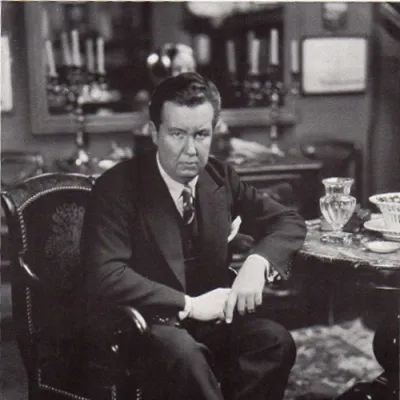
Georges Lepape
Human Design Chart
Biography
Georges Lepape — Manifestor with Profile 1/3
Manifestor 1/3 — Design at a Glance
Georges Lepape's Human Design laid the groundwork for a pioneering and visionary approach, destined to lead the world into a new future. His chart described an energy similar to that of an emperor in ancient Rome: He had the vision of a great whole but did not fight the necessary battles himself; instead, he inspired others to realize his plans. This configuration brought a specific pain point: Georges Lepape was often misunderstood because his thinking exceeded that of his environment. This led to polarization; he was loved and followed for his great dreams by some, while others rejected or even hated him because of these visions.
To find the right followers who suited him, it was crucial for his design to inform others about his intentions in a timely and precise manner. This formed the ideal strategy for him. If Georges Lepape followed this strategy and trusted his inner authorities, his design rewarded him with a sense of inner peace. Living against this mechanism, however, he felt a persistent, deep-seated anger. His path, therefore, was to minimize resistance through clear communication and create space for his leading role.
Splenic Authority
Georges Lepape trusted his fine, spontaneous inner voice to decide what was good for him. His inner authority lay in the defined Spleen Center, an area that functions as a health and alarm system. For this authority to be effective, both his Emotional and Sacral Centers were open—a configuration found only in Projectors or Manifestors.
This structure endowed him with a pronounced survival intelligence. His instinct and physical well-being served as reliable indicators of whether an environment, situation, or society was suitable for him. Decisions had to be made in the moment; the first, spontaneous impulse was the right one and served his immediate health. This allowed him to effectively care for himself and rigorously distance himself from harmful influences.
Since this impulse was very subtle and only appeared once in the moment, there was a risk that it could be drowned out by other influences. This required high vigilance from Georges Lepape. A temporary withdrawal could be helpful in decision-making. Because the knowledge of the right thing was always only available in the moment, plans could change short-term. Long-term commitments were therefore difficult; he needed a lot of space and flexibility to be true to his nature.
The 1/3 Profile — Investigator / Martyr
Georges Lepape was someone who combined theoretical knowledge and practical application inseparably. His design as Profile 1/3, the Researcher and Experimenter, established that his understanding had to arise through personal experience and testing. He learned not only through observation but through active doing and the resulting experiences.
Line 1 in his profile emphasized the need for a pause and thorough consideration before action. There was an inner pressure to commit and provide energy for the concentration process. At the same time, Line 3, the line of trial and error, placed weight on practical experimentation. Shortcuts were of little value to him as they overlooked important details. His path led through detailed work and the establishment and relinquishment of connections to develop adaptability.
When Georges Lepape made a statement or judgment, it was the result of a double verification process: theoretical foundation and practical verification. He had to face the consequences of his actions and learn from every mistake. This configuration created a person whose judgments were trustworthy because they were based on self-earned, tested insights. His life revolved around learning through trial and error, navigating between the fear of not knowing enough and the urge to experiment.
Split Definition — Defined & Open Centers
Georges Lepape's Human Design shows a tendency towards constant mental activity and clear will expression. His defined Ajna Center provided a reliable, specific form of conceptual thinking that was hardly influenced from the outside. This mind not only served internal processing but also acted as an external authority that shaped the mental field of his environment. Through the connection to his defined Throat Center, he could directly express his concepts and opinions; his communication was thus a reliable expression of what he thought, combined with the ability to manifest through interaction.
This mental clarity served his defined Heart and Spleen Centers. His defined Heart Center gave him a pronounced willpower and the desire to determine his life and resources himself. He tended to keep promises and prove his own worth, which gave him a competitive but also self-determined attitude. Simultaneously, his defined Spleen Center acted as an intuitive instance in the here and now. It provided spontaneous, non-rational judgments about health and well-being that he could trust without questioning them intellectually. His defined Root Center reinforced this with a constant inner pressure that propelled him materially and helped him deal with stress in a set way.
At the same time, Georges Lepape was receptive to external influences through several open centers. His open Head Center meant that he did not have a constant access to inspiration. He tended to identify with the questions or doubts of others when he did not trust his inner authority, which could lead to mental confusion. His open G Center did not allow for a fixed identity or life direction; he had to wait for initiation by others to find the right place and direction, rather than actively seeking them. Additionally, his open Sacral Center was vulnerable to the energy of the environment. He could not rely on a constant vital response, which led to him easily overextending himself when he took on foreign energies as his own. His open Solar Plexus also absorbed the emotions of his environment, causing him to fluctuate between the moods of others rather than having a stable emotional wave.
Channels for mental order, critical scrutiny and value creation.
Georges Lepape was someone whose mind was inclined to translate complex information into clear, logical structures. His design showed a tendency to recognize patterns and communicate them through precise language. This ability came from the Acceptance Channel 17-62, which connected his Ajna Center with his Throat Center. Gate 17 visualized patterns, while Gate 62 put them into words. Georges Lepape mentally organized information before speaking, which helped him solidify his worldview. He found satisfaction in precisely explaining what he understood.
Another defining aspect was his inner drive towards correction and perfection. The Judgment Channel 58-18 connected his Root Center with his Spleen Center. Gate 58 drove him towards vitality, while Gate 18 was the corrector. Georges Lepape questioned patterns to improve them. He sought what was out of balance and wanted to find solutions that worked for the collective. His criticism served not to destroy but to optimize.
On a material level, the Line of Money Channel 21-45, which connected his Heart Center with his Throat Center, was influential. Gate 21, the Gate of the Hunter, and Gate 45, the Gate of the Gatherer, created a dynamic between control and responsibility. Georges Lepape was willing to work hard but needed autonomy. He sought ways to manage resources and maintain independence. This channel promoted his understanding of hierarchies and the exchange of values.
Additionally, individual gates contributed to his orientation. Gate 52 promoted concentration and silent contemplation, while Gate 4 developed logical formulas for future security. Gate 40 sought liberation through work and expected recognition. Gate 56 allowed him to translate mental processes into figurative narratives. Gate 32 ensured continuity and evaluated new situations for their values. Gate 24 helped him renew knowledge in the rhythm of the pulse. Gate 28 supported decisions in the here and now. Gate 53 allowed him to pioneer new paths. Gate 48 recognized deep connections, even if the implementation could be difficult. Gate 8 promoted his individual contribution to the group. Gate 20 helped him act authentically in the present and integrate his uniqueness. This combination shaped Georges Lepape as someone who logically structured, critically questioned, and materially acted responsibly.
Collective Circuitry — Circuit Signature
Georges Lepape's design showed a tendency towards structured, rational analysis that operated free of emotional coloring. This 'emotionless ratio' was created by the Understanding Circuit, which in him formed two separate parts: On one hand, the Acceptance Channel connected the Ajna with the Throat Center, promoting the translation of thoughts into words. On the other hand, the Judgment Channel between the Spleen and Root Centers linked intuitive assessments with physical energy distribution. Both groups were not energetically connected but existed parallel.
Besides this cognitive structure, there was a clear orientation towards material resources and cooperation. The Ego Circuit connected Georges Lepape's Throat with his Heart Center through the Line of Money Channel. This created a direct flow between the ability to communicate and the willpower to organize resources or generate wealth. It was timeless energy aimed at mutual support and the joint creation of material foundations, without relying on the constant life force of the Sacral Center.
As a person with Split Definition, Georges Lepape's energy consisted of these two distinct, not directly connected blocks: the cognitive-intuitive area (Ajna, Throat, Spleen, Root) and the will-based resource area (Throat, Heart). The Throat Center functioned here as an interface but was not energetically active as a bridge between the two separate systems, but rather formed its own connections within its respective groups. This shaped an experience world in which rational strategy and material organization worked side by side without merging into a single, continuous narrative.
Right Angle Cross of Service 2
Georges Lepapes design indicates a tendency towards a deep, often unspoken dedication to the well-being of others. He was someone who used his energy not primarily for personal ambitions, but in service to a greater whole or a specific person. This attitude stems from the configuration known as the 'Right Cross of Service 2', which describes a specific form of self-actualization through care and support.
In this Human Design context, this means that Georges Lepapes inner authority and contentment were closely linked to his ability to help others without losing his own identity. It was not about self-sacrificing submission, but rather a powerful, focused support that arose from a clear inner resonance. His design promoted a natural sense of where help was truly needed and how it could be delivered most effectively.
This mechanism shaped his interactions with the world: Georges Lepape was most effective when he found himself in roles or situations where he could use his abilities to ease or enrich the lives of others. The energy of this cross supported him in maintaining flexible boundaries between self and other, always with the aim of exerting a positive influence. It was a dynamic of giving that was based on a solid foundation of his own values and a clear intention, which distinguished him from mere adaptation. His path was marked by the search for meaning through service to others.
Saturn Return · Uranus Opposition · Chiron Return · 2nd Saturn Return — Life Cycles
Georges Lepapes design was characterized by recurring cycles of structuring and transformation, which manifested in his career as a fashion illustrator. This mechanism was evident when he became one of the most important illustrators for the fashion magazine *Gazette du bon ton* in 1912, at the age of 25. This step marked his first Saturn return, a phase in which years of groundwork condensed into a solid, institutional result. The design indicated a tendency to anchor himself in established structures once inner maturity was ready.
Later, in 1926 at the age of 39, the Uranus opposition led him to a new challenge: he worked for six months on the cover pages of eight issues of the American *Vogue* in 1927. This configuration describes an impulse towards change and expansion, which took him out of his familiar framework and opened up new, international horizons. It was a moment of adaptation to changed circumstances, which demonstrated his flexibility.
His second Saturn return occurred in 1945, when he was 58 years old. That year, he illustrated Paul Géraldy's work *L'Amour*. This cycle confirmed the previously developed competence and led to further consolidation of his reputation. Through this sequence of structuring and transformation, Georges Lepapes path was shaped: he used the respective astrological windows to solidify his artistic identity while also meeting new demands. His career was not a linear ascent, but a series of strategic anchoring and necessary adaptations.
Manifestor · Splenic Authority — Synthesis
Georges Lepape was a Manifestor whose life was marked by an inner drive towards creation and a pronounced investigative spirit. His defined Ajna Center (mental consciousness) and the Channel of Acceptance (Gate 17/62) pointed to a capacity to organize information, recognize patterns, and communicate these through visual forms. This mental clarity, combined with the authority in the Spleen, led to spontaneous, instinctive decisions that determined his creative direction. The profile as a Researcher/Experimentor (1/3) reinforced the necessity to validate knowledge through personal experience – a process that was evident in repeated professional engagements where he charted new paths and reinterpreted established formats.
A central paradox in his design lay in the tension between the Manifestor type, which is destined to initiate and lead, and the need to respect the spontaneous Spleen authority. While he developed visions and expressed them through his work, his inner system required constant adaptation to current well-being to avoid harmful influences. This duality led to a creative dynamic in which both the conception of new ideas and intuitive boundaries played a role.
3 Defined Channels
Incarnation Cross - Right Angle Cross of Service 2
Solar Return
The Solar Return shows the moment when the sun returns to its exact birth position - your personal solar year.
Life Cycles
Discover the life cycles with a detailed triple view (birth chart, cycle chart, composite).
Human Design Profile
- Type
- Manifestor
- Strategy
- To inform others before acting
- Authority
- Splenic Authority
- Profile
- 1/3 - Investigator / Martyr
- Definition
- Split Definition
- Incarnation Cross
- Right Angle Cross of Service 2
- Date of Birth
- 26.06.1887 14:00
- Place of Birth
- Paris Arrondissement 8, France
Frequently Asked Questions
What was Georges Lepape's Human Design type?
What Profile did Georges Lepape have in Human Design?
What Authority guided Georges Lepape?
What incarnation cross was Georges Lepape assigned to?
When was Georges Lepape born?
Discover your own Human Design
Are you also a Manifestor? Find out in a personal reading how to use your initiation power peacefully and dissolve resistance.
More Personalities
Back to overviewBaekhyun

Balthus
Beyoncé

Christian-Jaque

Fergie

Halston