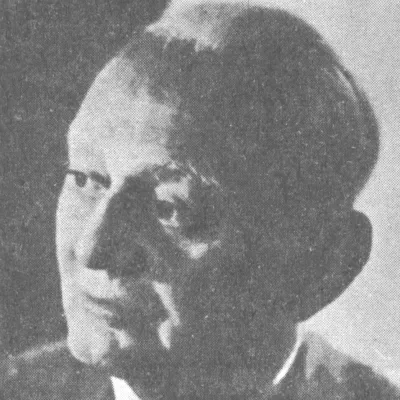
Gerhard Rohlfs
Human Design Chart
Biography
He taught Romance languages and literature at the universities of Tübingen and Munich in Germany. He died in Tübingen on 12 September 1986, aged 94.
Gerhard Rohlfs — Generator with Profile 3/5
Generator 3/5 — Design at a Glance
Gerhard Rohlfs revealed himself as someone with remarkable endurance, comparable to a workhorse that only effectively uses its strength when it feels inner approval for the task. His Generator design laid the foundation for this energy source: He had abundant sacral energy, which was released not through self-initiation but by responding to signals from life. The motto 'not initiate, but react' decisively shaped his functioning mechanism. When an impulse came and his inner voice responded with a clear yes, he could respond with consistent action and thus experience deep satisfaction and a sense of fulfillment.
This mechanism, however, contained two specific stumbling blocks. First, his energy was at risk if he continuously did things that he actually had no desire to do; this led to the depletion of his enormous creative potential and made him vulnerable to exhaustion. Second, he suffered when prevented from working on his heart projects even though he still wanted to continue with full power. If Gerhard Rohlfs did not live according to the principle of reacting from the gut but constantly tried to initiate himself, sooner or later he would encounter a feeling of persistent frustration and a noticeable lack of energy. Only in harmony with his strategy of waiting for life signals and then responding with vigor could no one stop him.
Sacral Authority
Gerhard Rohlfss decision-making was characterized by direct physical reactions. As a Generator, he possessed sacral authority, which simplified his process: Strategy and inner guidance merged into one. This required that his Emotional Center be open so that he did not have to wait for emotional clarity but could decide in the moment.
His orientation occurred through a 'gut feeling' or a felt surge of energy as a response to external stimuli. He learned to pay attention to physical signals like grunting, humming, or an affirming 'mm-hm'. When these appeared, he felt vital and alive. Then it seemed that unlimited energy was available to him, enabling him to engage in activities with great enthusiasm. This work proceeded without rigid purposefulness; it was carried by joy and satisfaction.
Furthermore, his activated Spleen Center acted as a supportive authority. Through this connection to the sacral level, Gerhard Rohlfss could react particularly quickly and spontaneously. He had an immediate access to his physical well-being and instinctive perception. These instincts served him as a reliable compass that he trusted in his decisions. Thus, he lived from a deep resonance with the environment, which energized and empowered him.
The 3/5 Profile — Martyr / Heretic
Gerhard Rohlfss design inclined towards experimental action shaped by practical experience. As a 3/5 Profile – Explorer and Hero – he appeared as someone who initially believed nothing without question but had to try everything himself. This attitude corresponded to the third line: Trial and error were no obstacles for him, but essential learning steps. He tackled things, made mistakes, started anew, and made unusual discoveries.
This practical knowledge presented to others with natural attractiveness. Here the fifth line was at work: Gerhard Rohlfss was considered a hero or rescuer who offered practical solutions during crises. His ability to conclude processes and show maturity flattered his self-esteem. Yet this role had a downside. If he failed in front of others during his experiments, it was very painful for him. Moreover, he often wore a mask of reserve; after the crises when people needed him, he withdrew again to collect his energy and enter or dissolve new connections. His path was marked by this rhythm of public action and private reflection.
Split Definition — Defined & Open Centers
Gerhard Rohlfss Design established a tendency towards consequent mental structure and vital endurance. His defined Ajna Center guaranteed consistent mental processes; he always thought through data and concepts in his own way, unaffected by external influences. These thoughts flowed directly into his defined Throat Center, enabling him to express what he understood reliably. Thus, his communication was an expression of his mind, clear and steady, though limited by this specific connection.
The driving force came from his defined Sacral Center. As a Generator, Gerhard Rohlfss had an enormous source of vital energy that felt like a constant hum. His strategy involved not initiating but waiting for questions or circumstances to react with a gut feeling yes or no answer. Only upon receiving an affirmative response did he have access to the full sacral power to persistently tackle tasks and find satisfaction. This stability was supported by his defined Spleen Center, which gave him spontaneous intuition and a strong immune system; he acted in the moment, trusted his body awareness, and remained protected from health risks. Additionally, his defined Root Center provided a firm inner pressure that propelled him materially and existentially forward.
At the same time, Gerhard Rohlfss was vulnerable to conditioning through open centers. His open Head Center lacked consistent inspiration; he tended to engage with foreign questions or be overwhelmed by mental pressure from others rather than trusting his internal authority. The open G Center meant a lack of firm identity and direction; he adapted to his environment, often seeking "borrowed" security in relationships or places instead of seeing his own path clearly. His open Heart Center drove him to prove worth through promises and competition – a cycle of self-doubt due to the absence of consistent willpower. Finally, his open Solar Plexus absorbed foreign emotions; he mirrored the emotional climate but often falsely identified with these feelings, leading to inner unrest and fear of confrontation.
Channels for mental order, caring values and ambitious transformation.
Gerhard Rohlfss Design inclined towards logical order and structural preservation. His inner work was characterized by the necessity to integrate complex details into a coherent whole before they could be accepted as understandable. This was evident through Channel 17-62: Gate 17 visualized patterns in the Ajna Center, while Gate 62 translated these visual impressions into precise language and logical structures. This connection created a constant internal pressure to organize information mentally and articulate opinions in detail. Gerhard Rohlfss mind aimed at sharpening the "big picture" by categorizing facts; anything that did not fit this logical system remained incomprehensible to him.
Alongside this cognitive structuring, there was a deep instinctual level of care and preservation. Channel 27-50 connected sacral energy with the instinctive values of the Spleen Center. Here it was not about spontaneous creation but nurturing and protecting what already exists – whether people, ideas, or community structures. Gate 27 provided selfless support, while Gate 50 guarded traditional values and laws necessary to ensure stability. Gerhard Rohlfss aura attracted trust; he took responsibility to keep the "tribe" or his environment alive, but only acted effectively in response to a clear invitation.
Another driver was Channel 54-32, which linked ambition with instinctive continuity. Gate 54 in the Root Center propelled through the desire for recognition and advancement, while Gate 32 in the Spleen recognized the fragility of existence and sought talents to secure the survival of the tribe. This combination generated a drive to work hard and be loyal to advance upwards, always with an eye on long-term stability.
Additionally, isolated Gates like Gate 61 (inner truth/sound) and Gate 42 (closure/experience), which influenced his attitude towards inner silence and ending processes, as well as Gate 39 (provocation/analysis) in the Personality, stimulated mutation processes through critical re-evaluation.
Tribal Circuitry — Circuit Signature
Gerhard Rohlfss Design inclined towards structured, rational insight. His Understanding Circuit connected the Ajna Center with the Throat Center, enhancing his ability to articulate logical connections clearly and free from emotional bias. This was about sharing strategic knowledge to initiate improvements for the future.
Parallel to this, two additional circuits operated as separate, non-directly linked forces. The Ego Circuit connected the Spleen and Root Centers via the Transformation Channel, creating an instinctive efficiency in handling resources and stress situations, where pauses for regeneration were essential due to no direct connection to the Sacral Center.
The Protector Circuit also involved the Spleen Center but this time with the Sacral Center through the Preservation Channel. Here, a primal energy of protection and preservation was evident, rooted in care for one's family or closest community. This link between instinctive perception (Spleen) and constant life force (Sacral) served the continuity and sustenance within a closer circle.
Through Shared Definition, these three areas—rational communication, resource-oriented efficiency, and familial protection—existed as parallel, independent streams alongside each other. They did not flow into one another but shaped Gerhard Rohlfs life as separate yet equally important fields of action, each with its own logic and rhythm.
Right Angle Cross of Maya 2
Gerhard Rohlfss design carried the signature of the right cross of the Maya. This configuration established a specific life dynamics: the impulse to forge new paths through personal experience and inner clarity, not as an act of resistance against the system but from a deep conviction that change is necessary. It was not about destructive breaking but creating space for something new that did not yet exist.
In Human-Design, this cross describes an energy aimed at questioning old structures and replacing them with more authentic expressions. Gerhard Rohlfs acted not out of anger or defiance but from a clear vision of what could be possible. His strategy was to make these new possibilities visible and show others how they can live their own truth.
The mechanics of this design require intuition and trust in one's direction. Gerhard Rohlfs showed himself as someone willing to enter the unknown, thereby encouraging others to find their own path too. It was always about being free oneself and making that freedom accessible for the environment around them. Through his presence and actions, he created a bridge between the old and new by demonstrating that change is possible when one follows their inner voice.
Saturn Return · Uranus Opposition · Chiron Return · 2nd Saturn Return — Life Cycles
Gerhard Rohlfss design showed a tendency towards structured milestones manifesting in clear professional phases. In 1920, at age 28, he was promoted – a typical expression of his first Saturn return. This cycle often marked the point where years of groundwork condensed into a viable result and a new level of personal responsibility was established.
Later came his call to Munich in 1938 when he was 46 years old. This fell during the Chiron return phase, a fulfillment cycle between the ages of 49 and 51 (here slightly shifted forward or interpreted as the beginning of blooming), where one's incarnation cross unfolds. If Gerhard Rohlfs had lived according to his strategy and authority, this period became the time for finding meaning and experiencing his life purpose. The move to Munich thus did not signify healing old wounds but rather concrete realization and fulfillment of his deepest life task in a professional context.
Generator · Sacral Authority — Synthesis
Gerhard Rohlfss deep roots lay in his sacral drive (Generator type) and he found his energy in action itself. The connection between sacral authority and the profile of the experimenter/helper shaped a life path characterized by constant experimentation and sharing practical experiences. He drew strength from reacting to external stimuli (sacral center) and processed this through a defined mental center (Ajna), recognizing and communicating logical structures – a process amplified by the channel of Acceptance (Gate 17/62). This pattern was evident in documented career events pointing towards trying new paths and taking responsibility.
Central for Gerhard Rohlfss was a tension field between the need for practical experience (Line 3) and the resulting ability to pass on knowledge (Line 5). He had to experience things himself to understand them and make them accessible to others – an attitude that drove him but could also lead to inner tension. The combination of the Understanding Circuit and the Ego Circuit points towards a person who both needed to recognize and communicate logical connections as well as develop a strong self-image.
3 Defined Channels
Incarnation Cross - Right Angle Cross of Maya 2
Solar Return
The Solar Return shows the moment when the sun returns to its exact birth position - your personal solar year.
Life Cycles
Discover the life cycles with a detailed triple view (birth chart, cycle chart, composite).
Human Design Profile
- Type
- Generator
- Strategy
- To respond - wait for something to respond to
- Authority
- Sacral Authority
- Profile
- 3/5 - Martyr / Heretic
- Definition
- Split Definition
- Incarnation Cross
- Right Angle Cross of Maya 2
- Date of Birth
- 14.07.1892 18:45
- Place of Birth
- Berlin-Lichterfelde, GER
Frequently Asked Questions
What is Gerhard Rohlfs' Human Design type?
What Profile did Gerhard Rohlfs have?
What authority did Gerhard Rohlfs have?
What incarnation cross did Gerhard Rohlfs have?
When was Gerhard Rohlfs born?
Discover your own Human Design
Are you also a Generator? Find out in a personal reading how to use your sacral energy correctly and discover deep satisfaction.
More Personalities
Back to overviewAaliyah

Alexia

Angèle

Anne-Marie

Arcángel

Arno