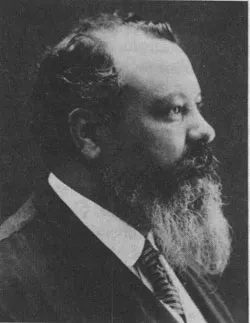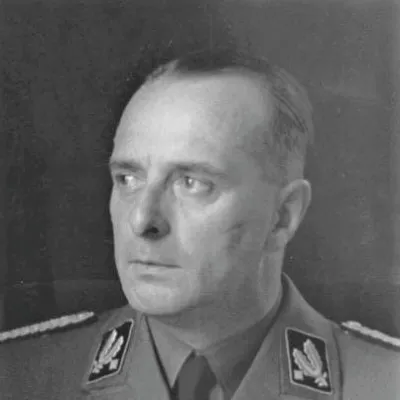
Hanns Albin Rauter
Human Design Chart
Biography
After World War II, Rauter was handed over to the Dutch government by the British and was tried by a special court in The Hague. Rauter denied committing war crimes, but the court found him guilty and sentenced him to death. A film record was made of the trial. The death sentence was confirmed by a higher court on 12 January 1949, and Rauter was executed by firing squad near Scheveningen on 24 March 1949 at age 54.
Human Design Analysis: Hanns Albin Rauter as Manifestor 3/5
Manifestor 3/5 — Design at a Glance
Hanns Albin Rauter's design established him as a pioneer and leader whose energy was geared towards actively guiding the world into a new direction. His nature resembled that of a strategic leader who developed visions and instructed others to implement them, rather than fighting every battle himself. This configuration, however, came with a specific risk: Since his thoughts often outpaced what his environment could process, he inevitably polarized people. Some loved and followed him for his great goals, while others rejected or even hated him because of the same visions. Misunderstandings were thus a central pain point in his character.
To minimize this resistance and find the right followership, his design demanded a clear strategy: He had to inform others timely and precisely about his intentions. This communication was not for permission but to prepare the environment for his influence. If Hanns Albin Rauter lived by this strategy and acted according to his inner authority, his system rewarded him with a sense of inner peace. If he missed this path and clashed against other people's resistance without prior information, it resulted in persistent, deep anger for him. His design thus described a clear mechanism between informing action, social reaction, and the emotional outcome of either peace or frustration.
Emotional Authority
Hanns Albin Rauter displayed a basic attitude that was shaped by his defined Solar Plexus Center: his inner authority lay in the emotional wave. This configuration fundamentally determined his decision-making process. He was subject to constant ups and downs of his feelings, perceiving the world always colored by his current mood. What excited him for one moment could appear negative in the next. His immediate feeling was only a snapshot, not necessarily his deeper truth. Quick, spontaneous decisions from this emotional heat often had negative consequences.
The mechanics of his Emotional Authority required patience. The more time he took to let a decision mature, the deeper and more comprehensive he could perceive the situation. This demanded conscious hesitation and multiple reconsiderations of important questions. Over time, intense feelings subsided, he gained emotional distance and clarity as well as calmness set in. Only then had he gone through the process. This rule applied regardless of which other centers were defined in his design: The Solar Plexus Center always took precedence for Emotional Authority. Hanns Albin Rauter thus had to learn to wait for the calm after the emotional storm to make long-term decisions that significantly influenced his life path.
The 3/5 Profile — Martyr / Heretic
Hanns Albin Rauter's design tended towards appearing as someone who solved problems not through abstract theories but by personal, often risky experimentation. As a person of Profile 3/5, the experimenter and hero, he initially believed little in given truths. Instead, he gathered knowledge through direct practice and resulting mistakes. This Line 3 demanded openness to evidence, where mistrust towards abstract beliefs was often balanced with satirical humor or listening.
The acquired experiential knowledge Hanns Albin Rauter then presented to the environment. The Fifth Line gave him a natural attractiveness and a role as a rescuer who offered practical solutions in crises. Yet this heroic role carried the weight of high societal expectations. His eccentric behavior could indeed be creative but risked also slowing down or letting others see his creative process fail – a painful aspect of this profile. Hanns Albin Rauter thus showed himself to be someone who proved his own truth through steadfast perseverance despite interference and projection, by living it and making it accessible to others.
Single Definition — Defined & Open Centers
Hanns Albin Rauter's design revealed a tendency towards deep emotional depth and reliable communication, balanced by mental insecurity and a lack of inner willpower. His defined Throat Center gave him a consistent way of self-expression; he spoke from a clear source, whether it was the heart or mind. This voice was his constant feature in interacting with the world. Parallel to this, his defined Solar Plexus acted as an internal authority. Hanns Albin Rauter needed time to gain emotional clarity; he went through waves of feelings before making decisions. These emotional waves colored his environment and attracted others who felt this intensity.
In contrast, a high susceptibility to conditioning was evident in his open centers. His open Head Center tended to absorb mental pressure from the environment, leading to doubts and confusion when trying to find answers to other people's questions. His open Ajna Center reflected concepts from his surroundings rather than having stable theories of its own; he took on ideas without identifying them as personal truths. The open G Center indicated a lack of firm identity; Hanns Albin Rauter adapted to people and places to find direction, rather than determining it himself. He often sought confirmation from the environment because he did not know who he was.
The open Heart Center showed weakness in willpower; he tended to make promises to prove his worth, failed at them, and then felt unworthy. The open Sacral Center caused him to absorb foreign energy, leading to overload as he didn't know when it was enough. Finally, the open Root Center absorbed external stress, causing a feeling of chaos and pressure that wasn't his own. His open Spleen Center made him vulnerable to survival fears; he clung to things that seemed to provide security, even if they were unhealthy, to ease this fear. Hanns Albin Rauter lived in a tension field between his clear voice and the many external influences reflected by his open centers.
Channels for emotional openness and creative moods.
Hanns Albin Rauter was someone whose social interaction and communicative impact were strongly determined by an internal emotional wave. His design inclined him to not act impulsively but wait until the mood was right before using his words. This attitude resulted from Channel of Openness 22-12, connecting the Solar Plexus Center with the Throat Center. This channel links emotional authority with the ability to articulate. Gate 22 brings passion and melancholy, while Gate 12 regulates through caution, ensuring this openness is directed only at people with the greatest potential for change. Rauter used the quality of his voice to touch or move others, but it worked effectively only when he was in the right mood; forced social contacts could make him appear abrupt and isolated.
Alongside this central channel, other gates shaped his perspective. Gate 13 promoted reflection on time and continuity by collecting experiences and looking back at them. Gate 7 projected patterns for the future and showed a need for leadership through testing hierarchies. Gate 1 emphasized uniqueness and creative creation without limitations in the here and now, while Gate 2 served as a receptive point that transformed external changes into new evolutionary directions. Gate 20 anchored him in his authentic self through correct action in the moment. Emotional fluctuations were also influenced by Gate 55, representing extreme mood swings and genetic mutations. Gate 35 sought change through interaction and new experiences, while Gate 16 aimed for mastery through experimenting and identifying with skills. This constellation created a profile based on emotional resonance to initiate individual mutations in social fields.
Individual Circuitry — Circuit Signature
Hanns Albin Rauter's design inclined towards emotionally colored, open communication. His system was simply defined, meaning his energy flowed in one continuous group without being fragmented into separate parallel power fields. This coherence focused on the Knowledge Circuit, but at him it did not offer a full range of innovative or mutational impulses, rather specifically directed toward openness.
The active Channel 12-22 directly connected the Solar Plexus Center with the Throat Center. The Solar Plexus generated emotional waves and pulsing intuition; these inner feelings sought immediate expression outward through the voice in the Throat Center. It was not cognitive analysis but an acoustic transmission of the emotional state. Hanns Albin Rauter showed himself as someone who openly expressed his current emotional truth. The energy was pulsating and present-focused, driven by the need to articulate inner resonance into words. With no other centers belonging to or directly connected with this group, this flow remained pure between feeling and expression. There was no connection to strategic thinking or identity-forming willpower within this circuit; the power lay solely in his authentic, emotional voice that carried his internal state outward.
Right Angle Cross of the Sphinx 1
Hanns Albin Rauters Human Design featured the right cross of the Sphinx. This configuration shaped an internal stance that was not defined by external noise or constant activity but rather by deep, silent perception. The right cross of the Sphinx marks individuals whose energy flow is oriented towards receiving information and impulses from their environment without needing to react immediately. Hanns Albin Rauter often appeared as a quiet observer who understood situations internally before acting. This structure promoted a form of 'knowledge through being', where insights were not actively sought but allowed to settle and integrate in peace. It was not a passive stance in the sense of inactivity, but rather a strategic restraint that enabled him to see complex connections more clearly than those constantly pushing outward. Hanns Albin Rauter's path was characterized by this ability for inner condensation; he lived in a dynamic where listening and perceiving came before speaking or acting. This mechanism created a foundation for decisions based on deeper intuition rather than logical analysis or social pressure. His design suggested that his greatest strength lay in this silent integration, allowing him to maintain a certain internal stability in chaotic environments by drawing answers from a deep well of experience instead of relying on external sources.
Saturn Return · Uranus Opposition · Chiron Return — Life Cycles
Hanns Albin Rauters Human Design showed a tendency towards impulsive and often unexpected turns in interpersonal relationships. This dynamic was reflected in 1937 when, at the age of 42, he married a woman two decades younger than him. The Uranus opposition marks a life stage where the drive for freedom and novelty breaks through old structures; here it manifested as a radical change in his private sphere driven by an inner need for fresh energy and distance from routine.
Later came a phase of professional fulfillment. In 1943, at age 48, he was promoted to SS-Obergruppenführer and General of Police. This coincided with the Chiron Return cycle, a period between the ages of 49 and 51 (beginning here), during which his personal cross unfolds. Those who have lived according to their strategy now experience the bloom of their purpose; Rauters rise was an expression of this central life task that reached its maximum clarity and meaning for him at this point.
Manifestor · Emotional Authority — Synthesis
Hanns Albin Rauter was a Manifestor whose life was marked by a profound drive towards initiation and transformation. His design points to someone destined to pioneer new paths and draw others along (Manifestor type), with the expression of this vision regulated through emotional valleys (Emotional Authority). The connection between Solar Plexus and Throat Center (Channel 22/12) enhanced his ability to articulate feelings creatively – an expression that was always bound by the quality of the emotional experience. The profile as a Tester and Hero (3/5) underscored this process: Rauter experimented with paths himself, then made what he learned accessible to others, which gave him a certain charisma.
A central paradox in his design lay in the interplay between initiatory power and emotional maturity. As a Manifestor, he possessed the energy to initiate things and bring about change, yet his emotional authority required time for decision-making. This led to tension between the need for quick action and the necessity of fully experiencing emotions first. Documented events illustrated this: both personal turning points (relationship, 1937) and career advancements (promotion, 1943) fell within cycles based on inner transformation and outer change.
1 Defined Channel
Incarnation Cross - Right Angle Cross of the Sphinx 1
Solar Return
The Solar Return shows the moment when the sun returns to its exact birth position - your personal solar year.
Life Cycles
Discover the life cycles with a detailed triple view (birth chart, cycle chart, composite).
Human Design Profile
- Type
- Manifestor
- Strategy
- To inform others before acting
- Authority
- Emotional Authority
- Profile
- 3/5 - Martyr / Heretic
- Definition
- Single Definition
- Incarnation Cross
- Right Angle Cross of the Sphinx 1
- Date of Birth
- 04.02.1895 12:30
- Place of Birth
- Klagenfurt, AUS
Frequently Asked Questions
What is Hanns Albin Rauter's Human Design type?
Which profile did Hanns Albin Rauter have?
What authority guided Hanns Albin Rauter?
What incarnation cross did Hanns Albin Rauter have?
When was Hanns Albin Rauter born?
Discover your own Human Design
Are you also a Manifestor? Find out in a personal reading how to use your initiation power peacefully and dissolve resistance.
More Personalities
Back to overviewChristian-Jaque
Kesha

Laurent-Eynac
Lucebert
Masaccio
Papus