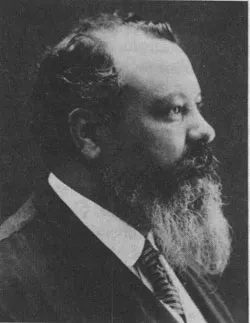
Hans Jonas
Human Design Chart
Biography
From 1955 to 1976 he was the Alvin Johnson Professor of Philosophy at the New School for Social Research in New York City. He died at his home in New Rochelle, New York, on 5 February 1993, aged 89.
The Human Design of Hans Jonas: Manifestor 6/2
Manifestor 6/2 — Design at a Glance
Hans Jonas revealed himself as someone who wanted to actively steer the world into a new direction. His Human Design type was that of a Manifestor, a configuration describing pioneers and visionaries. This structure suggested he didn't need to take every step himself but rather acted like a leader moving others towards his goals.
However, this design brought with it a specific pain point: The feeling of being misunderstood. As his thinking often reached further than that of his surroundings, he inevitably polarized people. Some followed him enthusiastically due to his great visions while others rejected or even hated him because of them. This division was not a mistake but an inherent part of his energetic presence.
To minimize this resistance and attract the right supporters, his design required a clear strategy: He had to inform others. Before he acted or set his plans into motion, it was crucial to enlighten people about his intentions in advance. If Hans Jonas followed this strategy, he was rewarded with a deep sense of inner peace. Living against this principle led to persistent anger as a reaction from his system. His path therefore lay in bridging the gap between his vision and reality through clear communication.
Emotional Authority
Hans Jonas lived with an internal authority rooted in his defined Emotional Center. This configuration fundamentally determined his decision-making: He was constantly swept up by emotional waves, showing in a permanent ups and downs of his feelings. The world appeared to him always colored by his current mood; still enthusiastic about something, he could turn negative towards it the next moment.
However, this mechanism did not mean that the first emotional impression was his truth. Quick, spontaneous decisions based on temporary moods often proved problematic for his design. Instead, clarity required patience and time. Hans Jonas had to let decisions mature, sleep on them multiple times, to allow intense feelings to subside. Only when an emotional distance was gained did calmness set in and the process was complete.
A central rule of his internal authority remained unshakable: The Emotional Center always took precedence over all other defined centers in his chart, regardless of which additional areas were activated. This prioritization was seen as a fundamental mechanism of his system. For long-term life decisions that significantly influenced his course, this process of waiting and fading out was indispensable. Only then could he transcend the momentary mood surge to reach deep and comprehensive insights.
The 6/2 Profile — Role Model / Hermit
Hans Jonas revealed himself as someone who did not carry wisdom from the start but acquired it through a lengthy process of self-examination. His design placed him on the line 6/2, meaning his earlier life was mainly characterized by experimentation. During these years, he searched for his own identity through trial and error, with setbacks often leading to necessary retreats to reorient himself. This phase served to preserve his individuality against the pressure of external security or rational fixation.
Only upon entering his first Saturn Return around age 30 did his attitude fundamentally change. Then he metaphorically retreated into a 'cave' to look back at accumulated experiences with great distance. This period of intense reflection was essential for him in healing and deeply understanding himself. He selectively examined every possibility, ready to reject or accept old structures – an inner mutation of sorts.
Once this process of internal clarification was complete, Hans Jonas re-emerged into the public eye. Now he acted as a wise person whose insights stemmed from lived experience. Others recognized this depth and sought his advice to learn from his introspective abilities. His authority did not rest on theoretical knowledge but on the validation through his life story.
Single Definition — Defined & Open Centers
Hans Jonas was shaped by a design characterized by constant mental activity and deep emotional reflection. His defined Ajna Center ensured a trustworthy, specific form of conceptual thinking; he processed data continuously and was not easily influenced by external opinions. This mental stability flowed into his defined Throat Center, resulting in communication that directly emerged from his conceptualized thoughts – he spoke what his mind had structured.
At the same time, he possessed an emotional authority through a defined Solar Plexus. This meant that truth for him did not lie in the „now“ but was revealed over time. He relied on waiting out waves of emotion until emotional clarity emerged before making important decisions. This process gave depth and sensitivity to his judgments but required patience. The defined Root Pressure provided a constant background impulse to move forward in the world and address existential questions.
In contrast, his Head Center was open. He had no consistent source for inspiration or answers to all questions. Instead, he tended to experience mental pressure moments as signs of confusion when he did not trust his inner authority. The open G Center also meant that his identity and direction were not predetermined; they crystallized only in correct environments. He was vulnerable to losing himself in relationships or places that did not fit, as he lacked an internal compass. His Heart, Sacral, and Spleen Centers were also open. The missing Heart Center made him vulnerable to the pressure of having to prove his worth, often leading into a cycle of promises and disappointment if he continued to justify himself. An open Sacral Center led to taking in energy from the environment without generating it himself; overloading was the risk if he ignored boundaries. Finally, an open Spleen Center made him sensitive to others' well-being and fears, which could lead him to cling to unhealthy situations just to simulate a sense of security. His strength lay in using these open fields not as deficiencies but as spaces for wisdom through observation and waiting.
Channels for emotional openness, curiosity, synthesis and recognition.
Hans Jonas was someone who transformed abstract ideas into moving stories. The Channel of Curiosity 11-56 connected his Thinking Center with the Throat, driving him to always seek new perspectives. He functioned as a storyteller, not only logically presenting information but also bringing it to life through filling gaps and imagination. His narratives served less for pure fact repetition than illustrating philosophical reflections on human existence.
At the same time, his expression was marked by deep emotional dependence. The Channel of Openness 22-12 connected his Solar Plexus with the Throat and subjected his communication to fluctuations in his mood wave. Hans Jonas spoke effectively only when he felt like it; this inner authority ensured that his words could emotionally touch or transform others once the timing was right. Without an emotional wave, his expression remained reserved.
Another characteristic was his sensitivity for belonging and principles. The Channel of Synthesis 19-49 connected Root Center with Solar Plexus and created an emotional glue for communities. Hans Jonas sought balance between feasibility and fairness to secure the cohesion of his „tribes“ – whether family or intellectual circles. He was sensitive to who fit into the group and who contradicted common ideals.
Finally, he was driven by a strong desire for experience. The Channel of Recognition 30-41 connected Root Center with Solar Plexus and generated restlessness that could only be quelled through new impressions. This longing for the unknown heated his emotions and motivated him to continuously face new situations to gain deep insights.
Collective Circuitry — Circuit Signature
Hans Jonas was marked by a simple, coherent energetic structure. His design linked Ajna, Throat, Solar Plexus, and Root Centers into one flow, giving him a clear, integrated inner self. In the Knowledge Circuit, Channel 12-22 (Openness) connected the Throat with the Solar Plexus Center, allowing him to directly translate emotional waves into words and express his individual identity authentically.
The Meaning-Finding Circuit included two separate segments: First, Channel 11-56 (Curiosity) linked Ajna with Throat Center, driving him to share past experiences through language and promote collective learning. Second, Channel 30-41 (Recognition) connected Solar Plexus and Root Centers, translating emotional impulses into concrete action impulses based on meaning from the past.
In the Ego Circuit, a connection between Solar Plexus and Root Center via Channel 49-19 (Synthesis) was also present. This promoted the ability to integrate different perspectives and resources through cooperation. Since this circuit did not draw direct life force from the Sacral Center, Hans Jonas required rest periods for regeneration. His energies moved cyclically: emotional waves from the past were reflected, put into words, and shared as new insights while synchronous actions on this basis created resources for the community.
Left Angle Cross of Defiance 1
Hans Jonas carried the design of the left challenge cross. This configuration shaped a fundamental attitude characterized by an intense focus on material and physical realities. In Human Design, this cross represents the drive to make the world tangible and to create or question concrete structures. It is not about abstract speculation but rather a deep anchoring in the visible and tangible.
For Hans Jonas, this meant that his path was often accompanied by the necessity of dealing with the harsh facts of existence. The left challenge cross indicates that confrontation with the physical world played a central role in his inner dynamics. It was about finding order in chaos or examining existing orders for their stability and truth. This energy promoted a direct, unvarnished view of life circumstances.
The challenge lay in not letting this intense engagement with the material world become a burden but rather using it as a source of clarity. Jonas’ design suggested that he anchored his own position in the world by grasping concrete realities. It was a path that did not tolerate illusions but relied on what was actually present and experienced. This orientation gave his approach a particular earthiness and direct presence in the here and now.
Saturn Return · Uranus Opposition · Chiron Return · 2nd Saturn Return — Life Cycles
Hans Jonas distinguished himself through an early condensation of his intellectual work. In 1930, at age 27, he earned his doctorate with the dissertation “The Concept of Gnosis.” This fell during his first Saturn Return, a cycle often marked by how years of groundwork mature into a solid, structural result. Later, his design showed an opening for deeper personal connections in the context of change. In 1943, at age 40, he married Lore Weiner. This occurred during the Uranus Opposition, a phase that frequently initiates new relationship structures or unexpected bonds when old patterns dissolve. Another crucial point was around 1950 with his Chiron Return. At age 47, his son Jonathan was born. In Human Design mechanics, this cycle is not a place of healing past wounds but rather an achievement cycle: Here one’s life task and meaning become concretely experienced and fruitful. The birth of his son marked the transition into a phase of bloom, in which Hans Jonas increasingly unfolded and realized himself in life. These events illustrate how astrological cycles acted as frameworks within which his specific life unfoldings—academically, relationally, and family-wise—manifested and stabilized.
Manifestor · Emotional Authority — Synthesis
Hans Jonas lived a life path marked by a deep inner tension between the drive for innovation and careful, emotionally grounded evaluation. His defined Ajna Channel (Curiosity) points to an unceasing search for new concepts and perspectives—a mind that constantly explores and generates insights (Gate 11). This intellectual energy was, however, connected with emotional authority, meaning that hasty conclusions were avoided and decisions could only be validated through a maturing emotional wave. He was a pioneer (Manifestor) who developed visions but did not carelessly bring them into the world; instead, he subjected them to an inner scrutiny.
This interplay created a central paradox: Jonas’ design points to a person who combines both the impulse for quick idea generation and the necessity of slow emotional processing. The early years, marked by experimental enthusiasm (Profile 6/2), gave way to a phase of intense reflection and wisdom-seeking that made him an example for others. The confirming events—doctorate, marriage, birth of his child—fell into cycles reflecting this inner dynamic: phases of active shaping alternated with periods of inner retreat and reevaluation.
4 Defined Channels
Incarnation Cross - Left Angle Cross of Defiance 1
Solar Return
The Solar Return shows the moment when the sun returns to its exact birth position - your personal solar year.
Life Cycles
Discover the life cycles with a detailed triple view (birth chart, cycle chart, composite).
Human Design Profile
- Type
- Manifestor
- Strategy
- To inform others before acting
- Authority
- Emotional Authority
- Profile
- 6/2 - Role Model / Hermit
- Definition
- Single Definition
- Incarnation Cross
- Left Angle Cross of Defiance 1
- Date of Birth
- 10.05.1903 07:30
- Place of Birth
- Mönchengladbach, Germany
Frequently Asked Questions
What was Hans Jonas' Human Design type?
Which profile did Hans Jonas have?
What authority did Hans Jonas possess?
What incarnation cross did Hans Jonas have?
When was Hans Jonas born?
Discover your own Human Design
Are you also a Manifestor? Find out in a personal reading how to use your initiation power peacefully and dissolve resistance.
More Personalities
Back to overviewChristian-Jaque
Kesha

Lucebert
Masaccio

Nadar
Papus