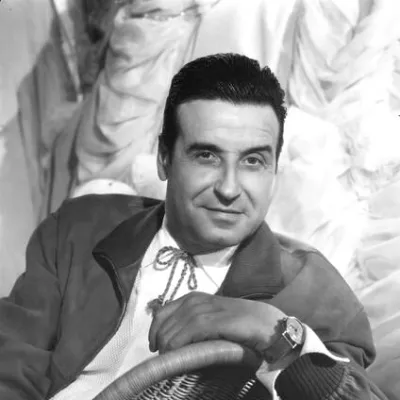
Hans Rasmus Astrup
Human Design Chart
Biography
Astrup died on 23 April 2021 aged 82.
Human Design Analysis: Hans Rasmus Astrup as Projector 5/1
Projector 5/1 — Design at a Glance
Hans Rasmus Astrup had a dense, focused aura that shone like a bright flashlight, revealing systemic flaws instantly. His design allowed him to spot deficiencies in structures or others immediately. However, direct criticism often triggered defensive reactions, akin to shining a blinding light into someone's face. Instead, his effectiveness was seen through harmonious radiance; he attracted others by living out what worked himself.
As a Projector, Hans Rasmus Astrup lacked a defined Sacral Center and thus had no constant intrinsic energy source. This led to phases of high activity that needed to be balanced with rest periods to prevent burnout. His design strategy involved not anticipating or directly criticizing but waiting for an honest and appreciative invitation. Only then could he elegantly use his projecting energy without causing resistance.
Living according to this mechanism rewarded Hans Rasmus Astrup with success. Deviations from it tended towards his non-self theme: Bitterness. Thus, his path was to let his unique insights take effect through patient waiting for the right invitation structure rather than fighting against the current of direct confrontation.
Ego Authority
Hans Rasmus Astrup revealed himself as someone whose inner truth lay in the will of his defined Ego Center. This specific authority is rare and presupposes that the Emotional, Sacral, and Spleen Centers are open, bringing great influenceability and a tendency to be distracted. His orientation did not come from the mind but from spontaneous, uncensored speaking; he had to learn to listen to what came out of his throat directly rather than what he thought. The mind served here his open centers and others' interests while his Ego Center asked: What do I want? What is worth it for me?
This will could manifest as a drive towards material success or as a pioneer spirit – the urge to be first, break boundaries, and leave conventional paths behind. His consequence on others sometimes appeared selfish, yet it was essential that he stood by himself and ensured his actions had personal value for him. A central mechanism of his design required pauses after each goal achievement. Continuous work did not yield desired results for Hans Rasmus Astrup but led to unhealthy exhaustion and illness. His success depended on staying true to his inner drive and only making promises when they aligned with it.
The 5/1 Profile — Heretic / Investigator
Hans Rasmus Astrup appeared as someone whose design made him magnetically attractive: Others actively sought out his knowledge and solutions. This Profile 5/1, the Hero/Researcher, projects an aura of healing and competence (Line 5) that prompts people to delegate their problems to him. Simultaneously, his inner structure demanded withdrawal into Line 1 of the Researcher to assimilate new knowledge and recover.
The challenge lay in balancing these two poles. Without clear boundaries, Hans Rasmus Astrup risked being overwhelmed by constant external demands – similar to an expert who is exhausted after intensive knowledge dissemination while inquiries continue. His design required learning to say "no" to avoid this exhaustion. Only so could he maintain the beneficial dynamics: Line 1 offered the necessary space for research and zest for life (Gate 58), while Line 5 made acquired knowledge available for problem-solving for others. This configuration described a life task where self-awareness and setting boundaries were crucial to optimally utilizing his gifts without burning himself out.
Single Definition — Defined & Open Centers
Hans Rasmus Astrup revealed himself through a firmly anchored self-confidence and a clear inner direction. His defined G Center gave him a reliable sense of identity and the ability to pursue his life mission without being dependent on others. This was complemented by his defined Heart Center, which provided him with willpower and control over his resources; he knew his worth and kept promises, strengthening his self-confidence. This combination created an autonomous presence in which he enjoyed working independently and achieving success.
In contrast, all other centers were open, making him situationally receptive to external influences. His open Head Center meant that mental inspiration was not constant; he tended to question whether he had found the right answer and could be influenced by others' doubts. Similarly, his open Ajna Center led him to adopt concepts and opinions from the environment rather than generating them consistently on his own. This required mindfulness to avoid falling into a non-self monologue that everything must be understood or certain.
His open Throat made him vulnerable to the pressure of seeking attention; he tended to worry about whether he was noticed instead of waiting for invitations to speak. His open Sacral Center meant no constant energy flow; he could amplify others' vitality and risk overexertion if he did not listen to his inner authority to set boundaries. Emotional waves from the environment were absorbed by his open Solar Plexus, leading him to question whether he should avoid conflicts instead of recognizing that these feelings were not his own.
Furthermore, his open Spleen Center was vulnerable to survival fears; he tended to cling to situations or people that gave a false sense of security out of fear of loss. Finally, his open Root absorbed stress from the environment, tempting him to rush to escape this pressure even though it did not belong to himself. This openness allowed him to feel and reflect others' fields as long as he did not identify with them.
Channels for pioneering spirit and universal love.
Hans Rasmus Astrup revealed himself as a personality whose inner competitive drive sought not just victory but deep individualization. His design connected the aggressive energy of the heart with the universal love of Higher Self, turning pure ambition into an art form: the ability to guide others through targeted 'shock' to their true selves – yet only upon invitation.
This mechanism was rooted in the Initiation Channel 51-25. Gate 51 brought the natural urge to be first and advance the material world through competition. Through its connection with Gate 25, the seat of Higher Self that recognizes beauty in all things, this competitiveness became a mystical duty. Hans Rasmus Astrup lived this process as an authentic life path; each personal triumph expanded his consciousness and served unconsciously as a bold example for others. He recognized that initiation is an irreplaceable gift: those who try to force it fail and are left bitter. Only those who live in their own strategy survive the shocks of mutation and become catalysts for the collective.
Alongside this central channel, other energies were at work. Gate 46 promoted a deep devotion to the physical process and saw the body as a temple, while Gate 58 created levity under pressure through experiments and pattern correction. Gate 52 required silent concentration to correct errors, linked with the complex integration power of Gate 10, which controls genetically determined behavioral rules in the G Center. In his design, Gate 1 supported unique, creative mutation here and now, while Gate 21 sought material control through respect within the community. Finally, Gate 2 received external impulses to shape them into new evolutionary directions. This constellation marked Hans Rasmus Astrup as someone who combined inner discipline with outer effectiveness, always ready to feel the wonder of his own spirit and inspire others toward transcendence.
Individual Circuitry — Circuit Signature
Hans Rasmus Astrup revealed himself as a courageous, resolute personality with strong inner convictions. His design featured an inwardly directed, individualistic energy that tightly linked his self-worth and identity. This inner strength came from the Centering Circuit, which in him specifically connected the Identity with the Heart Center. Through the Initiation Channel (Gate 25-51), heart energy, representing will and self-worth, flowed directly into his divine identity. This created a pulsating power in 'now', strengthening his individuality and enabling him to also affirm others' uniqueness – with the attitude: 'I am who I am.' However, this configuration lacked a connection to the Throat Center. Consequently, these deeply rooted convictions often could not be expressed directly or fluidly; they remained a quiet inner certainty rather than a loud message. As a simply defined person, Hans Rasmus Astrup lived with this clear, coherent energy in his central centers while other areas of his design were undefined and influenced by the environment. The small circuit colored his entire being, giving him melancholy and creativity but also some distance from the outer world as power primarily rested within himself.
Left Angle Cross of Healing 1
Hans Rasmus Astrups identity and life purpose were defined by the Left Cross of Healing. His existence focused on the process of healing, restoring wholeness, and overcoming separation or injury. This configuration determined his deeper motivation: experiencing healing as a central theme. His life was structured around cycles of injury and recovery, with the integration of these poles leading to inner stability. The design showed a tendency not just to endure fractures but actively transform them into a process of restoration. It involved an internal dynamic where awareness of woundedness and the drive for wholeness were inseparable. Hans Rasmus Astrup lived this tension as a constant backdrop to his personality. The mechanics of this cross emphasized that true strength lies not in the absence of pain, but in the ability to integrate it and let it give rise to a new form of coherence. His path was marked by this cyclical movement between breaking apart and coming together. This created a specific kind of resilience based on self-reflection and the will for inner unification. The structure of his design suggested that his contribution lay in bringing these principles of healing into his interactions and being, without seeking external validation but from a deep internal necessity.
Saturn Return · Uranus Opposition · Chiron Return · 2nd Saturn Return — Life Cycles
Hans Rasmus Astrups design showed a tendency to translate inner values and visions into concrete, enduring structures in the outside world. This was particularly evident during his second Saturn return, a life stage marking the transition from an experimental youth phase to established maturity with responsibility. During this period, previously gathered experiences and internal convictions must be transformed into a stable form that endures.
In 1993, at age 54, Hans Rasmus Astrup founded the Astrup Fearnley Museum of Modern Art in Oslo. This event was no coincidence but a typical expression of the mechanics of this second Saturn return: The previously carried vision of promoting art was now realized through the establishment of an institutional structure. Rather than just developing ideas, he created a lasting imprint on collective consciousness. The museum stood for the condensation of his personal values into a public good. Through this act, Hans Rasmus Astrup translated his inner stance into an external reality that extends beyond his own life. The second Saturn return demanded precisely this step towards anchoring and responsibility, which he fulfilled through founding the museum.
Projector · Ego Authority — Synthesis
Hans Rasmus Astrup lived a life marked by a profound internal guidance and a need to recognize and correct patterns (Gate 58, Line 1). His defined ego center (Heart) gave him the willpower to realize his visions while the open configuration of many centers – especially Head, Ajna, and Sacral – sensitized him to external influences. This openness allowed him to perceive subtle changes and embrace new information but required conscious self-observation to avoid conditioning. The combination of a defined internal compass (G Center) and the ability to recognize others' potential (Channel 25-51) points to someone who wanted to bring light into darkness for others – not through direct address, but through authentic being.
A central paradox in Astrups design lies in the interplay between individuality and adaptability. The defined Heart Center challenged him to pursue his own goals and seek material security while open centers simultaneously made him sensitive to others' needs and showed a tendency towards conditioning. This tension between the desire for self-actualization and the ability to engage with the environment shaped his path – he was both an independent shaper and a receptive mirror of his surroundings.
1 Defined Channel
Incarnation Cross - Left Angle Cross of Healing 1
Solar Return
The Solar Return shows the moment when the sun returns to its exact birth position - your personal solar year.
Life Cycles
Discover the life cycles with a detailed triple view (birth chart, cycle chart, composite).
Human Design Profile
- Type
- Projector
- Strategy
- Wait for the respectful invitation
- Authority
- Ego Authority
- Profile
- 5/1 - Heretic / Investigator
- Definition
- Single Definition
- Incarnation Cross
- Left Angle Cross of Healing 1
- Date of Birth
- 23.03.1939 16:26
- Place of Birth
- Oslo, Norway
Frequently Asked Questions
What was the Human Design type of Hans Rasmus Astrup?
Which Profile did Hans Rasmus Astrup have?
What was Hans Rasmus Astrup's Authority?
What incarnation cross did Hans Rasmus Astrup have?
When was Hans Rasmus Astrup born?
Discover your own Human Design
Are you also a Projector? Find out in a personal reading how to unfold your leadership qualities and recognize the right invitations.
More Personalities
Back to overviewSissy Spacek

Alain-Fournier

Anémone

Ann-Margret

Bourvil
Christian-Jaque