
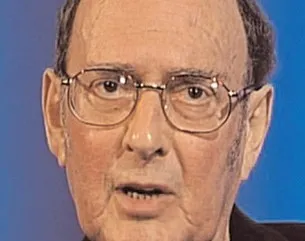
Harold Pinter
Human Design Chart
Biography
Pinter, the son of a Jewish tailor, grew up in a working class neighborhood on London’s East End. Taken out of the city during the start of World War II, he returned to his hometown when he was 14. He acted in school plays while he attended Hackney Downs Grammar School and went on to receive a grant to study at London’s Royal Academy of Dramatic Art. He was unhappy with his studies there and after only two years, he left and joined a repertory company. Strongly anti-war, he refused to do his national military service, and in 1949, he went before the magistrate who luckily gave him a fine rather than a prison sentence. Pinter stated that, if called to serve again in the future, he would still refuse to report.
In 1950, using the name "Harold Pinta," he published his first poems. From 1951-52, he traveled throughout Ireland and England with several acting companies, and until 1959, he played regional theatres under the name "David Baron." His first full-length play, "The Birthday Party," 1958, was initially rejected by London audiences but later was revived to great success. His second full-length play, "The Caretaker," 1960, established his reputation as a playwright. Two of his later works, "No Man’s Land," 1975, and "Betrayal," 1978, were quite successful as well. In 1978, he published "Poems and Prose 1941-1977."
He married Vivien Merchant, an actress who frequently appeared in his plays; they divorced in 1981. He remarried the biographer Lady Antonia Fraser. He had one child.
Harold Pinter — Generator with Profile 2/4
Generator 2/4 — Design at a Glance
Harold Pinter possessed the endurance of a Generator, unleashing his power not through spontaneous initiatives but through reactive actions. His design indicated that he had an enormous sacral energy – comparable to a workhorse – which only became effective when responding to external impulses. The motto for him was not “start” but “react.” When life sent a signal and his inner self confirmed with a clear “yes,” he could transform this energy into sustained work.
This mechanism carried two specific risks: first, exhaustion from activities that did not spark internal desire, leading to burnout. Second, frustration when hindered from continuing work on his heart project despite having full energy available. In harmony with this design, Harold Pinter experienced deep satisfaction and fulfillment. However, living against this nature – for example, through constant initiating without prior impulse – led him to feel persistent frustration and a lack of energy. His strength lay in responding instinctively to what met him from the gut rather than taking the first step himself.
Sacral Authority
Harold Pinter lived as a Generator whose decision-making was shaped by sacral authority. This inner leadership did not manifest through intellectual deliberation but as a direct physical reaction to external stimuli. His design required waiting for these impulses – often felt as an intuition, an internal growl or sudden surge of power – to know where his true energy lay. With his emotional center open, he could not make quick emotional decisions; instead, he relied on this sacral response that gave him vitality and inexhaustible energy once it engaged with something. This mechanism allowed him to immerse himself fully in activities driven by joy and satisfaction rather than duty. Additionally, his activated spleen center served as a supportive instance. It granted him immediate access to instinctive perception and physical well-being. This connection enabled quick, spontaneous reactions and decisions that directly stemmed from physical sensation. Thus, Harold Pinter followed a strategy of waiting for this clear, physical confirmation before acting, which simplified his process and allowed him to work with great enthusiasm when the inner motor engaged.
The 2/4 Profile — Hermit / Opportunist
Harold Pinter emerged as someone who oscillated between a deep need for withdrawal and the desire for connection within a close circle. His design indicated a tendency to withdraw into phases of intense internal work, only to then purposefully reconnect with his “favorite people.” This dynamic resulted from his Profile 2/4, which described an ongoing interaction between Line 2 (Hermit) and Line 4 (Community). For him, it was essential to set clear boundaries: he communicated externally when he needed company and when he wanted solitude. During his “me-time,” he immersed himself in internal processes to gain clarity. Only once this need was satisfied did he emerge from his “hollow” to reflect on the knowledge of his network and develop new ideas from it.
His inner compass was shaped by Gate 57 (Line 2), which utilized intuition for values and survival – not as a moral ideal but as decisive power for cleansing and determination. Simultaneously, Gate 53 (Line 4) offered him confidence in times of crisis. This line provided the belief that everything has an end, giving him assurance during difficulties or embarrassing situations that these phases would contribute to development and pass.
Single Definition — Defined & Open Centers
Harold Pinter possessed a fixed, reliable self-identity and a clear sense of direction. His defined G Center gave him the ability to feel secure in his love for himself and show others new paths without being dependent on them. This inner authority formed the foundation of his design.
As a Generator, he had an enormous source of vital energy in his Sacral Center. His strategy was not to initiate but to wait until life asked him before responding with a clear yes or no answer. This ensured him the necessary strength for endurance and satisfaction. Supported by his defined Spleen Center, which gave him a sharp instinct for health and well-being in the present moment, as well as his defined Root Center, which provided the necessary pressure for material existence and survival.
At the same time, Pinter was exposed to several open centers that made him vulnerable to conditioning. His open Head and Ajna Centers meant he did not have a consistent mental inspiration; he tended to engage with others' questions or doubts rather than trust his inner authority. The open Throat Center led him to feel pressured to demand attention through speaking instead of waiting for invitations. His open Heart Center drove him to prove his worth through promises or competition – a spiral that ended in frustration without internal guidance. Additionally, his open Solar Plexus absorbed the emotions of his surroundings, making him vulnerable to personalizing others' moods and avoiding confrontation out of fear of rejection. His challenge was not to accept these mental and emotional pressures as truth but to use them as mirrors of the environment while orienting himself towards his sacral reaction.
Channels for change, discovery, ambition and maturation.
Harold Pinter exhibited an energy that linked evolutionary change with a deep, often melancholic quality through Channel 60-3, connecting the Root Center with the Sacral Center. This configuration generated a pulsating rhythm of chaos and order; Pinter had to accept limitation (Gate 60) to move beyond the confusion of a new beginning (Gate 3). The resulting internal tension did not manifest as stagnation but as a potential source for unexpected innovations, which required patience until the next impulse came from his Sacral Center.
Parallel to this, Channel 29-46 shaped his life path. Through Gate 29 of saying yes in the Sacral Center and Gate 46 of determination in the G Center, he became fully immersed in his experiences. This process demanded persistence and letting go of expectations; only through a clear commitment could the significance of his paths be revealed at the end rather than planned ahead.
Another defining aspect was Channel 54-32, linking ambition (Gate 54) with the instinctive perception of the Spleen (Gate 32). Here, there was a drive to rise through talent and consistent effort, motivated by the desire for recognition and concern for the tribe's continuity. This energy pushed him to improve his position, where success depended on support from allies.
Finally, Channel 53-42 acted as abstract formative energy. It connected beginnings (Gate 53) with growth (Gate 42), meaning that every experience had to be fully processed and reflected upon to gain wisdom. Pinter lived in a cyclical process of learning from history, where early interruptions led to repeating cycles until they found a satisfying solution.
Collective Circuitry — Circuit Signature
Harold Pinter's design showed a tendency towards impulsive, mutator impulses directly arising from his life force. This was evident through the active Channel 3-60 in the Knowledge Circuit, connecting the Sacral Center with the Root Center. This configuration generated a direct flow of creative energy into immediate readiness for action without necessarily preceding intellectual planning. Pinter often acted out of a spontaneous urge to initiate something new or change existing structures by deviation. Parallel to this, separate energetic sub-sections were at work: The Meaning Circuit connected his Identity Center with Sacral and Root Centers through Channels 46-29 (Discovery) and 42-53 (Maturation). This promoted a cyclical emotional processing of past experiences contributing to the definition of his self. A third, isolated strand consisted of the Ego Circuit with Channel 32-54 (Transformation), connecting Spleen and Root Centers. Here it was about intuitive resource utilization and transformation in the context of group or tribal structures, yet without direct connection to central identity or life force energy. Since Pinter had a Simple Definition, these four centers – Sacral, Root, Spleen, and Identity – formed a cohesive, defined core. Energies flowed harmoniously within this group while other areas of the chart remained undefined, offering space for external influences. His expression was marked by this mix of spontaneous mutation, emotional maturation, and intuitive transformation.
Right Angle Cross of Penetration 3
Harold Pinter showed a pronounced tendency to work through direct confrontation and the exposure of contradictions. His design was characterized by the structure of the right cross of penetration three, a configuration that aims at the principle of truth through the conflict of different perspectives.
This mechanism did not describe passive observation but an active process: it involved holding various viewpoints or information against each other to gain clearer insight. For Harold Pinter, this meant that his deepest insights often crystallized out of the friction between seemingly incompatible positions. He did not live in the illusion of a simple, one-sided truth but sought clarity through dialogue or conflict with different perspectives.
The right cross of penetration three suggested that he used situations to make hidden tensions visible. This was not done with destructive intent but as a necessary step towards unraveling complex connections. His way of grasping the world was analytical and demanding; it required breaking surface harmony in favor of a deeper, though sharper reality. This configuration shaped his stance as someone who found the true substance in the collision of ideas or facts rather than settling for superficial explanations.
Saturn Return · Uranus Opposition · Chiron Return · 2nd Saturn Return — Life Cycles
Harold Pinter's design indicated a tendency towards strategic turning points that condensed into clear biographical milestones. In 1957, at age 27, he wrote his first play, «The Room». This marked his first Saturn Return, a cycle in which years of internal structuring and groundwork often crystallize into a tangible, visible result. The creation of this work was a moment of solidifying his artistic identity.
Later, in 1971 at age 41, he experienced the premiere of «Old Times». This fell during the Uranus Opposition phase, a period marked by sudden changes and breaking old patterns in Human Design. The premiere acted as a catalytic impulse that redefined his established position and opened unexpected paths.
The Chiron Return around 1980, when he was 50 years old, brought another central development: marrying Lady Antonia Fraser after a divorce. This cycle represents the blooming of one's incarnation purpose. If one has followed their strategy and authority, the deeper meaning of life becomes increasingly experiential here. The marriage was not just an event but an expression of this inner fulfillment and alignment with his personal life path, which gained clarity at this age.
Generator · Sacral Authority — Synthesis
Harold Pinter was a Generator whose life was marked by deep sacral energy and the resulting need to immerse himself in activities that truly fulfilled him. This ability for endurance as long as the internal reaction was present formed the red thread of his creation – evident in career events such as starting writing (1957) and producing new works (1971). The connection between Sacral Center and Root Center through the Channel of Mutation points to a natural talent for evolutionary change, constant experimentation with forms and expressions.
Simultaneously, his design revealed a central paradox: the simultaneous pursuit of deep connection and the need for isolation. His Profile as a Natural Talent/Networker reflected the inner conflict between Line 2 seeking retreat and internal clarity, and Line 4 striving for community and exchange. This tension was evident in an interplay of creative work requiring intense concentration and the desire for relationships, evidenced by an event in the realm of binding (1980).
4 Defined Channels
Incarnation Cross - Right Angle Cross of Penetration 3
Solar Return
The Solar Return shows the moment when the sun returns to its exact birth position - your personal solar year.
Life Cycles
Discover the life cycles with a detailed triple view (birth chart, cycle chart, composite).
Human Design Profile
- Type
- Generator
- Strategy
- To respond - wait for something to respond to
- Authority
- Sacral Authority
- Profile
- 2/4 - Hermit / Opportunist
- Definition
- Single Definition
- Incarnation Cross
- Right Angle Cross of Penetration 3
- Date of Birth
- 10.10.1930 14:00
- Place of Birth
- London, UK
Frequently Asked Questions
What was Harold Pinter's Human Design type?
What Profile did Harold Pinter have in Human Design?
Which Authority guided Harold Pinter's decisions?
What incarnation cross did Harold Pinter have?
When was Harold Pinter born?
Discover your own Human Design
Are you also a Generator? Find out in a personal reading how to use your sacral energy correctly and discover deep satisfaction.
More Personalities
Back to overviewAaliyah

Alain-Fournier

Alexia

Angèle

Angeli

Anne-Marie
