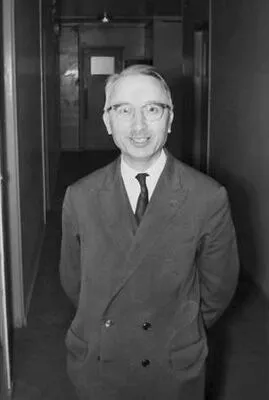
Henri Cartan
Human Design Chart
Biography
Cartan’s academic career began in 1928 when he was the professor of mathematics at the Lycée Caen. One year later he was appointed deputy professor at the University of Lille where he stayed for two years prior to becoming professor of mathematics at the University of Strasbourg. From 1940-69, he was on the faculty of the University of Paris, and from 1970-75, he taught at Orsay.
Cartan was made a Fellow of the Royal Society of London in 1971, and made an honorary member of the London Mathematical Society in 1959.
Cartan was married and had five children.
He died 13 August 2008, age 104.
Henri Cartan — Generator with Profile 2/4
Generator 2/4 — Design at a Glance
Henri Cartans design pointed towards great endurance and inner strength. As a Generator, he had plenty of sacral energy that made him strong and resilient like a workhorse – provided this power was used for the right tasks. His life force did not generate through mere initiative but primarily in response to impulses from his environment. The motto was clear: Not initiate, but react.
This mechanism meant Henri Cartan was most successful when he waited for a signal from life and then acted upon it as soon as his sacral center gave a clear “yes.” This inner feedback signal steered his actions directly from the gut. If he followed this strategy, he was rewarded with a deep sense of fulfillment; no one could stop him.
Conversely, the risk of his design showed in two pitfalls. If Henri Cartan spent his energy on things that did not resonate with him or were unimportant to him for long periods, he tended towards burnout and a lack of energy. Even if he was prevented from working on projects close to his heart – although he still had plenty of power left – frustration would arise. Living against his design by constantly initiating rather than reacting led to persistent dissatisfaction. His path to satisfaction thus lay in patience, waiting for the right impulse and then responding with full force.
Sacral Authority
Henri Cartan made decisions not through abstract thinking but waited for a direct physical resonance. His design suggested he only acted when his inner self gave a clear impulse – a sign that something truly energized him.
This approach stemmed from his sacral authority, which as a Generator was both strategy and internal decision-making instance. This unity simplified his process: He did not have to choose between different inner voices but could trust the first impulse coming from his Sacral Center. With an open Emotional Center, he remained free of emotional distortion in these moment-to-moment decisions.
The reaction often showed subtly as a gut feeling or a surge of energy – a soft grunt or an internal “Hmm” during positive resonance. Once this impulse came, he felt vital and energized. He lived with the urge to perform tasks with great enthusiasm without them needing to fulfill an external purpose. The joy in the action itself was his motivation. Additionally, an active Spleen Center supported his quick, instinctive perception, allowing him to listen reliably to his physical well-being and be guided by it.
The 2/4 Profile — Hermit / Opportunist
Henri Cartans design pointed towards a pendulum rhythm between deep withdrawal and active networking. As someone with Profile 2/4, he constantly oscillated between two fundamental needs: the urge of Line 2 to go inward as an “hermit,” and the desire of Line 4 to spend time with his closest community. This tension required him to create a safe environment where he could clearly communicate when he sought company and when he wanted solitude. In phases of being alone, he delved into internal processes to gain clarity. Once this need was satisfied, he returned from his “cave” to connect with his favorite people. This shift allowed him to reflect on the knowledge of his network during quiet times and develop brilliant ideas. The energy of Gate 53 (Line 2) projected outward the ability to start anew, which only became clear at the right call; here patience was crucial for building success. Simultaneously, Shock Gate (Line 4) showed a fixation in reacting to competition, coupled with a special talent for recognizing opportunities even in crises. This configuration marked Henri Cartan as someone who used targeted isolation and selective connection to leverage his intellectual resources.
Split Definition — Defined & Open Centers
Henri Cartan's Human Design profile indicated a tendency towards a fixed internal direction and vital endurance. His defined G Center provided him with a reliable sense of self-identity and purpose, enabling him to show others new paths without needing their approval. This inner clarity was reinforced by his defined Sacral Center, which supplied constant energy for persistence when he responded directly to immediate resonance rather than initiating mentally. The defined Spleen Center fostered spontaneous intuition and contentment in the present moment, while the defined Root Center provided a steady pressure to face existential challenges and move forward.
At the same time, Henri Cartan was vulnerable to conditioning through several open centers. His open Head Center tended to interpret mental confusion or external pressures as personal necessity, which could distract him from his inner authority. The open Ajna Center made him susceptible to foreign concepts and opinions that he did not always clearly distinguish from his own thoughts. His open Throat Center led him to seek attention or speak out to relieve pressure rather than waiting for inviting moments. The open Heart Center caused him to get caught in spirals of promises and self-proof, lacking the consistent willpower needed to fulfill commitments solely through ego energy. Finally, his open Solar Plexus absorbed the emotions of the environment, causing him to experience others' moods as his own instability and avoiding confrontation to maintain calm.
Channels for evolutionary change and intuitive life art.
Henri Cartan's Human Design profile indicated a tendency towards evolutionary change paired with deep intuitive adaptability. He was someone who could endure internal tension to create new structures. The Channel of Mutation 60-3 connected his Root Center with the Sacral Center, generating pulsating energy between limitation and order. Henri Cartan had to learn to accept the melancholy that arose in the pauses of this energy rather than trying to rationalize it away. His design required patience until new mutations passed through him. This channel brought a pressure for innovation but only became effective when he waited for his inner reaction instead of acting prematurely.
Parallel to this, the Channel of Perfect Form 57-10 shaped his behavior by connecting the Spleen Center with the G Center and allowing spontaneous intuitive adaptation to his environment. Henri Cartan acted not out of fear or future concerns but from a deep love for himself and a focus on physical well-being. This configuration helped him secure his survival in the present moment, behaving exactly as required by the situation. His way through the world was marked by clear, unburdened presence that unconsciously influenced others to live authentically.
Additional Gates in his design added further layers: Gate 53 brought a drive for freedom and new cycles, while Gate 54 linked worldly success with spiritual development. Gate 51 gave him strong willpower to adapt to shocks. In the Personality area, Gate 39 acted as an initiator of mutation through provocation and Gate 52 demanded silent concentration on pattern correction. In his design, Gate 13 supported meaning-finding by reflecting on the past, while Gate 15 integrated him into collective rhythms. This combination created a person navigating between individual renewal and harmonious integration.
Individual Circuitry — Circuit Signature
Henri Cartan's Human Design profile indicated a tendency towards separate parallel alignment: two independent energetic streams existed side-by-side without directly merging with each other. This arose from his Split Definition, forming two isolated groups – one in the lower body (Sacral and Root Centers) and another in the upper area (Identity and Spleen Centers).
In the Knowledge Circuit, Channel 3–60 'Mutation' connected the Sacral Center with the Root Center, driving energy to break established patterns and let new things emerge. It was about expressing a unique identity through deviation from the known. The pulsating formative energy of this channel promoted creativity and the ability to bring change into the world by transforming old knowledge.
Parallel to this, in the Integration Circuit, Channel 10–57 'Perfect Form' linked the Identity Center with the Spleen Center, securing survival through intuitive wisdom and proper behavior. The power from reacting to life was guided by inner knowledge to act in the present moment. This configuration strengthened the highest individuality, enabling Henri Cartan to navigate himself confidently through intuition and appropriate action.
Since both circuits lay in different groups, these forces did not experience direct energetic mixing. Instead, they shaped his essence as separate units: on one hand, courage for mutation and new creation in the lower body, on the other hand, intuitive survival-preserving presence in the upper area. This separation created a clear structure where both aspects could develop independently without blocking or blending with each other.
Right Angle Cross of Penetration 2
Henri Cartan's Human Design profile indicated a tendency towards inner stability that was not easily shaken by external disturbances. He often acted as a calming influence during times of crisis or sudden change, while others around him reacted. This demeanor stemmed from the configuration of his right Cross of Permeation 2.
In Human Design mechanics, this cross describes a specific energy connection between the emotional center and the motor center via the Solar Plexus Center. It grants the ability to not immediately translate emotional waves into action but rather to process them first for understanding. Henri Cartan thus possessed natural resilience against stressful situations. Instead of acting impulsively, he could wait until the emotional wave had subsided before taking clear-headed action. This created a protective mechanism against hasty decisions during turbulent phases of his life.
The energy of this cross acted like a buffer: it absorbed external pressures and transformed them into inner stability. For Henri Cartan, this meant that even when the environment became chaotic, he maintained his own center. This structure supported him in maintaining long-term perspectives without being overwhelmed by short-term emotional storms. His strength lay less in quick reaction than in the ability to remain calm under pressure and focus on what was essential once emotional clarity had been restored.
Saturn Return · Uranus Opposition · Chiron Return · 2nd Saturn Return — Life Cycles
Henri Cartan's Human Design profile indicated a tendency towards structural anchoring and long-term institutional impact. His life phases were characterized by clear cycles of maturation, where internal clarity transformed into external manifestation. The first Saturn Return often marked the transition from individual development to collective responsibility. In 1935, at age 31, Henri Cartan became one of the founding members of the Bourbaki Group. This event precisely aligned with the mechanics of this cycle: years of groundwork condensed into a solid, shared foundation. Here, not only personal ability but also the capacity to create structures that influence beyond the individual and shape generations was evident.
The second Saturn Return brought further depth to this role. It signified confirmation of his established position at the highest level. In 1958, at age 54, Henri Cartan gave a plenary lecture at the International Congress of Mathematicians in Edinburgh. This appearance was not an isolated success but rather the visible bloom of a long-lasting phase of consolidation. The design promoted here the role of stabilizing element within a large system. The mechanics of this second cycle underscored that true authority does not arise from sudden appearances but results from consistent care for foundations that eventually find international recognition. Henri Cartan's path thus demonstrated the power of patient structural work.
Generator · Sacral Authority — Synthesis
Henri Cartan was a Generator whose life was marked by deeply rooted sacral energy. This source allowed him to work with endurance and enthusiasm on his heart projects as long as he followed the inner guidelines of his body (sacral authority). The profile as a natural talent and networker points towards an interplay between the need for withdrawal into personal processes (Line 2) and the desire for exchange with like-minded individuals (Line 4) – a dynamic that strengthened his ability to innovate and generate knowledge. His defined G Center gave him a strong sense of direction and the capacity to inspire others, while the Channel of Mutation (3-60) continually encouraged him to explore new paths and question conventions.
A central paradox in Cartan's design lay in the interplay between constancy and change. On one hand, he possessed a reliable self-identity and clear sense of direction (defined G Center), on the other, he was destined through the Channel of Mutation to constantly transform himself and explore new possibilities. This tension manifested in events such as joining the Bourbaki Group (1935) and delivering his lecture at the Mathematics Congress (1958), both marked by established knowledge and a quest for innovation – a life between deep anchoring and creative penetration.
2 Defined Channels
Incarnation Cross - Right Angle Cross of Penetration 2
Solar Return
The Solar Return shows the moment when the sun returns to its exact birth position - your personal solar year.
Life Cycles
Discover the life cycles with a detailed triple view (birth chart, cycle chart, composite).
Human Design Profile
- Type
- Generator
- Strategy
- To respond - wait for something to respond to
- Authority
- Sacral Authority
- Profile
- 2/4 - Hermit / Opportunist
- Definition
- Split Definition
- Incarnation Cross
- Right Angle Cross of Penetration 2
- Date of Birth
- 08.07.1904 22:00
- Place of Birth
- Nancy, France
Frequently Asked Questions
What was Henri Cartan's Human Design type?
Which profile did Henri Cartan have in his chart?
What authority guided Henri Cartan's decisions?
What incarnation cross determined Henri Cartans life path?
When was Henri Cartan born?
Discover your own Human Design
Are you also a Generator? Find out in a personal reading how to use your sacral energy correctly and discover deep satisfaction.
More Personalities
Back to overviewAaliyah

Alexia

Angèle

Anne-Marie

Arcángel

Arno