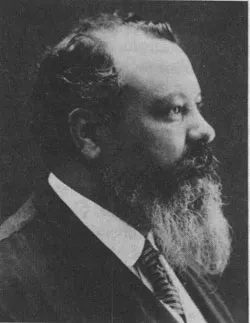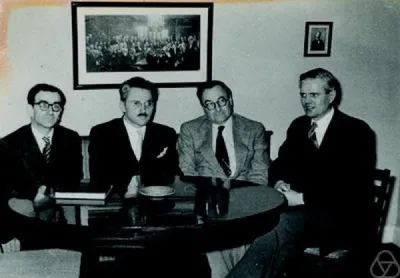
Herbert Busemann
Human Design Chart
Biography
Herbert Busemann was born in Berlin to a well-to-do family. His father, Alfred Busemann, was a director of Krupp, where Busemann also worked for several years. He studied at University of Munich, Paris, and Rome. He defended his dissertation in University of Göttingen in 1931, where his advisor was Richard Courant. He remained in Göttingen as an assistant until 1933, when he escaped Nazi Germany to Copenhagen (he had a Jewish grandfather). He worked at the University of Copenhagen until 1936, when he left to the United States. There, he got married in 1939 and naturalized in 1943. He had temporary positions at the Institute for Advanced Study, Johns Hopkins University, Illinois Institute of Technology, Smith College, and eventually became a professor in 1947 at University of Southern California. He advanced to a distinguished professor in 1964, and continued working at USC until his retirement in 1970. Over the course of his work at USC, he supervised over 10 PhD students.
He is the author of six monographs, two of which were translated into Russian. He received the Lobachevsky Medal in 1985 for his book The geometry of geodesics.
Busemann was also an active mathematical citizen. At different times, he was the president of the California chapter of Mathematical Association of America, and a member of the council of the American Mathematical Society.
Busemann was also an accomplished linguist; he was able to read and speak in French, German, Spanish, Italian, Russian, and Danish. He could also read Arabic, Latin, Greek and Swedish.
Human Design Analysis: Herbert Busemann as Manifestor 3/5
Manifestor 3/5 — Design at a Glance
Herbert Busemann's design indicated a tendency towards proactive action. As a Manifestor, he was a pioneer meant to lead the world into a new future. Similar to an emperor in ancient Rome, he had the vision of a grand whole but did not lead the necessary wars and battles himself. Instead, he sent others to conquer foreign lands for him. This role came with a specific pain point: He was often misunderstood because he thought ahead of others. His big dreams polarized; some people loved and followed him, while others disliked or even hated him because of these visions. For the right followers to find him, it was crucial that he informed others about his plans in a timely and precise manner. This was his ideal strategy. When he followed this strategy, he was rewarded with a sense of inner peace. If he lived against his design, he felt instead a persistent, deep anger. His path was to create clarity through information to minimize resistance and make his visions come true.
Emotional Authority
Herbert Busemann's design indicated a tendency towards emotional depth and necessary delays in decision-making. He showed himself to be someone who drew his inner authority from the defined Emotional Center. In Human Design mechanics, this center always carries authority once it is defined – regardless of all other configurations in the chart. This priority is a central mechanism: The emotional wave determines the decision-making process, not the mind or external expectations.
Busemann was constantly swayed by his emotions, coloring the world differently depending on his current mood. What appeared inspiring in one moment could seem negative in the next. His immediate feeling was only a snapshot, not a final judgment. Quick, spontaneous reactions to these first impressions often led to wrong decisions, as the emotional truth had not yet fully seeped in.
His design's strategy required patience. He needed time for decisions to mature, often over several days. By 'sleeping on questions,' intense feelings subsided, and a clear, calm insight emerged. This process of emotional condensation was essential for all long-term turning points that significantly shaped his life path. Only through this waiting period did he gain the necessary distance to recognize his true inner truth and act accordingly.
The 3/5 Profile — Martyr / Heretic
Herbert Busemann's design indicated a tendency towards experimental action and the role of a practical problem solver. As a person with Profile 3/5, the 'Explorer/Hero,' he learned through his own experimentation and had to work out his knowledge through trial and error. This line of the adventurer initially believed little in pre-fabricated doctrines; instead, Herbert Busemann amassed a rich treasure of practical life experiences that he made accessible to others.
The Hero Line (5) made him attractive to his surroundings, as people saw his self-made solutions as valuable and wanted to learn from his experiences. This flattered his self-image but could be painful when experiments failed in public. His mechanics also included the potential for practical solutions in crisis times, coupled with themes of organization and resource distribution. Herbert Busemann showed himself to be someone who boldly expressed his individuality, yet could provoke envy or suspicion. He only explained his insights when absolutely necessary and functioned as a bridge between personal experience and the expectation that organizations should run smoothly. His path was marked by the courage to make mistakes to learn from them and the ability to exercise practical authority in revolutionary times.
Single Definition — Defined & Open Centers
Herbert Busemann's design points to a tendency towards consequent self-determination, carried by a defined Heart Center. He has a constant source of willpower and ego, allowing him to keep his promises and determine his own worth without relying on external validation. This inner stability directly affects his expression: His defined Throat Center, connected to the Ajna Center, enables him to bring his mental concepts and theories clearly and reliably into the world. His thinking is not fleeting but structured by the defined Ajna Center; he processes information in a specific, trustworthy way and can inspire others or provoke thought through his intellectual presence.
This firm inner structure contrasts with his open centers, making him receptive to external influences. His open Head Center means he does not have a permanent mental pressure but takes in inspiration from the environment; he tends to burden himself with foreign questions and can easily get lost in doubts that do not belong to him. Similarly, his open G Center: He does not have a fixed identity that he generates himself but crystallizes his self-image through interaction with others and the right places. This makes him vulnerable to losing himself in relationships or searching for a direction he cannot define himself.
His open Sacral Center shows that he does not have a constant energy flow. He tends to amplify the vitality of others and exhaust himself in the process, which can lead to exhaustion if he does not pay attention to his limits. Additionally, his open Root Center absorbs the stress of his environment, making him vulnerable to adrenalized pressure that he does not generate himself. His open Spleen Center also makes him sensitive to health and survival issues; he must learn to distinguish between his own intuition and the conditioned fears he picks up from others. This constellation shapes him as someone who uses his mental and willful strength to orient himself in an often confusing and energy-rich environment.
Channels for community, structuring and the money line.
Herbert Busemann's design indicated a tendency towards strategic structuring and the handling of material responsibility. He was someone who had to translate insights into efficient processes while simultaneously bearing the pressure to secure resources and bind communities.
This dynamic was shaped by the Channel of the Money Line 21-45. This connection between the Heart Center and the Throat Center conveyed the authority of the "Hunter" (Gate 21) and the final voice of the "Collector" (Gate 45). For Busemann, this meant that success depended on his ability to maintain control over his work rhythms to spare his heart while he also took on material responsibility. The inner conflict lay in connecting service with the need to have the last word to ensure security.
Parallel to this, the Channel of Structuring 23-43 was at work. It connected the Ajna Center with the Throat Center through the Gate of Insight (43) and the Gate of Assimilation (23). This allowed him to transform spontaneous mental breakthroughs into clear, digestible explanations. His challenge was to give his mind time to assimilate knowledge before he articulated it. Only when he respected this inner processing could his innovative thinking be accepted as valuable rather than foreign by others.
The Channel of Community 37-40 connected the Solar Plexus and Heart Centers through the Gate of Friendship (37) and the Gate of Solitude (40). This created an emotional basis for contracts and loyalty. Busemann's design required that bonds not form spontaneously but through careful consideration and mutual benefit. He sought his place in the whole but also needed space for himself to find the emotional clarity that stabilized sustainable relationships.
Additionally, individual Gates shaped his Profile: Gate 49 (Transformation) demanded obedience to principles and the willingness to sacrifice for the common good. Gate 4 (Formulation) helped him develop logical patterns for future security, while Gate 55 (Plenitude) brought emotional mood swings that required a conscious, independent handling of resources.
Tribal Circuitry — Circuit Signature
Herbert Busemann's design inclined towards structured communication and cooperative resource building. As a simply defined person, he had a continuous energetic flow connecting the Heart, Solar Plexus, Ajna, and Throat Centers. This marked him as someone whose inner values and emotional resonance were directly translated into orderly expressive forms.
The Knowledge Circuit worked through him specifically via the Structuring Channel (Gates 43-23). This channel connected the Ajna Center with the Throat Center. Instead of chaotic inspirations, here the ability to clearly organize thoughts and articulate them precisely was evident. It was less about revolutionary innovations and more about the logical structuring of information.
Parallel to this, the channels of the Money Line (21-45) and Community (37-40) activated the Ego Circuit. These channels connected the Throat, Heart, and Solar Plexus Centers. This fostered an understanding of exchange as the basis for prosperity and support. Giving and receiving were not abstract concepts but concrete mechanisms for strengthening the social fabric. Since the Sacral Center was not involved, this process required pauses for regeneration to gather the necessary energy for joint projects.
Together, these connections formed a profile that set the stage for reliable, structured interaction. Herbert Busemann used his defined Centers to bring emotional intuition (Solar Plexus) and inner principles (Heart) into the world through clear speech (Throat) and logical thinking (Ajna), always in the context of mutual support and the creation of material and social resources.
Right Angle Cross of Explanation 2
Herbert Busemann's design indicated a tendency towards a clear, explanatory attitude, which was evident in his right cross of Explanation 2. This configuration combined the ability to penetrate complex connections with the drive to convey these insights to others in a comprehensible manner. It was not just about knowledge, but about the necessity to formulate truths in a way that made them tangible and understandable.
The mechanics of this cross emphasized the role of explaining as a central expression of energy. Herbert Busemann lived this task by structuring and making his insights accessible. It was less about revealing hidden mysteries than about clarifying what was already there but not yet understood. His way of communicating served to resolve confusion and establish order.
This impulse shaped his interactions and his contribution to the world. He sought ways to present ideas so that others could adopt and use them. The right cross of Explanation 2 demanded precise language and logical structure to make the message effective. Herbert Busemann fulfilled this requirement by carefully refining his thoughts and presenting them in a form that invited understanding. His energy flowed into the work of bridging the gap between expert knowledge and general understanding.
Saturn Return · Uranus Opposition · Chiron Return · 2nd Saturn Return — Life Cycles
Herbert Busemann's design marked a life path defined by phase-wise crises and structural reorganizations. In 1933, at the age of 28, he emigrated to Copenhagen. This marked his first Saturn Return, a cycle in which years of groundwork often condenses into a solid but also burdensome result. For his chart, this moment was a deep crisis that forced a fundamental change in external circumstances.
The next major turning point occurred in 1945, when he became Assistant Professor at Smith College in Northampton at the age of 40. This position fell on his Uranus Opposition, a time often associated with sudden, unexpected breaks or new career boosts in Human Design. Here, the mechanics were clearly a career leap that redefined his professional structure.
His second Saturn Return took place in 1964, when he was appointed Distinguished Professor at the age of 59. This cycle confirmed the long-term development and success that emerged from previous work. The sequence of these events – from the forced flight to the academic entry and the highest recognition – illustrated how the cyclical burdens and opportunities of his design concretely manifested in his biography.
Manifestor · Emotional Authority — Synthesis
Herbert Busemann was a Manifestor who, through his defined Mental Center (Ajna), developed concepts and connected them with the energy of the Heart (Channel 21-45). This combination drove him to take responsibility and seek control to ensure the survival and development of his 'tribe.' His profile as an experimenter and hero (3/5) indicates that he learned through personal experiences and made this knowledge available to others – a process intensified by the emotional wave of his authority (emotional center), as he needed time to let decisions mature and fully grasp the consequences of his experiments.
A central paradox in his design lay in the tension between the impulsive, directional character of the Manifestor and the necessity of emotional maturity. While he was destined to be an initiator and instigate changes, his emotional authority required patience and the mulling over of decisions, which might have led to internal conflicts. The recurring crises and successes that came with Saturn and Uranus cycles reflected this inner struggle: the drive for innovation and transformation (Knowledge Circuit) clashed with the need to emotionally process and integrate the effects of his actions.
3 Defined Channels
Incarnation Cross - Right Angle Cross of Explanation 2
Solar Return
The Solar Return shows the moment when the sun returns to its exact birth position - your personal solar year.
Life Cycles
Discover the life cycles with a detailed triple view (birth chart, cycle chart, composite).
Human Design Profile
- Type
- Manifestor
- Strategy
- To inform others before acting
- Authority
- Emotional Authority
- Profile
- 3/5 - Martyr / Heretic
- Definition
- Single Definition
- Incarnation Cross
- Right Angle Cross of Explanation 2
- Date of Birth
- 12.05.1905 13:30
- Place of Birth
- Berlin-Charlottenb., Germany
Frequently Asked Questions
What was Herbert Busemann's Human Design type?
What Profile did Herbert Busemann have in Human Design?
What Authority did Herbert Busemann have?
What incarnation cross did Herbert Busemann have?
When was Herbert Busemann born?
Discover your own Human Design
Are you also a Manifestor? Find out in a personal reading how to use your initiation power peacefully and dissolve resistance.
More Personalities
Back to overviewChristian-Jaque
Kesha

Lucebert
Masaccio

Nadar
Papus