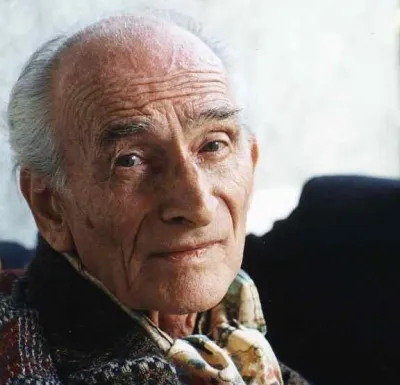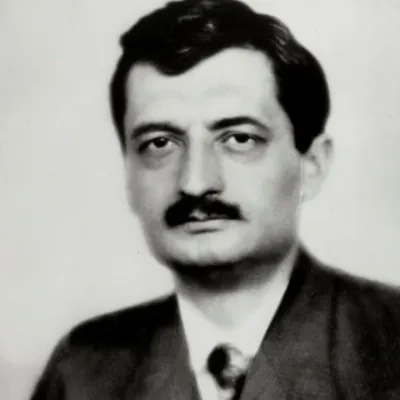
Hermann Oberth
Human Design Chart
Biography
The son of a prosperous doctor, he became interested in rockets when his mother gave him a copy of Jules Verne’s "From the Earth to the Moon," a book that he read over and over until he knew it by heart. He developed his theories while teaching himself the necessary mathematics, but eventually he enrolled at the University of Munich in 1912 to pursue a degree in medicine. With the onset of World War I, he left college to serve as a medic in the Austro-Hungarian Army, an experience that showed him he didn’t really want to be a doctor. After the war, he sought his Ph.D. at the University of Heidelberg, but in 1922, the University rejected his dissertation, which was based on his rocket design. In 1923, he published that research as "The Rocket into Interplanetary Space."
In 1929, Oberth’s book, "Ways to Spaceflight," won the first annual Robert Esnault-Pelterie-André Hirsch Prize of 10,000 francs. This allowed him to continue his research on liquid-propellant rocket motors, and in 1931, he applied for, and received, a patent on his innovative design. The first rocket was launched on 7 May 1931 near Berlin. He joined the faculty of the Technical University of Vienna in 1938. In 1940, he became a German citizen and one year later transferred to the German rocket development center at Peenemünde. After working in various facilities in Germany, Switzerland and Italy, he moved to the United States in 1955 where he did advanced space work for the army.
Married, he had four children.
He was wounded during World War I, and in 1929, while working as a technical advisor on the film, "Girl in the Moon," Oberth performed an experiment that ended with the loss of sight in his left eye.
The Human Design of Hermann Oberth: Manifesting Generator 1/3
Manifesting Generator 1/3 — Design at a Glance
Hermann Oberth revealed himself as someone marked by a hybrid energy configuration: He possessed the constant power of a Generator but also had the ability to accelerate processes and skip steps. This structure combined the need for reaction to inner impulses with lightning-fast implementation power.
As an Manifesting Generator, he primarily responded to his defined Sacral Center, which provided him with a steady source of energy. Unlike a pure Generator, however, he could directly channel this energy into action without waiting for the usual intermediate step of merely responding. This allowed him to quickly draw things into his life and push projects forward at high speed.
This rapid pace, however, carried specific risks. Often he would skip necessary steps, leading to the need to return later to make up for missing foundations. Such backlogs could cause frustration as the expected smooth progress was interrupted. Additionally, his design tended to react simultaneously to numerous different impulses and start several undertakings in parallel.
To find satisfaction, it was crucial for him not to initiate things himself but to wait until a clear inner "yes" impulse came from his Sacral Center. Only then could he effectively use his creative power. Under these conditions, he benefited from variety and a playful approach to his tasks rather than limiting himself to one thing alone. Regularly checking whether a project continued to bring joy helped him maintain the balance between his quick implementation power and the necessary sustainability.
Emotional Authority
Hermann Oberth exhibited an internal decision-making structure that did not solidify in moments of enthusiasm or rejection. His inner authority was emotional, carried by the defined Emotional Center. This meant he was constantly under a wave of feelings that colored his perception of the world at every moment. What excited him one moment could appear negative the next. However, these fluctuations were only snapshots and not an ultimate truth. Quick, spontaneous decisions stemming directly from such emotionality often proved problematic for his design and had negative consequences.
The mechanics of his authority required patience and time. He needed to let decisions mature in order to reach a deeper, more comprehensive understanding. This demanded conscious hesitation, multiple nights of reflection on important questions, and the willingness to repeatedly question himself. Only when intense feelings subsided and emotional distance was gained did clarity and calmness set in for him. This process was particularly significant for long-term decisions as they profoundly shaped his life course. By waiting, he went through the necessary maturation process before taking action.
The 1/3 Profile — Investigator / Martyr
Hermann Oberth revealed himself as someone whose life was marked by a deep drive to grasp knowledge not just theoretically but through his own actions. His design showed a tendency to initially plan in quiet and solitude before acting – a characteristic of Line 1, which stands ready to provide energy for focused concentration under pressure. Yet this phase of learning was only preparatory; the crucial step came next with the experimental approach. Here, Line 3 played a role, seeing trial and error as a necessary path to understanding. For him, this meant rejecting shortcuts and instead doing detailed work to learn from the consequences of his actions. Only through this process did reliable insights emerge. When he believed something was right, it was the result of double verification: first by thorough contemplation during pauses, then by practical application and enduring the outcomes. This process from planning to empirical validation formed the foundation of his judgment ability. He learned not just from books but also from the direct experience of failure and success in detail.
Single Definition — Defined & Open Centers
Hermann Oberth's design showed a tendency towards persistent, strong-willed expression, supported by a deep inner direction. His defined G Center gave him a reliable sense of self-understanding and a clear purpose for his life mission, while the also defined Heart Center provided him with the willpower to keep promises and independently control resources. This combination shaped him as someone who spoke from a strong 'I' - convinced that he wanted something and had it.
His communication was guided by the defined Throat Center, serving as a pivot point to translate messages into action. Since throat and heart were connected, he often acted out of the desire to achieve or possess something. Additionally, he possessed an enormous vital energy source: The defined Sacral Center generated daily power, but it could only be correctly utilized in response to external impulses. Initiated actions without prior questioning risked resistance and exhaustion, as sacral energy is not available for mental decisions.
At the same time, his design showed a complex emotional depth. His defined Solar Plexus Center required patience; truth revealed itself at the end of an emotional wave, not in impulsive now. Rush decisions often led to later regret here. This structure was supported by the defined Spleen Center, which provided intuitive, spontaneous warning signals in the moment - a body intelligence that could be rationalized and had to be trusted blindly. The also defined Root Center ensured constant pressure to move forward and master existential challenges.
In contrast, his open centers stood out: Head and Ajna were undefined. This made him vulnerable to mental confusion and the pressure to find answers for others' questions. Instead of persistent inspiration, he tended to get stuck in non-self thoughts or interpret concepts as personal truth. His strength did not lie in conceptual thinking itself but rather in not identifying with these open mental fields, instead using them as mirrors for environmental ideas while relying on his inner authority from Solar Plexus and Spleen.
Channels for emotional transformation, inspiration and focused mastery.
Hermann Oberth exhibited a basic attitude that drew from the connection of individual radiance and technical precision. His design suggested he influenced others through living his unique life less through explanatory words than by setting an example with creative perspectives. This aligned with Channel of Inspiration 1-8, which grants the ability to live as an individual and attract attention by authentically expressing inner truth.
This inspirational impact was reinforced by a tremendous capacity for focus. The Channel of Concentration 52-9 described a quiet pressure to remain still and maintain focus on details and facts. This energy helped him keep distractions at bay and logically engage with patterns to perfect them.
Additionally, his design connected intuitive depth with technical skill. The Channel of Wavelength 48-16 drove him to transform dexterity into talent through repeated experimentation and practice. Here it was about combining inner intelligence with outer mastery to find solutions or refine skills.
Critical analysis also belonged to his essence. The Channel of Judgment 58-18 ensured he questioned and corrected patterns, driven by a desire for perfection and the wish to make life in the collective more cheerful. He actively sought what did not work to improve it.
He took the material plane seriously. The Channel of the Money Line 21-45 showed readiness to work hard under his own control to secure resources and take responsibility for his survival as well as that of the 'tribe'.
At the same time, he sought new experiences. The Channel of Transience 35-36 drove him through emotional oscillations and the search for the new to gain wisdom, often also by experiencing crises or changes to broaden horizons.
Individual Gates rounded out this picture: Gate 17 stood for logical teaching and succession, while gates like 56 (mental storytelling), 25 (spiritual innocence) and 57 (intuitive clarity) enriched his personality. In the design, Gates 30 (awareness of feelings), 60 (acceptance of limitations) and 32 (continuity) acted as driving forces for stability and emotional depth.
Collective Circuitry — Circuit Signature
Hermann Oberth's design showed a tendency towards structured, rational analysis closely linked to the ability to formulate insights linguistically precisely. This connection arose through the Understanding Circuit, whose channels connected Spleen, Root and Sacral Centers with Throat Center. Here an energy of focused logic and strategic planning worked, aiming to clearly structure complex connections and project into the future free from emotional distortion. Parallel to this, the Knowledge Circuit showed a direct link between Throat and Identity Centers through the Inspiration Channel. This promoted spontaneous creative impulses and readiness to take new paths by expressing unique ideas directly from self. Another element was the Meaning-Finding Circuit connecting Solar Plexus with Throat Center. Thus his communication was subject to an emotional wave; he shared insights only when they were emotionally ripe and authentic, corresponding to a process of reflecting past experiences. Finally, in the Ego Circuit, the connection between Heart and Throat Centers through the Resources Channel supported clear understanding of giving and taking as well as the ability to organize support or secure material foundations through words. All these aspects formed an integrated whole for Hermann Oberth since he was simply defined: The mentioned centers stood in a direct energetic flow, making his intellectual clarity, emotional depth, and communicative expression power work together.
Right Angle Cross of Service 2
Hermann Oberth displayed a fundamental disposition based on the right cross of service. This configuration in the Human-Design system describes a specific energetic alignment where the individual tends to define and unfold themselves through serving others or a greater cause. It was not a conscious choice in everyday terms, but rather a deeply rooted structural tendency of the design.
This pattern shaped his way of interacting with the world: His energy flowed strongest where he could show himself useful or supportive. The right cross of service often implies a connection between one's essence and the need to contribute something for the common good or for other people. For Hermann Oberth, this meant that his inner balance and satisfaction were closely linked to the ability to perform this service. It was a defining aspect of his energetic signature, influencing his actions and reactions in various life situations. Without this element, the dynamic interaction between his inner self and the outer world would have been different. The structure determined that his contribution to the environment was not just an option but a central part of his way of existing.
Saturn Return · Uranus Opposition · Chiron Return · 2nd Saturn Return — Life Cycles
Hermann Oberth channeled his intellectual energy into structured, long-term projects. His design promoted a disciplined approach and systematic buildup, where theoretical concepts were gradually transformed into tangible results. This tendency towards solidifying ideas manifested in his Saturn returns, phases during which years of groundwork condensed into stable milestones.
In 1923, at the age of 29, Hermann Oberth passed his state examination and published his first work, “Die Rakete zu den Planetenräumen”. This marked his first Saturn return, where early theoretical considerations unfolded into a public, well-founded work. It was a moment of confirmation, in which inner labor emerged outwardly and laid the groundwork for further creation.
Later, in 1941 at the age of 47 during his Chiron return, he received German citizenship and joined the rocket team in Peenemünde. This cycle of bloom brought his life's mission into a new phase of practical implementation and institutional integration. His second Saturn return followed in 1950 when he was 56 years old, leaving Switzerland to travel legally to Italy. Here too, the pattern emerged: A reorientation based on prior stabilization that allowed him to continue his path in a new context.
Manifesting Generator · Emotional Authority — Synthesis
Hermann Oberth was a Generator who developed a unique dynamism through the connection of his Sacral Center with the Throat Center. His life showed as an ongoing search for new insights (Profile 1/3), where he did not only research theoretically but also experimented and taught from it – a process fueled by sacral energy that enabled him to push ideas forward swiftly. However, this ability to initiate and implement things was always accompanied by an emotional wave (emotional authority) requiring mature engagement with his insights before communicating them (defined Throat Center).
A central paradox in his design lay in the tension between the urge for quick implementation and the necessity of emotional clarity. As a Generator driven through the knowledge circuit to innovate and transform (Channel 1-8), the emotional authority demanded that he not rush decisions. This led to an interplay between boldly trying new paths and carefully testing their viability – a cycle of experiments, reflection, and renewed inspiration shown in documented successes (Saturn Return 1923).
6 Defined Channels
Incarnation Cross - Right Angle Cross of Service 2
Solar Return
The Solar Return shows the moment when the sun returns to its exact birth position - your personal solar year.
Life Cycles
Discover the life cycles with a detailed triple view (birth chart, cycle chart, composite).
Human Design Profile
- Strategy
- To respond - wait for something to respond to
- Authority
- Emotional Authority
- Profile
- 1/3 - Investigator / Martyr
- Definition
- Single Definition
- Incarnation Cross
- Right Angle Cross of Service 2
- Date of Birth
- 25.06.1894 22:16
- Place of Birth
- Hermannstadt, ROM
Frequently Asked Questions
What was Hermann Oberth's Human Design type?
What Profile did Hermann Oberth have in Human Design?
What Authority did Hermann Oberth possess?
What incarnation cross did Hermann Oberth have?
When was Hermann Oberth born?
Discover your own Human Design
Are you also a Manifesting Generator? Find out in a personal reading how to unfold your multi-talents and direct your energy wisely.
More Personalities
Back to overviewAldair

Alizée

Angeli

Arletty

Artus

Balthus