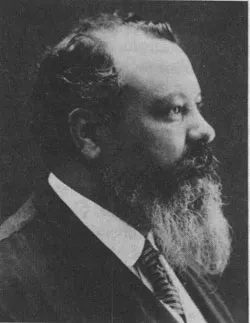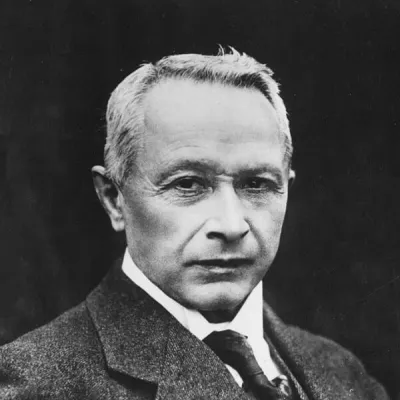
Hugo Junkers
Human Design Chart
Biography
In addition to aircraft, Junkers also built both diesel and petrol engines and held various thermodynamic and metallurgical patents. He was also one of the main sponsors of the Bauhaus movement and facilitated the move of the Bauhaus from Weimar to Dessau (where his factory was situated) in 1925.
Amongst the highlights of his career were the Junkers J 1 of 1915, the world's first practical all-metal aircraft, incorporating a cantilever wing design with virtually no external bracing, the Junkers F 13 of 1919 (the world's first all-metal passenger aircraft), the Junkers W 33 (which made the first successful heavier-than-air east-to-west crossing of the Atlantic Ocean), the Junkers G.38 "flying wing", and the Junkers Ju 52, affectionately nicknamed "Tante Ju", one of the most famous airliners of the 1930s.
When the Nazis came into power in 1933, they requested Junkers and his businesses aid in the German re-armament.
Hugo Junkers — Manifestor with Profile 1/3
Manifestor 1/3 — Design at a Glance
Hugo Junkers revealed himself as a pioneer and visionary whose design predisposed him to lead the world in new directions. His character bore the traits of a leader who did not fight every battle personally but mobilized others through his clear alignment, similar to an emperor expanding his realm through the hands of his soldiers. This role, however, brought with it a specific challenge: His far-reaching ideas often polarized people strongly. While some were drawn to his vision and followed him, he encountered misunderstanding or even rejection from others because his thinking frequently transcended conventional norms.
To minimize friction and find the right support, it was crucial for him to inform others precisely about his intentions at the right time. This strategy of information served to preempt resistance and create clarity. If he adhered to this pattern, his design rewarded him with a deep sense of inner peace. However, if he lived against this natural alignment, the result often led to prolonged, deep anger within himself. His path thus involved clearly communicating his vision before acting, thereby creating the necessary space for his leadership and avoiding conflicts through lack of transparency.
Emotional Authority
Hugo Junkers displayed an emotional patience: He did not seek immediate answers but let feelings and moods subside before taking action. His inner authority was Emotional Authority, carried by the defined Solar Plexus Center. This mechanism means that his decisions should never be based on fleeting impulses but rather on clarity that emerges after emotions have subsided.
As the Emotional Center was active, he experienced a constant emotional ups and downs: The world appeared colored through his current mood—sometimes enthusiastic, sometimes negative. Yet this snapshot did not represent ultimate truth. Quick, spontaneous decisions from such an emotion would often have had negative consequences for him. Instead, his design required time and multiple 'overnights' to reflect on questions. Only through this delay could he gain emotional distance so that intense feelings subsided and calmness as well as deep insight took their place.
This strategy was essential for long-term life decisions. Hugo Junkers had to take his time and ask himself repeatedly to ensure that his choice was not just a passing impulse but a clear, considered position. Only when the emotional wave had ebbed did true clarity emerge, which was crucial for his life path.
The 1/3 Profile — Investigator / Martyr
Hugo Junkers revealed himself as a person whose essence was shaped by the Profile of Investigator and Experimentor (1/3). His design inclined him to acquire knowledge not just theoretically but through direct practical experience. Line 1 in his chart promoted a deep need for learning and empathy; it enabled him to absorb information from various sources and remain open to others' perspectives. This formed the foundation of his approach: he sought first to understand the fundamentals.
Yet life revolved around the process of trial and error for him. Line 3 demanded action, adaptability, and authentic self-expression through doing. Often, the energy of the first line could have led him to hesitate because he felt he did not know enough yet. Nevertheless, the third line urged him to test these theoretical knowledge in practice. Mistakes were essential learning steps rather than failures.
When Hugo Junkers evaluated a solution or concept as good, his judgment was based on a double check: He had intellectually penetrated it and practically tested it thoroughly. His insights were thus self-earned and verified truths. This combination of an inquiring mind and experimental attitude made his judgment trustworthy, as it rested not merely on theory but on lived experience.
Single Definition — Defined & Open Centers
Hugo Junkers was characterized by a design that emphasized inner orientation and emotional depth. His defined G Center gave him a firm sense of self-identity and a clear direction in life; he knew who he was, and could show others this orientation without controlling their paths. This internal security was reinforced by his defined Heart Center, which provided him with the strength to keep promises and use resources autonomously. He enjoyed working independently and sought recognition for his contributions.
His communication wasn't random talk but a reliable expression of these inner structures. His defined Throat Center served as a pivot point that translated energy from the Heart and G Centers into clear messages. When he spoke or acted, it was from a position of 'I want' and personal identity, making his statements authentic and consistent.
At the same time, his design was marked by emotional complexity. His defined Solar Plexus Center formed his inner authority: Hugo Junkers needed time to make decisions. He patiently waited until the waves of his emotions subsided and emotional clarity emerged, rather than impulsively reacting to highs or lows. This waiting period was essential for him to avoid false steps.
In contrast, his undefined centers revealed specific vulnerabilities. His open Head Center made him susceptible to mental pressure and the temptation to solve others' questions as if they were his own problems, which could lead to confusion. The open Ajna Center meant that he absorbed concepts and ideas flexibly but shouldn't treat them as his own firm truth. Particularly challenging was his open Sacral Center: it lacked a constant energy source and instead absorbed vitality from the environment. This led him to easily become overburdened if he didn't set conscious limits and rely on rest periods, otherwise risking exhaustion. His open Spleen Center made him sensitive to health and well-being in his surroundings, while the open Root Center left him vulnerable to external stress that he amplified rather than generated.
Channels for emotional crises, inspiration, presence, reflection and community.
Hugo Junkers was someone who influenced others through his mere presence and authentic way of acting. His design tended to attract attention not by loud self-promotion but by consistently living out his individual truth. This attitude stemmed from the Channel of Inspiration 1-8, which connected the G Center with the Throat Center. Here, Gate 1 (Self-expression) and Gate 8 (Contributing) worked together: Junkers was designed to serve as a role model. His impact didn't come from explanations but from demonstrating his unique identity – inspiring others to live out their own creativity by doing so himself, much like how a pianist's performance might inspire listeners to play the piano.
Parallel to this, he was shaped by the Channel of Awakening 10-20 and the Channel of the Lost Son 13-33. The first channel connected Gate 10 (Appearance) with Gate 20 (Now), giving him constant awareness; he spoke for himself through living in the present moment, radiating self-love and trust. Others sensed this clarity even when Junkers wasn't always clear about it within himself. The Channel of the Lost Son 13-33 complemented this by adding reflective depth: Gate 13 (Listener) gathered information and secrets while Gate 33 (Withdrawal) offered space for contemplation. Junkers learned from the past, patiently sorted experiences, and shared wisdom only when it was ripe.
Emotionally driven, he was influenced by the Channel of Transience 36-35. This connected Gate 36 (Crisis) in the Solar Plexus with Gate 35 (Change) in the Throat Center. He sought new experiences often driven by restless longing or even creating crises to generate movement. His decisions required emotional waves; he learned to accept emotions as transient and used this depth for advice to others.
Socially, the Channel of Community 37-40 influenced him. It connected Gate 37 (Friendship) with Gate 40 (Aloneness). Junkers sought his place in the whole based on fair agreements and mutual support. He built bridges between individuals to create a harmonious group where everyone made respected contributions without hierarchical dominance.
Additional facets were shown through Gate 7 (Leadership/Hierarchy), projecting patterns for the future, and Gate 2 (Receptivity/Mutation), defining new evolutionary directions. Gate 30 (Recognizing Feelings) brought a longing for positive emotions while Gate 25 (Innocence/Spirituality) fostered mystical centering. In his design, Gates 45 (Tribe Level/Willpower) and 22 (Openness/Calmness) worked together, emphasizing his ability to gather energy for the community with patience.
Collective Circuitry — Circuit Signature
Hugo Junkers was someone whose inner compass was strongly shaped by a search for meaning and the expression of individual identity. His design united in one continuous energetic group the Throat, Identity, Solar Plexus, and Heart Centers. This created a direct flow between emotional reactions, strategic will, and verbal expression.
The Knowledge Circuit activated in him the Channel of Inspiration (Gates 8–1), connecting the Throat with the Identity Center to promote innovative flashes of insight and a tendency towards an individual unique path. Complementing this was the Integration Circuit through the Channel of Awakening (Gates 20–10) between Throat and Identity Centers, supporting the ability to draw strength from reacting to life and expressing it in 'the Now' through proper behavior.
Parallel to this, the Meaning Circuit shaped his emotional landscape. Through the Channel of the Lost Son (Gates 33–13), he connected Throat with Solar Plexus Center, fostering a cyclical wave-like emotion often melancholic and promoting sharing past experiences. The Channel of Transience (Gates 35–36) additionally linked Identity with Solar Plexus Center, focusing on finding meaning behind past events and emotionally processing these insights.
Finally, the Ego Circuit contributed through the Channel of Community (Gates 40–37). This connected Heart with Solar Plexus Center. It was a relationship of giving and taking, marked by mutual support and cooperation within a group without using the constant life force of the Sacral Center. This constellation required rest periods for regenerating resources for the common tribe.
Right Angle Cross of the Sphinx 1
Hugo Junkers displayed a fundamental disposition characterized by a profound connection to the material and physical space. His design inclined him towards anchoring himself in the world through concrete actions, often taking on a protective or supportive role for his environment. This stance stemmed from the energy of the Right Cross of the Sphinx, a configuration that fostered a strong awareness of one's own body and immediate surroundings. People with this expression tended to define their identity through what they tangibly created or preserved. They sought stability not through abstract theories but through tangible things that could be touched and utilized. This often meant an intensive engagement with matter, whether in technical, artistic, or everyday contexts. The energy of this cross form supported Hugo Junkers in translating his ideas into real forms that stood the test of time. He acted as someone who felt the ground beneath their feet and built upon it to create security – both for themselves and others. This connection to the physical helped him transform complex relationships into manageable structures without losing sight of the emotional or spiritual dimension. Instead, he seamlessly integrated these aspects into his material work.
Saturn Return · Uranus Opposition · Chiron Return · 2nd Saturn Return — Life Cycles
In this phase of life, Hugo Junkers showed himself as someone who re-aligned their personal foundation through a deep relationship. The Uranus opposition marks a turning point where old structures crumble and new, often unexpected connections emerge, challenging and expanding self-understanding. In 1898, at the age of 39, he married Therese Bennhold. This event was not merely a formal act but aligned with the dynamic energy of this astronomical configuration: A sudden yet enduring change in his private sphere aimed at reconciling individual freedom with a new bond. Rather than resisting this transformation, he let the impulse work – typical for this cycle – allowing him to break free from past patterns and create space for a partnership that shaped his further development. The opposition acts like a catalyst disrupting existing balances to reorder them on a higher level. For Hugo Junkers, this meant that his marriage to Therese Bennhold was not just a personal decision but an integral part of his personal evolution, through which he experienced and anchored himself in a new context.
Manifestor · Emotional Authority — Synthesis
Hugo Junkers lived a life path marked by a profound drive for knowledge and the will to change. His design as a Manifestor (with emotional authority) points to someone destined to pioneer new paths and draw others along – a trailblazer who always saw the necessity of maturing decisions in the depth of their feelings. The Profile as Researcher/Experimentator (Line 1/3) underscores this process of continuous review and experimentation, through which he developed a well-founded judgment for himself. His defined Throat Center, connected with the G Center and Heart Center, indicates that his communication came from a deep inner drive – an expression of individual knowledge and strong self-determination (Channel 1-8).
A central tension in his design lay between the impulsive energy of the Manifestor and the emotional wave requiring thorough engagement with issues. He was destined to initiate initiatives and bring about change, yet simultaneously needed time to emotionally penetrate his visions and ensure they truly aligned with his inner values. This interplay between swift action and deep reflection shaped his approach and led to a unique form of innovative power.
5 Defined Channels
Incarnation Cross - Right Angle Cross of the Sphinx 1
Solar Return
The Solar Return shows the moment when the sun returns to its exact birth position - your personal solar year.
Life Cycles
Discover the life cycles with a detailed triple view (birth chart, cycle chart, composite).
Human Design Profile
- Type
- Manifestor
- Strategy
- To inform others before acting
- Authority
- Emotional Authority
- Profile
- 1/3 - Investigator / Martyr
- Definition
- Single Definition
- Incarnation Cross
- Right Angle Cross of the Sphinx 1
- Date of Birth
- 03.02.1859 03:00
- Place of Birth
- Mönchengladbach, Germany
Frequently Asked Questions
What was Hugo Junkers' Human Design type?
What Profile did Hugo Junkers have in Human Design?
What Authority did Hugo Junkers have?
What incarnation cross was assigned to Hugo Junkers?
When was Hugo Junkers born?
Discover your own Human Design
Are you also a Manifestor? Find out in a personal reading how to use your initiation power peacefully and dissolve resistance.
More Personalities
Back to overviewChristian-Jaque
Kesha

Lucebert
Masaccio
Nadar
Papus