
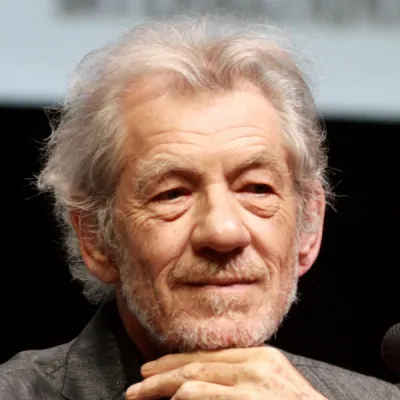
Ian McKellen
Human Design Chart
Biography
McKellen made his stage debut in 1961 at the Belgrade Theatre as a member of its repertory company, and in 1965 made his first West End appearance. In 1969, he was invited to join the Prospect Theatre Company to play the lead parts in Shakespeare's Richard II and Marlowe's Edward II. In the 1970s McKellen became a stalwart of the Royal Shakespeare Company and the National Theatre of Great Britain. He has earned five Olivier Awards for his roles in Pillars of the Community (1977), The Alchemist (1978), Bent (1979), Wild Honey (1984), and Richard III (1995). McKellen made his Broadway debut in The Promise (1965). He went on to receive the Tony Award for Best Actor in a Play for his role as Antonio Salieri in Amadeus (1980). He was further nominated for Ian McKellen: Acting Shakespeare (1984). He returned to Broadway in Wild Honey (1986), Dance of Death (1990), No Man's Land (2013), and Waiting for Godot (2013), the latter two being a joint production with Patrick Stewart.
Ian McKellen — Manifesting Generator with Profile 4/6
Manifesting Generator 4/6 — Design at a Glance
Ian McKellen's design inclined towards businesslike versatility. As an Manifestor Generator, he had constant sacral energy that provided him with a steady foundation of life force. At the same time, however, he possessed the ability to skip steps in action and quickly draw results into his life. This hybrid nature combined reacting to impulses with a unique speed of implementation.
This profile often manifested itself in Ian McKellen pursuing multiple projects simultaneously. The inner logic of his design allowed him to proceed nonlinearly, serving various interests at once. When his inner authority and the sacral center agreed – when they gave a clear 'yes' to impulses – this parallelism could turn into a creative play mode. In this state, he drew deep satisfaction from his work without being hindered by the demand for linear completion of a single task.
Problems arose, however, when he acted too quickly or ignored important intermediate steps. Then he often had to backtrack and do remedial work, which caused frustration – the specific non-self theme of this type. The optimal orientation was first to react to life, wait for resonance, and then proceed only once inner confirmation was clear. This way, his speed became a tool for satisfaction rather than a source of friction.
Sacral Authority
Ian McKellen's design inclined towards making decisions not through intellectual analysis but through immediate physical resonance. As a Generator, he had sacral authority, meaning that his strategy and inner guidance were identical: waiting for external stimuli and then reacting from the gut. This configuration greatly simplifies the decision-making process as no cognitive pre-planning is required.
The prerequisite for this clear guidance is an open emotional center, which allowed Ian McKellen to listen to his sacral responses without emotional distortion. These responses manifested as spontaneous bursts of energy or vague sounds like grunts or nods – a clear signal of interest and energy. When his sacral motor kicked in, he felt vital and acted with great enthusiasm, driven by the joy of activity itself, not an external goal.
Furthermore, an activated spleen worked as supportive authority. This gave him the ability to react particularly quickly and instinctively. He could directly use his physical well-being and intuitive perception to act reliably. This combination of sacral energy and spleen-supported speed marked him as someone who showed himself best through spontaneous, lively involvement in what appealed to him at the moment without long deliberations.
The 4/6 Profile — Opportunist / Role Model
Ian McKellen's design inclined towards experimental behavior in youth that later transformed into a clear role shift. The Profile 4/6, the 'Networker/Role Model', begins before the first Saturn return often like a pure network type (Line 3), intensively testing relationships and friendships. With the activation of Line 6, however, an inner conflict emerged: the desire for community (Heart) stood in opposition to the need to withdraw and contemplate the meaning of life (Head). This Heart-Head conflict shaped his development towards a wiser, more distant attitude.
Additionally, Gate 20 in the fourth line influenced him, promoting transpersonal awareness and intuition. This energy emphasized conveying knowledge through practical actions rather than pure theory. At the same time, Gate 55 in the sixth line focused on individual development and material security as a basis for spiritual growth. Here it was first about covering one's own needs before a higher mental stance could arise. Overall, his design worked towards him maturing through personal experience and protection from false attachments to authority that others later sought.
Split Definition — Defined & Open Centers
Ian McKellen's Human Design profile indicates a tendency towards a consistent and well-defined mode of expression. His defined Throat Center served as the focal point for messages he communicated with ease and honesty. This voice was not arbitrary but drew from his inner identity: The defined G Center gave him a reliable sense of direction and the feeling of being lovable. He knew who he was without needing to measure himself against others. Alongside this, he had a defined Heart Center, which provided a constant source of willpower. He could make promises and keep them, thereby building trust and controlling his own resources. His energy generator lay in the defined Sacral Center; here vital energy was generated daily but only correctly activated through reactions to external stimuli – not by initiatives from the mind.
These stable internal structures contrasted with his openness towards the outside world in mental and emotional areas. His open Head Center made him vulnerable to mental pressure and questions from others, which he often internalized as his own problems. The open Ajna Center allowed intellectual flexibility but led to the adoption of concepts and opinions from the environment rather than generating them himself. Emotionally, through the open Solar Plexus Center, he was a barometer for the mood of his surroundings; he absorbed and amplified foreign feelings, making him vulnerable to emotional conditioning. Additionally, his open Spleen Center tended to project fears about survival security, while the open Root Center took on and magnified external stress. These open centers challenged him not to make decisions impulsively or emotionally but to trust his inner authority to disengage from the conditioning influence of the environment.
Channels for powerful manifestation and spiritual breakthrough.
Ian McKellen's Design inclines towards intense, self-reinforcing activity. The Charisma Channel 34-20 connects the physiological energy of the Sacral Center with the Throat Center. This creates a drive to immediately translate reactions into actions. The speed of this connection often bypasses thinking, making it difficult to sit still. Without inner guidance, this energy can become chaotic; with it, it becomes a source of impressive achievements and natural inspiration. It is healthy to fully concentrate on satisfying activities and not be constantly available to others.
At the same time, a competitive nature aimed at surpassing boundaries was evident. The Initiation Channel 51-25 links the ego of the Heart Center with the spiritual self. Here individualization becomes an art: Through the "shock" of competition or new challenges, awareness of one's uniqueness arises. This process not only strengthens the individual but serves as a bold example for others. It is important to receive initiation rather than actively seek it; forced initiation leads to bitterness, while authentic living enables transcendent encounters.
Additional Gates shape this dynamic: Gate 59 in the Sacral Center follows a genetic strategy of bonding and pairing, independent of personal feelings. Gate 23 translates inner sound into speech and promotes assimilation through explanation. Gate 27 brings caring warmth that improves all activities and strengthens the tribe. Gate 42 emphasizes completing processes as a prerequisite for new commitments; indecisive endings lead to blockages. In the design, Gate 5 supports the basic rhythm through habits and rituals, while Gate 2 offers receptivity to evolutionary directions. Gate 56 allows mental processes to be abstracted into pictorial narratives. This combination requires a balance between impulsive action and rhythmic structure to fully harness the power of the design.
Individual Circuitry — Circuit Signature
Ian McKellen's Human Design profile indicates a tendency towards solidified, courageous individuality. His Authority Circuit connects the Identity Center with the Heart Center. This connection strengthens clear self-worth and firm convictions: "I am who I am." However, without a connection to the Throat Center, these inner certainties often remained difficult to express in words. Simultaneously, his Manifestation Circuit operates through Channel Charisma (20-34), which links the Sacral with the Throat Center. This channel is about securing survival by correctly reacting to life and implementing intuitive knowledge in the present moment.
Since Ian McKellen has a Split Definition, these two energetic systems do not exist as one continuous flow. Instead, there are two separate forces: on one hand, the inner strength of Identity and Heart (Group: G Center/Heart), and on the other hand, the active, survival-assuring communication between Sacral and Throat (Group: Throat/Sacral). There is no direct energetic bridge between these two areas. The melancholy and creativity of his Authority Circuit colors the entire chart, while his Manifestation aspect provides acoustic presence in the here and now. Thus, Ian McKellen appears as someone deeply rooted in his own individuality, but who does not always directly connect this strength with his action-oriented life energy.
Right Angle Cross of the Sleeping Phoenix 2
Ian McKellen's Human Design suggests a tendency towards deep inner transformation that is often characterized by a seemingly quiet or withdrawn state. This configuration is referred to in Human Design as the right cross of the sleeping phoenix. It describes a process of cleansing and renewal where old structures must be dismantled before new ones can emerge. The term 'sleeping phoenix' refers to the necessity of entering a phase of rest or non-action to resolve internal tensions and realign energy.
For Ian McKellen, this meant that his true strength did not lie in constant activity but rather in the ability to pause and focus on what is essential. In moments when he withdrew from external demands, he could gain profound insights that later served as a source for creative or personal impulses. This dynamic does not manifest as active outward action but as an inner process of condensation and clarification.
The right cross of the sleeping phoenix also emphasizes the importance of patience and trust in one's own rhythm. Ian McKellen learned that rest is not a lack of activity, but rather a form of preparation for future developments. Through this approach, he was enabled to engage with complex issues and process them in ways that were enriching both for himself and others.
Saturn Return · Uranus Opposition · Chiron Return · 2nd Saturn Return — Life Cycles
Ian McKellen's Human Design suggests a tendency towards structural reorganization and social engagement that intensifies during phases of maturity. This configuration describes a process where inner clarity is carried outward to redefine collective values.
In 1979, at the age of 40, he was awarded the Order of the British Empire (CBE). For his design, this marked a phase of Uranus opposition, often confirming long-term groundwork through official recognition or sudden shifts. The energy of this cycle promotes breaking free from outdated structures in favor of new individual expressions that are then socially validated.
Ten years later, in 1989 at the age of 50, he co-founded Stonewall with others. This fell during his Chiron Return, a fulfillment cycle considered a period of bloom. During this phase, one's incarnation cross increasingly unfolds in life; meaning and purpose become experiential if one has lived according to their strategy and authority beforehand. This is not about healing old wounds but about the concrete realization of life's purpose through active engagement for others. Ian McKellen demonstrated how personal integrity translates into collective action capability when the inner compass is clear and external circumstances mature.
Manifesting Generator · Sacral Authority — Synthesis
A central red thread in this design is the dynamic connection between inner authority and outer impulses. The defined sacral center (and channel of charisma) provides a constant life energy that should not be used for initiation but rather reacts to stimuli. This responsiveness is amplified by the manifesting generator configuration, which allows for rapid action—a process initiated from the inner centers (Centering Circuit) and discharged communicatively through the throat center. The profile as networker/role model points towards a lifestyle that seeks connections (line 4), as well as requires moments of reflection (line 6) to channel this energy purposefully and authentically.
The central paradox lies in the tension field between quick implementation and the need for returning to fundamental steps. The ability to quickly initiate things carries the risk of skipping important processes—a conflict that is further intensified by the profile (Heart against Head). At the same time, line 6 in the profile awakens an expectation of wisdom and role model function, which creates internal pressure counteracting impulsive action. Documented events (Order, co-founding a group) show that this dynamic manifests in successes arising from engaged actions but also require reflection and building connections.
2 Defined Channels
Incarnation Cross - Right Angle Cross of the Sleeping Phoenix 2
Solar Return
The Solar Return shows the moment when the sun returns to its exact birth position - your personal solar year.
Life Cycles
Discover the life cycles with a detailed triple view (birth chart, cycle chart, composite).
Human Design Profile
- Strategy
- To respond - wait for something to respond to
- Authority
- Sacral Authority
- Profile
- 4/6 - Opportunist / Role Model
- Definition
- Split Definition
- Incarnation Cross
- Right Angle Cross of the Sleeping Phoenix 2
- Date of Birth
- 25.05.1939 21:30
- Place of Birth
- Burnley, England, United Kingdom
Frequently Asked Questions
What is Ian McKellen's Human Design type?
What profile does Ian McKellen have in Human Design?
What authority does Ian McKellen possess?
What incarnation cross does Ian McKellen have?
When was Ian McKellen born?
Discover your own Human Design
Are you also a Manifesting Generator? Find out in a personal reading how to unfold your multi-talents and direct your energy wisely.
More Personalities
Back to overviewSissy Spacek

Aldair

Alizée

Anémone

Angeli

Ann-Margret
