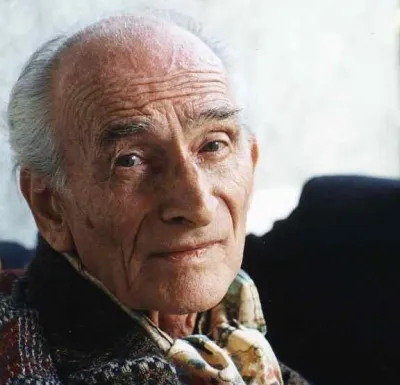
Ignazio La Russa
Human Design Chart
Biography
On 11 May 2008, he became acting president of National Alliance (AN), which, on 29 March 2009, merged into Berlusconi's party The People of Freedom (PdL). He was one of the three national coordinators of the PdL until 17 December 2012 when he launched his own National Centre-right (CN) party.
He is married and has three sons, Geronimo, Lorenzo and Leonardo.
Ignazio La Russa as a Manifesting Generator 5/1 in Human Design
Manifesting Generator 5/1 — Design at a Glance
Ignazio La Russa's design is characterized by a hybrid energy that combines constant power with the ability to skip steps and achieve results quickly. As a Manifesting Generator, he had a constant energy source in his sacral center, which worked satisfactorily only when he responded to external impulses rather than initiating himself. This configuration allowed him to pursue multiple projects simultaneously and fall into a playful mode, which gave him deep satisfaction.
The challenge lay in the speed: Without the confirmation of the sacral center ("Yes, I like this") or the approval of his inner authority, he tended to skip important steps. This often led him to have to backtrack to complete missing steps, causing frustration – his specific non-self theme. Additionally, there was the risk of taking on too many impulses at once, quickly turning his creative joy into overloading.
For Ignazio La Russa, it was crucial to regularly check whether his ongoing projects still aligned with his inner resonance. Only through this conscious reaction to life and acceptance of his natural versatility could he use his speed without falling into frustration. His design challenged him to see variety as a source of his strength, rather than limiting himself to linear, single-minded approaches, as long as inner approval was given.
Emotional Authority
Ignazio La Russa's design featured a tendency towards emotional wave motion, which significantly shaped his perception and decision-making. His chart showed Emotional Authority, carried by a defined Solar Plexus Center. In Human Design mechanics, this authority is prioritized: Regardless of other defined centers, it always takes precedence in orientation. This means that Ignazio La Russa was subject to an inner dynamic that showed in a constant up and down of feelings. The world appeared to him always colored by his current mood; enthusiasm could quickly turn into negative evaluation.
This mechanism implies that an immediate emotional impression does not represent the final truth. Quick, spontaneous decisions based on such a snapshot carried the risk of negative repercussions. Instead, his design required patience and the conscious drawing out of time. By letting decisions mature and reviewing them multiple times, the intense feelings gained distance. Only when the emotional wave subsided did clarity and calmness set in for Ignazio La Russa. This process of emotional detachment was essential to gain deeper insights and make well-founded long-term life decisions, rather than being led by passing moods.
The 5/1 Profile — Heretic / Investigator
Ignazio La Russa emerged as someone who used his deep, darkly worked knowledge to offer practical solutions to others in times of crisis. His design showed a tendency to only step outward once all details were absolutely clear and thought through – the property of Line 1, which conducts research in secrecy. However, through Line 5, he acted like a master, magnetically drawing others to him; people actively sought his answers to their problems. This configuration, however, brought a specific risk: Without clear boundaries, he risked being exhausted by the constant inquiries of his environment, similar to an expert finding their inbox full of further questions after long conferences. The mechanics of his Profile 5/1 therefore require him to learn to say no, to maintain the balance between his private research work and public problem-solving. His strength lay in excellence – the ability to communicate complex details so precisely that they became understandable and applicable to others. This, however, also required him to protect his own boundaries to avoid falling into the trap of always being available, while his own energy base depleted.
Single Definition — Defined & Open Centers
Ignazio La Russa revealed himself through a persistent, active mental structure that continuously generated concepts and theories. His defined Ajna Center ensured that his mind was always in motion, allowing him to not only develop ideas but also to directly translate them into words and actions. This connection to the defined throat enabled him to express what he thought reliably and clearly, without the message being distorted on its way out. His communication was thus a direct expression of his mental preferences.
This cognitive stability contrasted with his emotional and energetic dynamics. With a defined Solar Plexus Center as his inner authority, he was dependent on not making decisions immediately but waiting for the emotional wave to pass. Only through patience and going through the emotional cycles could he gain clarity; impulsive action at the peak of his feelings would have led to confusion. At the same time, he had a defined Sacral Center, which gave him enormous, constant vitality. This energy was only effective when he responded to life rather than initiating it himself. A confirming sacral response secured him the strength for perseverance, while mental decisions that ignored this reaction led to frustration and exhaustion.
His open centers shaped his vulnerabilities to external influences. The open Head Center made him susceptible to mental pressure and the questions of others, leading him to engage with problems that were not his own. The open G Center meant that he did not have a fixed, unchanging identity but was formed through the environments and people he encountered. He was dependent on being in the right place to find the correct direction and love, rather than seeking it himself. The open Heart Center led to him not being able to prove his self-worth through willpower or promises, but rather learning not to prove himself. Finally, his open Root Center absorbed stress from the environment, making him vulnerable to the pressure of others, while his open Spleen Center made him sensitive to health and well-being, but warned him against spontaneous, fear-based decisions.
Channels for emotional depth, logical clarity and powerful action.
Ignazio La Russa showed a fundamental disposition characterized by the tension between emotional openness and logical structure. His design tended to process information and transport it through a specific, mood-driven articulation.
The Openness Channel 22-12 connected his Solar Plexus Center with the Throat Center. This created a social interaction that was strongly dependent on the emotional wave. Ignazio La Russa had the ability to achieve an emotional impact on others through the quality of his voice and his timing, but only if he felt internally inclined to do so. The restraint of Gate 12 regulated the openness of Gate 22, allowing him to use his warmth and social skills purposefully to gain attention and move others. If he was not in the right mood, this interaction could be abrupt or lead to misunderstandings.
Parallel to this, his mind continuously organized details into a mental system. The Accepting Channel 17-62 connected the Ajna Center with the Throat Center. Here, it was about translating visual patterns (Gate 17) into language and details (Gate 62). Ignazio La Russa sought logical order and understanding. Everything he could not integrate into his inner image, he did not understand. This created a pressure to explain his opinions and what he understood or did not understand precisely. Successful communication required him to be invited to speak to avoid resistance and ensure clarity.
Additionally, the Charisma Channel 34-20, connecting the Sacral Center with the Throat Center, gave him a powerful, manifesting energy guided by sacral reaction. The urge to act met the ability to express himself in the present moment. This energy allowed him to maintain activity over longer periods and inspire others, provided he followed his inner guidance and did not act impulsively from the mind. Without this inner alignment, however, the energy could lead to obsession or chaotic outbursts.
Individual Gates like Gate 61 (inner truth, silence) and Gate 3 (mutation, order in the sacral center) underscored the process of creating new orders from confusion and gaining individual insights. Gate 50 (protective reflex, values) fostered a conservative attitude towards traditions and tribal rules.
Individual Circuitry — Circuit Signature
Ignazio La Russa's design showed a continuous, coherent energetic structure. As a person with a simple definition, his defined centers – Throat, Solar Plexus, Ajna, and Sacral – were directly connected to each other. This created a stable internal flow that combined action capability and emotional clarity without internal breaks or separate energy islands.
This cohesion worked through three specific circuits. The Knowledge Circuit connected his Throat with the Solar Plexus Center via the Openness Channel. This promoted the authentic expression of individual identity and emotional waves. Parallel to this, the Understanding Circuit connected the Ajna with the Throat Center via the Accepting Channel. Here, it was about the logical, strategic structuring of insights and their clear, visual communication into the future. Finally, the Integration Circuit secured survival by linking the Sacral with the Throat Center via the Charisma Channel. This enabled him to effectively set intuitive power and reactions to life in the current moment.
Together, these connections formed a profile that united emotional authenticity, rational strategy, and vital action power in a single, coherent system. Ignazio La Russa could thus not only think or feel knowledge but also carry it directly and charismatically into the world, supported by a stable, integrated energy base.
Left Angle Cross of Obscuration 1
Ignazio La Russa's Human Design profile indicated a tendency towards strategic restraint, coupled with the ability to discern complex interconnections without immediately revealing them. This configuration describes an internal dynamic where clarity often emerges in silence before it is carried outward.
The left cross of Veiling 1 marks a personality that does not act through direct confrontation or immediate disclosure but rather through subtle, almost invisible control of information and perceptions. This is not about malicious deception but a protective mechanism: the essential is consciously hidden behind a facade to protect it from premature influence or misinterpretation. Ignazio La Russa was someone who carefully filtered his true intentions and deepest insights. Only those with the patience to penetrate the surface gained access to his true substance.
This mechanism requires a high degree of inner discipline, as the impulse to reveal immediately is always in conflict with the necessity of veiling. The strength lies in the control of the information flow. Ignazio La Russa used this structure to maintain a clear, though hidden, line in chaotic situations. He often appeared enigmatic because his true potential was not visible at the surface level. This veiling served to preserve the integrity of his decisions until the right moment for their implementation arrived. Thus, an aura of unpredictability was created, which was both protective and a strategic advantage.
Saturn Return · Uranus Opposition · Chiron Return · 2nd Saturn Return — Life Cycles
Ignazio La Russa moved through a life rhythm marked by recurring phases of structuring and transformation. His design shows a sequence of cycles that combine stability with the necessity of adaptation.
The first Saturn Return marked a time of consolidation. In this phase, earlier experiences condensed into a solid foundation. It was about taking responsibility and solidifying one's position in life. This cycle created the necessary structure to face future challenges.
Simultaneously, the Uranus Opposition acted as a counterforce. It brought unexpected changes and demanded flexibility. The tension between the stabilizing power of Saturn and the disruptive energy of Uranus required Ignazio La Russa to question fixed positions and find new paths. It was a phase of letting go and reorientation.
The Chiron Return, the fulfillment cycle, brought a time of bloom. Here, his incarnation cross became experiential. Following his strategy and authority, his life purpose became clearer. Meaning and direction became clearer, not as healing, but as the unfolding of full potential.
The second Saturn Return rounded off this development. It stood for maturity and the integration of all previous lessons. Ignazio La Russa showed himself capable of anchoring the wisdom gained and adopting a stable, mature stance. These cycles together formed a picture of someone who found themselves through structure, transformation, and inner clarity.
Manifesting Generator · Emotional Authority — Synthesis
A central red thread in this chart is the dynamic between inner depth and outer articulation. The combination of emotional authority, the Hero/Researcher profile, and the defined mental center (Ajna) points to a person who generates profound insights and then, channeled through openness (Gate 22/12), communicates them outward. This ability to gather, process, and articulate knowledge is strengthened by the sacral energy, which provides a constant source of engagement and drive. It seems as if this person's life is strongly shaped by the desire to understand and share this understanding with others, with the emotional wave playing a crucial role in the maturation and expression of these insights.
The central paradox lies in the tension between the impulse for swift action, which the manifesting generator type brings, and the necessity of emotional clarification. The ability to skip steps and initiate things quickly contrasts with emotional authority, which requires time and maturation for decisions. This creates a field of tension between the desire for immediate implementation and the inner necessity to experience and integrate emotions before acting.
3 Defined Channels
Incarnation Cross - Left Angle Cross of Obscuration 1
Solar Return
The Solar Return shows the moment when the sun returns to its exact birth position - your personal solar year.
Life Cycles
Discover the life cycles with a detailed triple view (birth chart, cycle chart, composite).
Human Design Profile
- Strategy
- To respond - wait for something to respond to
- Authority
- Emotional Authority
- Profile
- 5/1 - Heretic / Investigator
- Definition
- Single Definition
- Incarnation Cross
- Left Angle Cross of Obscuration 1
- Date of Birth
- 18.07.1947 02:00
- Place of Birth
- Paternò, Italy
Frequently Asked Questions
What is the Human Design type of Ignazio La Russa?
What Profile does Ignazio La Russa have in Human Design?
What Authority determines the decision-making of Ignazio La Russa?
Which incarnation cross is Ignazio La Russa associated with?
When was Ignazio La Russa born?
Discover your own Human Design
Are you also a Manifesting Generator? Find out in a personal reading how to unfold your multi-talents and direct your energy wisely.
More Personalities
Back to overviewAldair

Alizée

Angeli

Arletty

Artus

Balthus