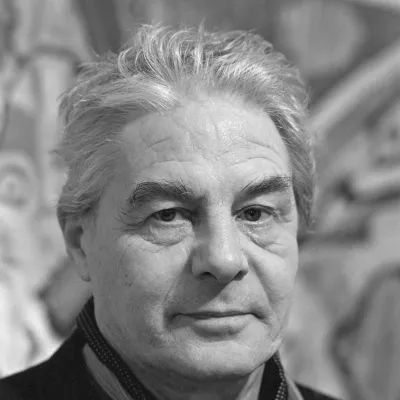
Photo: Wikimedia Commons
J. R. R. Tolkien
Human Design Chart
Biography
From 1925 to 1945 Tolkien was the Rawlinson and Bosworth Professor of Anglo-Saxon and a Fellow of Pembroke College, both at the University of Oxford. He then moved within the same university to become the Merton Professor of English Language and Literature and Fellow of Merton College, and held these positions from 1945 until his retirement in 1959. Tolkien was a close friend of C. S. Lewis, a co-member of the Inklings, an informal literary discussion group. He was appointed a Commander of the Order of the British Empire by Queen Elizabeth II on 28 March 1972.
After Tolkien's death his son Christopher published a series of works based on his father's extensive notes and unpublished manuscripts, including The Silmarillion. These, together with The Hobbit and The Lord of the Rings, form a connected body of tales, poems, fictional histories, invented languages, and literary essays about a fantasy world called Arda and, within it, Middle-earth. Between 1951 and 1955 Tolkien applied the term legendarium to the larger part of these writings.
What does Manifestor 4/6 mean for J. R. R. Tolkien?
Manifestor 4/6 — Design at a Glance
J.R.R. Tolkien revealed himself as a pioneer and visionary whose design predisposed him to lead the world into a new future. His nature resembled that of a Roman emperor: He possessed the grand vision of an empire but did not personally wage wars or battles, instead delegating their execution to others, much like a ruler sending his soldiers to conquer lands.
This forward-thinking mindset often led to misunderstandings and polarization. As he thought further ahead than many of his contemporaries, he was loved and followed by some while being rejected or even hated by others precisely because of these vast visions. This conflict between understanding and rejection formed a central pain point in his design.
To find the right followership, it was essential for him to inform others timely and accurately about his intentions. This strategy of informing served to attract the right people who could follow his leadership. When he followed this strategy, he was rewarded with an inner sense of peace. Living against his design by not sufficiently informing led instead to a persistent, deep-seated anger within him. His path was thus marked by the necessity to communicate his vision clearly to find inner balance and minimize resistance.
Emotional Authority
J.R.R. Tolkien exhibited a decision-making stance that required time and emotional distance. Spontaneous reactions were unreliable in his design; he needed a process to gain clarity instead. This structure stemmed from his emotional authority. With the Solar Plexus Center defined, it served as his internal guiding force – independent of other defined centers. This meant that he was subject to constant waves of emotions. His perception was always colored by the current mood: The same thing could appear inspiring in one moment and negative in another. Immediate feelings were merely snapshots, not necessarily the truth. Quick decisions made from this emotional heat risked negative consequences.
Instead, it was necessary for him to 'dress up properly.' Tolkien had to rethink his decisions multiple times and sleep on them until intense emotions subsided. Only when emotional distance emerged did calmness set in and the process conclude. This mechanism allowed him to recognize more deeply and comprehensively. It required patience, especially with long-term choices that influenced his life course. By waiting out the emotional wave movement, he found his true inner voice beyond fleeting mood feelings.
The 4/6 Profile — Opportunist / Role Model
J.R.R. Tolkien's design inclined him to experiment with relationships in the first three decades of his life as Line 6 was not yet active and behaved like a Line 3. During this phase, he actively sought connections within social networks driven by the need of Line 4 (Heart), which waited for trustworthy alliance partners. This early stage served to learn through analysis and dealing with opposites without having to aggressively resist, which could have restricted trust.
With maturation and activation of Line 6 (Head), his dynamics fundamentally changed. J.R.R. Tolkien now experienced an inner conflict between the deep desire for belonging to a community and the simultaneous urge to withdraw to contemplate the meaning of life – symbolically depicted as looking from a high mountain top. This contradiction from Heart against Head shaped his later stance.
He was expected to meet the demands of a wise role model through cooperation with others. Line 6 enabled him to share his deep source of inspiration and intuitive clarity. At the same time, his heart remained cautious; it opened only partially to avoid being hurt by false bonds. By giving patterns to others, he affirmed their value while collective suggestions helped further develop his own depth. His life task was to sustainably navigate the tension between social engagement and individual reflection.
Single Definition — Defined & Open Centers
J.R.R. Tolkien's design indicated a tendency towards a stable, intuitive identity characterized by emotional depth and persistent inner pressure. His defined centers – Throat, G Center, Solar Plexus, Spleen, and Root – formed the constant mechanical basis of his ability to act. The defined G Center gave him a reliable sense of self-identity and direction in life, while the also defined Spleen Center provided an intuitive body intelligence in the present moment that allowed for spontaneous judgments about health and well-being.
His communication was shaped by the defined Throat Center, serving as a pivot point to make messages from other defined centers effective in the world. The defined Solar Plexus Center acted as an emotional authority: J.R.R. Tolkien was designed to wait out the waves of his feelings before making decisions, as truth revealed itself over time. The defined Root Center also provided a constant stress and survival pressure that propelled him forward in the material world.
In contrast, Head, Ajna, Heart, and Sacral Centers were open for him. These areas did not belong to his continuous personality but reflected situational environmental energies. His open Head and Ajna Centers meant that mental inspiration and conceptual thinking were only activated by external influences; he tended to be distracted by doubts or questions from others when he didn't trust his inner authority. The open Heart Center showed a vulnerability to the pressure of proving willpower, despite lacking consistent energy for it. Finally, his open Sacral Center indicated that generative life force and availability came from outside; he could easily become exhausted if he amplified foreign energies rather than listening to his own strategy. This configuration described a person with a firm inner structure who was nevertheless strongly influenced by their environment in mental, willful, and energetic areas.
Channel 28-38: Struggle — Channels & Gates
J.R.R. Tolkien exhibited a stubborn determination to follow his own path and find life's meaning in resistance struggles. This attitude was shaped by the Life Struggle channel 38-28: Gate 38 in the Root Center generated adrenalized pressure to maintain integrity against external distractions, while Gate 28 in the Spleen Center intuitively recognized which fights were worthwhile. This mechanism drove him to fight for values that made his existence meaningful.
Additionally, the Inspiration channel 1-8 between G and Throat Centers was at work: Through Gate 1 he expressed a mutative perspective that inspired others through Tor 8's ability to contribute as an example – not through words but by living out his individuality exemplarily.
The Perfect Form channel 57-10 connected Spleen and G Center: Gate 57 offered intuitive insight into physical well-being, which Gate 10 guided self-referential behavior. This enabled spontaneous, appropriate action in the present moment that secured survival and projected a quality of conduct marked by deep self-love.
In the Wave Length channel 48-16 (Spleen-Throat), Tor 48 sought life-critical information from intuitive depths while Tor 16 perfected skill through repeated experimentation. This combination transformed technical mastery into talent refined by endurance and dedication.
The Emotional Release channel 39-55 (Root-Solar Plexus) set the emotional wave in motion: Gate 39 provoked to strengthen the mind, while Gate 55 regulated moods between joy and melancholy. This created a pulsating dynamic that required authentic life to savor spiritual depth.
Individual Gates complemented this picture: Tor 21 controlled material resources, Tor 19 sought security in partnership and territory, Tor 37 promoted organic community structures. Tor 6 provided friction as a growth factor, Tor 50 preserved traditional values through protective reflexes, and Tor 46 emphasized dedication to the process here and now.
Individual Circuitry — Circuit Signature
J.R.R. Tolkien's design indicated a tendency towards pulsating, acoustic creativity aimed at initiating transformation through the expression of his unique identity. As someone with Simple Definition, there was a continuous energetic flow between Throat, Identity, Spleen, Root, and Solar Plexus Centers.
The Knowledge Circuit strongly shaped this dynamic. Through Inspiration (Channel 1-8), it connected the Throat to the Identity Center, promoting the expression of his individual essence. Simultaneously, two separate segments of the same circuit were at work: The Life Struggle (Channel 28-38) linked Spleen and Root Centers, while Emotional Release (Channel 55-39) directly connected Solar Plexus and Throat Centers. This enabled emotional waves from the Solar Plexus to be transported through the Throat to bring new knowledge and change into the world.
Additionally, the Understanding Circuit supported this structure. The Wave Length channel (16-48) directly linked Throat and Spleen Centers, facilitating the sharing of logical insights without conditioning. Finally, integration contributed: The Perfect Form channel (10-57) connected Identity and Spleen Centers, guiding strength from reactions to life through intuitive knowledge in the present moment. This configuration described a life task of uncovering hidden connections and passing them on to others.
Right Angle Cross of Tension 4
J. R. R. Tolkien's design carried the structural element of the right tension 4 cross. This configuration shaped an inner dynamics aimed at resolving tensions by focusing on what is essential and reducing unnecessary complexity. In Human Design, this cross marks a specific archetypal framework that operates not through conscious effort but as a fundamental life attitude. It signals a tendency to focus on the core question during phases of high internal or external friction: What is truly necessary here? Tolkien's chart displays this structure as a firmly anchored background factor. It did not function as a temporary state but rather as an ongoing filter for his perception of challenges. Where others might have gotten lost in details or been overwhelmed by the intensity of a situation, this cross offered him the opportunity to sharpen his focus and ignore what was superfluous. It was a mechanical property of his design that helped him find clarity in unclear situations by encouraging him to recognize the underlying truth of a situation rather than dealing with superficial symptoms. This tension resolution through reduction to the essential endowed him with a certain calmness regarding complex problems.
Saturn Return · Uranus Opposition · Chiron Return · 2nd Saturn Return — Life Cycles
J. R. R. Tolkien's design showed a clear structure through two Saturn return cycles, marking fundamental phases of maturity and each linked to career-relevant conclusions. The first Saturn return occurred around the age of 28, a phase in which years of groundwork often condensed into a solid result. This was reflected concretely in the year 1920 when Tolkien ended his work on the New English Dictionary. This step signalled the conclusion of an extended period of learning and building up as well as the consolidation of his professional identity.
The second Saturn return took place around the age of 57, a time often associated with establishing long-term structures or publishing more mature works. In Tolkien's case, this mechanism was active in 1949 when "Farmer Giles of Ham" was published. These two cycles thus formed the framework for his professional development: The first cycle closed the intensive education and research phase, while the second cycle documented the productivity and public validation of his mature work. The events were not coincidences but expressions of the inner chronology of the design, where internal maturity became visible externally.
Manifestor · Emotional Authority — Synthesis
He was a Generator who acted through the connection of emotions and the expression of his innermost truth. A red thread runs through his life: the pursuit of authentic self-expression (Channel 1-8) and the ability to inspire others – a voice that came from deep within, carrying creative impulses into the world. The defined Throat Center, fueled by various centers, points to someone who distinguished himself through communication and simultaneously unleashed transformative power. The profile as Networker/Role Model (4/6) amplifies this aspect by pairing the desire for connection with the need for inner reflection. Reoccurring career events around Saturn Returns (1920 and 1949) underscore the necessity of constantly realigning oneself and unfolding one's potential.
A central paradox lay in the tension between the need for belonging (Line 4 in Profile) and the desire for independent reflection (Line 6). He lived the conflict between Heart and Head, between engaging with a community and retreating into inner contemplation. This internal dissonance created space for profound insights and the ability to both connect and transform – a tension that shaped his creative work and drove him to develop new perspectives.
5 Defined Channels
Incarnation Cross - Right Angle Cross of Tension 4
Solar Return
The Solar Return shows the moment when the sun returns to its exact birth position - your personal solar year.
Life Cycles
Discover the life cycles with a detailed triple view (birth chart, cycle chart, composite).
Human Design Profile
- Type
- Manifestor
- Strategy
- To inform others before acting
- Authority
- Emotional Authority
- Profile
- 4/6 - Opportunist / Role Model
- Definition
- Single Definition
- Incarnation Cross
- Right Angle Cross of Tension 4
- Date of Birth
- 03.01.1892 22:00
- Place of Birth
- Bloemfontein, South Africa
Frequently Asked Questions
What was J. R. R. Tolkien's Human Design type?
What profile did J. R. R. Tolkien have?
What authority did J. R. R. Tolkien have?
What incarnation cross did J. R. R. Tolkien have?
When was J. R. R. Tolkien born?
Discover your own Human Design
Are you also a Manifestor? Find out in a personal reading how to use your initiation power peacefully and dissolve resistance.
More Personalities
Back to overviewAlain-Fournier
Angeli
Christian-Jaque
Juninho

Kesha

Lucebert