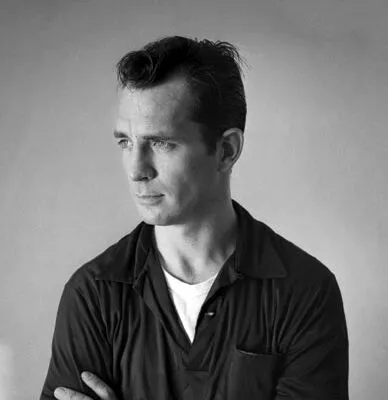
Jack Kerouac
Human Design Chart
Biography
Of French-Canadian parentage, Kerouac was raised in a French-speaking home in Lowell, Massachusetts. He "learned English at age six and spoke with a marked accent into his late teens." During World War II, he served as a United States Merchant Mariner; he completed his first novel at the time, which was published more than 40 years after his death. His first published book was The Town and the City (1950), and he achieved widespread fame and notoriety with his second, On the Road, in 1957. It made him a beat icon, and he went on to publish 12 more novels and numerous poetry volumes.
Kerouac died in 1969. Since then, his literary prestige has grown, and several previously unseen works have been published. Kerouac is recognized for his style of stream of consciousness spontaneous prose. Thematically, his work covers topics such as religion and mysticism, childhood, poetry and literature, New York City and the Bay Area in the 40s and 50s, Buddhism, and life. He became an underground celebrity and, with other Beats, a progenitor of the hippie movement, although he mostly remained uninterested in politics. He has a lasting legacy, greatly influencing many of the cultural icons of the 1960s, including Bob Dylan, the Beatles, Jerry Garcia, and the Doors.
Human Design Analysis: Jack Kerouac as Manifesting Generator 5/1
Manifesting Generator 5/1 — Design at a Glance
Jack Kerouac's Design featured a tendency towards hybrid dynamics: He had the constant energy of a Generator but also possessed Manifestor qualities due to additional connections. This configuration allowed him to skip steps in the process and quickly draw new situations into his life. Often, this speed led him to pursue multiple projects simultaneously rather than focusing linearly on one thing.
As a Manifesting Generator, his strategy was not initiating but reacting to inner impulses from the sacral center. Only when this center signaled a clear "yes" could he effectively utilize his creative power. If these impulses did not do so or if he acted against his internal timing, he quickly fell into frustration – the non-self theme of his type. His energy worked best in play mode, with variety and fun. Trying to proceed strictly linearly or adhering to constraints blocked his natural flow. The ability to act swiftly was only helpful when he regularly checked whether his authority still supported the direction he had begun. This way, he could draw deep satisfaction from his work rather than exhausting himself through hasty action or multitasking without inner consent.
Emotional Authority
Jack Kerouac's Design indicated a tendency towards emotional wave movements that made his perception of the world heavily dependent on his current mood. His inner authority was Emotional Authority, carried by the defined Emotional Center. In Human-Design mechanics, this authority always takes precedence over all other defined centers, regardless of what else is active in the chart. This meant for him that quick, spontaneous decisions based on immediate feelings were often misleading and could have negative consequences, as the first impression was merely a snapshot and did not necessarily reflect deeper truth.
Instead, his system required patience: He had to let decisions ripen, ideally overnight or over several days. Through this waiting period, intense emotions subsided, emotional distance was gained, and only then clarity and calmness set in. This process was essential for long-term life decisions with significant influence on his further path. Jack Kerouac thus showed himself as someone who had to learn to take his time and ask multiple times before acting to ensure that his choice did not stem from a fleeting emotional coloring but rather rested on a stable, clear understanding.
The 5/1 Profile — Heretic / Investigator
Jack Kerouac's Design featured a paradoxical dynamic tendency: He was someone who collected deep knowledge and simultaneously had a magnetic effect on others seeking solutions from him. As a 5/1, or Hero/Investigator, he used his extensive knowledge base (Line 1) to offer it to others for problem-solving purposes (Line 5). This configuration gave him almost an irresistible quality; people desperately wanted to know what treasures he had to offer.
This process of learning and facing challenges was in tension with the need for acceptance from like-minded individuals. Gate 11 on his Line 1 emphasized the gift of serendipity – being at the right place at the right time – as well as a deep desire to be understood by people who shared similar goals. At the same time, there was an anxiety about anonymity and the feeling that his ideas were not valued if they went unnoticed.
On the other hand, Gate 22 on Line 5 marked directness and practical solutions, especially in times of crisis. Here he had the ability to break rules when he was not in the mood. These mutative actions could be perceived as unconventional and trigger negative projections from others. The danger lay in others overwhelming him with questions if clear boundaries were not set. His path involved finding a balance between researching for himself and problem-solving for others by learning to say no as well.
Quadruple Split Definition — Defined & Open Centers
Jack Kerouac's Human Design shows a tendency towards constant mental activity and a strong, independent identity. He appeared as someone who was constantly driven to ask questions and find answers, propelled by his defined Head Center and Ajna Center. This configuration generated a continuous flow of inspiration and concepts, but these were not directly translatable into action; struggling against this mental restlessness often led to frustration or inner anxiety when he tried to prematurely convert thoughts into actions.
At the same time, Jack Kerouac possessed a firm sense of self-identity and willpower, anchored in his defined G Center and Heart Center. This gave him a clear sense of direction and the ability to fulfill promises as well as determine his own resources. His voice, shaped by his defined Throat Center, served as a reliable channel to convey these inner structures outward – whether it was from the mind or driven by willpower.
In contrast, his open Spleen Center revealed a vulnerability to existential fears and a need for external confirmation of wellbeing. Jack Kerouac tended to feel uncertain when he wasn't near people who radiated a sense of safety and health to him. This could lead him to hold onto things impulsively or let them go just to receive this conditioning "feel-good frequency," rather than trusting his own inner authority. The challenge was not to use the spontaneous fear of the open Spleen Center as a basis for decision-making, but to patiently wait until clarity emerged from his defined emotional and mental processes.
Channels for mental images, focus, emotional depth and universal love.
Jack Kerouac's Human Design profile suggests a tendency towards deep, almost meditative focus paired with an unpredictable emotional volatility in communication. This configuration creates an internal rhythm between silent observation and impulsive expression.
Channel 52-9 connects his Root Center to the Sacral Center. This generates a calm, passive pressure to remain still and avoid distractions, directing energy toward precise details. It is not an active search for answers but rather waiting for the sacral response to reveal the right focus. Without this focus, he could become restless; with it, he perfects patterns through logical, step-by-step analysis.
At the same time, Channel 22-12 between Solar Plexus and Throat Center influences his social interaction based on emotional waves. Gate 22 brings passion and melancholy while Gate 12 exercises a cautious restraint that limits expression to moments with high mutational potential. He did not speak out of duty but only when his mood allowed, at which point his voice could be catalytic.
Channel 51-25 in the Heart Center connects the ego's competitive shock with the universal love of Higher Self. This drives him to transcend boundaries and develop a mystical uniqueness through personal triumphs that inspire others—provided he follows his inner authority rather than seeking initiation.
Additionally, Channel 64-47 in Head and Ajna Centers filters every experience through a kaleidoscope of mental images. This active mind constantly seeks a story or perspective that makes sense, often leading to temporary confusion until suddenly a clear, inspiring viewpoint crystallizes.
Supporting this structure are Gates 11 (visual memory), 17 (logical teaching), and 49 (upheaval/principles) in his Personality, along with Gate 26 (ego innovation) and Gate 37 (friendship/community) in his Design. These shape his ability to store collective ideas and innovative impulses within organic communities.
Collective Circuitry — Circuit Signature
Jack Kerouac's Human Design profile suggests a tendency towards internal stability paired with the ability to shape emotional waves into language. As a Fourfold Defined individual, his chart consisted of four separate groups; these centers operated parallel to each other without direct energetic exchange between them.
His Define Circuit connected Identity and Heart Centers, creating inner stability and strong convictions that were often difficult to verbalize due to the absence of the Throat Center. The Understanding Circuit linked Sacral and Root Centers, where focused energy created logical structures free from emotional influence.
The Knowledge Circuit connected Throat and Solar Plexus Centers, allowing for the expression of individual identity through emotional language; new insights were communicated acoustically and in the present moment. The Meaning Circuit linked Head and Ajna Centers, where he sought meaning in past events with intuitive insights appearing cyclically.
These four separate streams shaped Jack Kerouac: inner centering, rational focus, emotional expression, and reflective intuition. They did not form a cohesive whole but rather four independent energy fields that structured his experience. None of these groups flowed into the others; each operated isolated yet intensely within its own boundaries.
Left Angle Cross of Informing 1
Jack Kerouacs Human Design suggests a tendency towards a specific kind of communication that aims less at mere information and more at the transmission of inner states. His structure promoted a need to make the invisible visible and to formulate thoughts in such a way that they are not just understood but immediately experienced by the recipient. This configuration describes a life task of uncovering hidden connections and passing them on to others, always focusing on authentic resonance.
In Human Design, this expression is marked by the left cross of communication. It refers to an energetic constellation that translates ideas into words intended to have a deep emotional or spiritual impact. Jack Kerouac used his language not just for description but as a tool for direct connection. His way of writing and speaking was characterized by an impulse to bridge the gap between his inner self and the outside world through precise yet sensitive formulations. This did not stem from strategic calculation, but followed a natural mechanism of his design aimed at pouring complex inner realities into a language that directly spoke to and moved other people.
Saturn Return · Uranus Opposition — Life Cycles
Jack Kerouacs Human Design suggests a tendency towards structured self-discovery often manifesting in phase-wise consolidation. As a Generator, he had life energy that responded to resonance-based answers: actions only bore fruit when accompanied by inner confirmation. This mechanism shaped his path toward sustainable expression.
The first Saturn Return marked a turning point of maturation in his chart. This cycle condensed years of groundwork and internal tensions into a solid result that was not only personally significant but also publicly effective. For Jack Kerouac, this process began in 1950 at the age of 28 when his first published novel, “The Town and the City,” appeared. This event exemplified Saturn mechanics: the slow, often arduous work on personal identity and creative expression culminated in a concrete, tangible work. It was less an abrupt breakthrough than the logical consequence of a phase of growth and confrontation with one's limits. The Saturn Return helped him define his role more clearly and focus his energy rather than diffuse it into vague attempts. Through this condensation, he gained stability and could channel his creative power in ways that were both understandable to himself and his surroundings.
Manifesting Generator · Emotional Authority — Synthesis
He was a Generator who experienced an unusual speed of life through the connection of sacral energy and the Throat Center (Manifesting Generator). However, this ability to attract things quickly was tempered by emotional authority requiring time for decision maturation. He lived in a constant tension field between the impulse to act immediately and the necessity to repeatedly check feelings to gain clarity. The defined Head Center (with permanent mental pressure) intensified this process by constantly urging him to ask questions and understand things - an inner drive expressed as a deep thirst for knowledge (5/1 Profile).
This thread of constant searching for knowledge and the need to pass it on shaped his entire being. He was a hero who used the depth of his understanding to offer solutions, yet this role also challenged him (5/1 Profile). The left cross of communication 1 indicates that he was destined to share his insights. The speed of his sacral energy and the necessity for emotional maturity formed a paradox: he could develop ideas quickly but needed time to fully process and bring them into the world - an interplay between action and reflection that accompanied his life path.
4 Defined Channels
Incarnation Cross - Left Angle Cross of Informing 1
Solar Return
The Solar Return shows the moment when the sun returns to its exact birth position - your personal solar year.
Life Cycles
Discover the life cycles with a detailed triple view (birth chart, cycle chart, composite).
Human Design Profile
- Strategy
- To respond - wait for something to respond to
- Authority
- Emotional Authority
- Profile
- 5/1 - Heretic / Investigator
- Definition
- Quadruple Split
- Incarnation Cross
- Left Angle Cross of Informing 1
- Date of Birth
- 12.03.1922 17:00
- Place of Birth
- Lowell, Massachusetts, United States
Frequently Asked Questions
What was Jack Kerouac's Human Design type?
What profile did Jack Kerouac have?
What authority did Jack Kerouac have?
What incarnation cross did Jack Kerouac have?
When was Jack Kerouac born?
Discover your own Human Design
Are you also a Manifesting Generator? Find out in a personal reading how to unfold your multi-talents and direct your energy wisely.
More Personalities
Back to overviewAlain-Fournier

Aldair

Alizée

Angeli

Arletty
Artus