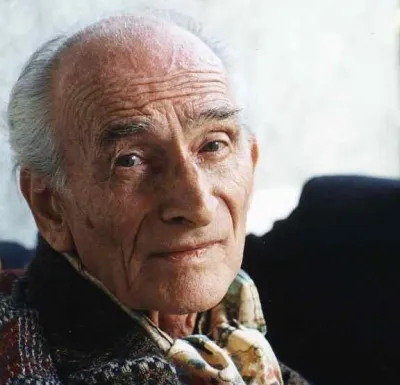
Jacques Rivette
Human Design Chart
Biography
The Human Design of Jacques Rivette: Manifesting Generator 6/2
Manifesting Generator 6/2 — Design at a Glance
Jacques Rivette revealed himself as someone who possessed a hybrid energy structure: He had the constant power of a Generator combined with the ability of a Manifestor to accelerate processes. His design suggested that he could quickly pull things into his life by skipping steps when acting. However, this speed was a double-edged sword. Often, his impulses were too rapid, causing important intermediate steps to be missed and forcing him to return later to fill in gaps. This led quickly to frustration, his specific Non-Self theme. Additionally, Jacques Rivette tended to pursue multiple projects simultaneously, driven by many different impulses. Without strict adherence to his strategy – reacting to life before acting – this creative drive easily tipped into overwhelm. Success and deep satisfaction came for him only when he ensured that his Sacral Center gave a clear "yes" at every step. In this state, the Manifesting Generator falls into a Play Mode where variety and parallel work are not seen as distractions but rather as sources of his vital creative power. The discipline to regularly check whether inner agreement still existed was crucial for him to productively harness his unique dynamism instead of getting lost in the chaos of his own speed.
Emotional Authority
Jacques Rivette was influenced by an emotional wave that significantly shaped his perception and decision-making. His design featured emotional authority in the defined Emotional Center. This mechanism held true regardless of other definitions in the graphic: When the Emotional Center was activated, it dictated inner guidance. The world always appeared colored by his current mood state. Enthusiasm could quickly turn into negative evaluation; an initial impression was often just a snapshot, not yet the final truth. Quick, spontaneous decisions made from such emotion proved risky and potentially harmful to him.
Instead, his configuration required patience. Jacques Rivette had to allow time for feelings to settle and emotional distance to develop. Only after multiple reconsiderations or sleeping on an issue did clarity and calmness set in. This process was essential for long-term decisions with significant consequences. Only through this delay could he recognize the deeper, more comprehensive truth rather than being guided by transient mood swings. The necessity of taking his time and asking repeatedly formed the core of his strategic approach to important life crossroads.
The 6/2 Profile — Role Model / Hermit
Jacques Rivette's Human Design profile suggests a tendency towards experimental learning during his youth, followed by an intense phase of distance and reflection. As a 6/2 Profile ("Role Model / Natural Talent"), the energy of Line 3 influenced him before Saturn's return, roughly until around age thirty. This period encouraged trial and error as driving principles; Jacques Rivette gathered diverse life experiences to find his direction. The activation of Line 6 emphasized moving from the family environment into the collective sphere and seeking a meaning in life that transcended material concerns.
After turning thirty, Line 6 became fully active. Metaphorically speaking, Jacques Rivette retreated into a "cave" to reflect deeply on his earlier experiments with great distance. This period served for healing and profound self-awareness. At the same time, the qualities of Line 2 shaped his behavior: self-control, calmness, and maintaining a steady internal rhythm helped him conserve energy and maintain inner peace. He adhered to strong patterns to avoid stagnation.
When the time was ripe, Jacques Rivette emerged from this reflective phase as a wise person. Others recognized his life wisdom and came to him to learn from his deep introspective abilities. His projects aimed at supporting people in recognizing their own purpose, with an appreciation for familial values through Venus in Gate 37 playing a role. Thus, his early uncertainty transformed into a stable authority that served as a role model for others.
Split Definition — Defined & Open Centers
Jacques Rivette revealed himself as someone who spoke his truth with ease and clarity. His defined Throat Center acted as a focal point for messages that came from various inner sources and became communication or action in the world. This consistent way of expressing shaped his work.
His energy source lay in his defined Sacral Center. As a Generator, he had an enormous reserve of power that felt like a constant hum. What was important to him was not initiating but waiting for questions or offers before responding with a yes or no answer. Only this way did the full vital energy become available; if he initiated himself, he interrupted this connection and risked frustration.
This process was supported by his defined Heart Center, which gave him willpower. He liked to determine his life himself, keep promises, and seek recognition for his contribution. His self-assured presentations strengthened this center, while suppressing his ego energy would have been harmful.
He did not make emotional decisions impulsively but let his defined Solar Plexus Center guide him. This center functioned as an inner authority that required patience. He waited out the ups and downs of the emotional wave before acting to achieve emotional clarity. Spontaneous judgments in the moment he left to his defined Spleen Center, responsible for intuition and well-being.
At the same time, Jacques Rivette was vulnerable to external influences in his open centers. His open Head Center tended to take on mental inspiration or pressure from the environment, which could lead to confusion if he did not use his inner authority. Similarly, his open Ajna Center made him susceptible to foreign concepts and opinions that he used as mirrors rather than identifying them as his own truth.
His open G Center meant he had no fixed identity or direction but found these through interaction with the environment and the right places. False environments led to a feeling of being lost in him. Additionally, his open Root Center absorbed stress from the environment, making him vulnerable to external pressure that he did not generate himself.
Channels for community, caring values and emotional change.
Jacques Rivette's design showed a tendency towards careful preservation of values and structures. The Conservation Channel 27-50 connected his Sacral Center with his Spleen Center, giving him a selfless interest in others paired with the ability to uphold traditional laws. This configuration created layers of protection and nurturing necessary to keep his tribe and its creative ventures alive. His aura automatically attracted trust; people sought support from him. Yet this capacity for provision required clear boundaries: Only through his own sacral reaction did he know if it was correct to give energy out. Without this inner confirmation, overloading threatened as he was prone to taking on too much responsibility.
Parallel to this, there was a restless search for new experiences. The Transience Channel 36-35 connected his Solar Plexus Center with his Throat Center and drove him to experience emotionally charged situations to gain wisdom. Gate 36 perceived inexperience as inadequacy, often leading him to provoke crises just to set things in motion. This channel resisted restrictive patterns and sought adventures that expanded the gene pool. His emotional wave determined the pace; he had to wait until his feelings were clear before fully committing to an undertaking.
A third aspect was his need for community and fair agreements. The Community Channel 37-40 connected Solar Plexus with Heart Center. Here it was about building bridges between individuals based on mutual recognition and willpower. He waited for the right invitation to become part of an organization and sought his place in the whole. This connection could not be made spontaneously but required time to benefit both sides.
Additionally, Gates like 5 (Rhythm), 9 (Detail Work) and 14 (Gaining Power with Grace) influenced his energy setup. They promoted the perfection of patterns through repeated experiments and helped him handle power gracefully. Gate 30 in the Personality part reflected also the recognition of feelings and acceptance of limitations as fate, deepening his emotional journey.
Tribal Circuitry — Circuit Signature
Jacques Rivette's design showed a tendency towards emotional reflection. He appeared as someone who drew meaning from past experiences and shared this with others. The Meaning-Finding Circuit connected his Throat and Solar Plexus Centers via the Transience Channel in him. This created wave-like emotional cycles: feelings rose, peaked, and ebbed again. The goal was to learn together from the past through communication.
Parallel to this, another force worked: community building. The Ego Circuit connected Heart and Solar Plexus Centers via the Community Channel. Here it was about reciprocal support – 'today I give, tomorrow you give'. As there was no direct connection to his Sacral Center, Jacques Rivette needed rest periods for resource regeneration for this cooperative dynamic.
A third aspect concerned the protection of oneself. The Protecting Circuit connected his Sacral and Spleen Centers via the Conservation Channel. This reflected instinctive care and preservation rooted in ancient survival energies of family and genetics.
These three circuits formed separate parts of Jacques Rivette's energetic landscape. The connection between Throat and Solar Plexus as well as Heart and Solar Plexus formed a group, while the connection from Sacral to Spleen stood isolated beside it. Thus, alongside his ability for emotional meaning-seeking in community existed an independent instinctive protective function. None of these energies flowed directly into each other; they worked as parallel, independent forces of his character.
Left Angle Cross of Migration 1
Jacques Rivettes Human-Design trug die Signatur des linken Kreuzes des Weiterziehens. Diese Konfiguration prägte eine Grundhaltung, die sich durch Ausdauer und einen tiefen Drang zur kontinuierlichen Entwicklung auszeichnete. Das linke Kreuz des Weiterziehens beschreibt keine plötzliche Inspiration oder ein schnelles Ziel, sondern einen Prozess, der in Schritten voranschreitet. Es handelte sich um eine Energie, die bestand darin, nicht aufzugeben, auch wenn der Weg lang und oft unsichtbar war.
Diese Struktur legte nahe, dass Jacques Rivette sein Potenzial nur dann vollständig entfalten konnte, indem er den Prozess des Vorankommens selbst als Sinn sah. Nicht das schnelle Ergebnis stand im Vordergrund, sondern die Fähigkeit, Schritt für Schritt voranzugehen, Hindernisse zu umschiffen und dabei die eigene Richtung zu wahren. Das Kreuz verband verschiedene Aspekte seiner Natur zu einer kohärenten Strategie der Beharrlichkeit. Es ging darum, in Bewegung zu bleiben, ohne sich von äußeren Erwartungen oder inneren Zweifeln ablenken zu lassen.
Die Mechanik dieses Kreuzes betonte die Notwendigkeit, dem eigenen Rhythmus zu vertrauen. Jacques Rivette zeigte sich als jemand, dessen Stärke im Ausharren lag. Er musste lernen, dass das Weiterziehen kein Zeichen von Schwäche oder Prokrastination war, sondern eine aktive Strategie der Reifung. Durch diese konsequente Fortsetzung seiner Wege konnte er tiefere Einsichten gewinnen und seine einzigartigen Perspektiven entwickeln. Das linke Kreuz des Weiterziehens forderte Geduld gegenüber sich selbst und der Welt, um die volle Tiefe seiner Erfahrungen zu erschließen.
Saturn Return · Uranus Opposition · Chiron Return · 2nd Saturn Return — Life Cycles
Jacques Rivette zeigte sich in den frühen Siebzigern als jemand, der etablierte Grenzen radikal hinterfragte und mit ungewöhnlicher Ausdauer an Projekten arbeitete, die konventionelle Maßstäbe sprengten. Dies entsprach der Dynamik seiner Uranus-Opposition, einer Konstellation, die oft zu einem tiefgreifenden Bruch mit früheren Mustern führt. Sie verlangt nach individueller Freiheit und Innovation, kann aber auch innere Spannungen zwischen dem Wunsch nach Autonomie und äußeren Erwartungen erzeugen.
1971, im Alter von 43 Jahren, drehte er „Out 1: Noli me tangere“, einen extrem langen Spielfilm. Dieses Ereignis markierte den Höhepunkt dieser planetaren Phase. Die Uranus-Opposition wirkt häufig als Katalysator für kreative Explosionen, die nicht in bestehende Strukturen passen. Rivette nutzte diesen Zeitpunkt, um eine komplexe, experimentelle Vision zu verwirklichen, die seine künstlerische Unabhängigkeit unter Beweis stellte. Der Film war keine bloße Produktion, sondern Ausdruck eines notwendigen Loslösens von konventionellen Erzählformen. Die Energie dieser Opposition förderte ein tiefes Bedürfnis nach Authentizität und Originalität, selbst wenn dies mit großen Risiken verbunden war. So wurde aus der inneren Dissonanz eine kraftvolle äußere Aussage, die seine einzigartige Position im Kino festigte.
Manifesting Generator · Emotional Authority — Synthesis
Jacques Rivette war ein Manifestierender Generator (MG), dessen Leben von einer dynamischen Wechselwirkung zwischen dem Drang zur schnellen Initiierung und der Notwendigkeit emotionaler Reifung geprägt war. Die definierte sakrale Energie (Sacral Center) lieferte eine konstante Antriebskraft, die durch die Verbindung zum Throat Center (Kommunikation und Manifestation) in rasche Aktionen umgesetzt werden konnte – ein Muster, das sich beispielsweise in der Produktion von umfangreichen Filmen zeigte. Doch diese Geschwindigkeit erforderte stets eine Rückkehr zu tieferer Betrachtung, da das Überspringen wichtiger Schritte (Design-Auszug) korrigiert werden musste. Das Profil als Rollenvorbild und Naturtalent deutet darauf hin, dass er durch eigene Erfahrungen Weisheit sammelte, die er später teilte.
Ein zentrales Paradox in Jacques Rivettes Design lag im Zusammenspiel von emotionaler Autorität (Emotionale Autorität) und der Manifestierer-Komponente seines Typs. Er benötigte Zeit, um Entscheidungen reifen zu lassen und Gefühle zu durchleben (Sinnfinden-Schaltkreis), doch gleichzeitig besaß er die Fähigkeit, Dinge schnell anzustoßen. Diese Spannung zwischen dem zyklischen, emotionalen Prozess des Wahrnehmens und der potenziellen Impulsivität des Manifestierers prägte seine Arbeitsweise und offenbarte sich in Phasen intensiver Arbeit, gefolgt von Zeiten der Reflexion – ein Muster, das durch den Uranus-Opposition-Zyklus im Jahr 1971 belegt wird.
3 Defined Channels
Incarnation Cross - Left Angle Cross of Migration 1
Solar Return
The Solar Return shows the moment when the sun returns to its exact birth position - your personal solar year.
Life Cycles
Discover the life cycles with a detailed triple view (birth chart, cycle chart, composite).
Human Design Profile
- Strategy
- To respond - wait for something to respond to
- Authority
- Emotional Authority
- Profile
- 6/2 - Role Model / Hermit
- Definition
- Split Definition
- Incarnation Cross
- Left Angle Cross of Migration 1
- Date of Birth
- 01.03.1928 12:00
- Place of Birth
- Rouen, France
Frequently Asked Questions
What was Jacques Rivette's Human Design type?
What profile did Jacques Rivette have in Human Design?
Which authority determined Jacques Rivette's decisions?
What incarnation cross did Jacques Rivette carry?
When was Jacques Rivette born?
Discover your own Human Design
Are you also a Manifesting Generator? Find out in a personal reading how to unfold your multi-talents and direct your energy wisely.
More Personalities
Back to overviewAldair

Alizée

Angeli

Arletty

Artus

Balthus