
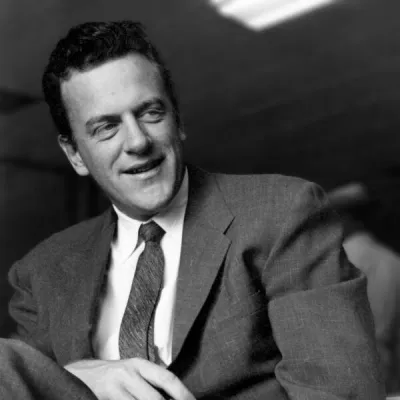
James Arness
Human Design Chart
Biography
As a youngster, Arness left home at age 17. He worked on a freighter, was a radio announcer, sang in the streets for money, worked on road construction and even became a part-time bum living out of an old car. He served in the Army in World War II, from 1943-1945, spending his last year in a hospital after being wounded in the Third Infantry in Italy.
After the war, he enrolled at the University of Minnesota, where he was bitten by the acting bug. While at school, he worked as a substitute radio announcer at station WLOL. The cold winters of Minnesota aggravated Arness' wounded leg, so he packed up and left with a pal for sunny California. He soon landed a small role in a little theatre production. Arness was spotted by an agent who put him to work in the movie The Farmer's Daughter..
Not ready to grow up and meet success head on, he took off down the California-Mexico coast, living out of his car and adventuring. Back to Hollywood, he again worked at odd jobs, construction and real estate as he tried out for film roles.
His movie break came in 1951 with a classic horror flick that put his 2.01 m (6 ft 7 in) size to use, as he played the title role in The Thing. His rugged good looks got him a contract with John Wayne's production company and the two men became friends. In 1955, Wayne turned down the role of Matt Dillon in Gunsmoke, recommending Arness for the role. The show was a beloved hit for 20 years.
Arness was married from 1948-1963 and had three kids. He was married for the second time in 1978 to 32-year old Janet Surtees.
What does Manifesting Generator 5/1 mean for James Arness?
Manifesting Generator 5/1 — Design at a Glance
James Arness revealed himself as someone who possessed an uncommon combination of constant inner strength and lightning-fast execution. His design conveyed the ability to shorten processes and achieve results with a speed that pure generators often could not match. Yet this quickness was no free-for-all, but rather existed in a constant tension field with the necessity for reaction.
As a Manifesting Generator, he had a steady stream of sacral energy. This provided him with a foundation of endurance and vitality, yet required the strategy of waiting for external impulses. He should not initiate from himself but respond to life. Only when his inner center reacted with a clear
Emotional Authority
was the path open for action.
The challenge lay in balancing his natural urgency with this wait time. If he acted too quickly or started multiple projects simultaneously without internal consent, he risked frustration as important steps were skipped. Conversely, opening up to a state of deeper satisfaction and playful flow became possible once he combined reaction to impulses with his characteristic efficiency. In this mode, his ability to draw things into his life quickly was no longer an obstacle but a source of great fulfillment and creative freedom.
The 5/1 Profile — Heretic / Investigator
James Arness possessed emotional authority, meaning that his defined Emotional Center carried his inner decision-making process. This was the case regardless of which other centers were also defined in his design; emotional authority always took precedence. His internal compass operated on a perpetual cycle of emotional waves – phases of ascent and descent. The world appeared to him colored by this current mood: In one moment, he could be enthusiastic about something, only to see it completely negatively the next.
This feeling in the moment was however just a snapshot, a first impression that did not necessarily represent his truth yet. Quick, spontaneous decisions made directly from such an emotion could therefore have very negative consequences. To gain clarity and avoid these negative effects, James Arness needed time delay. The more time he took to let a decision mature, the deeper and more comprehensive he could perceive the situation.
This process required patience and multiple
Single Definition — Defined & Open Centers
James Arness had a massive, defined energy base through his Sacral Center, which gave him constant life force and the strategy of reaction. Combined with defined willpower in the Heart Center and expression ability in the Throat Center, he possessed a strong foundation for implementing intentions. His emotional authority lay in the Solar Plexus Center; this required waiting out emotional waves for clarity instead of impulsive action. The intuitive Spleen Center protected him in the moment through spontaneous perception.
This configuration showed a motor with high capacity to implement will through speech or deed, but strictly had to wait on external stimuli. Emotional depth served as a filter for decisions, not an impulse source. At the same time, his open centers – G Center, Head, Ajna, and Root Centers – indicated situational identity, mental flexibility, and the uptake of stress from the environment.
The open G Center implied that James Arness did not carry a fixed internal identity but rather reflected this through environment and relationships. He tended to question who he was or which direction was correct instead of knowing it internally. The open Head and Ajna Centers gave him a flexible mind open to inspiration, but vulnerable to mental pressure and confusion from the outside world. He had to learn not to accept every thought or question as his own truth.
The open Root Center absorbed adrenalized stress from the environment. James Arness was conditioned to strengthen this foreign pressure and try to release it through hyperactivity, which could lead to an endless cycle if he did not recognize that this pressure did not belong to him. The wisdom of his mechanism lay in distinguishing between healthy and unhealthy external pressure and not being driven by the need to constantly achieve or accomplish something. His strength was reliable energy upon correct reaction; his challenge was not taking on the identity and stress of others as his own.
Channel 16-48: The Wavelength — Channels & Gates
James Arness revealed himself as someone who radiated a charismatic presence, driven by a deep, intuitive truth. His design tended to act in the moment and inspire others, while he had to wait on his own internal reaction to direct energy correctly.
This dynamic was shaped by the Channel of Charisma 34-20. It connected the Sacral Center with the Throat Center, translating raw physiological energy into an expression in the now. This required patience: The generative power could not break out impulsively but had to respond to external stimuli to work correctly. At the same time, the Channel of Brainwave 57-20 gave him a penetrating self-awareness. Intuitive insight from the Spleen Center flowed directly to the Throat, enabling the ability to articulate existential knowledge in the moment – the consciousness “I know that I am living now.”
Additionally, the Channel of Frequency 48-16 shaped his development. Here intuitive depth connected with perfecting skill through repeated practice. James Arness used this combination to sharpen talents and communicate them as a unique expression form.
In interpersonal interactions, the Channel of Openness 22-12 worked. It linked the emotional wave of Solar Plexus to articulation in the Throat Center. His social interaction depended on his mood; he was open and warm when his mood matched, allowing him to emotionally touch listeners and act as a catalyst for change. The Channel of Community 37-40 rounded out his profile by connecting emotional clarity with willpower. This promoted a need for fair agreements and loyal bonds within a group, waiting on the right invitation to find his place in the whole.
Individual Circuitry — Circuit Signature
James Arness revealed himself as someone who articulated new insights here and now. His design connected the Throat Center with Solar Plexus and Spleen (Knowledge Circuit). This allowed him to translate intuitive flashes of insight (Channel 20-57) as well as an open attitude (Channel 12-22) into pulsating, acoustic expression forms. He thereby created individual identity and set off emotional waves that heralded change.
Parallel to this, the Understanding Circuit worked through Channel 16-48 between Throat and Spleen Centers. Here it was about sharing focused, rational strategies for the future, free of emotional coloring. This visual, logical clarity stood alongside his intuitive creativity as an independent force.
In the Ego Circuit, he connected Heart and Solar Plexus Centers through Channel 37-40 (Community). This promoted a balanced relationship of giving and taking within a group, supported by traditional values and mutual support, without direct connection to the constant life force of the Sacral Center.
Furthermore, he integrated power through the Integration Circuit. Channels 20-34 (Charisma) and 34-57 (Power) linked Throat, Sacral, and Spleen Centers. James Arness reacted to life, channeled this energy through correct behavior and intuitive knowledge, making it effective in the now. This mechanism strengthened his highest individuality and secured his survival through direct, charismatic presence. All these centers formed a single, coherent energetic group within him.
Left Angle Cross of Duality 1
James Arness carried the left cross of duality, a configuration that aligned his deepest motivation with reconciling seemingly irreconcilable opposites. His design suggested he did not seek simple answers but rather how opposing forces could be united into a new wholeness. This archetypal essence defined his life pattern as an ongoing process of integrating polarities. It was not about moral judgments like good or evil, but the fundamental experience that true unity only arises when one faces the tensions between light and darkness. James Arness was marked by this structure: The task was to acknowledge duality rather than deny it. His chart indicated he learned to see contradictions as a necessary part of a greater whole. This mechanism shaped his inner stance; he sought ways for extremes to complement each other instead of excluding one another. The union of these poles was the key to inner balance in his design. He lived with the awareness – consciously or unconsciously – that true strength comes from holding opposites and ultimately connecting them. This was not a passive acceptance but an active engagement with the complexity of existence, where synthesis from different extremes became the goal.
Saturn Return · Uranus Opposition · Chiron Return · 2nd Saturn Return — Life Cycles
In 1975, at age 52, James Arness faced a profound identity question: He ended his long-standing role as Marshal Matt Dillon in “Gunsmoke.” This step marked the Chiron Return, a cycle of fulfillment and bloom. During this period, one’s incarnation cross unfolds increasingly if they follow their strategy and authority. Meaning and purpose become experiential not through healing old wounds but through the realization of inner design. For James Arness, this moment was not a crisis in the negative sense but a necessary turning point. The long-term portrayal of a character had fulfilled its function; now it was time to live beyond that role as his true self. The Chiron Return demands integrating past life experiences into a coherent whole. James Arness showed himself ready to let go of old structures to honor his true design. This process is not an end but a deepening of self-understanding. Ending the series expressed this inner development, allowing him to live out new facets of his personality that had previously been overshadowed by the role. The Chiron Return thus confirms the path towards a more authentic existence where one’s potential fully comes into play.
Manifesting Generator · Emotional Authority — Synthesis
James Arness’ life was marked by a profound inner dynamic, manifesting in his ability to act both quickly and impulsively as well as dwell deeply in emotions. This combination of sacral energy and emotional authority led him to react immediately to external stimuli while simultaneously feeling an internal need to let decisions mature and fully explore the range of his feelings. He moved between the urge for immediate manifestation and the wisdom of finding clarity within the emotional wave – a dance that shaped his actions and gave them unique intensity. His strength lay in intuitively recognizing the right opportunities and filling them with powerful energy as long as they aligned with his inner truth.
Central to James Arness’ design was the tension between his need for autonomy and the ability to deeply empathize with others. He possessed a pronounced individuality and strong self-confidence, yet he was also open to the energies of his environment and could intensely perceive their vibrations. This openness made him vulnerable but also enabled him to adapt effortlessly to different situations and build deep connections with other people. He navigated between the desire for independence and the longing for community, a paradox that distinguished his personality and made him an authentic individual.
6 Defined Channels
Incarnation Cross - Left Angle Cross of Duality 1
Solar Return
The Solar Return shows the moment when the sun returns to its exact birth position - your personal solar year.
Life Cycles
Discover the life cycles with a detailed triple view (birth chart, cycle chart, composite).
Human Design Profile
- Strategy
- To respond - wait for something to respond to
- Authority
- Emotional Authority
- Profile
- 5/1 - Heretic / Investigator
- Definition
- Single Definition
- Incarnation Cross
- Left Angle Cross of Duality 1
- Date of Birth
- 26.05.1923 01:26
- Place of Birth
- Minneapolis, MN, United States
Frequently Asked Questions
What was James Arness' Human Design type?
What Profile did James Arness have in Human Design?
What Authority did James Arness have?
What incarnation cross did James Arness have?
When was James Arness born?
Discover your own Human Design
Are you also a Manifesting Generator? Find out in a personal reading how to unfold your multi-talents and direct your energy wisely.
More Personalities
Back to overviewSissy Spacek

Aldair

Alizée

Anémone

Angeli

Ann-Margret
