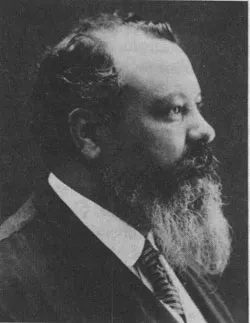
James Cronin
Human Design Chart
Biography
He and co-researcher Val Logsdon Fitch were awarded the 1980 Nobel Prize in Physics for a 1964 experiment that proved that certain subatomic reactions do not adhere to fundamental symmetry principles. Specifically, they proved, by examining the decay of kaons, that a reaction run in reverse does not merely retrace the path of the original reaction, which showed that the interactions of subatomic particles are not indifferent to time reversal. Thus the phenomenon of CP violation was discovered.
Cronin received the Ernest Orlando Lawrence Award in 1976 for major experimental contributions to particle physics including fundamental work on weak interactions culminating in the discovery of asymmetry under time reversal. In 1999, he was awarded the National Medal of Science.
Cronin was Professor Emeritus at the University of Chicago and a spokesperson emeritus for the Auger project. Cronin was a member of the Board of Sponsors of the Bulletin of the Atomic Scientists.
He died 25 August 2016.
James Cronin — Manifestor with Profile 2/5
Manifestor 2/5 — Design at a Glance
James Cronin was a Manifestor, a type designed to be a pioneer and visionary, leading the world into a new future. His design resembled an emperor in ancient Rome: He had the vision of a great whole but did not lead the necessary wars and battles himself. Instead, he sent others to conquer foreign lands for him. This role often put him in conflict with his surroundings, as his big dreams did not appeal to everyone. He polarized strongly; some loved and followed him for his visions, while others disliked or even hated him because of his huge goals. A central pain point was that he was misunderstood because he often thought ahead of his peers. To ensure the right followers found him, it was crucial that he informed others about his plans in a timely and precise manner. This was his ideal strategy. If James Cronin followed this strategy of informing others and his inner authority, he was rewarded with a sense of inner peace. If he lived against his design, he likely felt a persistent, deep anger within. His path was marked by the tension between leading from vision and the necessity to clearly communicate this vision to minimize resistance and gain support.
Splenic Authority
James Cronin's design inclined towards spontaneous, instinct-driven orientation. His inner authority lay in the Spleen, a center that functions as a health and alarm system. For this authority to be effective, his Emotional and Sacral centers were open – a configuration seen only in Projectors or Manifestors.
This structure endowed him with a pronounced survival intelligence. His inner knowledge did not manifest as a slow reflection but as a spontaneous signal indicating whether a situation, environment, or society was healthy for him. This first impulse served as a reliable compass for his physical well-being and enabled him to rigorously shield himself from harmful influences.
Since this Spleen impulse was subtle and only present in the moment, his decision-making required high vigilance. External influences could easily overshadow these subtle signals, making it useful to seek clarity through retreats. Because he only knew what was right in the moment, his plans often changed at the last minute. This made long-term commitments difficult; instead, he preferred flexibility and freedom to adapt spontaneously to what seemed fitting.
The 2/5 Profile — Hermit / Heretic
James Cronin's design inclined towards...: He navigated between a deep need for withdrawal and the external pressure to act as a problem solver. His Profile 2/5, the 'Natural Talent / Hero and Savior', shaped this dynamic. Line 5 attracted others seeking answers and help, while Line 2, the 'Hermit Line', compelled him to withdraw to gain clarity. This created a tension: He had to carefully weigh where to invest his energy to avoid losing himself.
This structure required him to strategically use his 'alone time'. In silence, he could look inward and decide when and for whom he wanted to solve problems. Gate 18 on Line 2 emphasized the need for correction, paired with the realization that some situations were uncorrectable. Acceptance became spiritual renewal, rather than fighting against the wind. Simultaneously, Gate 52 on Line 5 allowed him to maintain focus during phases of inactivity. In crisis times, he showed the strength to hold back and act only when necessary. His statements thus became precise and effective in the collective, rather than falling into enigmatic complexity. James Cronin lived this balance by using his isolation to offer clear, targeted support later, without sacrificing himself.
Split Definition — Defined & Open Centers
James Cronin's Human Design profile indicates a tendency towards constant mental pressure, paired with a clear, willful orientation towards the material world. His defined Head and Ajna Centers created a steady internal drive to question and form concepts, yet he lacked the direct energy to implement these ideas. This mental process culminated in his defined Throat Center, which served as a reliable channel to clearly communicate these thoughts and theories. Supported by his defined Heart Center, he possessed a firm willpower to keep promises and maintain his authority in the material realm. Additionally, his defined Spleen Center provided an intuitive, momentary perception of well-being and survival instinct, while his defined Root Center supplied the necessary adrenergic pressure to move forward and master existential challenges.
In contrast, James Cronin's open Centers showed him as someone strongly influenced by his environment. His open G Center meant that he did not carry a fixed, unchanging identity but rather blended with the energy around him. This led him to question whether he was in the right place or who he really was when the environment did not match. His open Sacral Center made him vulnerable to the energy of others; he could easily be overwhelmed when trying to keep up with the generative power of others and had to learn to respect his own limits rather than exhausting himself with borrowed energy. Finally, his open Solar Plexus absorbed the emotions of his surroundings, leading him to feel foreign moods and emotions as his own and to feel emotionally unsettled if he did not consciously take a step back to calm down.
Channels for logical clarity, awareness and powerful execution.
James Cronin's mental architecture was based on precise logic and inner clarity. His design combined the ability to visualize complex patterns with the urge to translate them into understandable language. The Acceptance Channel 17-62 ensured that he not only absorbed information but organized it into a coherent mental system. What he could not logically categorize remained incomprehensible to him; this created a strict but effective filter for his understanding of the world.
Parallel to this, the Judgment Channel 58-18 acted as an internal watchman. It drove an insatiable impulse to question and correct existing patterns. This mechanism constantly sought what was out of balance to ensure perfection and efficiency. It was not mere criticism but a deep instinct to examine life and the environment for their functionality and health.
In the realm of will and material structure, the Money Line Channel 21-45 and the Awareness Channel 24-61 shaped him. The former linked the drive for control and responsibility with the need to manage resources. James Cronin sought independence to maintain his natural rhythm and understood success as a result of willpower and strategic leadership. The latter brought forth spontaneous, intuitive insights. His mind was designed to process sudden moments of knowledge that broke old patterns of thought. This combination of hard logic, corrective judgment, and intuitive awareness formed a mind that was both analytically sharp and open to deeper, unexpected truths.
Collective Circuitry — Circuit Signature
James Cronin's design sets a tendency towards clear, structured communication based on logical analysis. As a person with split definition, his energy consisted of two separate, not directly connected blocks. The first block connected the Ajna and Throat Centers (Understanding Circuit) as well as the Heart and Throat Centers (Ego Circuit). This created a continuous flow of thoughts through the speech center to willpower. He could articulate rational insights (Channel 17-62) and material resources (Channel 21-45) directly into words with authority. The second, isolated block included Spleen and Root Centers (Understanding Circuit), fostering an intuitive, survival-necessary awareness that did not blend with his mental or communicative energy. Additionally, the Knowledge Circuit showed a connection between Head and Ajna Centers (Channel 24-61). This gave him the ability to generate innovative flashes of insight and new perspectives. This creativity flowed into his analytical processes but did not directly support his emotional or physical action capability. The separation of the groups meant that his intellectual clarity and will on one hand and his intuitive security on the other hand worked as parallel, independent forces without forming a single, unified energy flow.
Right Angle Cross of Service 3
James Cronin's Human Design reveals a specific orientation: the right Service Cross. This configuration establishes an internal structure that does not aim for dominant action or forcing solutions but rather supports a serving function within larger contexts. In Human Design, this cross is characterized by patience, persistence, and the ability to give others space and stabilize processes from the side without needing to be in the spotlight.
For James Cronin, this meant that his natural path was to act as a reliable support. His energy was directed towards fulfilling the needs of others and carrying systems through unobtrusive presence. It was not passive submission but an active, yet quiet form of support that trusted that true impact arises through service and dedication, not through control. This orientation shaped his interactions and how he positioned himself in groups or partnerships, focusing on the welfare of the whole rather than putting his own ambitions first.
Saturn Return · Uranus Opposition · Chiron Return · 2nd Saturn Return — Life Cycles
James Cronin's Human Design shows a tendency towards deep inner reflection that crystallized into a clear affirmation of his essence in later life phases. He was someone who directed his energy not through external pressure but through a quiet, consistent focus on the essential. This attitude became visible in 1980, at the age of 49, when he received the Nobel Prize in Physics. This marked his Chiron Return, a cyclical transition in Human Design mechanics that is considered a phase of fulfillment and blooming. Between the ages of 49 and 51, the individual's Incarnation Cross increasingly unfolds in life, provided the person has lived according to their strategy and authority before. The Nobel Prize was not a mere coincidence but an expression of this inner maturity: what James Cronin had sought and researched throughout his life now found its external confirmation. It was a moment when meaning and purpose became tangible, not as healing of old wounds but as the culmination of a long journey of self-discovery. His work condensed into a robust result that carried his inner truth outward. This cycle underscores the importance of trusting one's rhythm so that the potential of the design can naturally unfold without coercion or haste.
Manifestor · Splenic Authority — Synthesis
James Cronin was a Manifestor whose life was marked by an inner drive towards initiation and a deep need for autonomy. His defined Head Center (with the Acceptance Channel) generated a persistent mental pressure to recognize patterns and transform knowledge – a capability enhanced by the Knowledge Circuit, making him a pioneer of new insights. The authority in the Spleen Center fostered a pronounced instinctual understanding that helped him navigate complex situations and make decisions in alignment with his inner well-being. This interplay of visionary power, intuitive insight, and the need for solitude shaped his path.
Simultaneously, his Profile (2/5) revealed a central paradox: he was both a withdrawn hermit seeking time for inner reflection and a hero and savior expected to provide solutions in times of trouble. This tension between the desire for autonomy and the role of the sought-after one, bearing responsibility for others, created a dynamic field in which he constantly balanced giving and taking, inspiring and retreating. A notable event, the receipt of a Nobel Prize, demonstrated how his unique perspective and knowledge were recognized.
4 Defined Channels
Incarnation Cross - Right Angle Cross of Service 3
Solar Return
The Solar Return shows the moment when the sun returns to its exact birth position - your personal solar year.
Life Cycles
Discover the life cycles with a detailed triple view (birth chart, cycle chart, composite).
Human Design Profile
- Type
- Manifestor
- Strategy
- To inform others before acting
- Authority
- Splenic Authority
- Profile
- 2/5 - Hermit / Heretic
- Definition
- Split Definition
- Incarnation Cross
- Right Angle Cross of Service 3
- Date of Birth
- 29.09.1931 12:42
- Place of Birth
- Chicago, IL, United States
Frequently Asked Questions
What is James Cronin's Human Design type?
What Profiles did James Cronin have?
What Authority did James Cronin have?
What incarnation cross did James Cronin have?
When was James Cronin born?
Discover your own Human Design
Are you also a Manifestor? Find out in a personal reading how to use your initiation power peacefully and dissolve resistance.
More Personalities
Back to overviewChristian-Jaque
Kesha

Lucebert
Masaccio

Nadar
Papus