
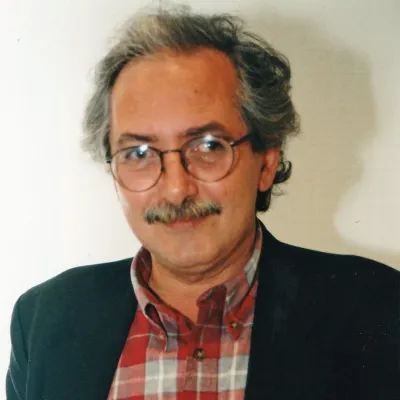
Jean-Claude Izzo
Human Design Chart
Biography
He died in Marseille on 26 January 2000.
Human Design Analysis: Jean-Claude Izzo as Projector 1/3
Projector 1/3 — Design at a Glance
Jean-Claude Izzo appeared as someone who had an intense, focused aura, comparable to a bright flashlight illuminating weaknesses in his surroundings. His design as a Projector enabled him to immediately recognize where systems or relationships were lacking. However, this direct perception could quickly become uncomfortable if used without invitation – similar to a light beam shining directly into someone's face.
The mechanics of his design suggested that he was not driven by constant, intrinsic life energy, as his Sacral Center remained undefined. Instead, he experienced phases of high activity followed by necessary rest periods to avoid exhaustion. The best strategy for him was to wait for an honest and respectful invitation from others. Rather than imposing his observations, he was most effective by simply 'shining' – attracting others by his own harmonious presence, leading them to seek his advice.
If Jean-Claude Izzo lived by this principle, he was rewarded with success. Ignoring this dynamic and acting without invitation led to his non-self theme: Bitterness. His path was to take the lead, but only when asked.
Splenic Authority
Jean-Claude Izzo made decisions not through prolonged deliberation but through an immediate, physical impulse. His design placed authority in the Spleen, which required a specific internal structure: both the Emotional and the Sacral Centers were open. This configuration allowed him a pronounced survival intelligence, manifesting as spontaneous inner knowledge about whether a situation or environment was healthy and right for him.
His intuition and physical well-being served as reliable indicators. The first impulse was crucial, as it directly served the protection of his health and helped him rigorously shield himself against harmful influences. However, this Spleen impulse was subtle and occurred only once in the present moment. It could easily be drowned out by other voices, requiring high vigilance from Jean-Claude Izzo. Sometimes a brief retreat was necessary to clearly hear this fine signal tone.
Since knowledge of the right course of action was always available only in the moment, his plans often underwent short-term changes. Long-term commitments were difficult for this design; instead, he preferred spontaneity and reserved himself much freedom and flexibility in his life to follow the changing inner compass.
The 1/3 Profile — Investigator / Martyr
Jean-Claude Izzo was someone who not only gathered knowledge but also validated it through rigorous practical testing. His design as a 1/3 Profile, that of the Investigator and Experimenter, set a life task based on the principle of trial and error. Line 1 drove him to delve deeply into subjects theoretically, often accompanied by the fear of not knowing enough to act. Yet, Line 3 challenged him to act, even without guarantees.
This dynamic created a specific kind of authority: when Jean-Claude Izzo deemed something right, he had previously tested it both intellectually and existentially. His judgment was therefore trustworthy, as it arose from failed and successful experiments. Line 3 teaches that success is often a byproduct of authentic, present action, not the result of perfect planning. At the same time, he had to endure the shocks and failures that came with this process. Line 1 also brought the theme of duty and the danger of alienation through excessive demands. Jean-Claude Izzo learned that innocent action does not guarantee success and that true insight only emerges through confrontation with reality. His path was marked by the necessity to bridge the gap between theoretical knowledge and practical application through personal experience.
Split Definition — Defined & Open Centers
Jean-Claude Izzo had a reliable, magnetic identity. His defined G Center gave him a clear sense of his own direction and the ability to show others new paths without being dependent on their approval. This inner security allowed him to pursue his own mission, even when he did not always know the way ahead.
His willpower was strongly pronounced through his defined Heart Center. He controlled his resources himself and kept promises he made. This strengthened his self-esteem but required discipline to avoid overburdening others or setting unrealistic expectations for their capacities.
Another defining characteristic was his defined Spleen Center, which gave him a sharp instinct for health and well-being. He relied on spontaneous, intuitive judgments in the "now" that secured his survival and promoted a strong immune system. This existential sense was only active in the present moment and did not allow for rational adjustment afterward.
In contrast, his Head Center was open. He tended to get stuck in mental pressure and confusion when trying to find answers to questions that did not originate with him. Instead of being led by this intellectual engagement, it was crucial for him to remain a detached observer of his thoughts.
His Ajna Center was also open, giving him a flexible mind that was open to new ideas but vulnerable to interpreting others' concepts as his own truth. He had to learn not to feign an appearance of certainty where none existed.
His open Throat Center made him vulnerable to the pressure to attract attention by speaking or acting. The healthy approach was to wait for invitations rather than taking the initiative to speak up.
His open Sacral Center meant he did not have a constant vital energy. He was sensitive to the energy of others and tended to overextend himself if he did not listen to his inner authority to set boundaries.
Finally, his Solar Plexus Center was open. He absorbed and amplified the emotions of his surroundings. To remain emotionally stable, he had to learn not to personalize these feelings and regularly withdraw to release the absorbed waves.
Channels for logical clarity and spiritual pioneering.
Jean-Claude Izzo showed himself to be someone with an insatiable urge to question and perfect patterns. This attitude stemmed from the Judgment Channel 58-18, which connected the Root Center with the Spleen Center. Through the Gate of Vitality (58) and the Gate of Correction (18), an internal sentry was created that constantly checked whether what was perceived was healthy and in balance. This logical impulse drove him to cultivate the art of mastery and seek solutions that were applicable to the collective, rather than wasting energy on unwanted criticism.
Parallel to this, the Initiation Channel 51-25, connecting the Heart Center through the Gate of Shock (51) and the Gate of Self Spirit (25), was at work. Here, competitive ego energy merged with the ability to see the beauty of both the living and the non-living equally. Jean-Claude Izzo had the power to introduce others into their individualization through "shocks"—whether as a challenge or an unexpected event. However, this process was only effective when invited; otherwise, it led to bitterness. His nature was to challenge humanity to move forward and transcend boundaries, serving as a courageous example himself.
Additionally, other Gates shaped his design: Gate 15 promoted collective behavior and adaptation to natural rhythms, while Gate 10 supported survival through proper timing via complex integration processes. Gate 46 demanded full commitment in the here and now to find happiness through engagement. On the personality side, Gate 28 (risks in the present), Gate 2 (receptivity to new directions), and Gate 39 (provocation for mutation) played a role, underscoring his analytical sharpness and readiness for change. Gate 53 allowed him to pioneer new paths, while Gate 54 connected worldly success with mystical insight. Finally, Gate 52 called for concentrated pauses for pattern correction to avoid stress.
Individual Circuitry — Circuit Signature
Jean-Claude Izzo appeared as a person with a solid self-worth and strong inner convictions, which were often difficult to express in words. This attitude resulted from his Centering Circuit, which in his case specifically connected the Identity Center with the Heart Center. Through the Initiation Channel, the energy of personal identity flowed directly into willpower and self-esteem. This created a pulsating, very individual strength that reinforced him to be who he was, without needing to communicate this inner firmness outwardly through the Throat Center.
Parallel to this, there was a separate, unconnected energetic structure. The Split Definition clearly separated this inner Centering from another group of energies: the connection between the Spleen and Root Centers. This area belonged to the Understanding Circuit and activated the Channel of Judgment. Here, a focused, rational energy aimed to improve the future through logic and structure. Since the Solar Plexus Center was not involved, it was a pure, emotionless ratio. These two systems – the deep, individual Centering and the strategic, future-oriented analysis – existed alongside each other as separate forces in Jean-Claude Izzo, without directly flowing into one another. They shaped his essence as someone who was internally unshakable while simultaneously working to improve structures with a clear mind and strategic focus.
Right Angle Cross of the Vessel of Love 2
Jean-Claude Izzo carried the design of the right cross of the Vessel of Love. This configuration shaped his inner disposition through a profound, often unconscious vulnerability, coupled with the drive to transform this sensitivity into creative or emotional depth. The Vessel of Love symbolizes the ability to absorb and hold large emotional currents without immediately breaking. In the right cross, this dynamic is intensified by a specific orientation that requires a certain distance or protective shell to maintain one's integrity.
For Jean-Claude Izzo, this meant that his emotional world was not only intense but also complexly layered. He could enter deep bonds while simultaneously feeling the need to withdraw to process his own feelings. This tension between dedication and self-protection shaped his approach to relationships and conflict resolution. It was not about coldness, but about a necessary mechanism to preserve his emotional substance. His strength lay in accepting this vulnerability and using it as a source of authenticity and connection, rather than seeing it as a weakness. This created a unique balance between openness and inner reserve.
Saturn Return · Uranus Opposition · Chiron Return — Life Cycles
Jean-Claude Izzo showed himself to be someone who took a clear turn in the middle of his life to reposition himself professionally and creatively. This development aligned with the dynamics of his Uranus opposition. This cycle, which often manifests around the age of 42, brings a strong impulse for change and liberation from old structures. In 1987, at the age of 42, Izzo moved to Paris and took over the editorship of the magazine Viva. This step marked a break with the familiar and the entry into a new, more dynamic phase, driven by the inner urge to renew himself.
Later, around the age of 50, the Chiron return came into effect. This period represents the bloom and unfolding of one's incarnation purpose, provided one has followed their strategy up to that point. It is not a phase of healing, but of realization. Izzo used this energy to unfold his creative potential. In 1995, at the age of 50, his crime novel “Total Khéops” was published. This work was the visible expression of his inner maturity and the fulfillment of his specific life path. The combination of the earlier transformation phase and the later blooming period shaped his path to becoming a recognized author.
Projector · Splenic Authority — Synthesis
Jean-Claude Izzo was a projector whose life was marked by a deep drive for understanding and correction. His ability to recognize flaws in the system (Channel 58-18) and to shed light on the dark was central to his way of perceiving the world. This was combined with a pronounced inner authority in the Spleen, which gave him spontaneous knowledge about well-being and the correctness of situations. His role as a researcher and experimenter (Profile 1/3) led him to gain insights through personal experience and share them with others – a process that was strengthened by the connection between Root and Spleen centers.
A central paradox in his design lay in the tension between the need to use his own judgment and the tendency to correct others, and the necessity to pay attention to the acceptance of his environment. As a projector, he projected his knowledge onto others, yet the fine Spleen voice required a sensitive navigation in social contexts. This dynamic was evident in phases of professional departure and success, which were accompanied by a constant weighing between his own inner compass and external resonance.
2 Defined Channels
Incarnation Cross - Right Angle Cross of the Vessel of Love 2
Solar Return
The Solar Return shows the moment when the sun returns to its exact birth position - your personal solar year.
Life Cycles
Discover the life cycles with a detailed triple view (birth chart, cycle chart, composite).
Human Design Profile
- Type
- Projector
- Strategy
- Wait for the respectful invitation
- Authority
- Splenic Authority
- Profile
- 1/3 - Investigator / Martyr
- Definition
- Split Definition
- Incarnation Cross
- Right Angle Cross of the Vessel of Love 2
- Date of Birth
- 20.06.1945 21:00
- Place of Birth
- Marseille, France
Frequently Asked Questions
What is Jean-Claude Izzo's Human Design type?
What Profile did Jean-Claude Izzo have in Human Design?
What Authority did Jean-Claude Izzo have?
What incarnation cross did Jean-Claude Izzo have?
When was Jean-Claude Izzo born?
Discover your own Human Design
Are you also a Projector? Find out in a personal reading how to unfold your leadership qualities and recognize the right invitations.
More Personalities
Back to overviewSissy Spacek

Alain-Fournier

Anémone

Angeli

Ann-Margret

Bourvil
