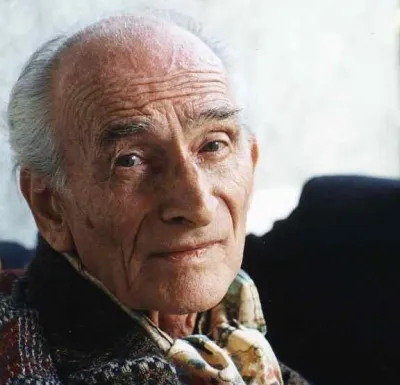
Jean Claude Killy
Human Design Chart
Biography
The son of a former Spitfire pilot for Free France who moved his family to the alpine village of Val d'Isere in 1945 and opened a ski shop, Killy learned to ski for the fun of it. "I did it because it was the only thing you could do in Val d'Isere. In 1950, there was no hockey, nothing....I had no master plan, no career plan. My ambition was applied to next week, never more than that, because we didn't have much information on the outside world."
At 19, Killy joined the French team, whose coach was impressed by his daredevil style and came to the US for the first time. Three years later he was entered in all three men's Alpine events at the 1964 Innsbruck Winter Olympics, but he fell in the downhill, lost a binding in the slalom and finished fifth in the giant slalom. The agony of defeat only made him work harder.
By age 25 he was considered the world's top skier, which he proved at the Winter Games in Grenoble in 1968, winning the downhill by 0.08 of a second followed by the easily won slalom. The result of the final event required a decision in the committee room, where Killy was moved to first place from second place on grounds of a technicality. He then went on to win the World Professional Skiing Title in 1973. Within five years, the world's top skier was a multi-millionaire from endorsements for sporting equipment.
In 1972 Killy made a film entitled "Snow Job" and subsequently married leading lady Danielle Gaubert. Danielle had recently been divorced from Rhadames Trujillo, son of the dictator of the Dominican Republic. Killy adopted her two children from the marriage and their daughter Emilie was born the following year.
What does Manifesting Generator 1/3 mean for Jean Claude Killy?
Manifesting Generator 1/3 — Design at a Glance
Jean Claude Killy's design inclined towards lightning-fast action combined with the ability to skip steps. As an Manifesting Generator, he had constant sacral energy that allowed him to quickly pull things into his life. This hybrid nature merged the endurance of a generator with the direct impact of a manifestor.
The central challenge was not to miss important processes due to excessive speed or to overwhelm himself by starting parallel projects too often. Often this speed led to attacking several things at once, which without clear inner confirmation quickly turned into frustration. His optimal expression form was the „Play Mode“. Satisfaction and creativity only arose when he responded to impulses – rather than initiating them – and confirmed his sacral center with a clear „Yes!“.
Parallelism was not a disturbance for Jean Claude Killy but an energetic need. Frustration primarily occurred if he did not follow this strategy or forced himself into linear completion. Through regular checks whether his projects were still fun and supported by his inner authority, he could draw deep satisfaction from his work. His design promoted variety; the compulsion to finish one thing before starting another was contrary to his natural energy.
Emotional Authority
Jean Claude Killy's inner compass was the defined Solar Plexus Center, which characterized his decision-making through a distinctive emotional wave. His internal authority fluctuated with feelings; the world appeared colored by his current mood. In one moment he could be totally enthusiastic, in the next negatively evaluate the same situation. This immediate feeling was only a snapshot, not a secured truth value. Spontaneous reactions from this fleeting emotion carried the risk of proving erroneous as they had yet to reach deeper clarity.
The mechanics of his emotional authority required time distance. The longer Jean Claude Killy let a decision mature, the more comprehensive became his understanding. It was necessary to muster patience and review important steps multiple times. Through this conscious delay, intense feelings gained distance. Initial restlessness gradually gave way to calmness. Only when this process was fully completed did true clarity set in. This strategy of delay served not procrastination but ensuring that decisions stood on a stable emotional foundation, especially for long-term steps with significant life impact. The emotional wave had to run its natural course before practical orientation became possible.
The 1/3 Profile — Investigator / Martyr
Jean Claude Killy's design inclined towards cyclical movement between deep theoretical learning and active experimentation often marred by errors. As a researcher and experimenter, he was in dynamic tension: Line 1 demanded resting phases for regenerating willpower, while Line 3 sought independence through self-tested talent. This configuration meant that his judgment was only trustworthy when both theoretically grounded and practically tested.
The energy of the Sun dominated with Gate 40 (Line 1), which determined the inner foundation. Here pauses were crucial; similar to moon phases or digestion, this line required rest before new work could begin. Without this rest, willpower remained weakened. Simultaneously, Gate 16 (Line 3) promoted independence without dependence on others. It was necessary to wait for the right moment until energy was available for skills.
Life revolved around integrating knowledge and experience. When Jean Claude Killy evaluated something as good, he had previously tested it both mentally and practically in his heart and guts. This double testing process – theory through Line 1, practice through trial and error of Line 3 – created a judgment authenticity based on self-earned insights.
Split Definition — Defined & Open Centers
Jean Claude Killy's design establishes a tendency for immense inner drive, fueled by five defined centers. His vital energy (Sacral) and his will (Heart) created a massive presence in action, while his identity (G Center) and emotional depth (Solar Plexus) provided direction. This configuration means: He reacted to life rather than initiating it, acted with full ego, and represented a clear personal truth. His communication (Throat) was directly sourced from these wellsprings, meaning an authentic presence. However, the defined Solar Plexus required patience; decisions had to wait for the emotional wave to find clarity.
At the same time, Jean Claude Killy was situational through four open centers and susceptible to external influences. The open Head and Ajna Centers made him receptive to mental inspiration or confusion from his environment; he tended to question whether he knew the "right" answer, even though this wasn't his own truth. The open Spleen Center drew spontaneous, intuitive impulses that could be risky since they were absorbed by others – a pattern that led him to feel insecure or seek security from others. Additionally, the open Root Center absorbed external stress and adrenaline; he could find himself under pressure to act faster than his inner authority allowed, which could lead to overload.
The tension lay in using his powerful will and vital energy without being overwhelmed by mental pressure or external stress. His strength showed in waiting for the emotional wave before setting his manifestation into motion, and recognizing that mental ideas or spontaneous fears did not represent his own center.
Channels for community, leadership, reflection and discovery.
Jean Claude Killy's Design indicated a tendency towards collective, logical leadership that relied less on authoritarian enforcement and more on shared patterns and the trust of the community. This attitude was shaped by the Alpha Animal 7-31: Gate 7 (Role of Self) provided the strategic logic for analyzing societal trends, while Gate 31 (Leading) had the voice to articulate these insights. Crucial to this approach was the mechanism of invitation; Jean Claude Killy could only effectively exercise his leadership role when he was recognized and invited by the majority to show the way. This was a form of leadership through influence within an existing pack, not isolated rule.
Parallel to this, there was a strong need for reflective distance before communication, driven by the Lost Son 13-33. Here, Gate 13 (Listener) gathered experiences and secrets, while Gate 33 (Withdrawnness) reflected on them in hindsight to uncover their deeper truths. This configuration required patience; wisdom emerged only after a cycle of experience was completed. Thus, Jean Claude Killy acted as someone who did not rush to judgment but extracted lessons only at the end of a process and then shared them with others when the timing was right.
Additionally, the Discovery 29-46 marked a profound persistence. Through the positive Yes-Saying of Gate 29 (Sacral), Jean Claude Killy remained unwaveringly connected to his direction (Gate 46), where the meaning of these paths often only became clear in retrospect. Enhanced by the Community 37-40, he sought binding agreements and his place within a larger structure, with emotional clarity taking time to establish stable partnerships or alliances. The individual gates emphasized detailed work (Gate 9) and pattern recognition (Gate 62), which strengthened logical leadership through precise factual support, while Gate 16 in collective experimentation led to mastery.
Collective Circuitry — Circuit Signature
Jean Claude Killy's Human Design profile is characterized by a tension between rational future orientation and emotional processing of the past, rooted in traditional tribal logic. As someone with split definition, his energy did not consist of a single flow but rather two parallel, non-directly connected fields.
The first field united Throat, Identity, and Sacral Centers. Here, the Understanding Circuit operated through Channel "Alpha Animal" (31-7), which articulated logical strategies for improving the future in words. Parallel to this, the Meaning Circuit flowed with Channels "Lost Son" (33-13) and "Discovery" (46-29). This circuit connected the same centers but focused on the cyclical processing of past emotions. Jean Claude Killy therefore had to navigate between an emotionless ratio for future structures and wave-like feelings from the past.
The second, separate field encompassed Heart and Solar Plexus Centers. Here, the Ego Circuit operated through Channel "Community" (37-40). This channel promoted a conservative approach to cooperation: the traditional principle of give-and-take ("Today I give, tomorrow you give"). Since this field did not have a connection to the Sacral Center, there was no constant life force. This necessitated mandatory rest periods for resource regeneration before further support could be provided to the tribe. Jean Claude Killy's experience was thus marked by these disjointed working methods: creative, emotional sharing in one field and strategic, rest-requiring giving in another.
Right Angle Cross of Planning 3
Jean Claude Killy's Human Design profile emphasized a tendency towards strategic orientation and long-term vision. He was someone who could penetrate complex situations to recognize connections beyond the immediate horizon. This ability allowed him to develop plans based on a deep understanding of circumstances, rather than just short-term reactions.
This attitude stems from the mechanics of his right cross in Planning 3. This aspect focuses on identifying the essential elements within complex entanglements and setting a clear direction. It is not about spontaneous impulses but about patiently developing strategies that are resilient. Jean Claude Killy had an inner instrument to transform uncertainties into structured action options. His strength lay in foresight and the ability to keep the big picture in view while others often saw only the next step. This characterized his approach in life areas where overview and long-term planning were crucial.
Saturn Return · Uranus Opposition · Chiron Return · 2nd Saturn Return — Life Cycles
Jean Claude Killy's Human Design profile indicated that the transition into full responsibility did not occur as a sudden rupture but rather as a conscious consolidation of his previous paths. His first Saturn return marked this turning point: a moment of reflection to determine whether his life choices aligned with his inner truth or required fundamental course corrections.
This mechanism became active in 1972, at the age of 29. Killy returned to competitive skiing for one winter season and won a professional series in North America. This event was not merely a sports success but an expression of mature confirmation of his path. The Saturn return forces confrontation with structure and durability; Killy used this moment to redefine and solidify his career. Instead of turning away from the past, he integrated his experience into a new phase of mastery. Winning the series underscored that his comeback was based on a solid foundation – one that had developed over years of groundwork and now reached maturity. It showed how the design guided him to take responsibility for his talent and unfold it in a professional framework aligned with his inner development.
Manifesting Generator · Emotional Authority — Synthesis
A central thread runs through the design: the dynamic connection between initiation and reaction. As an Manifesting Generator (MG), he possesses both the ability to quickly initiate things – a characteristic of the manifesting type – as well as sacral energy to respond to impulses. This combination, reinforced by his defined Throat Center, points to someone capable of powerfully bringing ideas and actions into the world (Channel 'The Alpha Animal'), but whose authentic path lies in being guided by inner cues. The profile as Researcher/Experimentor underscores this process of testing and refining, where self-discovered insights hold particular significance.
A central paradox lies in the tension between the drive for rapid initiation and the need for emotional clarity. Emotional authority requires time to mature decisions, while MG energy tends to rush forward and skip steps. This creates a field of tension between the desire for progress and the necessity to ensure that actions arise from deep inner conviction – a dynamic seen repeatedly in 'backtracking' after hasty moves.
4 Defined Channels
Incarnation Cross - Right Angle Cross of Planning 3
Solar Return
The Solar Return shows the moment when the sun returns to its exact birth position - your personal solar year.
Life Cycles
Discover the life cycles with a detailed triple view (birth chart, cycle chart, composite).
Human Design Profile
- Strategy
- To respond - wait for something to respond to
- Authority
- Emotional Authority
- Profile
- 1/3 - Investigator / Martyr
- Definition
- Split Definition
- Incarnation Cross
- Right Angle Cross of Planning 3
- Date of Birth
- 30.08.1943 05:10
- Place of Birth
- St.Cloud, France
Frequently Asked Questions
What is Jean Claude Killy's Human Design type?
Which Profile does Jean Claude Killy have?
What Authority does Jean Claude Killy have?
What incarnation cross does Jean Claude Killy have?
When was Jean Claude Killy born?
Discover your own Human Design
Are you also a Manifesting Generator? Find out in a personal reading how to unfold your multi-talents and direct your energy wisely.
More Personalities
Back to overviewAldair

Alizée

Angeli

Arletty
Artus

Balthus