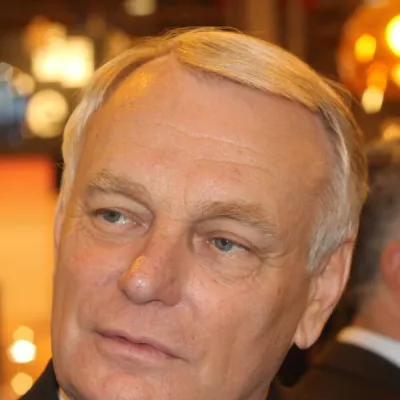
Jean Marc Ayrault
Human Design Chart
Biography
Jean Marc Ayrault — Projector with Profile 4/6
Projector 4/6 — Design at a Glance
Jean Marc Ayrault's Human Design profile is characterized by a focusing aura that immediately recognizes systemic errors. This perception acts like a bright flashlight, illuminating areas that are still in the dark or not functioning optimally around him. Instead of directly addressing these deficits – which could be perceived as aggressive or unpleasant by others – he first cultivates an agreeable presence.
The appropriate strategy is to wait for an honest and appreciative invitation before bringing his diagnostic perspective into play. Only then will his aura be seen as helpful rather than oppressive, protecting him from the typical projector trap: acting without invitations often results in resistance from others and bitterness within himself.
Furthermore, Jean Marc Ayrault lacks a defined Sacral Center, meaning he does not have a constant source of intrinsic life energy. Instead, he experiences phases of high productivity that must be balanced with rest periods to prevent burnout. The traditional model of continuous performance does not fit here. If his lifestyle aligns with this design – waiting for invitations and respecting his own energy balance – he will be rewarded with success. Otherwise, there is a risk of experiencing bitterness if his unique way of leading is not appropriately valued or invited.
Emotional Authority
Jean Marc Ayrault's inner compass required distance from the immediate emotional state before a decision was considered valid. His design showed an emotional authority carried by the defined Solar Plexus Center. This means that his inner truth did not lie in the first impulse but became visible only after emotional waves subsided.
The mechanics of this configuration describe a constant rhythm of ups and downs in the emotional world. The current mood strongly colored perception: what appeared enthusiastic at one moment could seem negative the next. However, this spontaneous reaction was just a snapshot, not the final clarity. Quick decisions made from this heat risked being based on misleading impressions.
The strategy consisted of allowing time to pass. By repeatedly 'sleeping on' an issue or choice, intense emotions subsided. Only with this emotional distance did deep calm and true insight emerge. This process was essential for long-term decision-making because it ensured that Jean Marc Ayrault responded not to fleeting moods but to his stable, deeper truth. Patience here was no obstacle but the necessary filter for understanding.
The 4/6 Profile — Opportunist / Role Model
Jean Marc Ayrault's design is marked by a fundamental inner conflict between a deep desire for social belonging and a later call to isolated authority. In the first three decades of life, this dynamic was exploratory; he actively sought validation through exchanges with others, where friendships were seen as crucial for his success. This phase was characterized by adaptability and the need to integrate personal experiences into collective reality.
With Saturn's return around age 30, this focus shifted fundamentally. Line 6 became active, stirring a desire to contemplate life's meaning and take up a position of wise distance. This stood in sharp contrast to the heart's desire of Line 4 to be part of a community. Jean Marc Ayrault had to learn to master the balance between social networks and the role as an example. He showed willingness to take extreme risks to gain a clear overview of the knowledge cycle. From then on, life revolved around meeting the high demands of being an example without hurting his own heart through false commitments. Success depended on how well he could reconcile these seemingly opposing forces – integration and isolated wisdom.
Triple Split Definition — Defined & Open Centers
Jean Marc Ayrault's Human Design profile indicated a tendency towards constant mental activity and direct communication. His defined Head Center and Ajna Center created a continuous pressure to ask questions and form concepts, while his defined Throat Center immediately translated these thoughts into speech. He was someone with clear identity (defined G Center) and a protected survival instinct (defined Spleen Center), but lacked consistent willpower or generative work energy.
This mechanism described a person whose ability to act did not stem from personal assertiveness. With his open Heart Center, he lacked the constant energy needed to keep promises or enforce his will; he tended to feel pressured into being someone other than himself under stress and felt compelled to prove his worth through performance. Similarly, he was missing the steady vitality of an open Sacral Center, leading him to risk absorbing borrowed energy from others instead of resting.
His inner authority lay in his defined Solar Plexus Center. This necessitated waiting for emotional waves before making decisions rather than acting on mental impulses until clarity arose. His also-defined Root Center provided a constant stress pressure for forward movement, but this had to be guided by emotional timing to avoid hasty head-driven actions. The challenge was to accept the mental pressure without immediately releasing it and respect his open energy centers by not constantly seeking external validation or readiness.
Channels for leadership, ambition, emotional clarity and mental structure.
Jean Marc Ayrault's Human Design profile indicated a tendency towards logical, collective leadership that relied strictly on community invitation and trust. This stance was shaped by Channel 7-31 of the Alpha Animal: Here, Gate 7 (the Role of Self) connects with Gate 31 (Leading). This does not mean absolute authority but influence from a position that only becomes effective when the majority acknowledges competence and shares leadership. Jean Marc Ayrault had to demonstrate his ability to understand existing patterns and predict trends; only then could he gain the necessary trust to act as a representative of the collective.
Parallel to this, there was an intense inner drive for new experiences driven by Channel 30-41 of Recognition. The pressure from Root (Gate 41) created restlessness and heated the emotional wave in Solar Plexus (Gate 30). This resulted in a strong desire to embrace the new but required patience to gain emotional clarity before making decisions.
His ambitions were supported by Channel 32-54 of Transformation. Here, ambition (Gate 54), motivated by fear of tribal failure and desire for recognition, drove consistent effort. The Spleen (Gate 32) helped instinctively recognize when support was available to secure social positions and make transformations sustainable.
Mentally, Jean Marc Ayrault constantly sought meaning in his experiences guided by Channel 47-64 of Abstraction. The Mind (Gate 47) filtered every situation through the Gate of Confusion (64) to understand underlying connections beyond the surface. This was not a process for solving personal problems but a mechanism to eventually reveal inspiring stories or new perspectives for others once mental unrest had transformed into clarity.
Collective Circuitry — Circuit Signature
Jean Marc Ayrault's Human Design profile shows tension between future-oriented logic and emotional meaning-making. With triple definition, three separate energetic islands exist that do not communicate directly but work in parallel. The Understanding Circuit connected his Throat Center with Identity Center through the Channel 'The Alpha Animal'. This allowed sharing of logical, rational insights – an 'emotionless ratio' looking unconditioned into the future.
Simultaneously, the Meaning-Making Circuit worked as a second, isolated force. It included two separate segments: Head and Ajna Centers along with Solar Plexus and Root Centers. The Channel 'Recognizing' (30-41) translated intuitive impulses from the head into clear strategies in the mind. This served as a bridge to make abstract ideas tangible. The second segment of this circuit processed emotions wave-like, reflecting on the past and seeking its meaning for collective learning.
The third force formed with the Ego Circuit through Channel 'Transformation' between Spleen and Root Centers. Here it was about cooperation and collectively creating resources within the tribe. Since no connection to Sacral Center existed, rest periods were necessary for regeneration. Ayrault's design is thus characterized by these three parallel working methods: cool strategy, emotional reflection, and resource-oriented collaboration, each as independent systems.
Right Angle Cross of the Unexpected 4
Jean Marc Ayrault's design established a tendency towards a specific life dynamics characterized by the right cross of the Unexpected. This configuration establishes a fundamental tension between the deep longing for stability and order, as well as the compelling necessity to adapt to unforeseen or revolutionary changes. Instead of swimming against the current, here the ability is trained to act in uncertainty and to open up new paths from the unexpected.
The archetypal structure of this cross demands that chaos not be rejected as a threat but rather integrated as a source for necessary change. The life task consists of finding clarity in moments of highest uncertainty and developing innovative solutions. Jean Marc Ayrault showed himself through this mechanism to be someone who had to learn to give up control over the course, instead reacting to what is revealed. It's not about holding plans down to detail but being flexible enough to turn sudden turns into opportunities for renewal. This dynamic shapes his entire existence: stability is not achieved through rigid structures, but through the competence of finding one's way in change and gaining new perspectives.
Saturn Return · Uranus Opposition · Chiron Return · 2nd Saturn Return — Life Cycles
Jean Marc Ayrault's life path was marked by a clear sequence of structuring and necessary breaks that led him to new responsibilities. In 1977 at age 27, he was elected mayor of Saint-Herblain. This marked his first Saturn Return, a cycle in which inner authority and outer responsibility merge; here his previous development condensed into a sustainable position of leadership and stability.
Twelve years later, in 1989 at the age of 39, he was elected mayor of Nantes. This step fell into the phase of Uranus Opposition. While Saturn anchors, this configuration challenges established patterns to make room for new freedom and expanded perspectives. Jean Marc Ayrault did not use this impulse merely for a break but for transformation of his role: He traded local anchoring for a larger stage, where the old structure of Saint-Herblain was replaced by the more complex responsibility in Nantes.
These two events illustrate the mechanism of his design: First, foundation is laid (Saturn), then this foundation is broken or expanded to allow growth (Uranus). Career development shows no linear progression but cyclical maturation spurts. Each change was not random but an answer to a specific planetary pressure that synchronized inner structures with outer demands. Through these phases he found his way to a stable yet dynamic leadership identity, embodying both continuity and change.
Projector · Emotional Authority — Synthesis
Jean Marc Ayrault seems to be marked by a persistent focus on the collective and logical analysis. The connection of Head Center and Ajna Center, strengthened by the Alpha Animal Channel, points towards a mind that recognizes patterns and acts strategically in groups (Gate 7 & 31). This ability to grasp community needs and set direction is underlined by the defined G Center – an inner compass for identity and meaning-making, guiding others. Emotional authority and the connection of Root and Solar Plexus Centers suggest that decisions are deeply lived through but ultimately based on understanding collective well-being.
A central paradox lies in the tension between the need for strategic leadership and emotional waves. While the defined Head and Ajna Centers allow quick insights, emotional authority requires a slower process of feeling maturation (Solar Plexus). This could lead to inner conflict – the desire to act clearly and decisively versus the necessity to fully experience one's emotions before making a decision. The ability to harmonize these two forces seems crucial for his actions.
4 Defined Channels
Incarnation Cross - Right Angle Cross of the Unexpected 4
Solar Return
The Solar Return shows the moment when the sun returns to its exact birth position - your personal solar year.
Life Cycles
Discover the life cycles with a detailed triple view (birth chart, cycle chart, composite).
Human Design Profile
- Type
- Projector
- Strategy
- Wait for the respectful invitation
- Authority
- Emotional Authority
- Profile
- 4/6 - Opportunist / Role Model
- Definition
- Triple Split
- Incarnation Cross
- Right Angle Cross of the Unexpected 4
- Date of Birth
- 25.01.1950 11:00
- Place of Birth
- Maulévrier, France
Frequently Asked Questions
What is Jean Marc Ayrault's Human Design type?
What Profile does Jean Marc Ayrault have?
What authority does Jean Marc Ayrault possess?
What is Jean Marc Ayrault's incarnation cross?
When was Jean Marc Ayrault born?
Discover your own Human Design
Are you also a Projector? Find out in a personal reading how to unfold your leadership qualities and recognize the right invitations.
More Personalities
Back to overviewSissy Spacek

Alain-Fournier

Anémone

Ann-Margret

Bourvil
Hergé