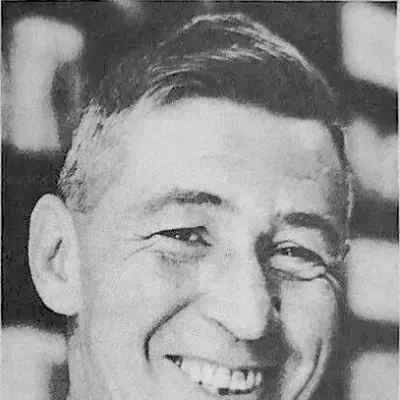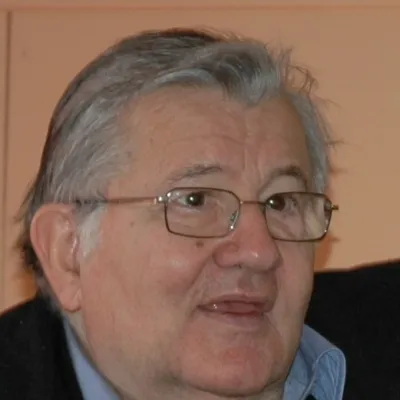
Jean-Marie Pelt
Human Design Chart
Biography
He often appeared on television and radio and has written numerous books on ecology and botany.
Jean-Marie Pelt as a Projector 5/1 in Human Design
Projector 5/1 — Design at a Glance
Jean-Marie Pelt appeared as someone with a dense, focused aura who immediately identified flaws in other people's systems or structures. His design inclined him to shed light on darkness, much like a bright flashlight directed towards problematic areas. However, this ability was effective only when not perceived as direct criticism; immediate addressing of faults often provoked resistance. Instead, he attracted others by living his own harmony, prompting them to seek out his insights voluntarily. As a Projector, he lacked an intrinsic constant energy source due to his undefined Sacral Center. This led to phases of high productivity that inevitably had to be followed by necessary rest periods to prevent burnout. Societal structures often expecting continuous performance did not align with this natural rhythm. His strategy involved waiting for an honest and respectful invitation from his environment before offering leadership or advice. Living by this principle rewarded him with success. Ignoring this dynamic and trying to act against the flow of his energy phases or lead without invitation eventually led to the non-self theme of bitterness. Thus, his influence was marked not through constant action but through targeted, invited presence.
Emotional Authority
Jean-Marie Pelt moved within an emotional wave that constantly colored his perception of the world with current moods. His design carried Emotional Authority rooted in a defined Emotional Center. This configuration meant he was subject to feelings oscillating between highs and lows; what appeared inspiring at one moment could be negative the next. For him, immediate feeling was always just a snapshot, an initial impression that did not automatically reflect deeper truth. Quick, spontaneous decisions made from this emotional heat often proved disadvantageous.
The mechanics of his inner authority required patience and time. Since the Emotional Center was defined, this authority took precedence over all other defined centers in his chart. This was a central rule of his design: regardless of other structures, he had to trust the emotional process. He needed distance to gain clarity. By letting decisions sleep and taking time, intense feelings subsided. Only then did calmness set in, allowing him to see through the decision-making process. This ability to let emotions mature shaped his approach to long-term life decisions that greatly influenced his path. He learned to take his time and ask multiple times until the emotional fog cleared, making a well-founded insight possible.
The 5/1 Profile — Heretic / Investigator
Jean-Marie Pelt was someone who used deep knowledge to offer solutions for others' problems. His design as a 5/1 profile gave him almost magnetic appeal: others actively sought out the wisdom he had to share. However, this dynamic came with a specific risk. Without clear boundaries, he risked being drained by constant questioning from others – similar to a scientist left exhausted after long conferences while new questions pour in.
The mechanics of his profile explained this tension: Line 1 stood for the intense process of learning and research for himself. Line 5 represented fulfillment and the ability to offer universal solutions during crises. This line exerted strong influence, demanding discipline to protect or rebel against values. Saturn as the planet of this line emphasized a conservative awareness towards fundamental values that should not be casually abandoned.
Additionally, Gate 31 in his Throat Center represented logical and rational leadership through communication. Here, there was an interplay between light and darkness: light brought form into speech while darkness led to spirituality. The quality of this leadership depended heavily on the people following him. Jean-Marie Pelt's challenge lay in maintaining balance between private research (Line 1) and public problem-solving (Line 5). Only through learning to say 'no' could he maintain this beneficial balance, optimizing his gifts without sacrificing himself.
Triple Split Definition — Defined & Open Centers
Jean-Marie Pelt was characterized by a constant mental activity that asked questions and formed concepts. His defined Head Center and Ajna Center created a permanent pressure to understand, which did not directly make him action-oriented. Instead, he inspired others or put them under intellectual pressure while waiting for the right moment to pass on ideas. His communication was reliable and clear, supported by his defined Throat Center, which translated his thoughts into words.
A firm inner identity and direction came from his defined G Center, helping him love himself and offer guidance to others without needing to direct them. At the same time, he moved through an emotional wave; his defined Solar Plexus required patience to achieve emotional clarity before making decisions. His defined Spleen Center provided spontaneous intuition in the present moment, while his defined Root Center supplied a constant pressure to move forward and deal with stress.
In contrast, his Heart Center was open. This led him not to be designed to prove willpower or make promises he couldn't keep. He tended to confirm his worth through performance, often ending in a spiral of self-doubt when expectations were unmet. His open Sacral Center also meant that he did not have consistent vital energy. He was vulnerable to being overwhelmed by the energy of others and had to learn to set boundaries and rest rather than rely on borrowed strength, which otherwise led to exhaustion.
Channels for logical clarity, reflection, intuition and abstraction.
Jean-Marie Pelt showed himself as someone who gathered experiences to pass them on later with deeper insight. This attitude was shaped by the Lost Son Channel 13-33: He listened (Gate 13) and withdrew (Gate 33), practicing patience until truth revealed itself – a process of reflection rather than immediate reaction.
His mind worked through the Judgment Channel 58-18. Here, Gate 58 drove the urge for joyfulness and stability while Gate 18 critically reviewed what needed correction. Pelt sought to perfect logical patterns but did so effectively only when asked to avoid unnecessary conflicts.
Emotionally, he was moved by the Recognition Channel 30-41. Gate 41 generated restlessness and a desire for new experiences, which Gate 30 fueled with intense feelings. Pelt learned not to blindly follow this longing but waited for his emotional wave to make clear decisions.
Mentally, the Abstraction Channel 47-64 influenced him. Gate 64 brought mental confusion and many images that Gate 47 tried to understand. Pelt accepted that his mind was not an inner authority; he endured chaos until a clear picture or inspiring story emerged for sharing.
Additionally, individual Gates were at work: Gate 50 protected traditional values and tribal rules. Gate 31 transferred leadership to others. Gate 3 brought mutations and adaptation to changes. Gate 43 broke through with spontaneous insight, seeking recognition for new ideas but fearing rejection. Gate 19 connected him to resources, territory, and spiritual community. Gate 48 recognized deep patterns but often led to frustration without implementation. Gate 62 provided logical details, patience, and the ability to clearly name facts.
Collective Circuitry — Circuit Signature
Jean-Marie Pelt was someone whose inner compass was shaped by three separate, parallel operating energetic systems. This triple definition did not create a unified flow line but rather distinct, coexisting energy fields. One system connected the Spleen Center with the Root Center through the Judgment Channel. Here, an instinctive ability to evaluate and structure logical insights was applied purposefully without emotional influence.
A second, completely independent system included Head and Ajna Centers as well as Throat and Identity Centers. Through Channels of Abstraction, Lost Son, and Recognition, it linked initial inspiration with linguistic expression and personal essence. This enabled a cyclical processing of ideas that were put into words and reflected from the past.
The third system connected Solar Plexus and Root Center. It generated emotional wave movements driven by internal tensions. These feelings did not follow a linear pattern but went through their own cycles of rise and fall. Since these three groups were not interconnected, Jean-Marie Pelt experienced rational analysis, emotional processing, and inspired communication as separate experiences. He had to learn to live with these different, often non-overlapping energetic streams without forcing them into one continuous flow.
Left Angle Cross of Wishes 2
Jean-Marie Pelt displayed a fundamental disposition marked by a deep inner longing. His Human Design chart shows the Left Cross of Desires, indicating a strong need for fulfillment and meaning. This configuration describes someone whose life is often driven by the desire to achieve certain goals or realize a specific vision. It's not just about superficial dreams but an existential search for what the heart truly desires.
For Jean-Marie Pelt, this meant that he always strove to translate his inner impulses into reality. The Left Cross of Desires gives him a special sensitivity towards his own needs and emotions. He was someone who learned to use these feelings as a guide to find his path. His decisions were often guided by this deeply rooted desire to create or experience something significant.
This mechanism is evident in the fact that he never simply went through life passively but actively sought ways to fulfill his desires. It was an ongoing process of recognizing and acting based on his inner drives. Jean-Marie Pelt used this energy to better understand himself while simultaneously supporting others in their own search for fulfillment. His design suggested that he was happiest when pursuing his personal goals authentically.
Saturn Return · Uranus Opposition · Chiron Return · 2nd Saturn Return — Life Cycles
Jean-Marie Pelt showed a clear shift from political administration to academic deepening in the middle of his life. His design indicated a tendency to leave behind external structures to focus on his expertise and teaching – a process marked by two astrological cycles.
In 1972, at age 39, the Uranus opposition became active: Jean-Marie Pelt took up a professorship in botany and pharmacy at the University of Metz. This cycle often marks a break with old patterns in favor of new individual orientation. The career decision was not random but an expression of a drive for specific knowledge dissemination.
Ten years later, in 1983 at age 50, the Chiron return closed: Jean-Marie Pelt ended his work on the Metz Council which he had started in 1971. In Human Design mechanics, this period is not one of healing old wounds but a phase of fulfillment and bloom. Those who have lived according to their inner strategy experience here that their incarnation cross unfolds and meaning becomes tangible. The withdrawal from communal politics was thus an act of self-actualization, not failure. Both events together show a man increasingly seeking his life's purpose in the depth of his field rather than broad political mandates. His mechanics promoted focusing on the essential – botany and pharmacy – while external commitments were reduced to meet this core.
Projector · Emotional Authority — Synthesis
Jean-Marie Pelt was a projector whose life seemed marked by the need to bring light into darkness, both for others and himself. His defined Head and Ajna Centers (Understanding Circuit) point to constant inspiration and the drive to understand things and share knowledge (Channel of the Lost Son). This ability to recognize patterns and offer solutions was reinforced by the Hero/Researcher Profile wanting to make knowledge accessible to others. He seemed to be in a continuous cycle of learning, reflecting, and sharing, with emotional waves of his authority requiring careful consideration.
A central paradox lay in Pelt being as a projector designed to guide others and point out errors while his emotional makeup required patience and maturity before speaking up. The ability to gain deep insights (Gate 13) met the necessity to communicate them only after thorough reflection (Gate 33). This could potentially lead to tension between the desire to help others and caution against hasty action – a dynamic evident in events like the start and end of his work on the Council, where he clearly brought expertise before stepping back.
4 Defined Channels
Incarnation Cross - Left Angle Cross of Wishes 2
Solar Return
The Solar Return shows the moment when the sun returns to its exact birth position - your personal solar year.
Life Cycles
Discover the life cycles with a detailed triple view (birth chart, cycle chart, composite).
Human Design Profile
- Type
- Projector
- Strategy
- Wait for the respectful invitation
- Authority
- Emotional Authority
- Profile
- 5/1 - Heretic / Investigator
- Definition
- Triple Split
- Incarnation Cross
- Left Angle Cross of Wishes 2
- Date of Birth
- 24.10.1933 07:00
- Place of Birth
- Thionville, France
Frequently Asked Questions
What was Jean-Marie Pelt's Human Design type?
What Profile did Jean-Marie Pelt have in Human Design?
What Authority did Jean-Marie Pelt have?
What incarnation cross did Jean-Marie Pelt have?
When was Jean-Marie Pelt born?
Discover your own Human Design
Are you also a Projector? Find out in a personal reading how to unfold your leadership qualities and recognize the right invitations.
More Personalities
Back to overviewSissy Spacek

Alain-Fournier

Anémone

Ann-Margret

Bourvil
Hergé