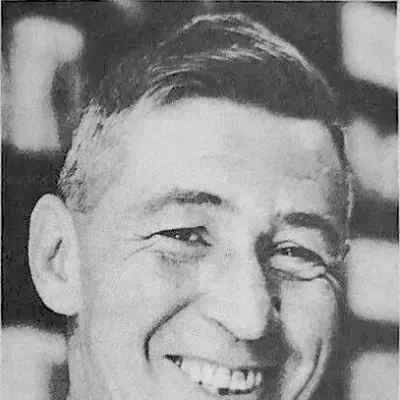
Jeffrey Archer
Human Design Chart
Biography
With boyish good looks, endless energy and wise-cracking charm, Archer joined the House of Commons at 29 but was forced to give up his seat five years later after he invested in a company that proved to be fraudulent. He turned to writing as a means of avoiding bankruptcy.
As a gesture toward reinstatement in favor, Prime Minister Margaret Thatcher appointed him Deputy Tory Party Chair on 3 December 1985, a position he had to resign in October 1986 after two London papers published stories about his alleged involvement with a London prostitute to whom he was accused of giving money. He sued the Star newspaper for libel in naming him party in a sexual liaison and was awarded $825,000 damages plus legal costs of $1.2 million in July 1987. He gave the money away, dividing it among more than 70 charities.
The son and only child of a career soldier and a journalist, Archer was so precocious as a child that "when he was three he wanted to be four and when he was four he wanted to be prime minister." After his father's death in 1955, he was granted a scholarship to Wellington School, where he excelled as a sprinter. Later at Oxford, he was captain of the track and field team, breaking records in the 100-year dash. After graduating Oxford in 1964, he stayed on for another post-grad years, during which he developed a fine skill as a fund-raiser.
In 1966 he entered public relations, launching Arrow Enterprises. His first political sortie was the following year, winning a council seat. He won his House of Commons seat in a resounding victory on 6 December 1969.
What does Projector 5/2 mean for Jeffrey Archer?
Projector 5/2 — Design at a Glance
Jeffrey Archer's design featured a dense, focused aura, comparable to a bright flashlight. This configuration allowed him to immediately identify system errors in his environment and shed light on the darkness. The challenge lay in the fact that this directness was often perceived as unpleasant or aggressive by others, similar to shining a bright beam directly into someone’s face.
The optimal strategy for Jeffrey Archer did not involve correcting others directly but rather holding back and serving as an example. By harmoniously radiating himself, he automatically became attractive; others came to him of their own accord to seek advice. His success depended strictly on waiting for a respectful, honest invitation rather than taking the initiative prematurely.
As a Projector, Jeffrey Archer did not have a defined Sacral Center and therefore lacked a constant intrinsic energy source. He experienced phases of high productivity followed by an imperative need for active rest periods to avoid burnout. The traditional system often ignored this need. Living according to his design rewarded him with success; defying it sooner or later brought his non-self theme "Bitterness" to the surface. His design thus demanded patience and waiting for proper recognition to effectively utilize his unique ability for systems analysis without exhausting himself or being repelled.
Splenic Authority
Jeffrey Archer demonstrated a decision-making process that relied on a fine, immediate inner signal: the first impulse. His design established that this spontaneous trigger was the only reliable truth; any hesitation or further thought risked blurring the clear sign. This mechanism originated from his authority in the Spleen Center, which functions as a health and alarm system. It provides an intuitive survival intelligence that immediately indicates whether a situation, environment, or person is beneficial or harmful.
For this Spleen Authority to be effective, both the Emotional Center and the Sacral Center were open, which is typical for Projectors and Manifestors. The crucial mechanism lies in the fleeting nature of this impulse: it comes only once at the moment. Therefore, Archer's strategy required a high level of awareness to not let external influences drown out this subtle call. Often, a brief retreat was necessary to find the quiet where the signal appeared.
This system primarily served to protect and set boundaries against harmful factors. Since knowledge was always available only in the present, long-term plans were counterproductive. Instead of rigid plans, Jeffrey Archer needed flexibility and space to respond to changing inner signals. The ability to rigorously set limits was based directly on this physical intuition that told him when a boundary had been crossed.
The 5/2 Profile — Heretic / Hermit
Jeffrey Archer's design creates a tension between the desire for public recognition and the need to withdraw. He is someone who initially hid his gifts in a "cave" to prepare himself for the role of the hero. This Profile 5/2 carries an internal contradiction: Line 5 seeks to help others and receive admiration, while Line 2 needs time alone to gather strength.
The energy of a 5/2 does not become immediately visible; it must first be discovered. Passive waiting for this discovery led to frustration and bitterness in Jeffrey Archer because being a "lone wolf" hero hardly works. Instead, his configuration required an active step out of withdrawal onto the public stage. Only through this conscious appearance could he receive the admiration he sought.
Line 5 (Gate 42) provides practical solutions during crises and radiates maturity as well as self-actualization. After public interaction, however, this energy withdraws again, leaving a mask behind. At the same time, Line 2 (Gate 60) brings selectivity and adaptability to limitations. This combination means that Jeffrey Archer had to set clear boundaries to protect his necessary alone time while being loved for his presence in the public eye. Successful integration lay in consciously separating these phases: actively appearing when the world needs him and withdrawing to renew his strength, rather than waiting to be found.
Split Definition — Defined & Open Centers
Jeffrey Archer's design was characterized by a clear distinction between inner strength and outer permeability. Four defined centers formed a robust foundation: The G Center endowed him with a reliable sense of self-identity and a firm direction for his life path, while the Heart Center provided constant willpower to fulfill promises. The Spleen Center ensured intuitive safety in the present moment, and the Root Center generated a persistent survival drive to move forward. This structure enabled him to act with inner authority and control resources autonomatically.
At the same time, five centers were open, making him situational and environmentally dependent. The open Head and Ajna Centers reflected mental inspirations without possessing them as personal truth; he tended to absorb ideas from his surroundings rather than generate them independently. The open Throat Center responded to invitations for communication without forcing or demanding attention. Particularly defining was the open Sacral Center: It absorbed the energy of others, posing a risk of overloading due to "borrowed" power since he lacked a consistent personal energy flow. Additionally, the open Solar Plexus Center acted as a barometer for emotional moods; it picked up and amplified feelings from his environment rather than offering a stable emotional base of its own.
This configuration showed that Jeffrey Archer remained mentally, communicatively, and emotionally open to environmental influence while guiding his actions from the inner security of identity, will, and instinct. He was designed to use the wisdom of body and will to navigate the pressures and impulses of the external world without getting entangled in its mental or emotional whirlpools.
Channels for pioneering spirit and ambitious transformation.
Jeffrey Archer is characterized by a driving dynamism that combines individual prominence with social ascent. This configuration arises from the interaction of two central channels in his design.
The Initiation Channel 51-25 connects the Heart Center through the Shock Gate (51) to Spirit via the Self Gate (25). Here, the competing ego energy, which always wants to be first, merges with the Higher Self's ability to recognize beauty. This creates a natural competitiveness aimed at initiating others into individualization and surpassing their limits through "shock." It is a mutative pressure that awakens the potential for uniqueness—yet only effective if this initiation is accepted as an invitation, not forced.
Simultaneously, the Transformation Channel 54-32 links the Root Center (Ambition Gate 54) with the Spleen Center (Continuity Gate 32). This channel drives the desire for social ascent through persistent effort and talent. Ambition arises from the awareness of the tribe's fragility; success depends on environmental support, which in turn expects loyalty and hard work. The Spleen instinctively recognizes when support is available to secure prosperity.
Additionally, prioritized gates bring further nuances: Gate 60 (Acceptance of limitations as a path to transcendence) and Gate 42 (Experience as the key to process completion) emphasize the need to transform pressure into creative transformation. Gate 56 promotes abstraction of mental processes into illustrative narratives, while Gate 57 provides intuitive clarity for survival in the here and now. In his design, Gates 21 (Control over material things through respect) and 2 (Receptivity to evolutionary directions) support this structure.
The combination of the drive to initiate through competition (51-25) and the ambition to work upwards with tribal support (54-32) shapes a person who wants to stand out individually while also transforming social structures—always in the tension between personal triumph and collective expectations.
Individual Circuitry — Circuit Signature
Jeffrey Archer's design establishes a tendency towards inner strength while simultaneously requiring external cooperation. The Projector Circuit connects his Identity and Heart Centers, promoting bold, individualistic foundational attitudes with strong convictions. This energy is not outwardly oriented; it strengthens the individual in their uniqueness ("I am who I am"). However, without a connection to the Throat Center, these firm beliefs were often difficult to articulate clearly. Parallel to this, the Manifestor Circuit connected his Spleen and Root Centers. This was part of the Family Dynamics: It involved cooperation, resource building, and reciprocal giving and taking. The link between Spleen (Intuition/Trust) and Root (Tension/Hurry) supported mutual aid in the collective. A central tension arose from this: The need for individual affirmation clashed with the necessity of cooperative resource creation. Since neither circuit had a connection to the Sacral Center, there was a constant lack of life force energy. Breaks for regeneration were therefore essential to maintain energy for these dynamics. In Jeffrey Archer's case, these two systems existed as separate, parallel forces (Split Definition), not as an integrated flow.
Left Angle Cross of Limitation 1
Jeffrey Archer's design shows a tendency towards strategic restraint, where recognizing limits serves as a source of inner strength. This configuration points to a life strategy defined not by unchecked advancement but through the conscious setting and acceptance of boundaries. It is about knowing when to stop or hold back in order to conserve energy and ensure long-term stability. These limitations are not seen as deficits but rather as protective structures that prevent overloading.
The left cross of Limitation 1 describes this dynamic precisely: it is not a passive restriction, but an active choice to save resources deliberately and focus actions on the essentials. Those who follow this pattern learn that true efficiency often lies in non-action or targeted waiting. Strength does not come from constant pushing against resistance, but through the ability to use natural limits as orientation points. This enables sustainable alignment, where impulses are only implemented when they align with existing capacities. Thus, restraint becomes the foundation for consistent results rather than being felt as an obstacle. The mechanics show that awareness of one's own boundaries is key to not scattering energy but focusing and effectively using it.
Saturn Return · Uranus Opposition · Chiron Return · 2nd Saturn Return — Life Cycles
Jeffrey Archer's design shows a clear arc from acquiring public authority to legal validation of his position. This path is marked by two central cyclic turning points, political establishment, and legal rehabilitation.
The first Saturn return around the age of 29 often signals in Human Design mechanics the moment when inner structure manifests outwardly and condenses into a viable public role. For Jeffrey Archer, this process concretely began in 1969: He was elected as a Member of Parliament for the Conservative Party in Louth, Lincolnshire. This event underscores the function of the Saturn return as a phase of solidifying authority and status within a system.
Decades later, around ages 47 to 51, the Chiron return occurs. This cycle is not understood in Human Design as healing old wounds but rather as a fulfillment phase where one's life purpose becomes visible and meaningful if strategy and authority have been respected. For Jeffrey Archer, this aspect was evident in 1987: He received damages and costs. This represents more than mere compensation; it signifies legal validation and reparation that definitively rehabilitated his position. The Chiron return thus acted as the conclusion of a process prepared by early political anchoring during the Saturn cycle. The mechanics therefore connect the building of structure with later validation of one's path.
Projector · Splenic Authority — Synthesis
A central red thread in this design is the dynamic balance between inner clarity and the need to respond to external influences. Defined Spleen authority signals strong instinctive knowledge about what is right, yet this knowledge is constantly challenged by open centers—especially Head, Ajna, and Sacral—with information from the environment. The design seems geared towards recognizing patterns (Gate 42, Gate 57), intuitively evaluating them (Spleen), and then acting or not based on external resonance. The combination of defined G-Center and Initiation Channel indicates a natural ability to inspire and lead others, but only when circumstances allow—radiance rather than imposition.
The central paradox lies in the tension between the need for alone time and the desire to exert influence. The Profile as Hero/Natural Talent (Line 5/2) points to a drive to achieve something special and help others, while Line 2 emphasizes natural withdrawal and the need for reflection. This contradiction is further amplified by open centers: constant intake of information and emotions provides valuable insights but also poses a challenge to maintaining one's inner direction without being swept away by external currents.
2 Defined Channels
Incarnation Cross - Left Angle Cross of Limitation 1
Solar Return
The Solar Return shows the moment when the sun returns to its exact birth position - your personal solar year.
Life Cycles
Discover the life cycles with a detailed triple view (birth chart, cycle chart, composite).
Human Design Profile
- Type
- Projector
- Strategy
- Wait for the respectful invitation
- Authority
- Splenic Authority
- Profile
- 5/2 - Heretic / Hermit
- Definition
- Split Definition
- Incarnation Cross
- Left Angle Cross of Limitation 1
- Date of Birth
- 15.04.1940 11:45
- Place of Birth
- London, United Kingdom
Frequently Asked Questions
What is Jeffrey Archer's Human Design type?
What profile does Jeffrey Archer have?
What authority does Jeffrey Archer possess?
What is Jeffrey Archer's incarnation cross?
When was Jeffrey Archer born?
Discover your own Human Design
Are you also a Projector? Find out in a personal reading how to unfold your leadership qualities and recognize the right invitations.
More Personalities
Back to overviewSissy Spacek

Alain-Fournier

Anémone

Ann-Margret

Bourvil
Hergé