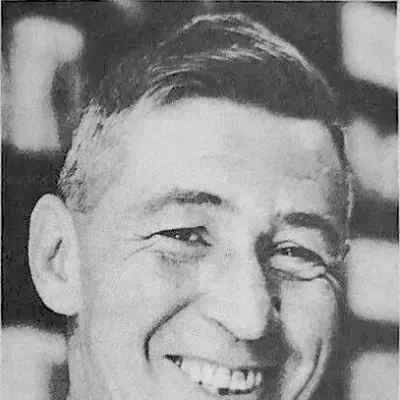
Jens-Peter Bonde
Human Design Chart
Biography
Jens-Peter Bonde emerged from the Danish Left of the 1970s, however he was on the centre-left for much of his life. In November 2005 he was the inspiration behind the setting up of a new Party at a European level, EUDemocrats. He was its president from 2005 to 2009.
Bonde was also a journalist and wrote over 60 books on the EU, including editions of EU treaties with additional commentary.
He was married to Lisbeth Kirk, editor-in-chief of the independent online newspaper EUobserver. Jens-Peter had four sons. He died on 4 April 2021, aged 73, in Frederiksværk.
Human Design Analysis: Jens-Peter Bonde as Projector 3/5
Projector 3/5 — Design at a Glance
Jens-Peter Bonde revealed himself through a focusing aura that immediately identified system errors. His Human-Design as a Projector acted like a bright flashlight casting light into dark corners and making inefficient processes in others instantly visible. However, this direct perception could generate resistance, comparable to a blinding beam of light that dazzles the observer rather than illuminating them.
The mechanics of his design suggested that addressing these errors immediately would be counterproductive. Instead, his authentic presence and inner harmony were attractive. When he embodied a functioning order himself, people naturally sought him out for advice. His strategy was to wait for a respectful and honest invitation rather than engaging in direct confrontation.
Since Projectors lack a defined Sacral Center, Jens-Peter Bonde lacked a constant intrinsic energy source. He experienced phases of high activity followed by necessary rest periods to prevent burnout. Living according to the principle of patience and waiting for invitations rewarded him with success. If he missed this strategy, his non-self theme of bitterness would manifest. His design thus required restraint in action in favor of an inviting presence that encouraged others to cooperate.
Emotional Authority
Jens-Peter Bonde showed a decision-making process that demanded emotional clarity. His inner authority lay in the defined Emotional Center – a mechanism that always took precedence over other defined centers. This did not mean he was always emotional, but rather his perception was marked by constant waves of ups and downs. The world appeared colored according to his current mood: what seemed inspiring at one moment could appear negative the next.
This state made spontaneous reactions dangerous as immediate feelings were only a snapshot, not the deeper truth. A quick decision based on such an emotional peak often led to negative consequences because it was based on transient impulses. Instead, his design required patience and temporal distance. Important steps had to be “slept over”; only when intense emotions subsided and emotional distance emerged did true clarity set in. This process of maturation was essential for long-term realignments as it ensured that actions were rooted in calmness rather than transient excitement. Jens-Peter Bonde thus needed to take his time, asking multiple times to separate the quality of his inner response from the noise wall of his current mood.
The 3/5 Profile — Martyr / Heretic
Jens-Peter Bonde revealed himself through Profile 3/5 as someone who acquired knowledge not from books but through personal experimentation and failure. This line of the experimenter required him to test everything personally before believing or passing it on. His design emphasized a tendency to view practical experiences – including mistakes – as valuable treasures that he offered others for inspiration or solutions.
This dynamic created natural attractiveness: people were drawn to his stories and “heroic” manner because they wanted to learn from his life experiences. Line 5, the Hero line, gave him this role of storyteller and rescuer. Yet precisely this public perception carried a risk: failing an experiment in front of others was painful as the hero role is vulnerable when it does not work.
His mechanics emphasized “trial and error” as a central learning path. Shortcuts were often counterproductive for him, as they neglected important details. Instead, he had to follow the path through detailed work and adaptability. At the same time, he needed to carefully balance his energy and maintain his protective instinct to avoid being swayed by external influences or losing himself in an inappropriate defensive stance. His design challenged him to stay true to what was right for him and only offer practical solutions validated by personal experience. This created a balance between the necessity of making mistakes to learn and the responsibility of authentically sharing this knowledge.
Triple Split Definition — Defined & Open Centers
Jens-Peter Bonde revealed himself as a person with a strong internal structure characterized by six defined centers. His design showed a tendency towards constant mental conceptualization; the defined Ajna Center ensured continuous mental processes and trustworthy concepts, which he reliably communicated through his equally defined Throat Center. This connection allowed him to directly translate his thoughts into words. Additionally, he possessed a strong willpower through the defined Heart Center, manifesting in a clear sense of self and the ability to keep promises and determine resources for himself.
Emotionally, Jens-Peter Bonde was exposed to deep wave movements. The defined Solar Plexus Center functioned as his inner authority; he needed time to go through the emotional wave before clarity emerged. Spontaneous intuition provided by the defined Spleen Center in the present moment, while the defined Root Center supplied a constant pressure for movement and survival. This dense structure of thinking, willpower, emotion, and instinct formed a stable interior.
In contrast, situational dependence was revealed through three open centers. The open Head Center meant that he did not have consistent inspiration or mental focus; he tended to be influenced by doubts or the questions of others rather than forcing his own answers. His open G Center indicated a lack of fixed identity and direction; he relied on being initiated by the environment to feel where he belonged, instead of prescribing his own path. Finally, the open Sacral Center led to him not having a consistent energy flow for work or sexuality. He absorbed the energy from his surroundings and had to learn to set boundaries rather than pushing himself to exhaustion through borrowed energy. His strength lay in balancing this inner stability with the flexibility of open centers.
Channels for logic, insight and connected power.
Jens-Peter Bonde revealed a design based on logical correction and innovative structuring. The Judgment Channel 58-18 connected life energy with an insatiable urge for pattern correction, creating a tendency towards perfectionism where logic had to prove it provided the best answers. Simultaneously, the Structuring Channel 23-43 enabled mutative insights and unique perspectives. These innovative thoughts increased efficiency but were dependent on correct timing to gain acceptance. The Community Channel 37-40 rounded out his profile by emphasizing the building of connections through fair agreements. This was about mutual benefit and loyalty within a group, where emotional clarity required time to develop.
The synthesis of these mechanisms led Jens-Peter Bonde to bring critical judgments ideally when requested and communicate innovative ideas at the right moment to avoid rejection. The challenge lay in not letting uninvited perfectionism take effect but using it as a service to the collective. His way of forming connections was based on searching for an honorable place within the whole and concluding agreements that were beneficial for all parties involved. Through this combination of logical review, innovative thinking, and communal action, he sought ways to make life lighter and more efficient without losing sight of individual needs or the right timing.
Individual Circuitry — Circuit Signature
Jens-Peter Bonde was marked by three separate energetic poles that did not exhibit automatic flow between them. His Knowledge Circuit connected Ajna and Throat Center via Channel 43-23 (Structuring). This promoted the expression of individual identity and new insights, with structuring helping to articulate inner visions clearly in words. Parallelly, his Understanding Circuit worked through Channel 18-58 (Judgment) between Spleen and Root Centers. Here, an emotionless ratio dominated: strategic analysis and future-oriented logic served societal improvement, free from emotional conditions. The third pole was his Ego Circuit with Channel 40-37 (Community) between Heart and Solar Plexus Centers. This regulated cooperation and resource management in the tribal context through a clear give-and-take principle without direct connection to sacral energy, requiring rest periods for regeneration. Since these circuits were not connected at Jens-Peter Bonde (Triple Definition), they existed as isolated fields of power. He had to choose situationally which energy was activated – whether creative expression, cold strategy, or cooperative resource utilization. There was no natural transition from idea through planning to implementation; every action required a conscious choice or an external impulse to activate the respective separate systems.
Right Angle Cross of Service 1
Jens-Peter Bondes Human-Design legte eine tiefe innere Triebfeder zur Unterstützung und Dienstleistung an anderen nahe. Sein Wesen zeigte sich geprägt von dem Gefühl, sich erst dann wirklich verwirklicht zu fühlen, wenn er nützlich war und einen konkreten Beitrag für sein Umfeld leistete. Diese Haltung bildete den zentralen Lebensantrieb: die archetypische Rolle des Helfers oder Dieners stand im Mittelpunkt seiner Existenz.
Diese Konfiguration, bekannt als das rechte Kreuz des Dienens 1, beschreibt eine spezifische energetische Struktur. Sie definiert nicht nur ein Verhalten, sondern eine fundamentale Bedürfnislage. Für Jens-Peter Bonde war der Dienst an anderen kein nebensächlicher Akt, sondern die primäre Quelle seiner Identität und seines Wohlbefindens. Die Mechanik dieses Designs zeigt, dass das Selbstwertgefühl eng mit der wahrgenommenen Nützlichkeit verknüpft ist. Wenn er helfen konnte, fühlte er sich am meisten in seinem Element. Es handelte sich hierbei um eine treibende Kraft, die ihn dazu antrieb, Verantwortung für andere zu übernehmen und ihre Bedürfnisse in den Vordergrund zu stellen. Diese Ausrichtung prägte seine Interaktionen und sein inneres Erlebnis maßgeblich. Der Fokus lag stets darauf, einen positiven Einfluss auszuüben und durch praktische Unterstützung Wert zu stiften. Dieses Muster war kein zufälliges Merkmal, sondern ein integraler Bestandteil seiner menschlichen Architektur, der sein Handeln und sein Selbstverständnis nachhaltig beeinflusste.
Saturn Return · Uranus Opposition · Chiron Return · 2nd Saturn Return — Life Cycles
Jens-Peter Bondes politische Laufbahn folgte einer klaren Struktur, die durch zwei Saturn-Rückkehr-Zyklen geprägt war. Diese astronomischen Ereignisse markieren im Human Design Momente der Reifung und Konsolidierung, in denen innere Werte sich nach außen hin festigen.
1979, im Alter von 31 Jahren, zog Jens-Peter Bonde ins Europäische Parlament ein. Dies entsprach seinem ersten Saturn-Return, einem Zeitpunkt, an dem das Selbstbild oft zu einer tragfähigen öffentlichen Identität wird. Die Energie dieses Zyklus förderte die Bereitschaft, Verantwortung auf einer neuen Ebene zu übernehmen und langfristige Ziele in konkrete politische Strukturen zu gießen. Es war der Beginn seiner europäischen Karriere, verankert in der Stabilität, die dieser erste Reifungsprozess bot.
Der zweite Saturn-Return trat 2008 ein, als Jens-Peter Bonde 60 Jahre alt war. An diesem Punkt zog er sich aus der aktiven Politik zurück. Der zweite Saturn-Zyklus fordert oft eine Überprüfung der erreichten Strukturen und eine Entscheidung für den nächsten Lebensabschnitt. Hier zeigte sich die Mechanik in der bewussten Distanzierung von der täglichen politischen Auseinandersetzung, nachdem die wesentlichen Ziele erreicht oder die Rolle erfüllt war. Beide Ereignisse – Einstieg und Rückzug – illustrieren, wie Saturn-Rückkehr-Zyklen als natürliche Scharniere dienen können, um Phasen des Aufbaus und des Loslassens zu strukturieren.
Projector · Emotional Authority — Synthesis
Jens-Peter Bonde lebte einen Weg, der von dem tiefen Bedürfnis geprägt war, Muster zu erkennen und Korrekturen anzustoßen (Channel 58-18). Diese Fähigkeit, Fehler im System zu finden, ging einher mit einer starken Willenskraft (definiertes Heart-Zentrum) und einem klaren Verständnis für die Notwendigkeit, Ressourcen effektiv einzusetzen – sowohl im persönlichen Leben als auch in der Gemeinschaft (Channel 37-40). Sein Design deutet auf einen Menschen hin, der durch das Aufdecken von Ungleichgewichten nicht nur eigene Einsichten gewann, sondern auch andere dazu inspirierte, neue Wege zu beschreiten. Die Verbindung von mentaler Schärfe (definiertes Ajna) und dem Bedürfnis, dies auszudrücken (definiertes Throat-Zentrum), ermöglichte es ihm, komplexe Sachverhalte zu strukturieren und verständlich zu vermitteln.
Ein zentrales Spannungsfeld in Jens-Peter Bondes Design liegt zwischen seiner Fähigkeit zur logischen Analyse und der emotionalen Welle (emotionale Autorität). Während er ein scharfes Urteilsvermögen besaß, erforderte seine innere Autorität Geduld und das Abwarten emotionaler Klarheit, bevor Entscheidungen getroffen werden konnten. Dieses Zusammenspiel von schnellem Denken und langsamer Entscheidung deutet auf einen Menschen hin, der zwar sofort erkannte, was verbessert werden muss, aber die Weisheit besaß, nicht impulsiv zu handeln, sondern abzuwarten, bis der richtige Zeitpunkt für eine Veränderung gekommen war.
3 Defined Channels
Incarnation Cross - Right Angle Cross of Service 1
Solar Return
The Solar Return shows the moment when the sun returns to its exact birth position - your personal solar year.
Life Cycles
Discover the life cycles with a detailed triple view (birth chart, cycle chart, composite).
Human Design Profile
- Type
- Projector
- Strategy
- Wait for the respectful invitation
- Authority
- Emotional Authority
- Profile
- 3/5 - Martyr / Heretic
- Definition
- Triple Split
- Incarnation Cross
- Right Angle Cross of Service 1
- Date of Birth
- 27.03.1948 06:30
- Place of Birth
- Åbenrå, Denmark
Frequently Asked Questions
What was Jens-Peter Bonde's Human Design type?
Which Profile did Jens-Peter Bonde have?
What Authority did Jens-Peter Bonde possess?
What incarnation cross did Jens-Peter Bonde have?
When was Jens-Peter Bonde born?
Discover your own Human Design
Are you also a Projector? Find out in a personal reading how to unfold your leadership qualities and recognize the right invitations.
More Personalities
Back to overviewSissy Spacek

Alain-Fournier

Anémone

Ann-Margret

Bourvil
Hergé