
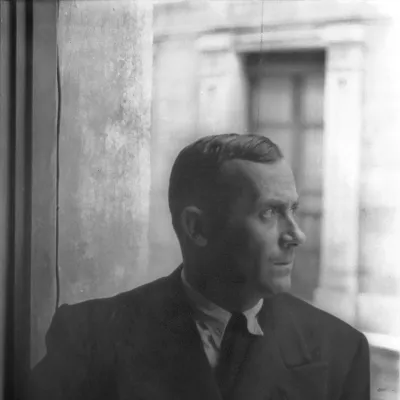
Joan Miro
Human Design Chart
Biography
Born in Barcelona, Miro was the son of a watchmaker, and he studied at the Escola d’Art. Miro came from a family of artisans, the eldest child and only son of Miguel, a goldsmith and watchmaker; his mother was the daughter of a cabinetmaker. He was a poor student and a dreamer who was reverential of drawing classes. After his dad bought a farm, he left for his first three-month trip to Paris in March 1920. After moving to Paris, he began developing an art that was folkloric compared to the more cosmopolitan Picasso, one of Miro’s contemporaries. One of the few artists to not lead a traumatized life, Miro structured his career with order and determination. In 1928, he wrote to Picasso that he was looking for a wife, a studio and a dealer. In 1929, at age 36, he married Pilar Juncosa of Palma. They were together until her death 54 years later; they had one daughter.
His recreation pursuits included jogging (with which he was ahead of his time) and boxing. He sparred occasionally with Ernest Hemingway, a friend, who owned Miro’s famous "The Farm."
He died on 25 December 1983 at his home on the island of Majorca from heart and respiratory problems.
The Human Design of Joan Miro: Manifesting Generator 5/1
Manifesting Generator 5/1 — Design at a Glance
Joan Miro lived as an Manifesting Generator, a configuration that made him a hybrid of the endurance of a Generator and the initiative power of a Manifestor. His defined Sacral Center provided him with constant energy, but his strategy did not lie in initiating actions but rather in reacting to internal impulses. This mechanism allowed him to skip steps and draw things into his life at lightning speed.
This speed was a double-edged sword. Often he was too quick, skipping important stages and having to return later to fill gaps – which caused frustration as this aligned with his Non-Self theme. Additionally, he tended to pursue multiple projects simultaneously, driven by various impulses. Without the confirmation of his inner authority, this creative drive quickly turned into exhaustion.
Joan Miro was truly satisfied and powerful only when he strictly reacted to life and checked before each step if his Sacral Center gave a clear „yes“. In this state of correct application, the demand to finish one thing after another lost its validity. Instead, he found his true creative power in play mode: through variety and parallel processing of different tasks as long as they were fun and supported by his inner energy.
Emotional Authority
Joan Miro was subject to an emotional wave that profoundly shaped his perception and decision-making. His inner authority resided in the defined Emotional Center – a mechanism that takes precedence over all other defined centers for any type except Reflectors, regardless of further configurations in the graph. This structure meant that Miro always saw the world through the filter of his current mood: The same thing could deeply inspire him at one moment and appear negative the next.
This constant ups and downs meant that his immediate feeling was merely a snapshot, not yet his deeper truth. Quick, spontaneous decisions from such an emotional state often proved problematic for his design. Instead, his mechanism required patience: He had to let decisions mature, think them over multiple times, and ideally sleep on them. Only when the intense feelings subsided and emotional distance was gained did clarity set in. This process of delay served to gain comprehensive insight before he acted – especially important for long-term pivots that influenced his life path.
The 5/1 Profile — Heretic / Investigator
Joan Miro emerged as someone who used deep inner knowledge to offer practical solutions to others. His design as a 5/1er – Hero/Researcher – combined the magnetic aura of Line 5 with the intense research work of Line 1. Others often sought him for answers, which could quickly drain him if he did not set clear boundaries. Like a scientist who answers questions until exhaustion, he risked being overwhelmed by others' expectations.
His task was to bring order out of confusion. The fifth line challenged him to accompany mutations with his own timing; immediate solutions often led to aversion. At the same time, he had to learn to say „no“ to maintain balance between personal research and service to others.
The first line of his configuration emphasized the necessity of inner reflection. It was about delving deeply into fantasies and focusing on authentic feelings rather than triggering many emotions at once – a tendency that could lead to overexertion. Through this focus, he could make meaningful experiences and delegate responsibility in the right measure. Thus, he transformed potential victim stances into brave personal convictions, despite the projections of his environment.
Single Definition — Defined & Open Centers
Joan Miro was someone whose expression was characterized by a persistent but limited way: the ability to transform information from various sources in the world into clear communication and action. This resulted from his defined Throat Center, which served as an energy focal point for messages. At the same time, he had an enormous power source in his defined Sacral Center, giving him true vitality that felt like a constant hum and propelled him to use his daily supply of energy for work or activities he enjoyed doing. However, his inner authority lay in his defined Solar Plexus Center; here, truth revealed itself over time. Miro was designed to wait out the ups and downs of emotional waves before making decisions to achieve emotional clarity rather than impulsively jumping into experiences.
Additionally, he had a defined Spleen Center, which gave him vital, spontaneous awareness in the present moment. This center managed his instinct and intuition to perceive what was healthy for his survival and allowed him to make trustworthy, spontaneous judgments. His defined Root Center provided physical pressure to move forward in the world and determined how he dealt with stress by nurturing existential awareness.
In contrast, his Head Center was open, meaning that he did not have a persistent way of processing mental information. He tended to be overwhelmed by doubts and confusion that actually belonged to others or sought inspiration for questions that were not his own. His open Ajna Center gave him a flexible mind that was open to intellectual stimulation but could condition itself to show confidence in ideas to gain acceptance. The open G Center led to him having no fixed identity and blending with people or adapting; he gathered directions through external initiation rather than asserting them himself. Finally, his Heart Center being open made him vulnerable to the pressure of proving his worth and making promises he couldn't keep due to lacking consistent energy.
Channels for intuition, judgment, care and emotional change.
Joan Miro was someone who combined intuitive depth with technical perfection. His design inclined towards mastering skills through repeated experimentation until they became art. This happened through the Channel of Wavelength 48-16: Gate 48 sought vital information from the subconscious, while Gate 16 translated these impulses into precise, perfected actions. Miro needed recognition and resources to continue this process of talent development; his skillfulness flourished when he was asked to contribute his ability.
Parallelly, the Channel of Judgment 58-18 worked. It connected the life energy of Gate 58 with the corrective logic of Gate 18. Miro relentlessly questioned existing patterns to find what did not work and aimed to perfect solutions. This drive for correction served to restore satisfaction in the collective by challenging inefficient structures – but only where his analysis was sought.
His actions were also influenced by the Channel of Preservation 27-50. Here, selfless care from Gate 27 connected with traditional values and laws from Gate 50. Miro felt a deep responsibility to protect and nurture clan and community. His aura attracted trust; people sought support from him. Yet he learned to carry this burden only when his own energy allowed – “enlightened selfishness” was the key to effectively serving others without exhausting himself.
Emotionally, he was driven by the Channel of Transience 36-35. Gate 36 felt the inadequacy of the status quo as a crisis, while Gate 35 manifested the urge for change and new experience. Miro actively sought adventures to mature through emotional highs and lows. He accepted that feelings were transient and used this restlessness to gain wisdom he passed on to others as advice. His path was marked by the search for the new, learning to wait out his emotional swings before making decisions.
Collective Circuitry — Circuit Signature
Joan Miro was someone whose inner experience was characterized by a complex interconnection of rational structure and emotional depth. His design linked the Throat Center with Spleen and Root Centers through the Understanding Circuit. This created a direct flow between instinctive perception (Spleen), urgent motivation (Root), and the ability to articulate insights (Throat). The Channels “Wavelength” and “Judgment” allowed him to grasp logical connections visually and strategically, communicating them free from conditioning.
Parallelly, the Meaning Circuit worked. Here, the Channel of Transience directly connected the Throat Center with the Solar Plexus Center. This generated a cyclical emotional wave that enabled Joan Miro to reflect on past experiences and emotionally understand their deeper meaning before expressing them. This connection emphasized sharing felt insights from the past.
A third aspect was the Protector Circuit. Here, the Channel of Preservation connected the Sacral Center with the Spleen Center. This gave him a primal energy of protection and preservation that worked instinctively (Spleen) with his life force (Sacral). It was about what was necessary for survival and care.
Although all these centers – Throat, Spleen, Root, Solar Plexus, Sacral – were defined in Joan Miro, they did not form a single continuous chain. Instead, three separate but coexisting streams existed: the rational flow (Throat-Spleen-Root), the emotional reflection stream (Throat-Solar Plexus), and the instinctive preservation stream (Sacral-Spleen). This separation meant that these energies worked parallel to each other without directly uniting into a single continuous flow.
Left Angle Cross of Wishes 1
Joan Miro had the Human Design of the left cross of Desires. This configuration determined a fundamental attitude characterized by a deep striving for inner fulfillment and a desire for harmonious alignment. In Human Design, this cross describes a specific energetic structure that focuses on personal desires and how they can be lived out in everyday life. It is not about external fame or material accumulation but rather an internal dynamic of satisfaction.
The mechanics of this design show a tendency to evaluate life situations based on how well they align with one's own inner sense of completeness. Joan Miro was marked by this constant orientation towards what subjectively seemed important and desirable to him. This was not a passive stance, but an active search for congruence between inner desire and external reality.
This cross acts as a filter for decisions and actions. What did not resonate with the deepest desires was often rejected or ignored, while that which found resonance was prioritized. The energy of this design promoted an authentic way of living, less influenced by societal expectations than by one's own internal compass needle. Joan Miro thus lived in constant engagement with recognizing his personal desires and integrating them into his existence, which gave him a unique perspective on his own happiness.
Saturn Return · Uranus Opposition · Chiron Return · 2nd Saturn Return — Life Cycles
Joan Miro showed a basic attitude of adapting to external circumstances, which condensed into phases of intense inner work. His design suggested that he waited for stimuli from his environment before acting – a strategy that allowed him to conserve energy and respond powerfully at the right moment.
In 1921, at age 28, Josep Dalmau organized Miro's first solo exhibition in Paris. This fell during his first Saturn Return, a cycle often used to structure years of groundwork and make tangible results visible. For Miro, this was not an abrupt breakthrough out of nowhere but the logical consequence of a long period of collecting and growing.
Later, in 1934 at age 41, he began the "Wild Pictures" series. This occurred during his Uranus Opposition, a time of political uncertainty and profound change. The pressure from the outside world forced him to express his inner truth radically. Thus, this artistic turn was a direct response to the unstable reality around him.
In 1940, Miro returned to Spain and initially lived in Palma de Mallorca, moving to Barcelona in 1942. This marked his Chiron Return, a fulfillment cycle. Here, healing in a medical sense did not occur but rather the flowering of his life's purpose was evident. After years of exile, he found stability again and could continue his work in a new context, which can be understood as confirmation of his previous paths.
Manifesting Generator · Emotional Authority — Synthesis
Joan Miro lived a creative process that was fueled by a deep sacral energy (defined Sacral Center), which, however, had to undergo a wave of internal evaluation due to emotional authority. This combination led to a life in which intuitive reactions and the seizing of opportunities were always accompanied by a phase of weighing options and emotional clarification. His Profile as Hero/Investigator (5/1) amplified this trait further, as he tended to accumulate knowledge and make it available to others – a process that repeatedly led him into new learning loops and required constant development. The connection between Throat and Spleen Centers via the Wave Channel indicated an ability to translate instinctive perceptions into communicable forms and refine skills.
A central paradox in Miro's design lay in the interplay of his manifesting Generator Strategy with emotional authority. He possessed the ability to quickly initiate things (manifesting energy), yet his emotional wave required time for decision-making. This led to a tension between the impulse to act immediately and the necessity to let feelings mature – an interplay that was evident in documented events, such as starting new series of works following phases of political uncertainty or withdrawing for personal clarification.
4 Defined Channels
Incarnation Cross - Left Angle Cross of Wishes 1
Solar Return
The Solar Return shows the moment when the sun returns to its exact birth position - your personal solar year.
Life Cycles
Discover the life cycles with a detailed triple view (birth chart, cycle chart, composite).
Human Design Profile
- Strategy
- To respond - wait for something to respond to
- Authority
- Emotional Authority
- Profile
- 5/1 - Heretic / Investigator
- Definition
- Single Definition
- Incarnation Cross
- Left Angle Cross of Wishes 1
- Date of Birth
- 20.04.1893 11:30
- Place of Birth
- Barcelona, Spain
Frequently Asked Questions
What was Joan Miro's Human Design type?
What profile did Joan Miro have in Human Design?
Which authority guided Joan Miro?
What incarnation cross did Joan Miro have?
When was Joan Miro born?
Discover your own Human Design
Are you also a Manifesting Generator? Find out in a personal reading how to unfold your multi-talents and direct your energy wisely.
More Personalities
Back to overviewAldair

Alizée

Angeli

Arletty

Artus

Balthus
