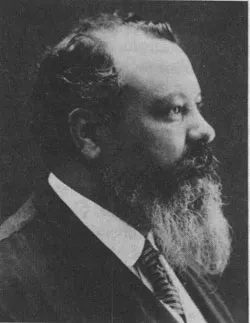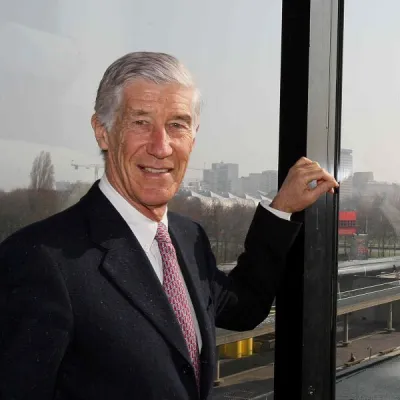
Joël de Rosnay
Human Design Chart
Biography
Joël de Rosnay as a Manifestor 5/1 in Human Design
Manifestor 5/1 — Design at a Glance
Joël de Rosnay exemplified the fundamental tendency of a Pioneer: He was designed to carry visions and lead others into new directions without having to do the work himself. This design corresponds to the Manifestor type, which acts similarly to an ancient emperor – with a great idea but implemented through delegation to others. Such pioneers inevitably polarize: Because their thinking is often far ahead, they are enthusiastically followed by some while being misunderstood or even rejected by others. This division is not a sign of error but an inherent characteristic of this configuration.
To minimize friction and find the right following, the central strategy lies in informing. Joël de Rosnay was programmed to clearly communicate his intentions and visions before acting. This serves not only transparency but also as the key to inner alignment. If this strategy is followed, a feeling of inner peace emerges – the reward for living in harmony with the design. Deviating from it and acting without prior information or against his inner authority instead leads to persistent, deep anger. This emotional reaction functions as direct feedback: It signals that the flow has been interrupted and the natural dynamics of the Pioneer have been blocked.
Emotional Authority
Joël de Rosnay exhibited a fundamental approach characterized by emotional wave movements: His perception of the world was always colored by his current mood. What appeared inspiring in one moment could be negatively evaluated in the next. This fluctuation was not a sign of unreliability but an expression of his inner authority – the defined Emotional Center.
In Human Design mechanics, the Emotional Center has priority: If it is defined, it automatically functions as inner authority regardless of which other centers are also active. This means that spontaneous decisions made from a strong emotional state were often misleading because they merely reflected a snapshot rather than the deeper truth.
For Joël de Rosnay, therefore, taking time was crucial. Quick reactions were replaced by the process of “sleeping on it.” Only when intense feelings subsided and an emotional distance was gained did clarity emerge. This patience allowed him to make long-term decisions with calmness after the emotional storm had passed. The strategy did not lie in immediate action but in waiting until the inner resonance reached its full depth and stabilized.
The 5/1 Profile — Heretic / Investigator
Joël de Rosnay revealed himself as someone who gathered deep knowledge to offer it to others for problem-solving. His design laid a tendency towards magnetic projection: Others actively sought his insights, often pushing him into the role of an advisory expert. This dynamic results from his 5/1-Profile (Hero/Researcher). Line 1 represents the intense research process and the foundation of knowledge, while line 5 carries this knowledge outward to offer solutions for crises or uncertainties.
This mechanism, however, harbors a specific challenge: Without clear boundaries, there is a risk of burnout. Similar to a scientist exhausted after long conferences and overwhelmed with inquiries, constantly providing solutions for others can drain one’s own energy. Line 5 requires respect as a genetic leader, yet if this respect is not limited by self-protection, it leads to exhaustion.
The balance lay in the ability to switch between the private research process (line 1) and public problem-solving (line 5). By learning to also say “No,” Joël de Rosnay could maintain the beneficial tension: He used his depth not only for external demand satisfaction but kept space for personal discoveries. This allowed him to optimally utilize his gifts without sacrificing himself. Overcoming these resistances against his own boundaries was crucial for his progress and his projection as a patient teacher who not only has knowledge but also purposefully shares it.
Split Definition — Defined & Open Centers
Joël de Rosnay's design indicated a tendency towards constant mental pressure to question and form concepts. The definition between the Head Center and Ajna Center created a continuous impulse for reflection; however, there was no direct energy available to immediately implement these ideas. This required patience until the right moment for transmission arrived instead of acting hastily.
His voice was marked by his defined Throat Center, which served as a pivot point to translate messages from the mind or other sources reliably into communication and action. This was complemented by his defined Heart Center, which gave him the strength of will to keep promises and control his own value and resources autonomously.
Emotionally, he operated according to the logic of his defined Solar Plexus Center: His inner authority lay in feelings. Decisions required waiting for an emotional wave to achieve clarity instead of reacting impulsively to highs or lows. This emotional depth allowed him to view situations from many perspectives before acting.
In contrast, his G Center (Identity/Direction), Sacral Center (vital energy), and Spleen Center (health/intuition) were open. His open G Center meant that identity was not set but initiated by the environment; he tended to question whether he was in the right place to find his direction. The open Sacral Center made him vulnerable to conditioned overexertion, as he did not have constant generative energy and had to learn to set limits instead of running on borrowed energy from others. His open Spleen Center left him uncertain about his health and intuition; he relied on being conditioned by healthy environments to develop a sense of well-being rather than succumbing to spontaneous fears.
Channels for awareness, change, abstraction and material values.
Joël de Rosnay appeared as someone who combined material responsibility with a deep need for inner clarity. His design indicated a tendency to navigate between the will to control and the search for hidden connections.
The 21-45 Money Line shaped his attitude towards material survival: Here, Gate 21 (the Hunter) meets Gate 45 (the Gatherer). This connection requires using one's own will to secure resources while always maintaining a balance between work and rest. The key lies in taking responsibility for one's environment without burning oneself out; it is about the ability to create structures through clear authority that serve the collective.
Parallel to this, Awareness 61-24 acted as the motor of his mental processes. This channel connects Gate 61 (Secrets) with Gate 24 (Rationalizing). It describes a mind that does not think linearly but waits for inspiration that discharges in sudden Aha moments. For Joël de Rosnay, this meant that knowledge was received rather than worked out – an attitude requiring stillness and patience until the inner truth becomes clear.
The Transience 35-36 drove him to constantly seek new experiences. Through Gate 35 (Change) and Gate 36 (Crisis), an emotional impulse arose to try something new to gain wisdom. This often led him to plunge into adventures not only for himself but also to take others along and grow together.
Additionally, Abstraction 47-64 colored his perception: Gate 64 (Confusion) and Gate 47 (Understanding) ensured that he filtered experiences through a kaleidoscope of possible stories. This channel helped him weave a coherent narrative from seemingly chaotic impressions which he could then communicate.
Individual Gates like Gate 26 (Manipulation/Innovation) supported his ability to anchor new ideas in the tribe, while Gate 33 (Reflection) provided the necessary retreat for condensing these impulses.
Collective Circuitry — Circuit Signature
Joël de Rosnay's design revealed him as someone who maintained separate energetic focal points. His configuration consisted of two unconnected groups: on one side, the connection between Heart, Throat, and Solar Plexus Centers; on the other side, Head and Ajna Centers. This separation meant that his strategic power (Heart) did not flow directly with his intuition or mind but existed as an independent resource.
The Knowledge Circuit connected his Head and Ajna Centers through the Awareness Channel (Gates 24–61). This promoted innovative flashes of insight and the ability to transform new knowledge for expression. Parallel to this, the Meaning Circuit operated in two separate parts: on one side also Head and Ajna Centers (Abstraction), on the other side Throat and Solar Plexus Centers (Transience). The latter connected emotional waves from the past with expression to share insights. The Ego Circuit linked Heart and Throat Centers through the Money Line Channel (Gates 21–45), promoting resource accumulation and material well-being through cooperation. Since there was no direct connection between the two main groups, these energies acted in parallel: mental innovation and emotional reflection on one side, strategic resource generation on the other, without forming a single continuous flow.
Left Angle Cross of Confrontation 1
Joël de Rosnay's design carries the imprint of the left cross of confrontation, a configuration that suggests a deep inclination towards engaging with established norms. This structure is not to be understood as destructive conflict but rather as a necessary process of clarity: by questioning and challenging existing structures, space is created for new, more authentic orders. The energy of this cross urges one not to lose oneself in passive adaptation but to find their own truth through direct encounters with resistance.
For Joël de Rosnay, this meant a way of living based on the search for integrity. The impulse lies in breaking through illusions and facing realities, even if it is uncomfortable. It involves being willing to break old patterns so that something new can emerge. This dynamic acts as a catalyst: it challenges one not to settle for half-truths but to penetrate to the core. Here, confrontation serves to protect one's identity and promote genuine growth, which only becomes possible through engagement with the unfamiliar or resistant. Thus, a path is revealed that does not aim at harmony at any cost, but rather at an honest, though sometimes painful, development towards greater self-determination and clarity in a complex environment.
Saturn Return · Uranus Opposition · Chiron Return · 2nd Saturn Return — Life Cycles
Joël de Rosnay emerged in the 1990s as someone who transformed his long-standing intellectual work into concrete structural reality. This did not happen impulsively, but as a result of a mature phase of consolidation marked by his second Saturn return. This cycle typically occurs between the ages of 58 and 60 – for Joël de Rosnay, however, it was noticeable at age 55 in 1992 – when years of groundwork condenses into a solid outcome.
The Saturn return symbolizes in Human Design mechanics the process of “building” and anchoring. What previously existed as an idea or concept now takes on a firm form and is sustainably anchored in life. For Joël de Rosnay, this energetic densification manifested when he founded Biotics SARL and became its CEO in 1992. This founding was not merely a career step but the expression of a design ready to pour its insights into an organized structure. The second Saturn return often demands that one harvest the fruits of their previous development and transform them into something lasting. Joël de Rosnay’s actions perfectly aligned with this dynamic: the theoretical foundations he had previously developed were now translated through the founding of Biotics SARL into a tangible institution serving as a foundation for future developments.
Manifestor · Emotional Authority — Synthesis
A central red thread in this design is the connection between inner perception and the drive to carry it outward. Emotional authority requires a maturing wave of feeling, while the defined Head Center generates a constant mental pressure towards inspiration and understanding. This combination of deep internal process and the need to share knowledge is reinforced by the 5/1 Profile type: as a Hero and Explorer, he seeks the depth of knowledge to make it accessible to others – a task linked through the Channel of the Line of Money with responsibility for the welfare of the tribe. This shapes a character that is both introspective and oriented towards external impact.
The central paradox lies in the tension between the Manifestor type and emotional authority. The Manifestor is destined to lead and move forward, yet the emotional wave requires time for decision-making – a process directly opposed to the impulsive action of the type. This discrepancy leads to an internal field of tension between the desire for immediate implementation and the necessity of allowing feelings to mature, which can strengthen the tendency to be misunderstood.
4 Defined Channels
Incarnation Cross - Left Angle Cross of Confrontation 1
Solar Return
The Solar Return shows the moment when the sun returns to its exact birth position - your personal solar year.
Life Cycles
Discover the life cycles with a detailed triple view (birth chart, cycle chart, composite).
Human Design Profile
- Type
- Manifestor
- Strategy
- To inform others before acting
- Authority
- Emotional Authority
- Profile
- 5/1 - Heretic / Investigator
- Definition
- Split Definition
- Incarnation Cross
- Left Angle Cross of Confrontation 1
- Date of Birth
- 12.06.1937 19:30
- Place of Birth
- Curepipe, Mauritius
Frequently Asked Questions
What is Joël de Rosnay's Human Design type?
What Profile does Joël de Rosnay have in Human Design?
Which Authority guides Joël de Rosnay?
What is Joel de Rosnay's incarnation cross?
When was Joel de Rosnay born?
Discover your own Human Design
Are you also a Manifestor? Find out in a personal reading how to use your initiation power peacefully and dissolve resistance.
More Personalities
Back to overviewChristian-Jaque
Kesha

Lucebert
Masaccio
Nadar
Papus